Vow symbols are visual signs or objects that represent promises, commitments, or sacred pledges between people or toward beliefs.
In short, vow symbols help people express loyalty, love, faith, and responsibility in a meaningful and lasting way. From wedding rings to sacred knots, these symbols have been used for centuries to mark important promises in human life.
What Are Vow Symbols?
Vow symbols are objects, signs, or gestures used to represent a promise or commitment. These promises can be personal, spiritual, or social.
People use vow symbols to:
- Show dedication to another person
- Represent loyalty to beliefs
- Mark life-changing commitments
- Express love, faith, or responsibility
Vow symbols are powerful because they make promises visible and memorable.
The History of Vow Symbols
Vow symbols have existed for thousands of years. Long before written contracts, people used symbols to seal promises.
Early Civilizations and Promise Symbols
Ancient societies believed promises were sacred. Breaking a vow was considered dishonorable.
Examples from history:
- Ancient Egyptians used rings to symbolize eternity
- Romans exchanged rings to represent marriage agreements
- Medieval knights used symbolic tokens to swear loyalty
These early practices shaped modern traditions.
Religious Origins of Vow Symbols
Many vow symbols come from religious traditions.
Religious communities used symbols to represent:
- Devotion to a god
- Commitment to spiritual life
- Loyalty to religious teachings
Examples include:
- Sacred beads used during prayers
- Hand gestures representing blessings
- Knotted cords symbolizing discipline
Religion helped formalize vow traditions across cultures.
Why Vow Symbols Are Important
Vow symbols are more than decoration—they carry emotional and cultural meaning.
Key Reasons Vow Symbols Matter
- They strengthen trust
- They make promises visible
- They remind people of commitments
- They create lasting memories
- They connect people across generations
Without vow symbols, many traditions would lose their emotional depth.
Types of Vow Symbols Used Around the World
Different cultures created unique vow symbols based on their beliefs and traditions.
Wedding Vow Symbols
Wedding vow symbols are among the most recognized worldwide.
Wedding Rings
Wedding rings are perhaps the most famous vow symbol.
Meaning of rings:
- Circle shape represents eternity
- No beginning or end symbolizes endless love
- Metal strength represents lasting commitment
Historically, rings were worn on the fourth finger, believed to connect to the heart through a vein once called the “vein of love.”
Wedding Knots
In some cultures, couples tie knots during marriage ceremonies.
This tradition is known as “tying the knot.”
Symbolic meanings:
- Unity
- Strength
- Shared destiny
This tradition inspired the common phrase still used today.
Wedding Crowns
Some cultures use crowns during marriage.
Meaning:
- Honor
- Unity
- Blessing of marriage
These crowns symbolize respect between partners.
Religious Vow Symbols
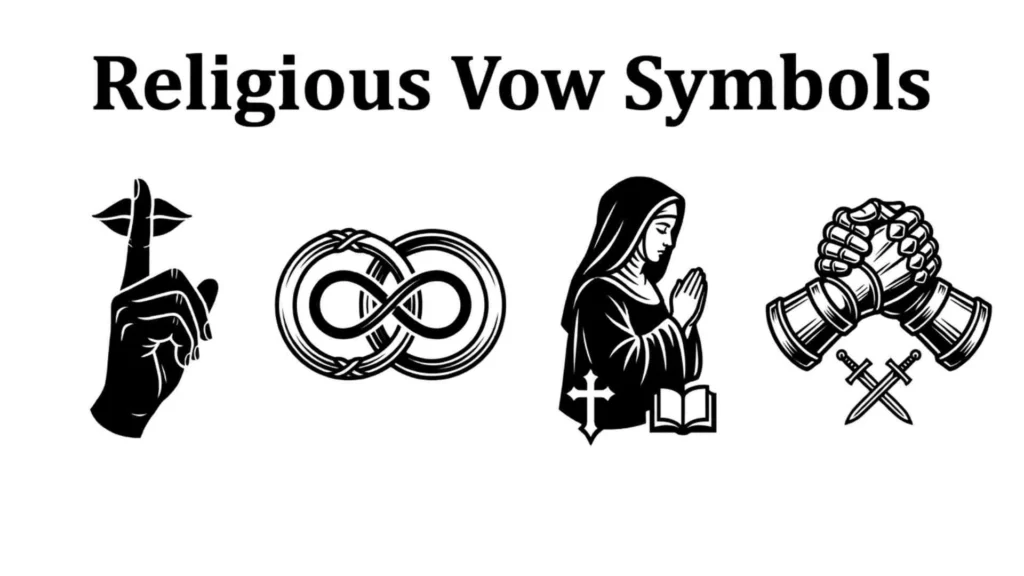
Religion includes many vow traditions.
Prayer Beads
Prayer beads are used in many faiths.
Symbolic meanings:
- Repetition of sacred words
- Spiritual discipline
- Devotion
These beads guide prayers and strengthen focus.
Sacred Threads and Cords
Some cultures tie threads around wrists or bodies.
Meaning:
- Protection
- Blessing
- Reminder of vows
These simple symbols carry deep spiritual meaning.
Monastic Symbols
Monks and spiritual followers use symbolic clothing or items.
Examples:
- Robes symbolizing simplicity
- Prayer ropes symbolizing devotion
- Head coverings symbolizing humility
These symbols reflect lifelong commitments.
Friendship Vow Symbols
Friendship also includes vow symbols.
Friendship Bracelets
Friendship bracelets are popular among children and teenagers.
Meaning:
- Loyalty
- Trust
- Shared memories
They are often handmade, making them more meaningful.
Matching Jewelry
Friends sometimes wear matching rings or necklaces.
Symbolic meanings:
- Unity
- Long-lasting friendship
- Emotional connection
These symbols show shared identity.
Cultural and Tribal Vow Symbols
Many traditional societies use unique vow symbols.
Tribal Tattoos
Some tribes used tattoos to represent commitments.
Meaning:
- Loyalty to tribe
- Personal achievements
- Life milestones
These tattoos told stories about the wearer.
Ritual Objects
Ceremonies often include symbolic objects.
Examples:
- Feathers representing honor
- Stones representing strength
- Shells representing connection to nature
These objects reflected cultural values.
Vow Symbols in Modern Society
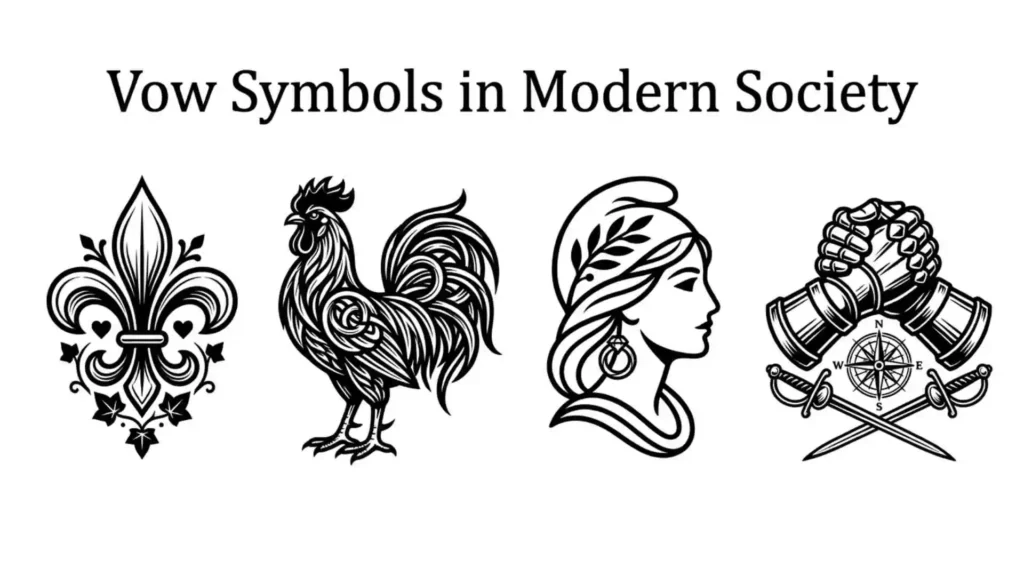
Even in the modern world, vow symbols remain important.
Engagement Rings
Engagement rings symbolize a promise of future marriage.
Meaning:
- Commitment
- Intention
- Hope for the future
They are often given during proposals.
Graduation Symbols
Graduation ceremonies include vow-like symbols.
Examples:
- Caps and gowns
- Diplomas
- Academic medals
These symbols represent commitment to education.
Professional Oath Symbols
Some professions use vow symbols.
Examples:
- Medical oath ceremonies
- Legal oath traditions
- Military pledge ceremonies
These symbols represent responsibility to society.
Practical Applications of Vow Symbols
Vow symbols serve practical purposes in daily life.
Strengthening Relationships
Vow symbols help relationships grow stronger.
They:
- Remind people of promises
- Encourage honesty
- Build trust
A simple ring or bracelet can carry powerful meaning.
Creating Social Bonds
Communities use vow symbols to strengthen unity.
Examples:
- Team badges
- Club membership pins
- Organizational logos
These symbols create belonging.
Supporting Emotional Well-being
Vow symbols provide comfort.
They:
- Offer reassurance
- Represent support
- Encourage commitment
People often feel safer when promises are symbolized.
Impact of Vow Symbols on Society
Vow symbols influence social structure and culture.
Promoting Trust in Society
Trust is essential for peaceful communities.
Vow symbols help by:
- Representing honesty
- Showing reliability
- Encouraging responsibility
They help build strong societies.
Encouraging Moral Responsibility
Symbols remind individuals of duties.
Examples include:
- Marriage vows
- Professional pledges
- Social commitments
These reminders help maintain ethical behavior.
Preserving Cultural Traditions
Vow symbols protect cultural heritage.
They:
- Keep traditions alive
- Pass values to younger generations
- Preserve historical practices
Without symbols, traditions might fade away.
Interesting Facts About Vow Symbols
Here are some fascinating facts:
- Wedding rings date back over 4,000 years.
- Knot ceremonies exist in many cultures worldwide.
- Some vow symbols are passed down for generations.
- Many ancient vow symbols still influence modern ceremonies.
These facts show how deeply rooted vow traditions are.
Legends and Stories About Vow Symbols
Stories often explain the meaning behind vow traditions.
The Legend of the Eternal Ring
Ancient stories describe rings as symbols of endless time.
Legend says:
The circular shape represents the never-ending cycle of love and life.
This idea inspired modern wedding traditions.
The Story Behind Knot Traditions
In old cultures, ropes symbolized unity.
When two ropes were tied together, they became stronger.
This became a powerful symbol of partnership and teamwork.
Vow Symbols in Art and Literature
Artists and writers often use vow symbols.
Examples include:
- Rings in romantic stories
- Knots in decorative art
- Chains representing unity
These symbols help express emotions visually.
Vow Symbols in Education and Learning
Schools use symbolic ceremonies.
Examples:
- Honor badges
- Achievement medals
- Graduation cords
These symbols motivate students to succeed.
Vow Symbols and Technology
Even technology uses symbolic promises.
Examples:
- Digital agreement icons
- Security symbols
- Trust badges on websites
These symbols represent commitment and reliability.
Challenges and Misunderstandings About Vow Symbols
Not everyone understands symbolic meanings.
Common issues include:
- Cultural differences
- Misinterpretation
- Loss of traditional knowledge
Education helps preserve their meaning.
Benefits of Understanding Vow Symbols
Learning about vow symbols offers many benefits.
Personal Growth
Understanding symbols helps people:
- Appreciate relationships
- Respect commitments
- Develop responsibility
It builds emotional maturity.
Cultural Awareness
Studying vow symbols teaches respect for traditions.
It helps people understand:
- Cultural diversity
- Religious practices
- Social customs
This promotes global harmony.
Creative Inspiration
Artists use vow symbols to create:
- Jewelry designs
- Paintings
- Digital artwork
These symbols provide endless creative ideas.
Frequently Asked Questions (FAQs)
1. What are vow symbols?
Vow symbols are objects or signs that represent promises, commitments, or agreements between individuals or groups.
2. What is the most common vow symbol?
The wedding ring is the most widely recognized vow symbol across many cultures.
3. Are vow symbols used only in marriage?
No, vow symbols are used in friendships, professions, education, and religious traditions.
4. Why do people exchange vow symbols?
People exchange vow symbols to make promises visible and meaningful.
5. Can vow symbols change over time?
Yes, new vow symbols continue to develop as societies evolve.
Conclusion
Vow symbols have played a powerful role in human life for thousands of years. From simple knots to elegant rings, these symbols represent trust, commitment, and responsibility. They connect people emotionally, preserve traditions, and strengthen communities. In modern society, vow symbols continue to shape relationships, professional duties, and cultural practices. By understanding vow symbols, we gain a deeper appreciation for promises and the values that hold societies together.
Meta Description (160 characters):
Discover the meaning of vow symbols, their history, cultural uses, and modern importance in relationships, traditions, and society worldwide.
Clara Miles
Hello! I’m Clara, a lifelong dreamer who finds magic in everyday moments. Writing has always been my way of exploring the world and understanding the people around me. I love creating stories that make readers laugh, cry, and reflect on life’s little surprises. When I’m not writing, you can usually find me sipping coffee at a cozy café or wandering through nature with a notebook in hand. My journey as an author is fueled by curiosity, imagination, and a love for connecting with my readers. Every story I write is a piece of my heart, and I hope it inspires yours too.
Books:
-
Whispers of the Heart
-
Shadows and Sunlight