
Buddhist symbols are sacred visual signs used in Buddhism to represent spiritual teachings, wisdom, and the path to enlightenment.
In short, Buddhist symbols help followers understand deep ideas like compassion, mindfulness, and inner peace through simple images. These symbols have guided millions of people for centuries and continue to inspire spiritual growth across the world.
What Are Buddhist Symbols?
Buddhist symbols are meaningful images or signs used in Buddhist teachings, art, rituals, and meditation. They help explain complex spiritual ideas in a simple visual way.
Instead of long explanations, a single symbol can represent:
- Enlightenment
- Compassion
- Wisdom
- Balance
- The cycle of life
For beginners and students, Buddhist symbols make spiritual teachings easier to understand and remember.
The Origin and History of Buddhist Symbols
Buddhist symbols began more than 2,500 years ago with the teachings of Siddhartha Gautama, commonly known as the Buddha.
Early Use of Symbols in Buddhism
In the earliest days of Buddhism, followers did not create statues of the Buddha. Instead, they used symbols to represent his presence and teachings.
Some early symbols included:
- Footprints representing the Buddha’s journey
- The Bodhi tree representing enlightenment
- Empty thrones representing wisdom
These symbols allowed people to honor teachings without creating human images.
Spread of Buddhist Symbols Across Asia
As Buddhism spread from India to China, Japan, Thailand, and Sri Lanka, local cultures added their own artistic styles.
This created many beautiful versions of Buddhist symbols, while keeping their core meanings the same.
Why Buddhist Symbols Are Important
Buddhist symbols are not just decorations—they are powerful tools for learning and reflection.
Key Reasons Buddhist Symbols Matter
- They help explain spiritual teachings
- They support meditation and mindfulness
- They remind people to live ethically
- They preserve religious traditions
- They inspire peace and compassion
These symbols connect people to deeper spiritual values.
The Eight Auspicious Buddhist Symbols
One of the most famous groups of Buddhist symbols is the Eight Auspicious Symbols, also called the Ashtamangala.
Each symbol carries a special meaning related to enlightenment.
The Lotus Flower (Padma)
The lotus flower is one of the most recognized Buddhist symbols.
Meaning of the Lotus Flower
The lotus grows in muddy water but blooms beautifully above the surface.
This represents:
- Spiritual growth
- Purity of mind
- Enlightenment rising above suffering
Real-Life Application
The lotus reminds people that challenges can lead to personal growth.
For example:
A student facing difficulties can still achieve success through patience and effort.
The Dharma Wheel (Dharmachakra)
The Dharma Wheel represents the teachings of Buddhism.
Symbol Meaning
The wheel has eight spokes, representing the Eightfold Path, a guide to living wisely.
It symbolizes:
- Wisdom
- Moral discipline
- Meditation
Historical Significance
The Dharma Wheel is believed to represent the moment when Buddha first taught his followers.
The Conch Shell
The conch shell represents the sound of truth spreading.
Meaning
It symbolizes:
- Communication of teachings
- Awakening from ignorance
- Spiritual awareness
Cultural Use
In some traditions, conch shells are blown during ceremonies to announce important spiritual events.
The Endless Knot
The endless knot is a complex looping design.
Meaning
It represents:
- Interconnectedness of life
- Unity of wisdom and compassion
- Endless cycle of cause and effect
Interesting Fact
This symbol also reflects the Buddhist idea of karma, where actions influence future outcomes.
The Golden Fish

The golden fish symbolize happiness and freedom.
Meaning
They represent:
- Freedom from suffering
- Joy and abundance
- Courage in life’s journey
These fish often appear swimming together, symbolizing harmony.
The Parasol (Umbrella)
The parasol represents protection.
Meaning
It symbolizes:
- Protection from suffering
- Shelter from negative forces
- Spiritual safety
In ancient times, umbrellas were used to protect royalty, showing honor and respect.
The Treasure Vase
The treasure vase represents abundance.
Meaning
It symbolizes:
- Wealth of wisdom
- Prosperity
- Fulfillment of wishes
Unlike ordinary containers, this vase is believed to never empty, symbolizing endless blessings.
The Victory Banner
The victory banner represents triumph.
Meaning
It symbolizes:
- Victory over ignorance
- Success in spiritual practice
- Achievement of enlightenment
It reminds followers that wisdom can overcome challenges.
Other Important Buddhist Symbols
Besides the Eight Auspicious Symbols, many other Buddhist symbols hold deep meanings.
The Bodhi Tree
The Bodhi tree represents enlightenment.
Historical Story
According to tradition, Siddhartha Gautama achieved enlightenment while meditating under the Bodhi Tree.
Meaning
It symbolizes:
- Awakening
- Wisdom
- Spiritual growth
The Buddha Footprints
Footprints symbolize the presence of the Buddha.
Meaning
They represent:
- The path to enlightenment
- Spiritual guidance
- Journey through life
These symbols are found in ancient temples.
The Lion
The lion symbolizes strength and courage.
Meaning
It represents:
- Power of truth
- Leadership
- Confidence in teachings
The Buddha’s teachings were often described as the “lion’s roar.”
The Stupa
A stupa is a dome-shaped structure.
Meaning
It symbolizes:
- The universe
- Meditation
- Sacred relics
Stupas are places of prayer and reflection.
Practical Applications of Buddhist Symbols
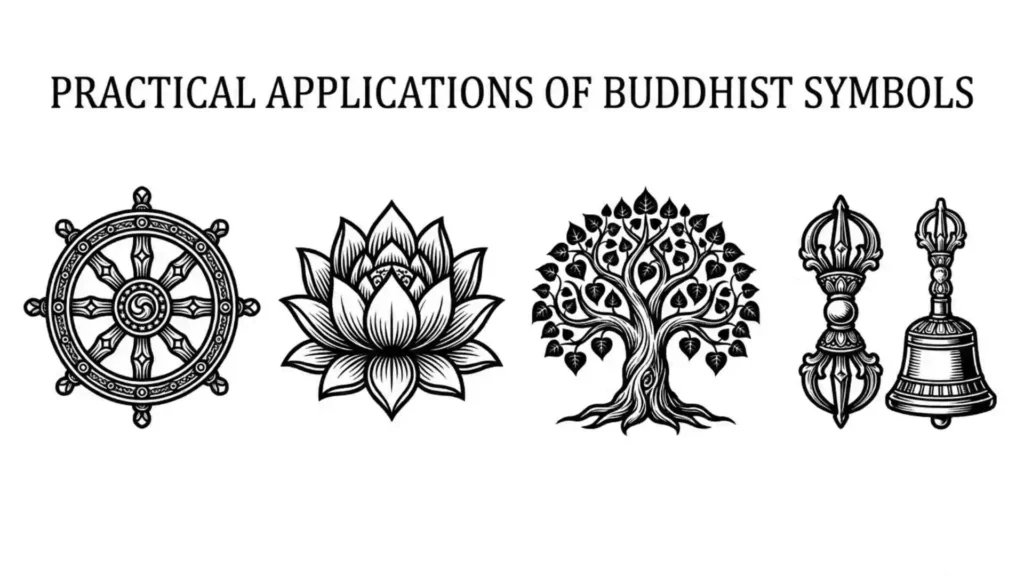
Buddhist symbols are used in daily life and spiritual practices.
Use in Meditation
Many people meditate using symbols.
Examples:
- Focusing on a lotus image
- Visualizing the Dharma Wheel
- Drawing endless knots during meditation
These practices improve focus and calmness.
Use in Art and Decoration
Buddhist symbols decorate:
- Temples
- Homes
- Prayer halls
They create peaceful environments.
Use in Education
Teachers use symbols to explain Buddhist philosophy.
For students, symbols help:
- Simplify complex ideas
- Improve memory
- Encourage reflection
This makes learning more engaging.
Impact of Buddhist Symbols on Society
Buddhist symbols have influenced societies worldwide.
Promoting Peace and Compassion
Many Buddhist symbols encourage peaceful behavior.
For example:
The lotus teaches patience and kindness.
These values support harmonious communities.
Encouraging Mindfulness
Symbols remind people to stay aware of their actions.
Mindfulness helps:
- Reduce stress
- Improve relationships
- Support mental health
This benefits individuals and society.
Preserving Cultural Heritage
Buddhist symbols protect cultural traditions.
They appear in:
- Architecture
- Festivals
- Artwork
This keeps cultural identity strong.
Legends and Stories Behind Buddhist Symbols
Stories help explain the deeper meaning of symbols.
The Story of the Lotus
Legend says that when the Buddha was born, lotus flowers bloomed wherever he stepped.
This story symbolizes:
- Purity
- Sacred beginnings
- Enlightenment
It explains why the lotus is so important.
The Story of the Endless Knot
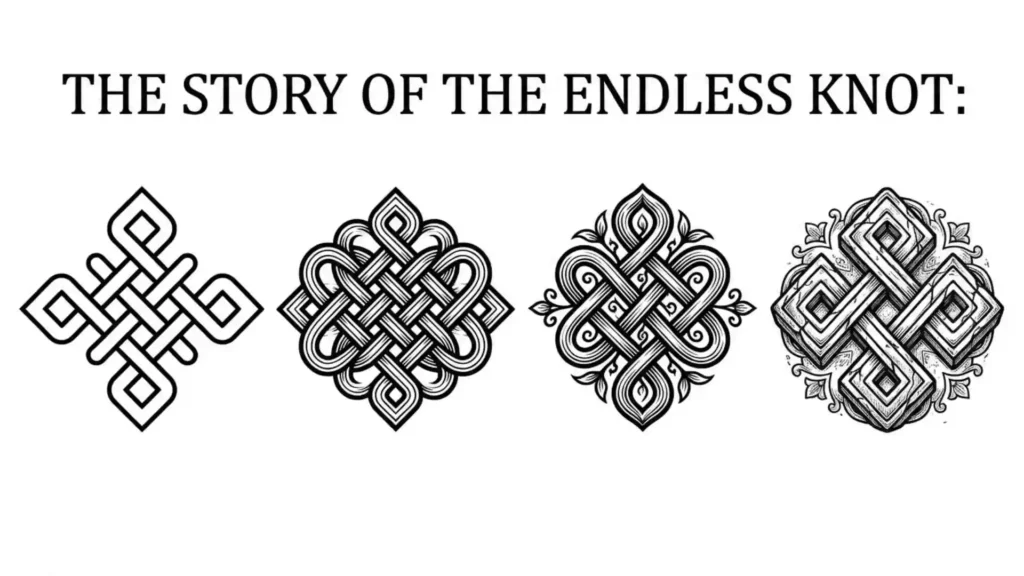
Some traditions say the endless knot represents the Buddha’s infinite wisdom.
Its loops symbolize:
- The connection between past, present, and future
- The unity of all living beings
This story highlights the importance of compassion.
Interesting Facts About Buddhist Symbols
Here are some fascinating facts:
- Many Buddhist symbols are over 2,000 years old.
- The Dharma Wheel appears on national flags in some countries.
- Buddhist symbols are used in meditation worldwide.
- Some temples contain thousands of symbolic carvings.
These facts show the lasting influence of Buddhist imagery.
Buddhist Symbols in Modern Life
Even today, Buddhist symbols remain meaningful.
Use in Jewelry and Fashion
Many people wear:
- Lotus pendants
- Endless knot bracelets
- Dharma Wheel necklaces
These items symbolize personal beliefs.
Use in Tattoos
Some individuals choose Buddhist symbols as tattoos.
Reasons include:
- Spiritual inspiration
- Personal growth
- Cultural respect
These tattoos often represent life journeys.
Use in Wellness Practices
Modern wellness programs use Buddhist imagery.
Examples include:
- Yoga studios decorated with lotus symbols
- Meditation apps using Dharma Wheels
These designs promote calmness.
Challenges in Understanding Buddhist Symbols
Interpreting symbols can sometimes be difficult.
Common Challenges
- Cultural misunderstandings
- Oversimplification of meanings
- Lack of historical knowledge
Education helps preserve accurate interpretations.
Benefits of Learning About Buddhist Symbols
Understanding Buddhist symbols offers many advantages.
Educational Benefits
Students gain:
- Cultural knowledge
- Historical awareness
- Ethical understanding
Symbols make learning engaging.
Emotional Benefits
Symbols encourage:
- Peace of mind
- Patience
- Compassion
They help individuals manage emotions.
Social Benefits
Communities benefit from:
- Stronger relationships
- Reduced conflict
- Shared values
Symbols promote harmony.
Frequently Asked Questions (FAQs)
1. What are Buddhist symbols?
Buddhist symbols are visual signs used to represent teachings, beliefs, and spiritual values in Buddhism.
2. What is the most important Buddhist symbol?
The Dharma Wheel is considered one of the most important symbols because it represents the Buddha’s teachings.
3. Why is the lotus flower important in Buddhism?
The lotus represents purity and enlightenment because it grows beautifully from muddy water.
4. Are Buddhist symbols used outside religion?
Yes, many Buddhist symbols are used in art, meditation, wellness, and cultural decorations.
5. Can anyone use Buddhist symbols?
Yes, but it is important to use them respectfully and understand their meanings.
Conclusion
Buddhist symbols are powerful tools that transform deep spiritual teachings into simple visual forms. From the lotus flower to the Dharma Wheel, each symbol carries lessons about wisdom, compassion, and enlightenment. These symbols have guided millions of people across centuries, shaping cultures and inspiring peaceful living. In today’s fast-paced world, Buddhist symbols continue to provide reminders of mindfulness, patience, and harmony. By learning about Buddhist symbols, we not only explore ancient traditions but also discover valuable lessons that help us live more meaningful and balanced lives.

Isaac Wellington
I’ve always been fascinated by the hidden stories in everyday life and the power of words to change how we see the world. Writing, for me, isn’t just a profession—it’s a way to explore human emotions, mysteries, and the unexpected twists of life. Over the years, I’ve dedicated myself to creating stories that linger in your mind long after the last page. When I’m not writing, you’ll usually find me wandering through old libraries or sketching ideas in a notebook. I believe every story has a heartbeat, and I aim to capture that rhythm in my work. Join me on a journey where imagination meets reality, and the ordinary becomes extraordinary.
Books:
-
Shadows of the Forgotten
-
Whispers Through Time