
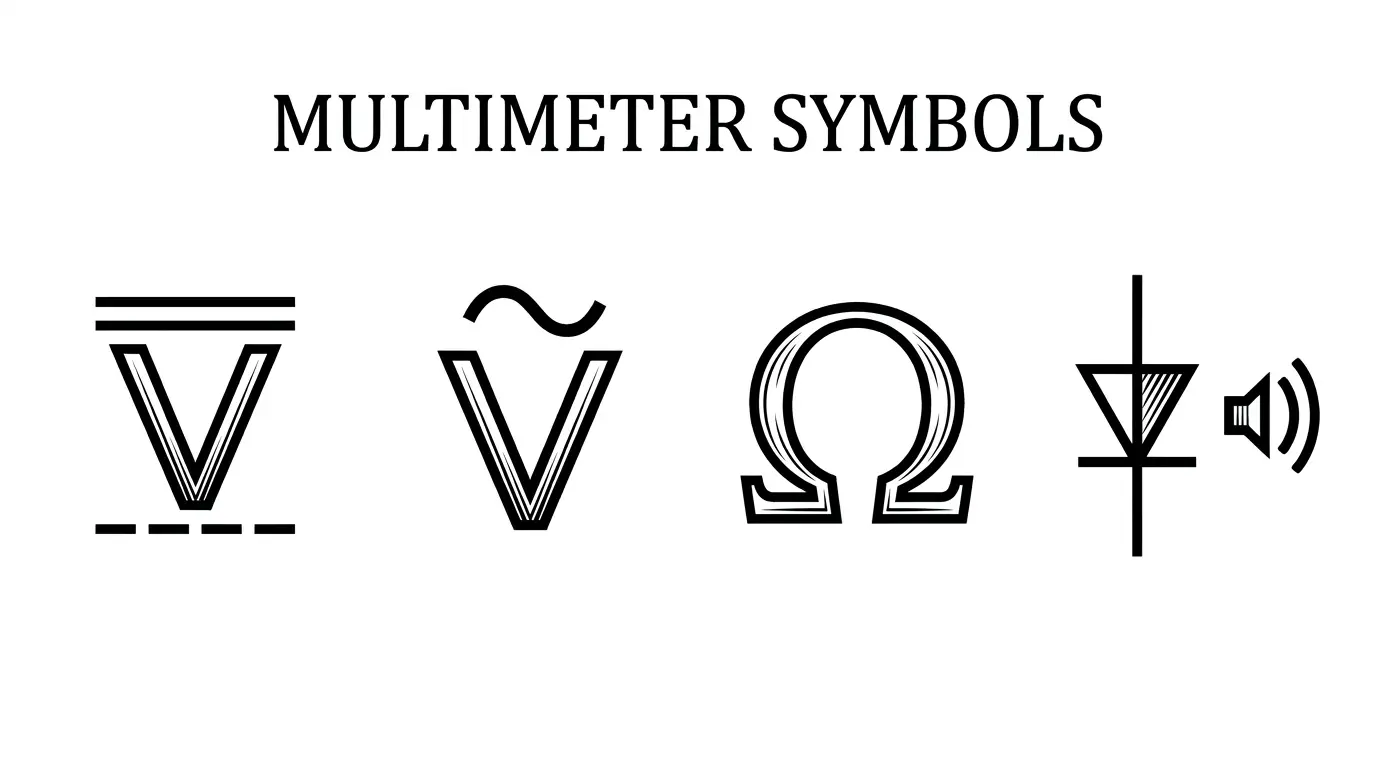
Multimeter symbols are the small icons printed on a multimeter that show what function or measurement the device performs.
In short, multimeter symbols help users measure voltage, current, resistance, and other electrical values safely and correctly. Understanding these symbols is essential for students, technicians, electricians, and anyone working with electrical systems.
What Are Multimeter Symbols?
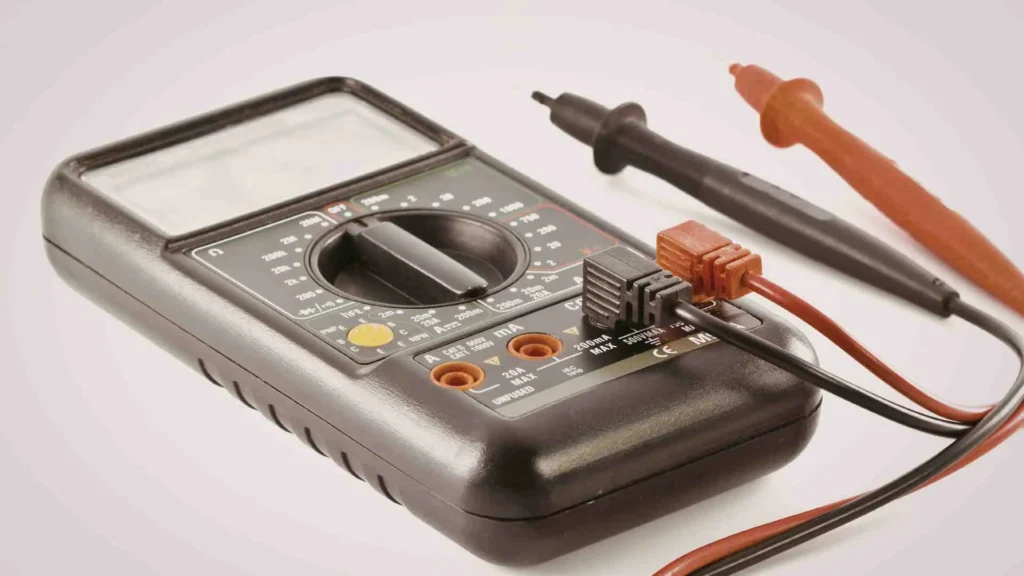
Multimeter symbols are visual icons found on digital and analog multimeters. These symbols guide users to select the correct measurement setting.
Instead of writing full words, manufacturers use symbols to:
- Save space on the dial
- Make operation faster
- Avoid language confusion
- Improve safety
If you’ve ever looked at a multimeter and felt confused by the markings, you’re not alone. Learning these symbols turns confusion into confidence.
What Is a Multimeter?
Before learning the symbols, it’s helpful to understand what a multimeter is.
A multimeter is an electrical testing tool used to measure:
- Voltage
- Current
- Resistance
- Continuity
- Frequency
- Temperature (on advanced models)
Multimeters are used by:
- Electricians
- Engineers
- Students
- Hobbyists
- Appliance repair technicians
Without multimeters, diagnosing electrical problems would be very difficult.
The History of Multimeters and Their Symbols
Multimeters have evolved over time, and so have their symbols.
Early Electrical Testing Tools
In the early 1900s, engineers used separate tools to measure voltage, current, and resistance. These tools were bulky and difficult to carry.
Later, inventors combined these tools into one device called the multimeter.
Development of Standard Symbols
As multimeters became popular, manufacturers introduced standardized symbols.
These symbols helped:
- Reduce mistakes
- Improve safety
- Make training easier
Today, most multimeter symbols follow international electrical standards.
Why Understanding Multimeter Symbols Is Important
Learning multimeter symbols is not just about convenience—it’s about safety.
Key Reasons to Learn Multimeter Symbols
- Prevent electrical accidents
- Avoid damaging equipment
- Improve accuracy
- Save time during testing
- Build technical skills
Even beginners can quickly become skilled once they understand these symbols.
Common Multimeter Symbols and Their Meanings
Let’s explore the most common multimeter symbols found on modern devices.
Voltage Symbols (V)
Voltage is one of the most frequently measured electrical values.
DC Voltage Symbol (V⎓)
This symbol looks like:
V⎓
Meaning:
- Measures Direct Current (DC) voltage
- Used for batteries
- Used for mobile devices
- Used for solar systems
Practical Example
You can use this setting to check:
- AA battery voltage
- Car battery power
- Phone battery condition
AC Voltage Symbol (V~)
This symbol looks like:
V~
Meaning:
- Measures Alternating Current (AC) voltage
- Used for household electricity
Practical Example
Use this to measure:
- Wall socket voltage
- Power outlet testing
- Home wiring inspection
Current Symbols (A)
Current measures the flow of electricity.
DC Current Symbol (A⎓)
This symbol measures:
- Direct current flow
- Battery-powered circuits
Example Uses
- Testing LED circuits
- Checking small electronics
- Measuring battery drain
AC Current Symbol (A~)
This symbol measures:
- Alternating current flow
- Household electrical current
Example Uses
- Checking appliance current
- Testing electrical motors
Resistance Symbol (Ω)
The resistance symbol looks like:
Ω (Omega)
Meaning:
- Measures resistance in ohms
- Tests electrical components
Practical Example
Use resistance measurement to:
- Test resistors
- Check wires
- Diagnose broken circuits
Resistance testing helps find hidden electrical faults.
Continuity Symbol (🔔 or Sound Wave)

This symbol usually looks like:
- A sound icon
- A bell
- Sound waves
Meaning:
- Checks if electricity can flow
- Produces a beep if connection exists
Practical Example
Use continuity testing to:
- Find broken wires
- Check fuses
- Test switches
This is one of the most useful settings for beginners.
Diode Symbol (→|—)
The diode symbol looks like:
→|—
Meaning:
- Tests diodes
- Checks semiconductor components
Practical Example
Use this to test:
- Diodes
- LED lights
- Electronic circuits
Capacitance Symbol (—|(—)
Capacitance symbol measures capacitor values.
Meaning:
- Measures capacitance
- Used in electronic repair
Practical Example
Use capacitance testing to:
- Check capacitors in power supplies
- Diagnose faulty electronics
Frequency Symbol (Hz)
The symbol:
Hz
Meaning:
- Measures frequency
- Used in AC signals
Example Uses
- Audio equipment testing
- Electrical system analysis
Temperature Symbol (°C or °F)
Some advanced multimeters include temperature testing.
Meaning:
- Measures temperature
- Uses temperature probes
Example Uses
- HVAC testing
- Engine diagnostics
Common Multimeter Control Symbols
Multimeters also include control symbols.
Hold Symbol (HOLD)
Meaning:
- Freezes the measurement reading
Useful when:
- You cannot see the display easily
- Working in tight spaces
Backlight Symbol
Meaning:
- Turns display light on
Useful for:
- Dark environments
- Night work
Auto Range Symbol
Some multimeters automatically select ranges.
Meaning:
- Device chooses measurement range
Benefit:
- Makes testing easier for beginners
Practical Applications of Multimeter Symbols
Understanding multimeter symbols allows people to perform real-world electrical tasks.
Household Electrical Testing
Multimeters help test:
- Wall outlets
- Extension cords
- Circuit breakers
This helps prevent electrical hazards.
Automotive Repairs
Mechanics use multimeters to test:
- Car batteries
- Alternators
- Wiring systems
Multimeter symbols guide accurate measurements.
Electronics Repair
Technicians use multimeters to fix:
- Mobile phones
- Computers
- TVs
- Radios
Without correct symbols, repairs would be risky.
Educational Applications
Students use multimeters in:
- Science labs
- Engineering training
- Technical education
Learning symbols builds practical knowledge.
Impact of Multimeter Symbols on Society
Multimeter symbols support safety and technological growth.
Improving Electrical Safety
Correct symbol usage prevents:
- Electric shocks
- Equipment damage
- Fire hazards
This makes homes and workplaces safer.
Supporting Technological Development
Multimeters support industries such as:
- Electronics manufacturing
- Telecommunications
- Automotive engineering
Reliable measurements ensure high-quality products.
Enabling DIY Repairs
Many homeowners now repair devices themselves.
Multimeter symbols make it possible to:
- Diagnose faults
- Save repair costs
- Reduce electronic waste
This supports sustainable living.
Tips for Remembering Multimeter Symbols
Learning symbols becomes easier with simple strategies.
Use Memory Tricks
Examples:
- V = Voltage
- A = Current
- Ω = Resistance
Simple connections improve memory.
Practice Regularly
Hands-on use helps reinforce learning.
Start with:
- Batteries
- Simple circuits
- Household items
Practice builds confidence.
Keep a Symbol Chart
Many beginners print charts.
Benefits:
- Quick reference
- Faster learning
- Reduced mistakes
Common Mistakes When Using Multimeter Symbols
Beginners sometimes make errors.
Choosing Wrong Measurement Mode
This can:
- Damage the device
- Cause inaccurate readings
Always double-check the symbol before testing.
Ignoring Safety Limits
Multimeters have voltage limits.
Never exceed:
- Maximum rating
- Safety guidelines
Safety always comes first.
Connecting Leads Incorrectly
Incorrect connections can damage circuits.
Always:
- Use correct ports
- Follow instructions
Interesting Facts About Multimeter Symbols
Here are some fascinating facts:
- The Ω symbol comes from the Greek letter Omega.
- Modern multimeters can measure over 10 different values.
- Some advanced models include Bluetooth connectivity.
- Digital multimeters are more common than analog models today.
These facts show how multimeters continue to evolve.
Modern Innovations in Multimeter Technology
Technology has improved multimeter design.
Smart Multimeters
Modern devices include:
- Wireless connectivity
- Mobile app integration
- Data storage
These features improve efficiency.
Digital Displays
Digital displays provide:
- Clear readings
- Better accuracy
- Faster results
This reduces human error.
Compact Portable Designs
Modern multimeters are:
- Lightweight
- Portable
- Durable
Technicians can carry them easily.
Safety Tips When Using Multimeter Symbols
Safety is critical when working with electricity.
Essential Safety Rules
- Always check symbol settings before testing
- Use insulated tools
- Wear safety gear
- Avoid wet environments
- Disconnect power when possible
Following these rules reduces risks.
Benefits of Learning Multimeter Symbols
Understanding symbols offers many advantages.
Career Benefits
Knowledge of multimeter symbols helps people become:
- Electricians
- Engineers
- Technicians
Technical skills increase job opportunities.
Personal Benefits
Homeowners gain:
- Confidence
- Cost savings
- Problem-solving skills
DIY repair skills are valuable.
Environmental Benefits
Repairing electronics reduces waste.
Benefits include:
- Less landfill waste
- Longer device lifespan
- Resource conservation
Small skills can create big environmental impacts.
Frequently Asked Questions (FAQs)
1. What do multimeter symbols mean?
Multimeter symbols represent different electrical measurements like voltage, current, resistance, and continuity.
2. Which multimeter symbol is used for voltage?
The symbol V represents voltage measurement.
3. What does the Ω symbol mean?
The Ω symbol represents resistance measurement in ohms.
4. Is it safe to use a multimeter without knowing symbols?
No, using a multimeter without understanding symbols can be dangerous and may damage equipment.
5. Can beginners learn multimeter symbols easily?
Yes, with practice and reference charts, beginners can quickly learn multimeter symbols.
Conclusion
Multimeter symbols are essential tools that make electrical testing safer, faster, and more accurate. From measuring voltage to checking continuity, each symbol plays a vital role in diagnosing electrical problems.
Understanding these symbols empowers students, technicians, and everyday users to handle electrical systems with confidence. As technology continues to grow, knowledge of multimeter symbols will remain a valuable skill for both professional and personal use.
