Rune symbols are ancient letters and mystical signs once used by Germanic and Norse people for writing, magic, protection, and guidance.
Today, rune symbols are popular in spirituality, tattoos, jewelry, storytelling, and self-discovery. These mysterious symbols carry deep meanings connected to nature, strength, fate, wisdom, and human emotions.
For centuries, rune symbols have fascinated historians, spiritual seekers, and mythology lovers alike.
Some people see them as historical alphabets, while others believe they hold spiritual energy and hidden messages.
Whether you are curious about Viking culture or looking for the meaning behind a rune tattoo, this guide will help you understand rune symbols in a simple and engaging way.
What Are Rune Symbols?
Rune symbols are characters from ancient alphabets called runes. These alphabets were mainly used by Germanic tribes and Scandinavian people before the Latin alphabet became common in Europe.
The word “rune” comes from an old Germanic word meaning secret, mystery, or whisper. This mysterious meaning is one reason runes are strongly connected to magic and spirituality.
Unlike modern alphabets, rune symbols were believed to carry deeper power. People carved them onto:
- Stones
- Weapons
- Jewelry
- Wood
- Graves
- Tools
- Amulets
Many believed the symbols could bring protection, luck, wisdom, or victory.
The History of Rune Symbols
Origins of Runes
The earliest rune symbols appeared around the 2nd century AD. Historians believe they were inspired by ancient Mediterranean alphabets, but they developed into their own unique writing system.
The oldest rune alphabet is called the Elder Futhark.
The name “Futhark” comes from the first six rune letters:
- F
- U
- Th
- A
- R
- K
The Elder Futhark contains 24 symbols.
Vikings and Rune Symbols
Rune symbols became strongly connected with the Vikings because Norse people used them widely during the Viking Age.
Vikings carved runes on:
- Swords for strength
- Ships for safe travel
- Stones to honor the dead
- Talismans for protection
Many rune stones still exist today in Scandinavia, especially in Sweden and Denmark.
The Mythological Story of Runes
According to Norse mythology, the god Odin discovered runes through sacrifice and wisdom.
Legend says Odin hung upside down from the world tree, Yggdrasil, for nine days and nights without food or water. After suffering greatly, he gained the knowledge of runes.
This story made runes symbols of:
- Wisdom
- Sacrifice
- Spiritual power
- Divine knowledge
The Elder Futhark Rune Symbols and Meanings
Below are some of the most famous rune symbols and what they represent.
Fehu – Wealth and Success
Fehu symbolizes:
- Wealth
- Prosperity
- New beginnings
- Abundance
In ancient times, cattle represented wealth, so this rune was linked to financial success and material comfort.
Modern Example
People may wear Fehu jewelry when starting a business or new career.
Uruz – Strength and Courage
Uruz represents:
- Physical strength
- Endurance
- Determination
- Health
It is connected to the wild aurochs, a powerful ancient bull.
Interesting Fact
Warriors sometimes used strength-related runes before battle for confidence and bravery.
Thurisaz – Protection and Defense
Thurisaz is linked to:
- Protection
- Conflict
- Boundaries
- Power
This rune is associated with Thor, the Norse god of thunder.
Ansuz – Wisdom and Communication
Ansuz symbolizes:
- Knowledge
- Communication
- Inspiration
- Divine messages
It is often connected with Odin and wisdom.
Practical Use
Some people meditate with Ansuz before public speaking or important conversations.
Raidho – Journey and Movement
Raidho stands for:
- Travel
- Life journeys
- Progress
- Personal growth
It reminds people that life is always moving forward.
Kenaz – Creativity and Knowledge
Kenaz represents:
- Creativity
- Learning
- Transformation
- Inner light
Artists and writers often feel connected to this rune.
Gebo – Gifts and Relationships
Gebo symbolizes:
- Generosity
- Partnerships
- Love
- Balance
It represents the exchange of energy between people.
Wunjo – Joy and Happiness
Wunjo means:
- Joy
- Harmony
- Pleasure
- Success
This rune encourages positivity and emotional balance.
Hagalaz – Change and Challenges
Hagalaz represents:
- Sudden change
- Destruction
- Transformation
- Natural forces
Although it may seem negative, it often points to growth after difficulty.
Nauthiz – Need and Patience
Nauthiz symbolizes:
- Patience
- Survival
- Discipline
- Overcoming hardship
This rune teaches resilience during difficult times.
Isa – Ice and Stillness
Isa represents:
- Stillness
- Reflection
- Focus
- Pause
It reminds people to slow down and think carefully.
Jera – Harvest and Rewards
Jera symbolizes:
- Rewards
- Cycles
- Harvest
- Success through effort
It teaches that hard work eventually brings results.
Eihwaz – Protection and Endurance
Eihwaz stands for:
- Stability
- Defense
- Spiritual strength
- Persistence
It is linked to the yew tree, a symbol of endurance.
Perthro – Mystery and Fate
Perthro represents:
- Destiny
- Mystery
- Luck
- Secrets
This rune is often associated with hidden knowledge.
Algiz – Protection and Safety
Algiz is one of the most popular protective runes.
It symbolizes:
- Safety
- Spiritual defense
- Higher awareness
- Divine protection
Modern Example
Many people use Algiz in tattoos or necklaces for protection.
Sowilo – Success and Energy
Sowilo stands for:
- Victory
- Sun energy
- Confidence
- Success
It is connected to positivity and achievement.
Tiwaz – Honor and Leadership
Tiwaz symbolizes:
- Justice
- Leadership
- Honor
- Sacrifice
It is connected to Tyr, the Norse god of war and justice.
Berkano – Growth and New Life
Berkano represents:
- Birth
- Healing
- Growth
- Family
It is associated with nurturing energy.
Ehwaz – Trust and Partnership
Ehwaz stands for:
- Teamwork
- Trust
- Loyalty
- Movement
It often symbolizes strong partnerships.
Mannaz – Humanity and Self-Awareness
Mannaz represents:
- Human connection
- Intelligence
- Cooperation
- Self-understanding
Laguz – Water and Intuition
Laguz symbolizes:
- Emotions
- Intuition
- Dreams
- Flow
It is linked to water and emotional depth.
Ingwaz – Fertility and Peace
Ingwaz stands for:
- Inner growth
- Fertility
- Harmony
- Completion
Dagaz – Transformation and Hope
Dagaz represents:
- Awakening
- Change
- Hope
- Breakthroughs
It symbolizes the transition from darkness to light.
Othala – Heritage and Home
Othala symbolizes:
- Family
- Heritage
- Tradition
- Homeland
It reminds people of their roots and ancestry.
Rune Symbols in Norse Mythology
Rune symbols played an important role in Norse legends and magical practices.
Odin and the Magic of Runes
Odin was believed to use runes for:
- Wisdom
- Divination
- Protection
- Communication with spirits
This connection made runes sacred in Norse culture.
Rune Magic in Viking Stories
Ancient sagas describe people carving runes to:
- Heal illness
- Win battles
- Protect ships
- Bring luck
- Curse enemies
While historians debate how magical these practices truly were, rune magic remains an important part of Norse storytelling.
How Rune Symbols Were Used in Daily Life
Rune symbols were not only mystical. They also had practical purposes.
Writing Messages
People used runes for everyday communication before modern alphabets spread.
Memorial Stones
Rune stones honored important people and recorded events.
Protection Charms
Many people carried carved runes for spiritual or physical protection.
Trade and Ownership
Merchants marked goods with runes to show ownership.
Modern Uses of Rune Symbols
Today, rune symbols appear in many parts of modern life.
Rune Tattoos
Rune tattoos are extremely popular because they combine mystery, beauty, and meaning.
Common tattoo choices include:
- Algiz for protection
- Fehu for success
- Tiwaz for courage
- Wunjo for happiness
Important Reminder
Some rune symbols have been misused by extremist groups in modern history. It is important to research meanings carefully before choosing a tattoo.
Jewelry and Fashion
Rune necklaces, rings, and bracelets are common in spiritual and Viking-inspired fashion.
Meditation and Spiritual Practices
Some people use rune symbols during:
- Meditation
- Journaling
- Self-reflection
- Manifestation practices
Rune Readings and Divination
Rune readings work similarly to tarot cards.
People draw runes and interpret their meanings to gain insight into:
- Relationships
- Career choices
- Personal growth
- Future possibilities
How Rune Readings Work
Step 1: Ask a Question
The person focuses on a question or life situation.
Step 2: Draw Runes
Runes are selected from a bag or spread on a cloth.
Step 3: Interpret Meanings
Each rune’s meaning depends on:
- Its symbol
- Its position
- Surrounding runes
- The reader’s intuition
Example Reading
If someone draws:
- Raidho
- Jera
- Sowilo
The reading may suggest progress, rewards, and future success.
Interesting Facts About Rune Symbols
Runes Were Often Carved, Not Written
Straight lines made runes easier to carve into wood and stone.
Some Rune Stones Are Over 1,000 Years Old
Many ancient rune stones still survive today.
Tolkien Was Inspired by Runes
Author J.R.R. Tolkien used rune-like writing in The Hobbit and other fantasy works.
Rune Symbols Appear in Video Games
Popular games featuring runes include:
- Assassin’s Creed Valhalla
- God of War
- Skyrim
Ancient People Believed Words Held Power
Writing runes was often seen as a magical act.
Benefits and Cultural Impact of Rune Symbols
Rune symbols continue to influence modern culture in many ways.
Preserving Ancient History
Runes help historians understand Viking society and early European cultures.
Encouraging Self-Reflection
Many people use runes as tools for mindfulness and personal growth.
Inspiring Art and Creativity
Runes inspire:
- Movies
- Fantasy books
- Tattoos
- Music
- Jewelry designs
Connecting People With Heritage
People interested in Scandinavian ancestry often explore runes to connect with their cultural roots.
Common Misunderstandings About Rune Symbols
Runes Are Not Just Magic Symbols
Although many people connect runes with spirituality, they were also real alphabets used for communication.
Not All Rune Meanings Are Certain
Historians still debate the exact meanings of some symbols.
Modern Interpretations Vary
Spiritual rune readings today are often modern interpretations rather than exact ancient practices.
How to Learn Rune Symbols
If you want to study rune symbols, here are some beginner-friendly steps.
Start With the Elder Futhark
Learn the 24 main runes one at a time.
Practice Drawing Them
Writing the symbols helps memory and understanding.
Read Norse Mythology
Learning Viking stories gives deeper meaning to runes.
Use a Rune Journal
Write your thoughts and interpretations regularly.
Study Historical Sources
Try learning from books written by historians and language experts.
Practical Examples of Rune Symbols Today
Business Branding
Some companies use rune-inspired logos for strength and mystery.
Entertainment
Movies and TV shows use rune symbols to create magical atmospheres.
Personal Motivation
People keep rune symbols on desks, jewelry, or phone wallpapers as reminders of goals and values.
Education
Teachers use runes to explain ancient history and language development.
Are Rune Symbols Dangerous?
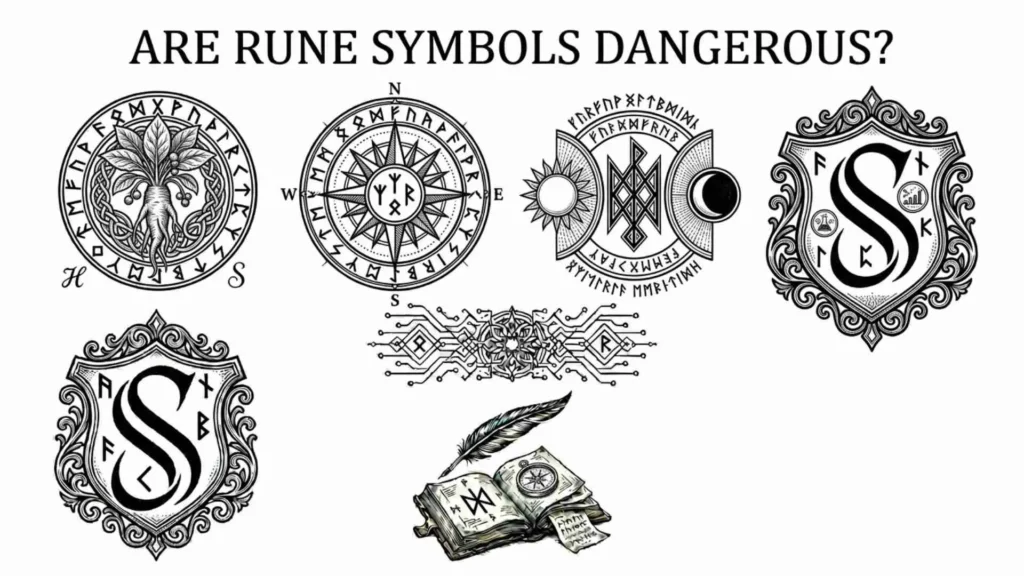
Many people ask whether rune symbols are dangerous or cursed.
Historically, runes were simply symbols and writing systems. While some cultures believed they held magical power, there is no scientific evidence that runes are dangerous.
However, because some extremist groups misused certain symbols in the 20th century, it is wise to understand the cultural background before using them publicly.
The Lasting Mystery of Rune Symbols
One reason rune symbols remain popular is their mystery. They combine:
- History
- Mythology
- Art
- Language
- Spirituality
This blend makes them fascinating to people from many different backgrounds.
Even after thousands of years, rune symbols continue to inspire curiosity and imagination around the world.
Frequently Asked Questions (FAQs)
What are rune symbols used for?
Rune symbols were used for writing, protection, memorials, magic, and spiritual practices. Today they are also used in tattoos, jewelry, and rune readings.
Are rune symbols connected to Vikings?
Yes, rune symbols were widely used by Norse and Viking cultures during the Viking Age.
How many rune symbols are in the Elder Futhark?
The Elder Futhark contains 24 rune symbols.
Can rune symbols predict the future?
Some people use runes for divination and guidance, but there is no scientific proof that they predict the future.
What is the most popular rune symbol?
Algiz is one of the most popular rune symbols because it represents protection and spiritual safety.
Conclusion
Rune symbols are much more than ancient letters carved into stone. They are powerful cultural symbols connected to history, mythology, spirituality, and human creativity. From Viking warriors and Norse legends to modern tattoos and spiritual practices, rune symbols continue to inspire people across the world.
Their meanings reflect timeless human experiences such as courage, love, growth, protection, and transformation. Whether you study them for historical knowledge, artistic inspiration, or personal reflection, rune symbols offer a fascinating glimpse into the beliefs and imagination of ancient cultures.
As interest in Norse mythology and ancient traditions grows, rune symbols remain a meaningful bridge between the past and the present.

Elliot Kensington
Elliot Kensington is a storyteller at heart, always fascinated by the hidden corners of human imagination. From a young age, he found comfort in books and the worlds they created, inspiring him to craft tales that blend emotion, suspense, and wonder. His writing journey began with short stories that captured fleeting moments of life, and over time, evolved into novels that explore both the extraordinary and the everyday. Elliot believes that every story holds a piece of the soul, and his mission is to connect readers to those moments that linger long after the last page. When he’s not writing, he enjoys exploring nature, capturing moments through photography, and seeking inspiration in the little things.
Books by Elliot Kensington:
-
Shadows of Tomorrow
-
The Whispering Path