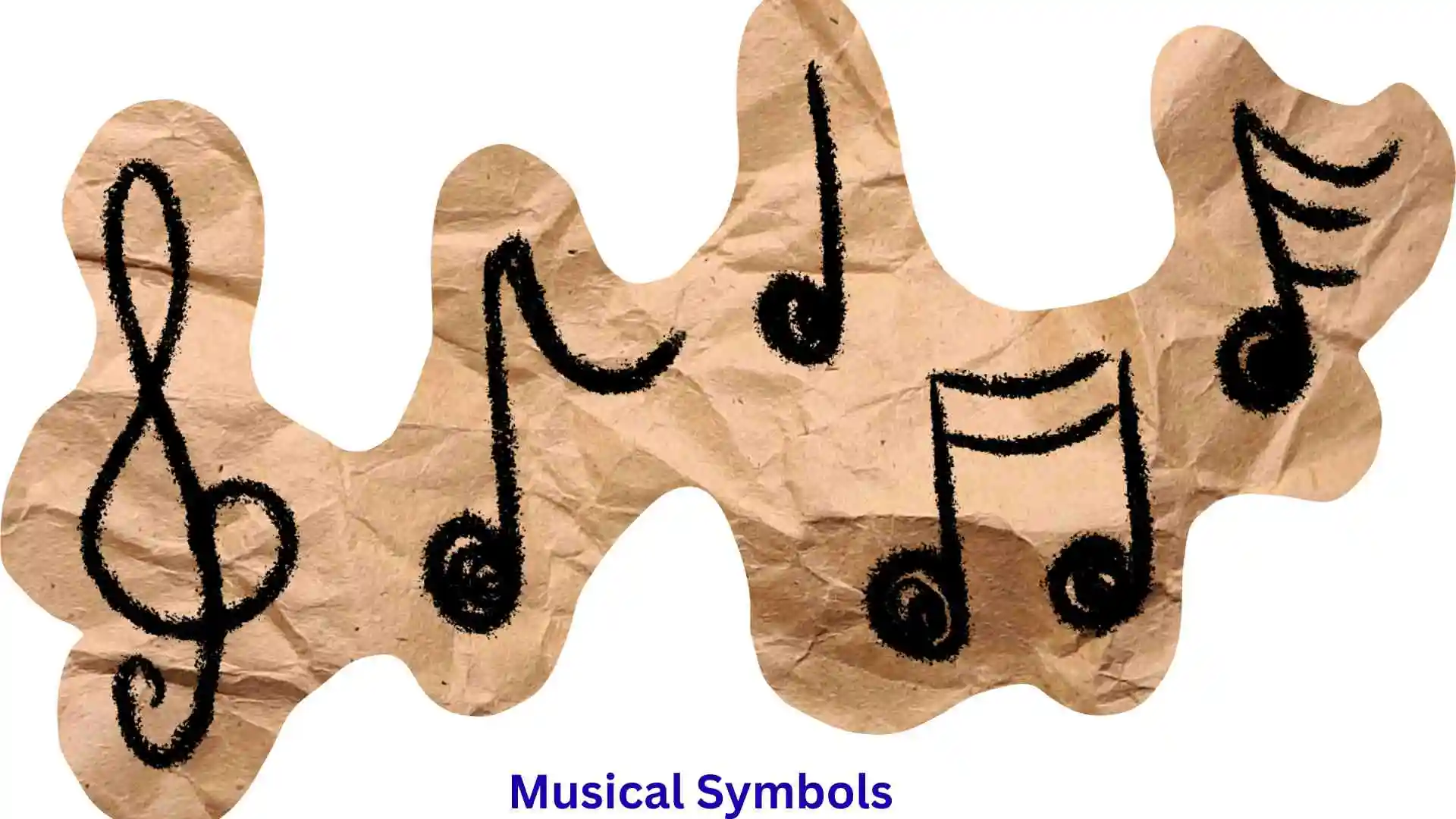
Musical symbols are special signs used in written music to show how sounds should be played, sung, or performed.
In short, musical symbols help musicians understand pitch, rhythm, tempo, and expression without using words. From simple notes to complex markings, these symbols form the universal language of music used by beginners and professionals around the world.
What Are Musical Symbols?
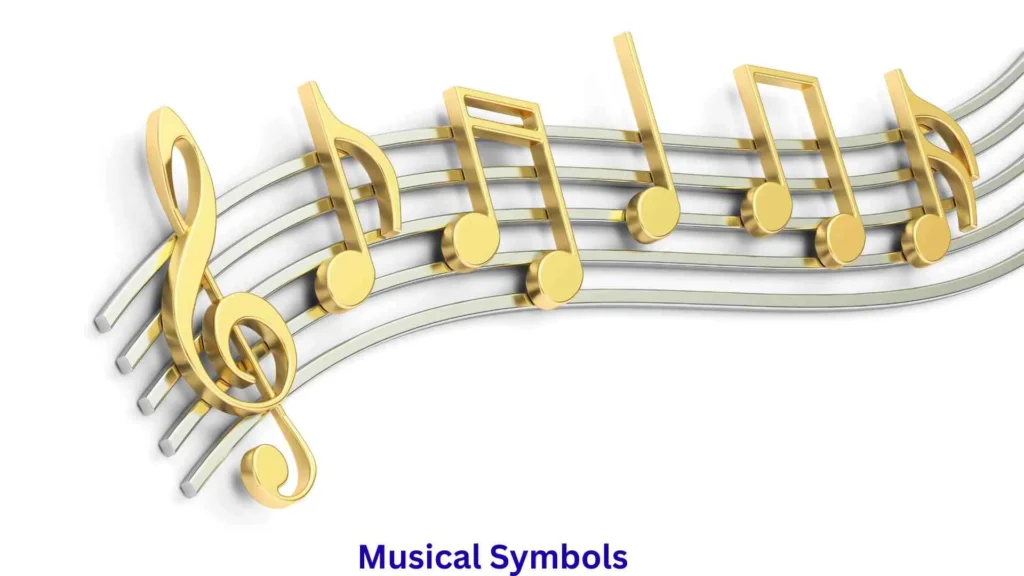
Musical symbols are visual marks used in musical notation to represent sounds, silence, timing, and musical expression. They help musicians read music just like readers understand letters in a language.
Without musical symbols:
- Music could not be written accurately
- Musicians would struggle to play together
- Complex compositions would be difficult to share
Musical symbols allow music to be recorded, shared, and performed across generations and cultures.
The History of Musical Symbols
Musical symbols have developed over centuries.
Early Beginnings of Musical Notation
Long ago, music was passed down orally, meaning people memorized songs. However, as music became more complex, people needed a way to record it.
Early forms included:
- Marks above text in religious songs
- Symbols indicating rising or falling pitch
- Simple lines showing melody direction
These early symbols were the foundation of modern musical notation.
Development in Medieval Europe
During the Middle Ages, monks began writing music using symbols called neumes. These symbols showed how melodies should move.
Over time:
- Staff lines were introduced
- Note shapes became standardized
- Rhythm symbols were created
This system evolved into the modern notation used today.
Modern Musical Symbols
Today’s musical symbols are used worldwide. They allow musicians from different countries to play the same piece of music without language barriers.
Modern musical notation includes:
- Notes
- Clefs
- Rests
- Time signatures
- Dynamic markings
Why Musical Symbols Are Important
Musical symbols are essential for creating and sharing music.
Key Reasons Musical Symbols Matter
- Help musicians read music
- Allow accurate performance
- Preserve musical compositions
- Enable group performances
- Support music education
Without musical symbols, orchestras, bands, and choirs would not function smoothly.
The Musical Staff
The musical staff is the foundation of written music.
What Is a Musical Staff?
A musical staff consists of five horizontal lines and four spaces where musical notes are placed.
Each line and space represents a different musical pitch.
Why the Staff Is Important
- Shows pitch levels
- Organizes notes
- Makes reading music easier
Without the staff, musical symbols would not have clear meaning.
Clefs: Symbols That Define Pitch
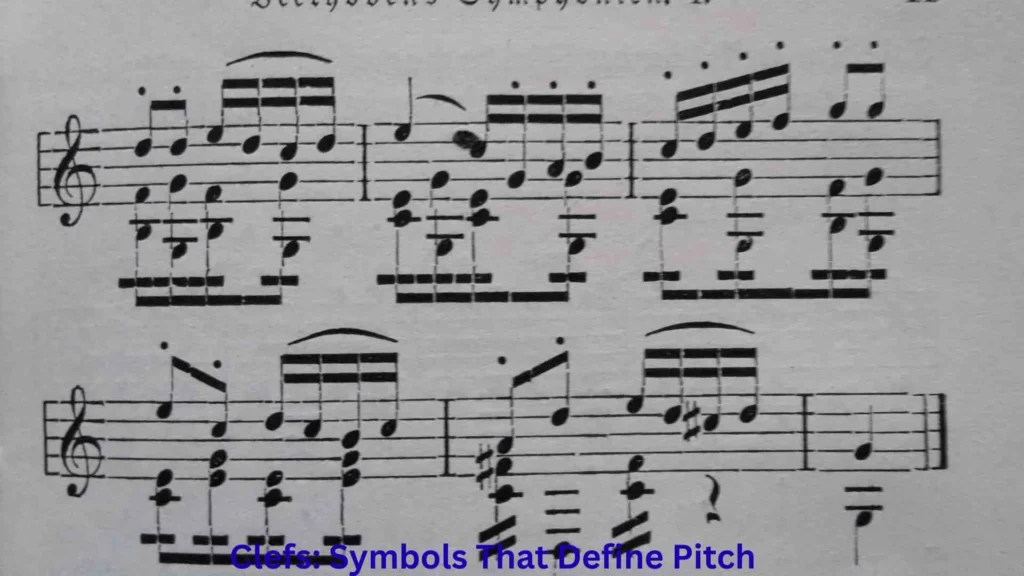
Clefs tell musicians which notes correspond to the lines and spaces on the staff.
Treble Clef
The treble clef is one of the most commonly used musical symbols.
Uses of Treble Clef
Used for:
- Piano (right hand)
- Violin
- Flute
- Guitar
Memory Tip
The treble clef circles around the G line, so it is also called the G clef.
Bass Clef
The bass clef is another important musical symbol.
Uses of Bass Clef
Used for:
- Piano (left hand)
- Cello
- Bass guitar
- Trombone
Memory Tip
The two dots of the bass clef surround the F line, so it is also called the F clef.
Musical Notes: The Core Symbols
Notes represent musical sounds.
Whole Note
A whole note is a basic musical symbol.
Characteristics
- Hollow circle
- No stem
- Lasts four beats in common time
Half Note
Half notes last half as long as whole notes.
Characteristics
- Hollow circle
- Stem attached
- Lasts two beats
Quarter Note
Quarter notes are commonly used in many songs.
Characteristics
- Filled circle
- Stem attached
- Lasts one beat
Eighth Note
Eighth notes are faster notes.
Characteristics
- Filled circle
- Stem with one flag
- Lasts half a beat
Sixteenth Note
Sixteenth notes are even faster.
Characteristics
- Filled circle
- Stem with two flags
- Lasts one-quarter beat
Musical Rests: Symbols of Silence
Music includes silence as well as sound.
Rests represent periods where no sound is played.
Whole Rest
Represents four beats of silence.
Half Rest
Represents two beats of silence.
Quarter Rest
Represents one beat of silence.
Eighth Rest
Represents half a beat of silence.
Time Signatures: Controlling Rhythm
Time signatures show how beats are grouped in music.
Example: 4/4 Time
This is the most common time signature.
Meaning:
- 4 beats per measure
- Quarter note gets one beat
Example: 3/4 Time
Used in waltz music.
Meaning:
- 3 beats per measure
- Quarter note gets one beat
Bar Lines and Measures
Bar lines divide music into sections called measures.
Purpose of Bar Lines
- Organize rhythm
- Help musicians stay in time
- Make reading music easier
Measures keep music structured and balanced.
Key Signatures: Indicating Musical Keys
Key signatures tell musicians which notes are sharp or flat throughout a piece.
Common Key Signature Symbols
- Sharp (#)
- Flat (♭)
- Natural (♮)
These symbols change pitch.
Sharps, Flats, and Naturals
These musical symbols modify notes.
Sharp Symbol (#)
Raises the pitch of a note slightly.
Example:
C becomes C sharp.
Flat Symbol (♭)
Lowers the pitch of a note slightly.
Example:
B becomes B flat.
Natural Symbol (♮)
Cancels sharp or flat changes.
Returns the note to its original pitch.
Dynamic Symbols: Showing Loudness and Softness
Dynamic symbols tell musicians how loudly or softly to play.
Common Dynamic Symbols
- p (piano) – Soft
- f (forte) – Loud
- pp – Very soft
- ff – Very loud
These symbols add emotion to music.
Crescendo and Decrescendo
These symbols show gradual changes in volume.
- Crescendo (<) – Gradually louder
- Decrescendo (>) – Gradually softer
They help shape musical expression.
Tempo Symbols: Controlling Speed
Tempo symbols indicate how fast music should be played.
Common Tempo Terms
- Largo – Very slow
- Andante – Walking speed
- Allegro – Fast
- Presto – Very fast
Tempo affects mood and energy.
Articulation Symbols: Shaping Sound
Articulation symbols show how notes should be played.
Common Articulation Symbols
- Staccato – Short and detached
- Legato – Smooth and connected
- Accent – Emphasized note
These symbols influence musical style.
Repeat Symbols: Saving Time in Music
Repeat symbols allow sections to be played again without rewriting.
Example
Two dots next to a bar line indicate repetition.
This saves space in written music.
Musical Symbols in Modern Technology
Musical symbols are widely used in digital systems.
In Music Software
Programs use musical symbols to:
- Compose songs
- Edit sheet music
- Create soundtracks
These tools simplify music production.
In Music Education Apps
Learning apps use musical symbols to teach beginners.
Examples include:
- Virtual piano lessons
- Rhythm training games
- Singing practice tools
Technology makes learning easier and more engaging.
Practical Applications of Musical Symbols
Musical symbols have many real-world uses.
In Schools and Education
Students learn musical symbols to:
- Read sheet music
- Play instruments
- Understand rhythm
Music education improves creativity and memory.
In Orchestras and Bands
Musicians rely on musical symbols to perform together.
Without symbols:
- Coordination would be difficult
- Timing would be inaccurate
- Performances would suffer
In Film and Entertainment
Movie soundtracks depend on musical notation.
Composers use musical symbols to write dramatic scores that match scenes.
In Religious and Cultural Ceremonies
Music plays an important role in ceremonies.
Symbols help maintain traditional songs and chants.
Impact and Benefits of Musical Symbols for Society
Musical symbols provide many advantages.
Preserving Musical Heritage
Symbols help preserve traditional music.
Ancient compositions remain available because they were written using notation.
Encouraging Creativity
Musical notation allows composers to create new works.
It supports artistic expression across cultures.
Supporting Education and Brain Development
Learning musical symbols improves:
- Memory
- Concentration
- Problem-solving skills
Music education strengthens cognitive abilities.
Promoting Cultural Exchange
Musical symbols create a universal language.
Musicians worldwide can understand the same notation.
This promotes global collaboration.
Interesting Facts About Musical Symbols
Here are some fascinating facts:
- Musical notation is over 1,000 years old.
- Some composers wrote music by hand using ink and feathers.
- Musical symbols are used in nearly every country.
- Famous classical compositions survive because of written notation.
Legends and Historical Stories About Musical Symbols
Music history includes many interesting stories.
The Story of Early Choirs
In medieval times, monks developed musical notation to ensure religious songs were sung correctly.
Without symbols:
- Songs changed over time
- Melodies were forgotten
Musical symbols preserved sacred music.
The Rise of Famous Composers
Great composers relied on musical symbols to share their creations.
Their written works allowed orchestras to perform music centuries later.
This shows the power of written notation.
Musical Symbols in Everyday Life
Even non-musicians encounter musical symbols.
Examples include:
- Music textbooks
- Karaoke screens
- Sheet music books
- Digital music apps
Musical notation influences daily entertainment.
How Beginners Can Learn Musical Symbols
Learning musical symbols becomes easier with practice.
Beginner Tips
- Start with simple notes
- Practice reading daily
- Use flashcards
- Play basic rhythms
Gradual learning builds confidence.
Practice Exercise Example
Try counting beats:
- Whole note = 4 beats
- Half note = 2 beats
- Quarter note = 1 beat
Clap rhythms to understand timing.
Common Mistakes When Learning Musical Symbols
Beginners sometimes face challenges.
Typical Errors
- Confusing note values
- Ignoring rests
- Misreading clefs
- Playing incorrect rhythm
Regular practice helps avoid mistakes.
Frequently Asked Questions (FAQs)
1. What are musical symbols?
Musical symbols are visual signs used in written music to represent pitch, rhythm, tempo, and expression.
2. Why are musical symbols important?
They allow musicians to read, write, and perform music accurately and consistently.
3. What is the most common musical symbol?
Musical notes, such as quarter notes, are among the most commonly used symbols.
4. Are musical symbols the same worldwide?
Yes, modern musical notation is mostly universal, allowing musicians from different countries to understand the same music.
5. How can beginners learn musical symbols easily?
Beginners can learn through daily practice, visual aids, music lessons, and interactive apps.
Conclusion
Musical symbols are the foundation of written music and play a vital role in preserving, teaching, and performing musical works.
From simple notes and rests to complex dynamic and tempo markings, these symbols allow musicians to express emotion, structure rhythm, and communicate musical ideas across generations.
Their universal nature makes music accessible to people worldwide, encouraging creativity, education, and cultural exchange. By understanding musical symbols, learners unlock the ability to read music, perform confidently, and appreciate the rich language of sound that connects people across time and cultures.

Isaac Wellington
I’ve always been fascinated by the hidden stories in everyday life and the power of words to change how we see the world. Writing, for me, isn’t just a profession—it’s a way to explore human emotions, mysteries, and the unexpected twists of life. Over the years, I’ve dedicated myself to creating stories that linger in your mind long after the last page. When I’m not writing, you’ll usually find me wandering through old libraries or sketching ideas in a notebook. I believe every story has a heartbeat, and I aim to capture that rhythm in my work. Join me on a journey where imagination meets reality, and the ordinary becomes extraordinary.
Books:
-
Shadows of the Forgotten
-
Whispers Through Time