
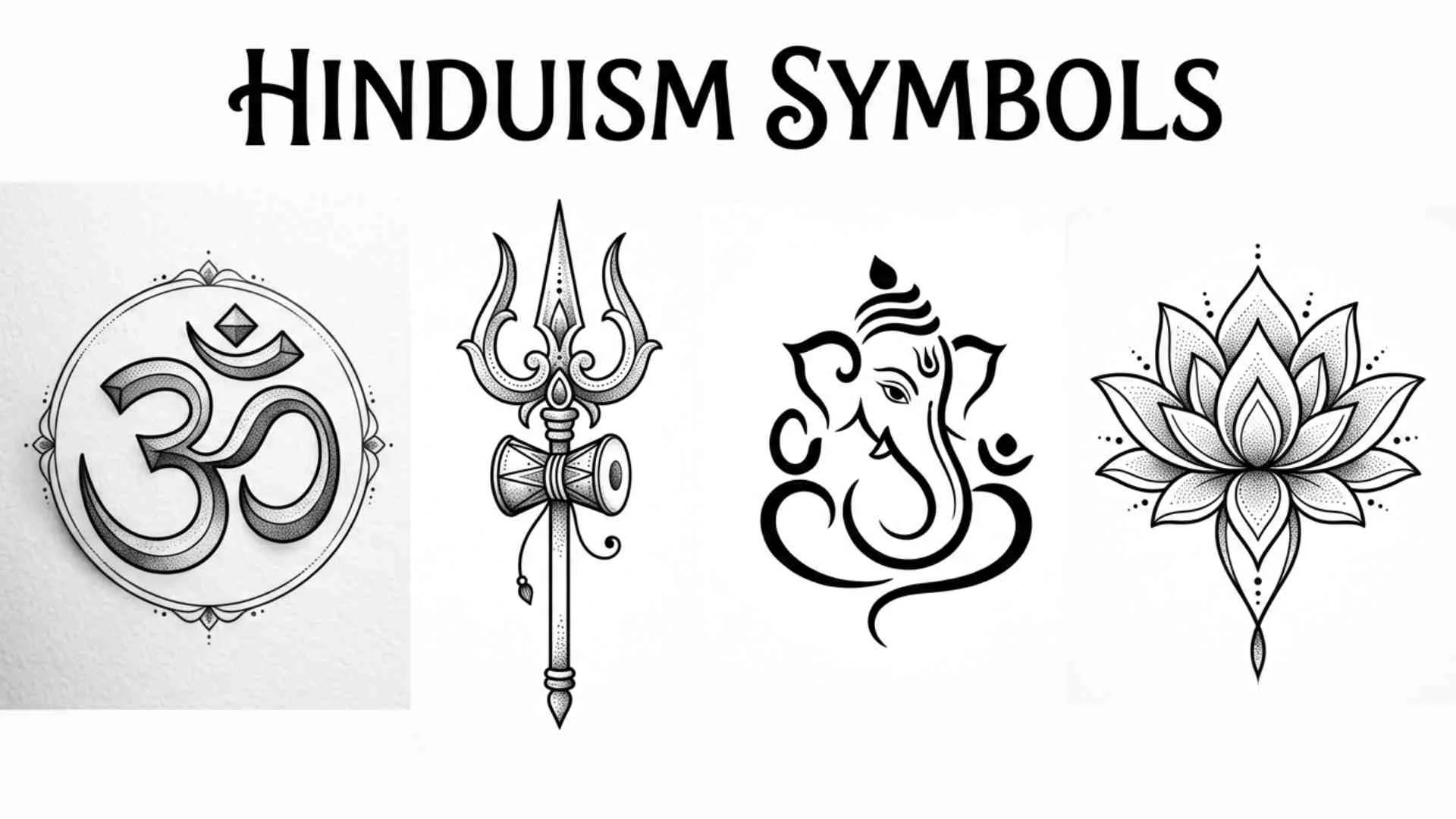
Hinduism symbols are sacred signs and images used in Hindu traditions to represent spiritual ideas, gods, cosmic forces, and moral values. In short, Hinduism symbols help believers express faith, understand complex teachings, and connect with divine energy in daily life. From the sacred Om to the lotus flower, these symbols carry deep spiritual meaning and have been used for thousands of years.
What Are Hinduism Symbols?
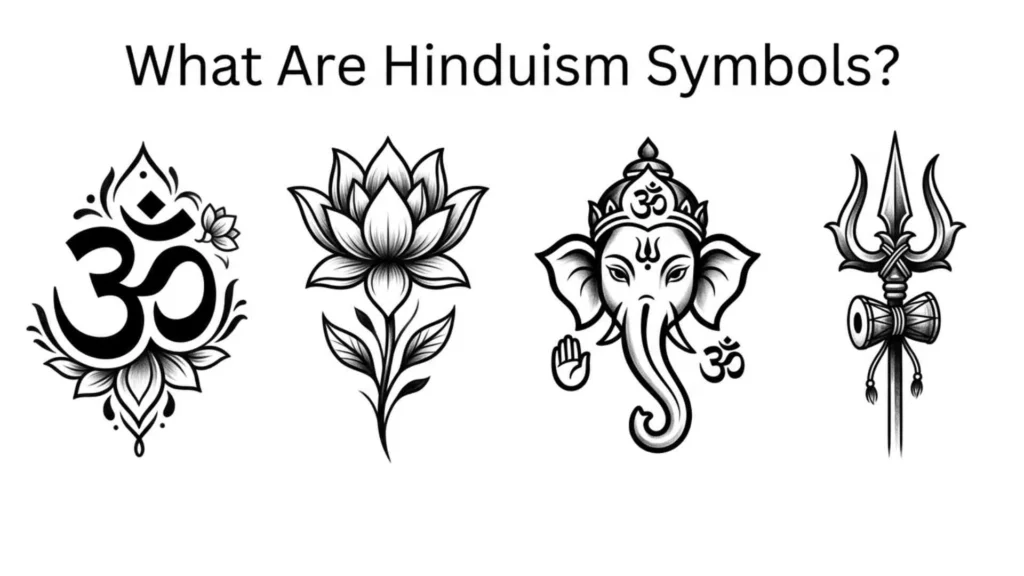
Hinduism symbols are visual signs that represent religious beliefs, philosophical ideas, and divine powers within Hindu traditions. These symbols are not just decorative—they carry spiritual messages and are used in rituals, temples, and everyday practices.
You can find Hinduism symbols in:
- Temples and shrines
- Sacred texts
- Homes and doorways
- Jewelry and clothing
- Religious ceremonies
- Festivals
Each symbol has its own meaning and purpose, often linked to mythology, nature, or cosmic principles.
The Historical Origins of Hinduism Symbols
Hinduism is one of the world’s oldest religions, dating back more than 4,000 years. Its symbols developed gradually through centuries of spiritual and cultural growth.
Early Roots in the Indus Valley Civilization
Some Hindu symbols have roots in the ancient Indus Valley Civilization, one of the earliest urban societies.
Archaeologists have discovered:
- Seal carvings with sacred shapes
- Animal figures with symbolic meanings
- Early representations of spiritual figures
These findings suggest that symbolism played an important role even in early societies.
Development Through Sacred Texts
Many Hindu symbols became widely recognized through ancient texts such as:
- The Vedas
- The Upanishads
- The Bhagavad Gita
- The Puranas
These texts describe spiritual concepts that later became represented through visual symbols.
Why Hinduism Symbols Are Important
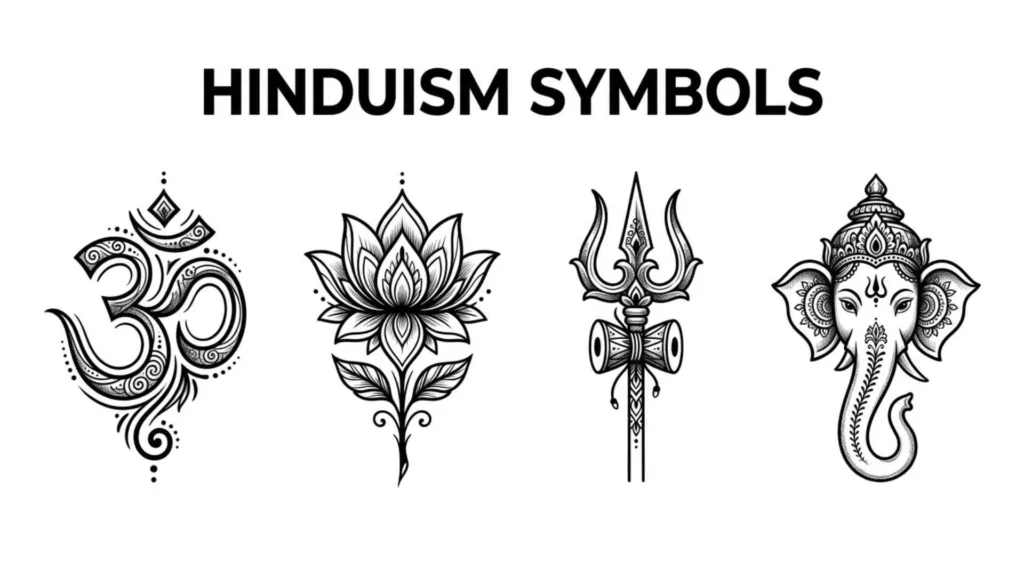
Hinduism symbols serve as tools for understanding spiritual teachings.
Key Reasons They Matter
- Represent spiritual ideas
- Support meditation and prayer
- Preserve cultural traditions
- Teach moral values
- Inspire devotion and faith
These symbols help people visualize concepts that are otherwise abstract.
The Most Important Hinduism Symbols and Their Meanings
Hinduism contains many powerful and meaningful symbols. Below are some of the most widely recognized ones.
Om (Aum) Symbol
The Om symbol is one of the most sacred Hinduism symbols.
Meaning of Om
- Represents the sound of the universe
- Symbolizes creation, preservation, and destruction
- Reflects ultimate reality
Om is believed to be the first sound of creation.
Practical Uses of Om
- Chanted during meditation
- Written in temples
- Used in yoga practices
- Printed on religious books
Om helps calm the mind and focus attention.
Swastika Symbol
The Swastika is an ancient Hindu symbol with positive meaning.
Meaning of Swastika
- Good luck
- Prosperity
- Auspicious beginnings
It is important to note that the Hindu swastika is very different from the symbol misused in modern history.
Practical Uses
- Drawn at entrances during festivals
- Used in wedding ceremonies
- Decorated on religious items
It symbolizes blessing and harmony.
Lotus Flower Symbol
The lotus flower is widely used in Hindu symbolism.
Meaning of Lotus
- Purity
- Spiritual awakening
- Growth from darkness to light
Cultural Importance
The lotus grows in muddy water but blooms beautifully, symbolizing spiritual progress despite challenges.
Trishul (Trident)
The Trishul is associated with the god Shiva.
Meaning of Trishul
- Creation
- Preservation
- Destruction
These three functions represent the cycle of existence.
Uses
- Seen in temples dedicated to Shiva
- Carried in religious processions
- Used in artwork and statues
Tilak Symbol
The tilak is a mark placed on the forehead.
Meaning of Tilak
- Spiritual awareness
- Blessing
- Devotion
Different colors and shapes indicate different traditions.
Practical Uses
- Applied during prayers
- Used in festivals
- Worn during religious ceremonies
Kalash Symbol
The Kalash is a sacred pot filled with water.
Meaning of Kalash
- Abundance
- Fertility
- Prosperity
Uses
- Placed in ceremonies
- Used during weddings
- Featured in temple rituals
Conch Shell (Shankha)
The conch shell is another sacred symbol.
Meaning of Shankha
- Divine sound
- Victory of good over evil
- Spiritual awakening
Practical Uses
- Blown during rituals
- Used in temple ceremonies
- Held by deities in statues
Chakra Symbol
The Chakra represents energy centers in the body.
Meaning
- Movement
- Power
- Balance
Uses
- Meditation
- Yoga practices
- Spiritual healing
Banyan Tree Symbol
The banyan tree symbolizes long life.
Meaning
- Immortality
- Strength
- Shelter
Many Hindu temples are built near banyan trees.
Cow Symbol
The cow is considered sacred in Hindu culture.
Meaning
- Motherhood
- Nourishment
- Compassion
Cows are respected and protected in many communities.
Hinduism Symbols in Temples
Temples are full of symbolic imagery.
Common Temple Symbols
- Om symbols on walls
- Lotus carvings
- Trishul decorations
These symbols guide worshippers and enhance spiritual focus.
Hinduism Symbols in Daily Life
Many Hindu families use symbols in everyday activities.
Symbols at Home Entrances
Symbols like Swastika or Om are drawn at entrances to invite positivity.
Symbols in Festivals
During festivals:
- Rangoli designs include symbolic shapes
- Kalash pots are placed for blessings
- Tilak marks are applied to guests
These practices strengthen cultural identity.
Hinduism Symbols in Art and Decoration
Symbols are often included in:
- Paintings
- Sculptures
- Jewelry
They make art meaningful and spiritual.
Practical Applications of Hinduism Symbols
Hinduism symbols are not just religious—they have practical roles.
Meditation and Yoga Practices
Symbols help practitioners concentrate.
Example:
Meditating on Om sound improves mental clarity.
Educational Use
Teachers use symbols to explain religious ideas.
Students learn:
- Moral values
- Cultural traditions
- Spiritual concepts
Community and Social Events
Symbols unite people during:
- Weddings
- Festivals
- Religious gatherings
They create shared identity.
Impact of Hinduism Symbols on Society
Hinduism symbols influence culture and social behavior.
Promoting Unity
Shared symbols strengthen community bonds.
People feel connected through common traditions.
Preserving Cultural Heritage
Symbols preserve ancient knowledge and beliefs.
Without them:
- Traditions might disappear
- Cultural identity might weaken
Supporting Moral Values
Many symbols teach ethical lessons such as:
- Truth
- Compassion
- Discipline
These values support peaceful societies.
Benefits of Hinduism Symbols in Modern Life
Even today, these symbols remain relevant.
Encouraging Mindfulness
Meditating on symbols promotes calmness and awareness.
Inspiring Art and Creativity
Designers use Hindu symbols in:
- Fashion
- Architecture
- Crafts
These designs combine tradition with creativity.
Enhancing Spiritual Awareness
Symbols remind individuals of spiritual goals and responsibilities.
Legends and Stories Behind Hinduism Symbols
Many symbols are connected to fascinating stories.
Story of the Lotus and Creation
According to mythology, the universe began with a lotus emerging from cosmic waters.
This made the lotus a symbol of creation and purity.
Story of the Conch Shell in Battle
In epic stories, warriors blew conch shells to announce victory and courage.
This linked the conch shell to bravery and divine strength.
Interesting Facts About Hinduism Symbols
Here are some surprising facts:
- The Om symbol is considered sacred across multiple religions.
- Some symbols date back thousands of years.
- Many Hindu symbols represent natural elements.
- Symbols are often used during life events such as birth and marriage.
Hinduism Symbols in Modern Popular Culture
Today, Hindu symbols appear in:
- Movies
- Books
- Yoga studios
- Jewelry brands
They continue to influence global culture.
Respectful Use of Hinduism Symbols
It is important to respect these symbols.
Guidelines
- Use symbols appropriately
- Avoid misuse or disrespect
- Learn their meanings before displaying them
Respect promotes cultural harmony.
Frequently Asked Questions (FAQs)
1. What are Hinduism symbols?
Hinduism symbols are sacred images that represent spiritual beliefs, gods, and moral teachings within Hindu traditions.
2. What is the most important Hindu symbol?
The Om symbol is widely considered the most sacred symbol in Hinduism.
3. Why is the lotus flower important in Hinduism?
It symbolizes purity, spiritual growth, and rising above difficulties.
4. Are Hinduism symbols used in daily life?
Yes, they are used in homes, temples, festivals, and ceremonies.
5. Can non-Hindus use Hindu symbols?
Yes, but it is important to understand and respect their meanings.
Conclusion
Hinduism symbols are powerful tools that connect people with spiritual ideas, cultural traditions, and moral values. From the sacred Om to the symbolic lotus flower, each symbol carries deep meaning and purpose. These symbols have shaped religious practices, inspired art, guided meditation, and strengthened community identity for thousands of years. Even in modern times, Hinduism symbols continue to influence education, culture, and personal spirituality. Understanding these symbols not only deepens knowledge of Hindu traditions but also fosters respect for one of the world’s oldest and most meaningful belief systems.

Isaac Wellington
I’ve always been fascinated by the hidden stories in everyday life and the power of words to change how we see the world. Writing, for me, isn’t just a profession—it’s a way to explore human emotions, mysteries, and the unexpected twists of life. Over the years, I’ve dedicated myself to creating stories that linger in your mind long after the last page. When I’m not writing, you’ll usually find me wandering through old libraries or sketching ideas in a notebook. I believe every story has a heartbeat, and I aim to capture that rhythm in my work. Join me on a journey where imagination meets reality, and the ordinary becomes extraordinary.
Books:
-
Shadows of the Forgotten
-
Whispers Through Time