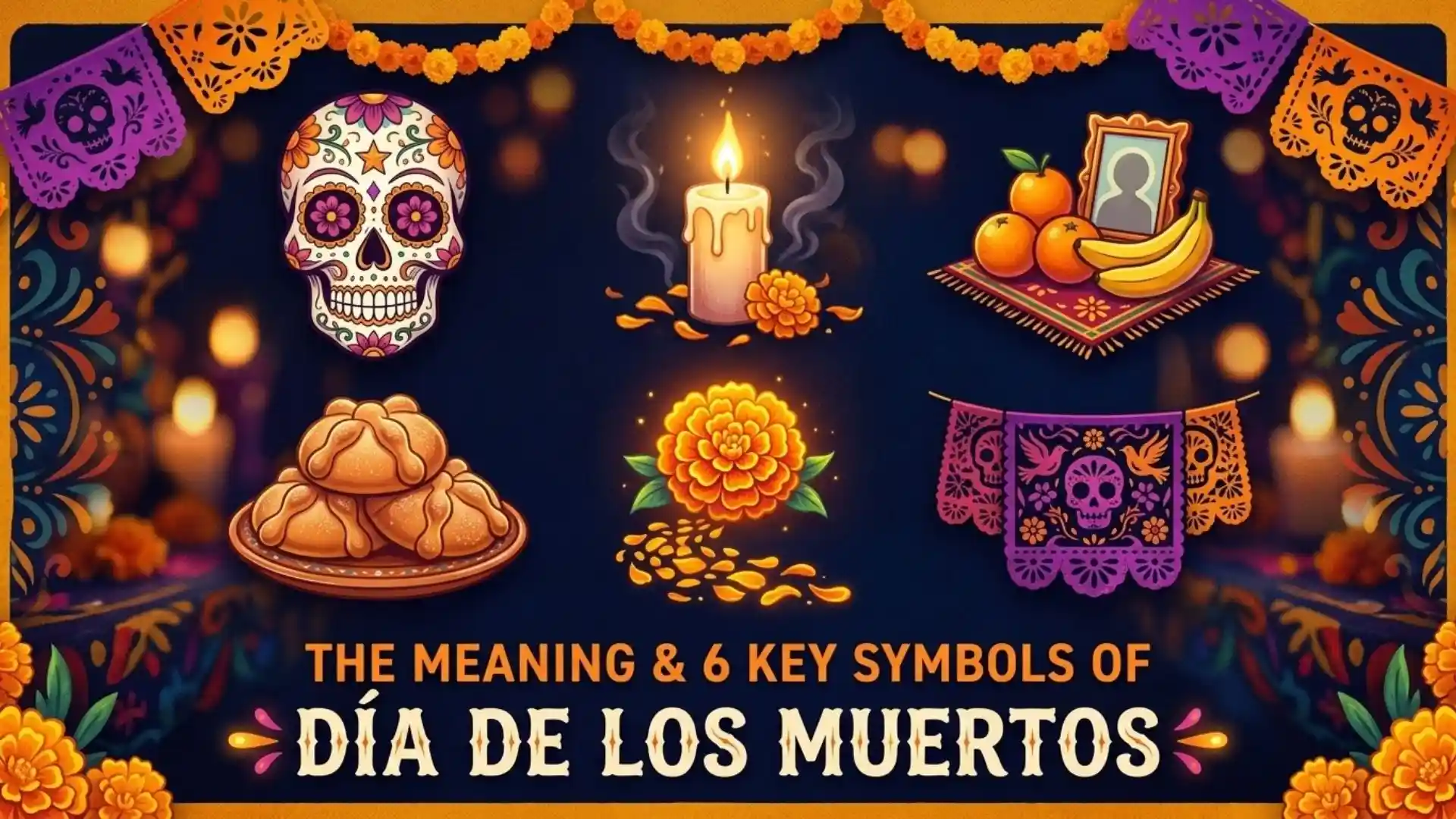
The Day of the Dead, known in Spanish as Día de los Muertos, is a Mexican cultural tradition that honors deceased loved ones through family gatherings, colorful decorations, traditional foods, and meaningful offerings. Every year, families prepare altars filled with photographs, candles, marigold flowers, and favorite dishes to remember the people who shaped their lives.
At first glance, the holiday may look like a festival of colorful skulls and orange flowers. However, every object can carry a deeper meaning. A sugar skull recalls the reality of death, a candle offers light, and a photograph brings a familiar face into the present. Together, these objects express love, remembrance, and cultural identity.
The meaning of Day of the Dead symbols becomes clearer when you understand how families use them. These traditions have Indigenous roots and have developed through centuries of cultural exchange, including the influence of Catholic observances. Today, communities celebrate Día de los Muertos in different ways across Mexico and beyond.
This guide explores the most important Day of the Dead symbols and their meanings, the holiday’s history, its dates, traditional foods, and the customs that make this celebration so meaningful.
What Is the Day of the Dead?
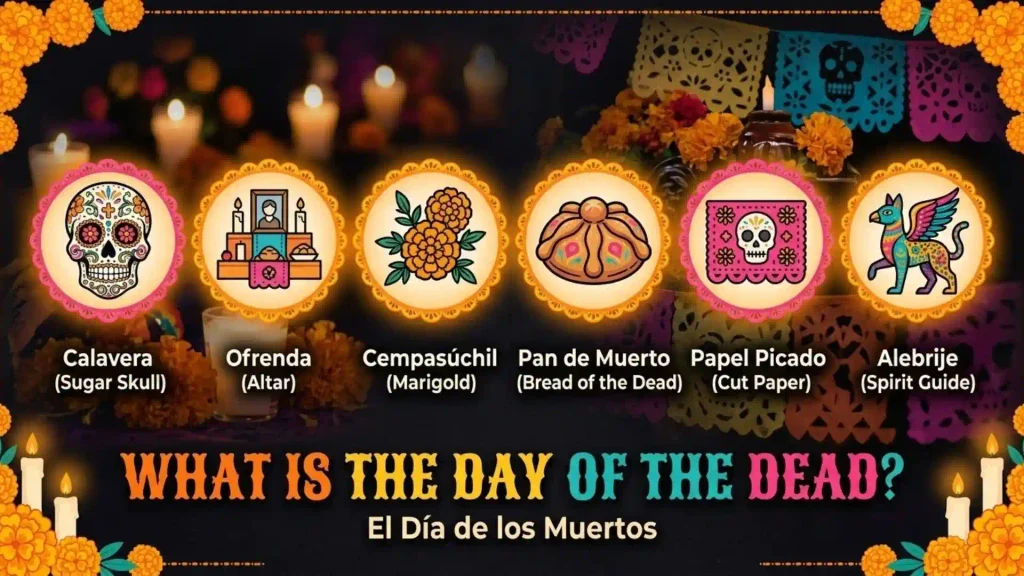
The Day of the Dead is an annual tradition that honors people who have died. Families remember deceased relatives and friends through offerings, prayers, cemetery visits, food, music, and storytelling.
Although Mexico is most closely associated with the holiday, Mexican and Mexican American communities also celebrate it throughout the United States. Other communities in Latin America observe related traditions, although their customs and beliefs may differ.
Día de los Muertos Meaning
The Spanish phrase Día de los Muertos translates directly to “Day of the Dead.” The holiday focuses on remembering deceased loved ones and maintaining family connections across generations.
In many communities, people believe that the spirits of the dead return temporarily to visit their families during the celebration. Families prepare welcoming spaces with favorite foods, photographs, candles, and flowers. These offerings express hospitality and affection toward those they remember.
However, not everyone interprets the tradition in precisely the same way. Some families emphasize spiritual beliefs, while others participate mainly to honor their heritage and preserve family memories.
The central idea remains simple: death does not erase the memories, relationships, and influence that people leave behind.
Why Is the Day of the Dead Celebrated?
Families celebrate Día de los Muertos to remember the dead, honor their ancestors, and share stories about loved ones who have passed away.
The holiday also helps younger generations learn about their family history. A child might discover a great-grandparent’s favorite song, see an old family photograph, or hear a story about someone they never met.
Common purposes include:
- Honoring deceased family members and friends.
- Preserving family stories and ancestral traditions.
- Expressing love and respect for people who have died.
- Maintaining cultural identity and community connections.
- Reflecting on life, death, grief, and the importance of memory.
Unlike occasions focused entirely on mourning, Día de los Muertos often combines sadness with warmth, humor, and celebration. Families can miss someone deeply while also smiling at the memories they shared.
What Does the Day of the Dead Represent?
The holiday brings several themes together, including remembrance, family, mortality, cultural heritage, and the connection between generations.
Its symbols communicate these ideas in visible ways. Flowers welcome, candles illuminate, food expresses hospitality, and photographs identify the people being honored.
The holiday does not require people to forget their grief. Instead, it gives families a meaningful way to acknowledge loss while celebrating the lives of those they remember.
When Is the Day of the Dead Celebrated?
The best-known Day of the Dead dates are November 1 and November 2. However, preparations and related observances can begin earlier, depending on local customs and family traditions.
| Date | Common association | Typical activities |
| October 31 | Preparation and related observances in some communities | Finishing altars, arranging flowers, and preparing food |
| November 1 | Often associated with deceased children | Placing toys, sweets, photographs, and other offerings |
| November 2 | Commonly associated with remembering deceased adults and the dead more broadly | Cemetery visits, prayers, family gatherings, and altar offerings |
These associations are common rather than universal. Some communities observe additional days or follow different local calendars.
What Is Día de los Angelitos?
Día de los Angelitos, meaning “Day of the Little Angels,” is a term used in some traditions for remembering deceased children.
Families may place toys, sweets, small photographs, and foods associated with the child on an ofrenda. These objects recognize the child’s personality and the place they hold within the family.
The observance reflects the same desire to remember and honor loved ones that runs through the broader holiday. Its exact timing and customs vary by community.
What Is Día de los Difuntos?
Día de los Difuntos is a Spanish expression referring to the Day of the Deceased or the observance of the dead. Its use varies across Spanish-speaking communities and religious contexts.
The term is associated with remembrance practices and may be used in connection with All Souls’ Day. It should not be treated as a universally standardized name exclusively for the adult portion of Día de los Muertos.
Why Does the Day of the Dead Last More Than One Day?
The holiday’s observances reflect a combination of local traditions, Indigenous practices, and Catholic calendar dates.
All Saints’ Day falls on November 1, while All Souls’ Day falls on November 2. These Catholic observances influenced the timing of many modern Day of the Dead traditions.
Families also need time to prepare food, arrange photographs, decorate graves, and build their ofrendas. In some places, celebrations extend across several days or include public events before and after November 1 and 2.
For many households, the preparation matters almost as much as the celebration itself.
History and Origins of the Day of the Dead
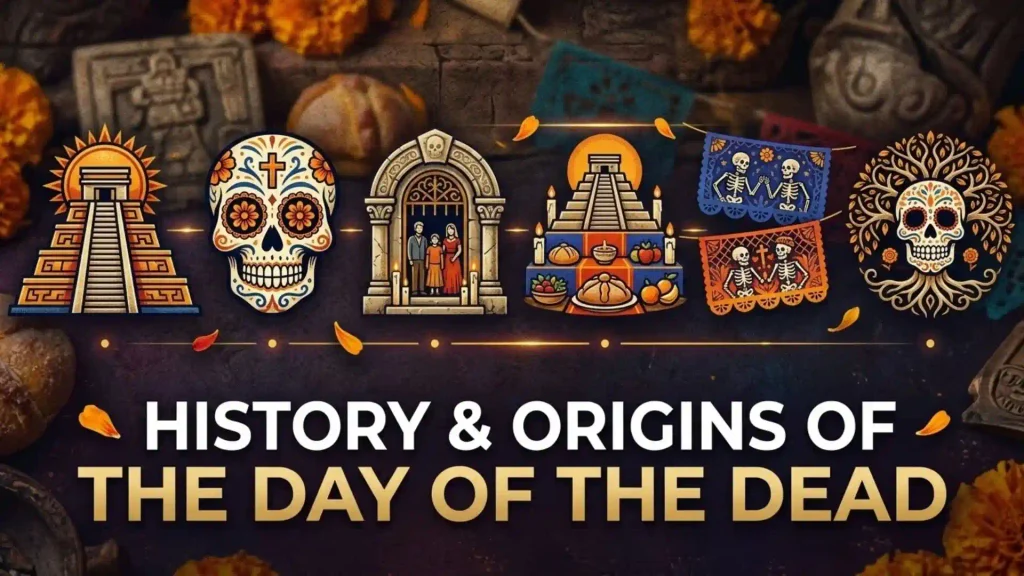
The history of Día de los Muertos is not a story of one ancient festival remaining unchanged. The modern celebration developed through centuries of cultural exchange, regional traditions, and changing religious practices.
Indigenous Roots of Día de los Muertos
Indigenous civilizations throughout Mesoamerica developed distinct beliefs and practices concerning death, ancestors, and the afterlife. These included the Mexica, commonly called the Aztecs, as well as Maya, Mixtec, and Zapotec communities.
Some Indigenous societies held ceremonies to remember the dead at particular times of the year. Their religious calendars and understandings of death differed from modern Western views.
The annual agricultural cycle also mattered in many communities. UNESCO’s description of Indigenous festivities dedicated to the dead connects the observances with the end of the maize-growing cycle in Mexico.
These traditions provide important historical context. However, the modern Día de los Muertos should not be described as an unchanged Aztec holiday. Indigenous cultures were diverse, and their practices evolved over time.
Spanish Conquest and Catholic Traditions
Spanish colonization beginning in the 16th century brought Catholic religious practices to the Americas. Over time, Indigenous traditions interacted with Catholic observances, including All Saints’ Day and All Souls’ Day.
This cultural exchange helped shape the timing and character of modern Día de los Muertos. Different communities combined local beliefs, family customs, religious practices, and regional artistic traditions in their own ways.
The result was not one identical ritual practiced everywhere. Instead, the celebration developed into a diverse collection of customs linked by remembrance and respect for the dead.
How the Modern Day of the Dead Developed
During the following centuries, family altars, cemetery visits, flowers, food offerings, and skull imagery became recognizable features of the holiday.
Mexican artists also helped shape its visual identity. Printmaker José Guadalupe Posada created influential satirical images of skeletons, including the figure associated with La Catrina. Later, artists such as Diego Rivera helped bring skeletal imagery into wider public view.
These artistic traditions helped establish the skulls and skeletons now associated with Día de los Muertos. Their meaning extends beyond frightening imagery. They can comment on mortality, social class, humor, and the shared fate of human beings.
UNESCO Recognition and Cultural Heritage
UNESCO recognized Mexico’s Indigenous festivity dedicated to the dead as intangible cultural heritage in 2008, following its earlier proclamation in 2003.
This recognition highlights the tradition’s cultural importance and its role in preserving community identity. It also recognizes the knowledge, rituals, craftsmanship, and family practices passed from one generation to another.
Read the UNESCO overview of Indigenous festivities dedicated to the dead for additional historical context.
Day of the Dead Symbols and Their Meanings
The most recognizable Day of the Dead symbols appear on family altars, in cemeteries, and throughout public celebrations. Each object can carry several meanings, and interpretations often depend on the family or community using it.
Ofrenda: The Day of the Dead Altar
An ofrenda is an offering prepared to honor deceased loved ones. It is one of the central features of Día de los Muertos.
Families arrange photographs, candles, flowers, food, drinks, and personal belongings on a table or specially prepared structure. The objects reflect the lives and personalities of the people being remembered.
An ofrenda might contain a grandfather’s favorite coffee, a grandmother’s cooking utensils, or a child’s treasured toy. These details make the altar personal rather than simply decorative.
In traditions that welcome returning spirits, the ofrenda provides a place for the deceased to visit their families symbolically or spiritually. For other participants, it serves as a meaningful family memorial.
Main meaning: Remembrance, hospitality, family connection, and honoring the deceased.
Sugar Skulls: Calaveras de Azúcar
Sugar skulls, called calaveras de azúcar, are among the most recognizable Day of the Dead decorations. Artisans commonly make them from sugar-based mixtures and decorate them with colorful icing, patterns, and other embellishments.
Their skull shape acknowledges mortality. Their bright colors and decorative details add a celebratory dimension to that message.
Some sugar skulls bear the name of a deceased person, while others serve as general decorations or gifts. Their precise use depends on local customs and the individual family.
Sugar skulls should not be confused with ordinary Halloween skull decorations. Within Día de los Muertos, they belong to a cultural tradition centered on remembrance.
Main meaning: Mortality, remembrance, and the celebration of life.
Calaveras: Skulls and Skeletons
The Spanish word calavera means “skull.” In Mexican cultural contexts, the term can also refer to skull imagery, artistic representations, and certain literary traditions associated with the holiday.
Skulls appear in paintings, sculptures, paper decorations, sweets, and costumes. They remind people that death is part of human existence, regardless of wealth, occupation, or social status.
Skeletons sometimes appear dancing, playing instruments, or performing everyday activities. Such scenes use humor to explore mortality rather than treating death only as something frightening.
Skull imagery can therefore express a complicated mixture of sadness, affection, satire, and celebration.
Main meaning: Mortality, equality in death, humor, and remembrance.
Marigolds: Cempasúchil Flowers
The cempasúchil, commonly known as the Mexican marigold, is one of the most important flowers associated with Día de los Muertos.
Its bright orange and yellow blooms stand out against photographs, dark cemetery stones, and colorful altar decorations. Families use the flowers to decorate ofrendas and graves, and some scatter petals along pathways.
According to a traditional belief found in many accounts of the holiday, the flowers’ vivid color and distinctive scent help guide deceased loved ones toward their offerings.
Marigolds also connect the celebration with the natural world. Their seasonal appearance, fragrance, and warm colors make them especially suited to a holiday that brings memory and the changing seasons together.
Main meaning: Remembrance, welcome, and the symbolic guidance of returning spirits.
Candles and Their Meaning
Candles provide light on Day of the Dead altars and at cemetery gatherings. Families may arrange them around photographs, flowers, religious images, and food offerings.
In many traditions, candlelight helps guide spirits toward the ofrenda. It can also suggest hope, prayer, spiritual presence, and the continuing bond between living relatives and the deceased.
Some altars arrange candles in patterns associated with the cardinal directions. Other families use simpler arrangements based on space, safety, and personal preference.
There is no single mandatory candle arrangement for every celebration.
Main meaning: Light, guidance, prayer, and remembrance.
Photographs of Deceased Loved Ones
Photographs make the people being honored visible within the ofrenda. They identify the family members or friends whose memories the household wants to preserve.
A photograph can also encourage storytelling. Relatives may explain who appears in the picture, describe an important event, or share a funny memory about the person.
Families sometimes display several generations together. This creates a visual record of relationships that might otherwise fade from younger relatives’ memories.
Main meaning: Personal remembrance, family history, and the preservation of identity.
Papel Picado: Decorative Cut Paper
Papel picado is decorative paper cut into intricate patterns. Artisans create designs featuring flowers, geometric shapes, skulls, and other images.
Families hang the paper above ofrendas, across courtyards, and along streets during celebrations. The material moves gently in the breeze, adding motion and color to the surroundings.
Some interpretations connect its movement with wind or the presence of spirits. The designs also reflect Mexican folk art, craftsmanship, and festive decoration.
Main meaning: Celebration, artistic heritage, and, in some interpretations, the movement of wind.
Incense and Copal
Copal is an aromatic tree resin used as incense in some Indigenous and Mexican ceremonial traditions. Its smoke and fragrance can contribute to the atmosphere of an ofrenda or religious observance.
Within some Day of the Dead practices, incense is associated with purification, prayer, and preparing a welcoming space for the deceased. Families may burn it alongside candles and flowers.
Not every household uses copal, and its meaning depends on the specific cultural and spiritual context.
Main meaning: Ceremony, purification, and spiritual remembrance in traditions that use it.
Water Offerings
Water is a common element on many ofrendas. Families may place a glass or pitcher of water among the photographs, candles, and food.
In traditions that welcome returning spirits, the water refreshes them after their symbolic journey. It can also express hospitality and care.
Its simplicity makes it especially meaningful. A glass of water is an everyday necessity that becomes a thoughtful offering within the ritual.
Main meaning: Refreshment, hospitality, and care for returning spirits.
Salt and Its Symbolism
Some families place salt on their ofrendas. In certain interpretations, salt represents purification or preservation.
Its use is not universal, and families may follow different explanations for including it. Some altars feature salt alongside water, candles, and other traditional offerings, while others leave it out.
The most important point is that altar arrangements reflect family and regional practices rather than a fixed checklist.
Main meaning: Purification and preservation in some traditions.
Monarch Butterflies
Monarch butterflies migrate to parts of Mexico during the fall and winter. Their arrival around the Day of the Dead season has inspired cultural associations between the butterflies and returning souls in some communities.
The timing of the migration gives the connection a natural seasonal context. However, the belief is not shared by every Mexican family, and monarch butterflies are not a universal requirement for the celebration.
Main meaning: Seasonal renewal and, in some local traditions, the return of departed loved ones.
La Catrina: The Elegant Skeleton
La Catrina is an elegant female skeleton that has become an iconic image in Mexican art and Day of the Dead celebrations.
José Guadalupe Posada developed the influential skeletal figure in satirical prints, and Diego Rivera later helped popularize the image in a major mural. La Catrina’s elegant appearance and skeletal form draw attention to mortality and social pretensions.
The image can suggest that status, wealth, and fashion cannot protect anyone from death. Today, La Catrina also appears in artwork, costumes, face painting, and public festivals.
However, La Catrina is one part of the holiday’s visual culture, not the source of all its traditions.
Main meaning: Mortality, satire, social equality, and Mexican artistic identity.
Crosses and Religious Images
Some ofrendas include crosses, pictures of saints, rosaries, or images of the Virgin Mary. These objects reflect the influence of Catholic traditions and the religious beliefs of the household.
Families may combine religious imagery with photographs, flowers, and personal belongings. Others create largely secular memorials.
These differences show how Día de los Muertos accommodates varied beliefs and practices.
Main meaning: Faith, prayer, and religious remembrance for families who include these objects.
Day of the Dead Altar Meaning and Traditional Offerings
An ofrenda brings the holiday’s symbols together in one place. Although no universal design exists, certain objects appear frequently because they help families remember and honor specific people.
What Goes on a Day of the Dead Altar?
Common ofrenda items include:
- Photographs: Identify the deceased loved ones being honored.
- Marigolds: Add fragrance and color and may guide spirits in traditional beliefs.
- Candles: Provide light and symbolize guidance or prayer.
- Water: Represents refreshment and hospitality.
- Pan de muerto: A traditional bread associated with the holiday.
- Favorite foods: Recall the tastes and meals enjoyed by the deceased.
- Personal belongings: Reflect hobbies, occupations, and important memories.
- Papel picado: Adds decorative color and may carry symbolic associations with wind.
- Religious objects: Express the household’s faith where relevant.
- Toys and sweets: May appear on altars honoring deceased children.
A family does not need every item to create a meaningful ofrenda. The purpose is to remember the person, not to reproduce a perfect display.
The Four Elements on an Ofrenda
Some explanations organize ofrenda objects around four elements: fire, water, earth, and wind.
| Element | Common representation | Traditional interpretation |
| Fire | Candles | Light and guidance |
| Water | Glasses or pitchers of water | Refreshment and hospitality |
| Earth | Bread, fruit, or other food | Nourishment and the natural world |
| Wind | Papel picado | Air and movement |
This framework is useful for understanding some altar designs, but it is not a universal rule. Interpretations and arrangements vary among communities.
Levels of a Traditional Day of the Dead Altar
Some families build altars with two or three levels, while other traditions use more elaborate structures. The levels may carry religious or cosmological meanings, including associations with heaven, earth, and the underworld.
Other altars prioritize practical considerations, family photographs, and the objects available to the household. There is no single arrangement that defines every authentic ofrenda.
Why Families Personalize Their Ofrendas
Personal items turn an altar into a portrait of someone’s life. A musician’s ofrenda might feature an instrument or sheet music, while a cook’s altar might include a favorite recipe.
Consider an altar honoring a grandmother. Her family might place her photograph beside marigolds, a treasured scarf, and a dish she prepared every Sunday. Each object tells part of her story.
That personal connection gives the altar its meaning. The objects are not merely decorations; they help relatives remember the person behind the photograph.
Day of the Dead Food and Its Symbolism
Food plays a central role in many Day of the Dead celebrations. Families prepare traditional dishes, place offerings on altars, and share meals while remembering deceased relatives.
Pan de Muerto: Bread of the Dead
Pan de muerto, meaning “bread of the dead,” is a traditional bread associated with the holiday. Many versions have a round shape, a soft interior, and a sugar-coated surface.
Decorative dough on top often resembles bones. Recipes and designs vary by region, and some communities prepare distinctive local versions.
Families may place the bread on an ofrenda or serve it with hot chocolate, coffee, or other drinks. Its presence connects food preparation with hospitality, family gathering, and remembrance.
Sugar Skulls and Traditional Sweets
Sugar skulls are both decorative objects and, in some cases, edible treats. Their bright icing and carefully arranged designs create a striking contrast with their skull shape.
Families may also include candies, chocolate, fruit, and other sweets. The selection often reflects regional cooking traditions or the preferences of the person being remembered.
Favorite Foods of the Deceased
Favorite foods make an ofrenda deeply personal. A family might prepare tamales, mole, fruit, or a regional specialty because the deceased enjoyed it during life.
These offerings recall ordinary moments: holiday dinners, family recipes, and the smell of a familiar meal. For many people, food brings memories back with unusual clarity.
The dishes do not have to be elaborate. Even a simple snack can carry meaning if it reminds relatives of someone they love.
Water, Coffee, and Other Drinks
Water commonly appears on ofrendas, while coffee, chocolate drinks, and other beverages may reflect personal preferences.
Some families also include alcoholic drinks if the deceased enjoyed them and the household’s traditions permit their use. These choices are personal rather than mandatory.
The broader idea is hospitality: families prepare a welcoming space that reflects the person they remember.
Why Food Matters During Día de los Muertos
Food connects remembrance with everyday family life. Preparing traditional dishes allows relatives to share skills, preserve recipes, and pass cultural knowledge to younger generations.
Cooking can also become a form of storytelling. A relative may explain why a certain dish matters, who taught them to prepare it, or which family gathering made it memorable.
Through these ordinary activities, the holiday keeps personal memories connected to living traditions.
Day of the Dead Traditions and Customs
The Day of the Dead traditions vary by region, religion, and household. Still, many customs share a common purpose: to remember the deceased and bring family and community members together.
Creating a Family Ofrenda
Families often begin by choosing photographs and collecting objects connected to their deceased loved ones. They arrange these items with flowers, candles, food, and other offerings.
Some families build elaborate structures, while others use a small table or shelf. The scale matters less than the personal meaning behind the objects.
Preparing an ofrenda can also involve children, who learn the names and stories of relatives through the process.
Visiting and Decorating Cemeteries
In some communities, families visit cemeteries to clean graves, place flowers, light candles, pray, and spend time near the resting places of loved ones.
Some gatherings include meals, music, or extended vigils. Others are quiet and reflective.
These practices are not identical throughout Mexico. Some families focus on home altars, while others place greater emphasis on cemetery visits.
Lighting Candles and Arranging Marigold Petals
Candles and marigold petals often appear along pathways, around graves, and on ofrendas. Their colors and fragrance create a welcoming setting for remembrance.
In traditions involving returning spirits, the flowers and lights help guide the deceased toward their families. They also make the celebration visually distinctive.
Preparing Traditional Foods and Sharing Stories
Cooking together allows relatives to pass down recipes while discussing family history. Stories about a deceased person can preserve details that photographs alone cannot capture.
A funny childhood memory, a favorite expression, or a lesson someone taught may become part of the family’s shared history.
Face Painting and Calavera Makeup
Skull-inspired makeup is common at some public celebrations and cultural events. Designs may draw on calavera imagery or the elegant appearance of La Catrina.
However, face painting is not the central purpose of the holiday. The tradition’s deeper meaning lies in remembrance, family connection, and cultural heritage.
Music, Dance, Parades, and Public Celebrations
Some communities organize processions, concerts, dances, workshops, and public festivals. These events create opportunities to share art, food, music, and cultural knowledge.
Public parades are especially visible in contemporary media, but they are not universal. Many families observe the holiday privately at home or in cemeteries.
Where Is the Day of the Dead Celebrated?
Día de los Muertos is closely associated with Mexico, but its practices extend beyond national borders. Regional differences are essential to understanding the holiday.
Day of the Dead in Mexico
Across Mexico, families honor the dead through a range of local traditions. Common practices include building ofrendas, preparing food, visiting cemeteries, and decorating with flowers.
The details can differ substantially between Indigenous communities, rural areas, and large cities. These differences reflect local history, religion, and family customs.
Day of the Dead in Oaxaca
Oaxaca is known for community celebrations, traditional crafts, cemetery observances, and richly decorated altars. Local markets may sell flowers, food, candles, and other materials used in preparations.
However, practices differ among communities throughout the state. One town’s observance should not be treated as representative of every Oaxacan family.
Day of the Dead in Michoacán
Communities around Lake Pátzcuaro are widely associated with cemetery vigils and local remembrance customs. Families may decorate graves with flowers and candles while gathering to honor the deceased.
These observances have distinct community histories. Visitors should learn about local customs rather than treating ceremonies as performances created for tourists.
Day of the Dead in Mexico City
Mexico City hosts public cultural events, artistic displays, exhibitions, and celebrations alongside private family observances.
Large public processions have become a visible part of the city’s contemporary holiday calendar. Their schedules and formats may change each year.
Day of the Dead in the United States
Mexican and Mexican American communities across the United States celebrate Día de los Muertos through family altars, cultural festivals, school activities, museum programs, and community events.
These celebrations help preserve family heritage while introducing the tradition to wider audiences. Some households maintain practices passed down through generations, while others adapt their observances to local circumstances.
Day of the Dead vs. Halloween: What’s the Difference?
The Day of the Dead and Halloween occur close together on the calendar, and both may feature costumes, skull imagery, and decorations. Their central purposes, however, differ.
| Feature | Day of the Dead | Halloween |
| Main purpose | Honoring and remembering deceased loved ones | A holiday featuring costumes, spooky themes, and community activities |
| Common dates | November 1 and 2, with related observances | October 31 |
| Recognizable symbols | Ofrendas, marigolds, sugar skulls, photographs | Pumpkins, bats, witches, ghosts |
| Common activities | Family remembrance, altar preparation, cemetery visits | Trick-or-treating, costume parties, haunted attractions |
| Cultural background | Indigenous Mexican traditions shaped by centuries of cultural exchange, including Catholic influences | A history involving ancient Celtic observances, Christian traditions, and later popular customs |
Can You Celebrate Both?
Yes. People can participate in both holidays while respecting their different histories and meanings.
The key is to avoid treating Día de los Muertos as merely a Halloween theme. Learning about the holiday’s cultural context helps visitors appreciate its symbols without reducing them to spooky decorations.
The Cultural and Spiritual Meaning of Día de los Muertos
Beyond its colorful imagery, Día de los Muertos carries deep meaning for families and communities. Its rituals make remembrance a shared activity rather than a private thought.
Honoring Ancestors and Preserving Family History
The holiday helps families keep the stories of deceased relatives alive. Photographs, heirlooms, recipes, and conversations preserve details about people who might otherwise become distant names in a family tree.
Children can learn about relatives they never met, including their interests, challenges, and contributions. These stories strengthen family identity across generations.
Life, Death, and the Continuation of Memory
Día de los Muertos acknowledges death without reducing a person’s life to the fact that they died. Colorful art, favorite foods, music, and humorous memories celebrate the experiences that made each person unique.
This does not mean the holiday eliminates grief. Families can feel sadness and joy at the same time, remembering painful losses while appreciating the time they shared.
The Role of Faith and Spiritual Beliefs
Some families understand the holiday through spiritual beliefs about the return of departed souls. Others emphasize prayer, Catholic observances, or the cultural value of remembering ancestors.
Still others participate mainly to honor their heritage. These approaches can coexist, and none should be assumed to represent every person who celebrates.
Cultural Identity and Mexican Heritage
Día de los Muertos helps preserve Mexican art, food, language, craftsmanship, and family traditions. For communities living abroad, it can also create a connection to ancestral places and shared cultural history.
UNESCO’s recognition highlights the importance of protecting the knowledge and community practices that sustain these observances. Read more in the UNESCO cultural heritage entry.
How to Appreciate Day of the Dead Symbols Respectfully
Understanding the symbols is a good first step toward appreciating the holiday. Respectful participation also requires attention to the people and communities who keep these traditions alive.
Learn the Meaning Before Using the Symbols
Take time to understand ofrendas, calaveras, marigolds, and traditional foods before using them in decorations or educational projects.
A sugar skull is more than a colorful design. An ofrenda is more than a decorative shelf. Each belongs to a tradition with personal, cultural, and sometimes spiritual meaning.
Respect Family and Community Traditions
Do not assume every family uses the same symbols or follows the same rituals. Some families emphasize Catholic prayer, while others draw on Indigenous traditions or secular remembrance.
When attending a community celebration, follow local guidance and ask permission before photographing private ceremonies or grieving families.
Understand the Difference Between Appreciation and Stereotyping
Reducing the holiday to skull makeup, costumes, and bright decorations overlooks its central purpose. Respectful appreciation recognizes the history, family relationships, and cultural knowledge behind the imagery.
Learn from Mexican artists, cultural organizations, museums, and community members. Their perspectives can provide context that a decorative display alone cannot offer.
Frequently Asked Questions About Day of the Dead Meaning and Symbols
What Is the Main Meaning of the Day of the Dead?
The Day of the Dead honors deceased loved ones through remembrance, family traditions, and cultural practices. Many families use ofrendas, photographs, flowers, candles, and food to celebrate the lives of those who have died.
What Are the Most Important Day of the Dead Symbols?
Important symbols include ofrendas, sugar skulls, marigolds, candles, photographs, papel picado, and pan de muerto. Each object has its own meaning, and interpretations may vary by region and family.
What Do Sugar Skulls Mean on the Day of the Dead?
Sugar skulls acknowledge mortality while celebrating the people being remembered. Their bright decorations create a contrast between the skull’s association with death and the joy of honoring a person’s life.
Why Are Marigolds Used for Día de los Muertos?
Marigolds, known as cempasúchil, have vivid colors and a distinctive scent. In many traditions, families use their petals to create pathways believed to guide returning spirits toward their offerings.
What Is an Ofrenda and What Goes on It?
An ofrenda is an altar or offering prepared to honor deceased loved ones. It may include photographs, candles, flowers, water, food, personal belongings, and religious objects.
Is the Day of the Dead the Same as Halloween?
No. Halloween centers on costumes, spooky themes, trick-or-treating, and other popular activities. Día de los Muertos focuses on remembering deceased loved ones and maintaining family and cultural connections.
Conclusion: The Meaning Behind Day of the Dead Symbols
The Day of the Dead meaning and symbols reveal a tradition built around remembrance, family, and cultural heritage. Sugar skulls acknowledge mortality, marigolds welcome loved ones, candles offer light, and ofrendas bring meaningful objects together.
These traditions also preserve stories, recipes, artwork, and memories across generations. Although families and communities celebrate in different ways, many share the desire to honor those who shaped their lives.
Understanding Día de los Muertos means looking beyond its colorful decorations. At its heart, the holiday is about remembering people with affection, sharing their stories, and keeping their place in the family alive.

Isaac Wellington
I’ve always been fascinated by the hidden stories in everyday life and the power of words to change how we see the world. Writing, for me, isn’t just a profession—it’s a way to explore human emotions, mysteries, and the unexpected twists of life. Over the years, I’ve dedicated myself to creating stories that linger in your mind long after the last page. When I’m not writing, you’ll usually find me wandering through old libraries or sketching ideas in a notebook. I believe every story has a heartbeat, and I aim to capture that rhythm in my work. Join me on a journey where imagination meets reality, and the ordinary becomes extraordinary.
Books:
-
Shadows of the Forgotten
-
Whispers Through Time