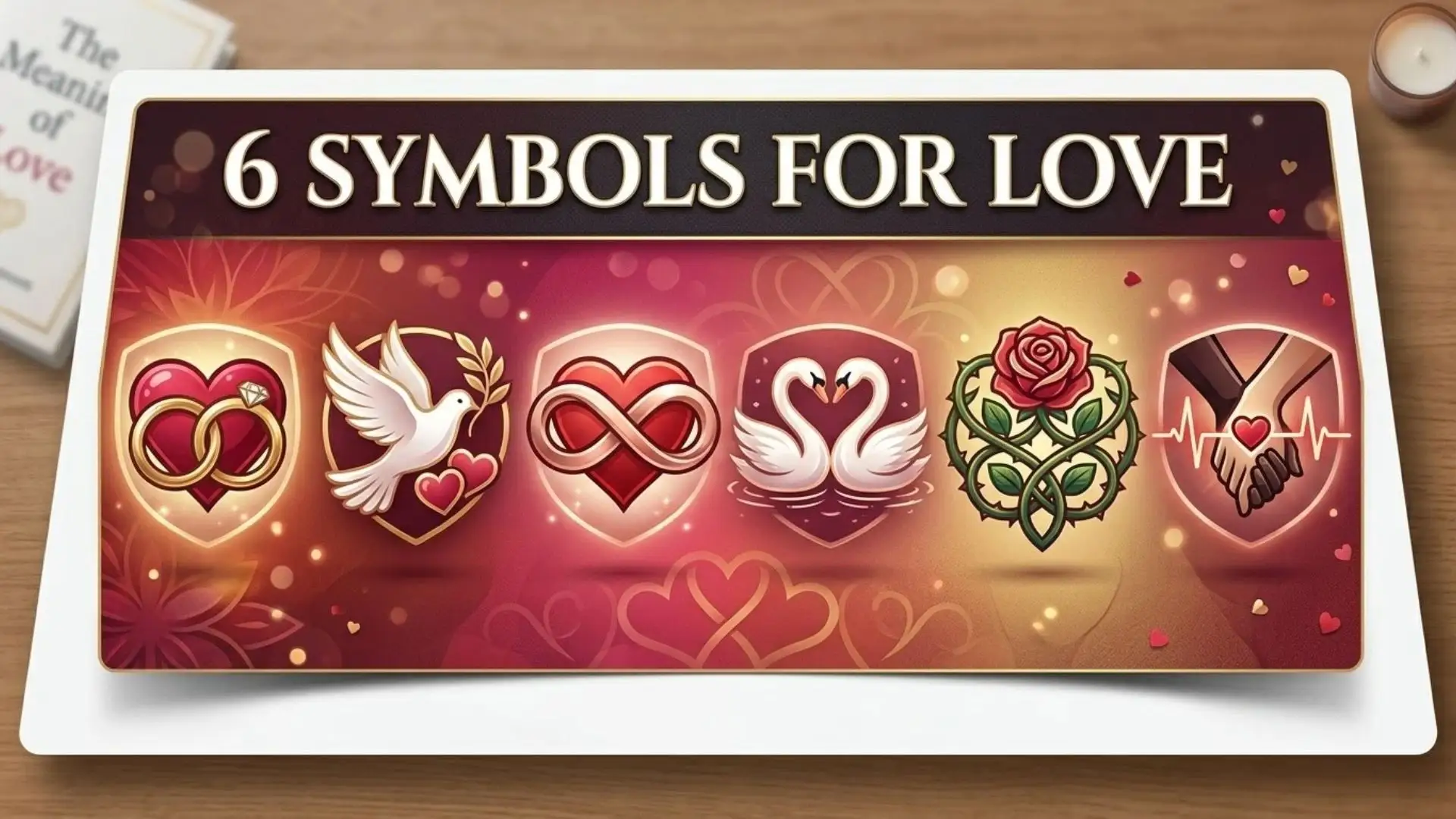
Love is one of the deepest human emotions, yet a simple image can sometimes express it better than a long speech. A heart on a greeting card, a red rose on an anniversary, or a ring exchanged during a wedding can carry years of memories and affection.
Across different cultures, people have used flowers, jewelry, mythological figures, and meaningful objects to communicate love. These symbols of love can express romantic passion, friendship, loyalty, spiritual devotion, or a promise to stay together.
However, every symbol has its own story. The heart is widely recognized as a sign of affection, while the Irish Claddagh ring connects love with friendship and loyalty. The infinity sign suggests endless devotion, and the lotus flower carries spiritual meanings in several Asian traditions.
Understanding these differences helps you choose a symbol that reflects what you truly want to express. Whether you’re looking for a meaningful tattoo, a romantic gift, a wedding design, or simply curious about love symbols and their meanings, this guide explores their histories, cultural associations, and modern uses.
What Are Symbols of Love?
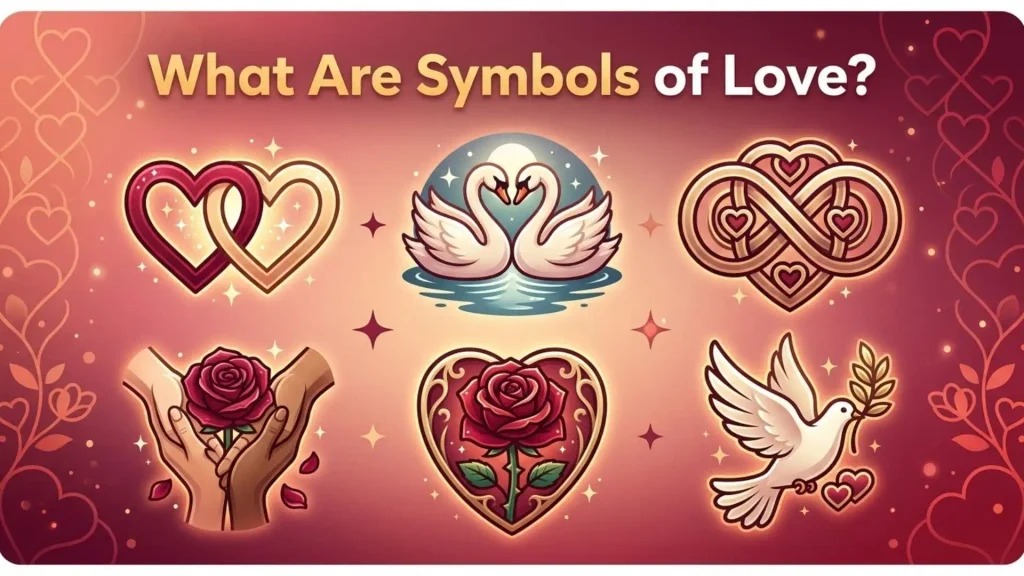
Symbols of love are images, objects, patterns, or figures that people associate with affection, emotional connection, devotion, and care. They give visible form to feelings that can be difficult to explain with words alone.
Some love symbols developed through religious traditions and mythology. Others became popular through art, poetry, jewelry, and everyday customs. Modern symbols also emerge through digital communication and personal experiences.
For example, a red rose often communicates romantic interest in Western cultures. A Claddagh ring carries more specific associations with Irish heritage, friendship, love, and loyalty.
Love symbolism generally falls into several categories:
- Romantic love: Hearts, red roses, Cupid, and paired swans.
- Eternal love: Infinity signs, circular rings, and interlaced designs.
- Love and loyalty: Claddagh rings, wedding bands, and personalized keepsakes.
- Love and friendship: Shared cups, clasped hands, and heart imagery.
- Spiritual love: Lotus flowers and religious imagery associated with compassion or devotion.
- Family love: Hearts, parent-and-child images, and symbols connected to nurturing and care.
A symbol’s meaning depends on its cultural background and the person using it. There is no single image that expresses every form of love equally well.
12 Famous Symbols of Love and Their Meanings
These 12 symbols offer different ways to express affection, attraction, commitment, and spiritual connection. Some have well-established historical backgrounds, while others gained their romantic meanings through later artistic and popular traditions.
The Heart Symbol: Love, Affection, and Emotional Connection
The heart is one of the most recognizable symbols that represent love. Its familiar shape appears on greeting cards, jewelry, clothing, decorations, and digital messages.
Although the heart shape doesn’t closely match the human heart’s anatomy, people have used it to express emotion for centuries. Medieval European culture helped develop the familiar association between the heart and inner feelings. By the 15th and 16th centuries, heart-shaped objects and images appeared in contexts associated with affection and personal devotion. The British Museum discusses this development in its article on the history of modern romance.
Today, the heart can communicate several related ideas:
- Romantic love: Attraction and affection between partners.
- Compassion and care: Concern for another person’s well-being.
- Emotional closeness: A meaningful bond between people.
- Family love: Affection between parents, children, siblings, and relatives.
- Friendship: Appreciation for someone who matters to you.
The heart’s versatility explains why it appears in so many situations. A small heart in a text message might express gratitude, while two intertwined hearts may suggest a romantic relationship.
Heart colors can add another layer of meaning. Red commonly suggests romance and passion, while pink often conveys tenderness. White hearts may suggest sincerity or peaceful affection, depending on context. These associations are popular conventions rather than fixed rules.
Best uses: Valentine’s Day cards, anniversary gifts, romantic jewelry, friendship gifts, and everyday expressions of affection.
The Red Rose: Romantic Love and Passion
Few flowers communicate romance as clearly as the red rose. Its rich color, delicate petals, and long-standing place in art make it a familiar choice for expressing love.
The rose’s symbolic history draws from several sources, including classical mythology, religious imagery, poetry, and floral traditions. In Greek mythology, roses became associated with Aphrodite, the goddess of love. Roman traditions connected the flower with Venus, her counterpart.
Over time, roses gained an especially strong association with romantic affection in Western culture. The Metropolitan Museum of Art explains how religious imagery, mythology, and the Victorian-era language of flowers helped shape floral meanings.
A red rose commonly communicates:
- Romantic love: A declaration of affection for a partner.
- Passion and desire: Intense romantic or physical attraction.
- Admiration: Appreciation for someone’s qualities.
- Devotion: A sincere expression of care and commitment.
- Beauty: Recognition of someone’s appearance or character.
Different rose colors may suggest different sentiments in contemporary floral customs. Pink roses often convey admiration or gratitude, while white roses frequently appear in weddings and ceremonies associated with sincerity or new beginnings.
These meanings aren’t universal. The message also depends on the occasion, the relationship, and the recipient’s preferences.
A single red rose may feel intimate and personal. A dozen roses might make a more dramatic anniversary gift. Either way, the gesture becomes more meaningful when it reflects the recipient rather than following a formula.
Best uses: Romantic gifts, anniversaries, Valentine’s Day, courtship, and expressions of admiration.
The Celtic Love Knot: Lasting Connection and Commitment
Celtic knotwork features intricate lines that weave over and under one another. Many patterns repeat continuously, creating the impression of a design without a clear beginning or end.
This visual quality makes interlaced knots popular in modern jewelry and artwork associated with eternal love. Couples often choose knot designs because they suggest two lives joined through an ongoing relationship.
However, historical accuracy matters here. Early medieval Celtic art includes elaborate interlaced patterns, especially in illuminated manuscripts and carved objects. The famous Book of Kells, created around the turn of the ninth century, is a major example of this artistic tradition.
Specific heart-shaped designs marketed today as ancient Celtic love knots don’t necessarily have the same documented history. Their romantic meanings often reflect modern interpretations of older knotwork.
Common contemporary interpretations include:
- Enduring connection: Two people whose lives remain intertwined.
- Loyalty and commitment: A promise to care for a relationship.
- Continuity: A bond that continues through changing circumstances.
- Shared identity: A design representing a couple or family.
Celtic-inspired knots appear in wedding bands, pendants, bracelets, and tattoos. Some designs incorporate two interlocking hearts, while others feature more complex geometric patterns.
If you choose one, consider its visual meaning and cultural background. A genuine historical knot pattern and a modern romantic design can both be meaningful without having identical origins.
Best uses: Couple tattoos, wedding jewelry, anniversary presents, and personalized designs representing lasting relationships.
The Claddagh Ring: Love, Loyalty, and Friendship
The Claddagh ring is one of Ireland’s best-known traditional love symbols. Its design features two hands holding a heart beneath a crown.
Each element has a distinct association:
- The heart represents love.
- The hands represent friendship.
- The crown represents loyalty.
Together, these elements express the idea that lasting affection benefits from friendship and faithfulness.
The ring takes its name from Claddagh, an area near Galway, Ireland. Surviving examples date to around the early 18th century. A traditional account associates the design with Richard Joyce, a Galway goldsmith, although the complete origin story remains uncertain.
The Claddagh became popular as a gift and relationship ring. It also developed a lasting connection with Irish identity and heritage. People today wear it as a friendship ring, romantic gift, engagement ring, or wedding band.
Some traditions assign relationship meanings to the direction of the heart. For example, a heart facing outward on the right hand is often interpreted as openness to love, while an inward-facing heart may indicate an existing relationship. Other customs connect left-hand placement with engagement or marriage.
These conventions vary, and their historical origins aren’t equally well documented. You shouldn’t assume every wearer follows them.
The ring’s enduring appeal comes from its combination of three qualities. Romance matters, but so do friendship, trust, and loyalty.
Best uses: Romantic gifts, Irish heritage jewelry, engagement rings, friendship gifts, and wedding bands.
The Quaich: Trust, Hospitality, and Shared Connection
A quaich is a traditional Scottish drinking cup, usually distinguished by its two handles. Its history connects it with hospitality, friendship, and the sharing of drinks among guests.
Unlike a heart or red rose, the quaich isn’t primarily a universal romantic symbol. Its significance comes from the act of sharing and welcoming another person.
In Scottish celebrations, a quaich may appear during a gathering or ceremony. Some couples incorporate it into weddings, where sharing a drink can symbolize their intention to build a life together.
The cup’s meaning can include:
- Trust: Sharing a drink as a gesture of welcome.
- Friendship: Celebrating a bond between people.
- Unity: Bringing individuals together around a shared moment.
- Hospitality: Welcoming someone into a home or community.
- Partnership: Creating a meaningful ritual between two people.
Imagine two newlyweds sharing a drink from a family quaich. The cup connects their marriage with family history and hospitality. Its meaning comes from the ritual as much as the object itself.
The quaich also illustrates an important point about cultural symbols of love. Some objects express affection indirectly through shared experiences, rather than through romantic imagery.
Best uses: Scottish wedding ceremonies, family celebrations, meaningful heritage gifts, and shared rituals.
The Infinity Symbol: Endless and Everlasting Love
The infinity symbol looks like a sideways figure eight. In mathematics, it represents the concept of infinity. In jewelry and popular culture, people often use it to communicate love without end.
This romantic meaning is a symbolic interpretation rather than the sign’s original mathematical purpose. Its continuous shape makes it a natural visual metaphor for an enduring bond.
For couples, the infinity sign can express:
- Everlasting love: A relationship intended to endure.
- Endless devotion: Continued care and dedication.
- Commitment: A promise to remain invested in the relationship.
- Connection across distance: Affection that continues when partners live apart.
- Shared history: A bond that grows through years of experiences.
Infinity designs are common in necklaces, bracelets, wedding jewelry, and tattoos. Some feature two interlocking loops, while others combine the sign with a heart, initials, or a meaningful date.
For example, partners might choose matching infinity tattoos with their anniversary dates. The design becomes a reminder of their shared commitment rather than a guarantee that a relationship will last forever.
The symbol can also represent family bonds, friendship, or personal values. Its meaning depends on the people who choose it.
Best uses: Couple tattoos, anniversary jewelry, long-distance relationship gifts, and symbols of lasting commitment.
The Swan: Partnership, Grace, and Devotion
Swans have appeared in art, literature, mythology, and romantic imagery for centuries. Their graceful movements and paired appearances make them appealing symbols of partnership.
In popular culture, swans are often associated with lifelong love because some species form long-term pair bonds. However, their behavior varies, and their relationships don’t always last for life. Their romantic symbolism is therefore a cultural association rather than a universal biological rule.
Swans may suggest:
- Partnership: Two individuals moving through life together.
- Devotion: Continued attention and care.
- Grace and beauty: Elegance in appearance or behavior.
- Harmony: A peaceful relationship between partners.
- Romantic connection: An enduring bond represented through paired imagery.
Swans also appear in mythology and folklore. In Greek mythology, swans are associated with Apollo and appear in stories involving other gods and heroes. Their meanings can therefore extend beyond romance to beauty, music, transformation, or divine presence.
In modern wedding decorations, paired swans can symbolize a couple beginning a shared life. Artists may also use them in paintings or sculptures to suggest affection without depicting human figures.
Still, a swan doesn’t automatically mean eternal love in every tradition. Its meaning depends on the artwork and cultural setting.
Best uses: Wedding decorations, romantic artwork, anniversary gifts, and designs representing partnership.
The Dove: Peace, Affection, and Devotion
The dove is widely associated with peace, gentleness, and harmony. It can also carry meanings connected to love and devotion, especially in classical mythology and religious art.
In Greek and Roman traditions, doves were associated with Aphrodite and Venus. Their appearance in art connected them with beauty and romantic affection.
In Christian traditions, the dove has important religious associations, particularly with the Holy Spirit and peace. These meanings should not be confused with a purely romantic interpretation.
As a love symbol, the dove may express:
- Peace: A relationship built on understanding rather than conflict.
- Gentleness: Kindness in words and actions.
- Reconciliation: The desire to restore a relationship.
- Affection: A caring connection between people.
- Devotion: A sincere commitment to another person or belief.
A pair of doves can appear in wedding art or decorative designs to suggest harmony between partners. A single dove may instead communicate peace, hope, or spiritual meaning.
Context makes the difference. If you choose a dove for a tattoo or gift, think about whether you want to emphasize romance, reconciliation, or peace.
Best uses: Wedding artwork, reconciliation gifts, peaceful relationship imagery, and religious or spiritual designs.
The Lotus Flower: Compassion, Purity, and Spiritual Growth
The lotus flower holds important meanings in several Asian religious and cultural traditions. Its ability to grow from muddy water and rise above the surface has inspired associations with purity, renewal, and spiritual development.
In Buddhism, lotus imagery often appears in representations of enlightened beings and teachings about spiritual awakening. In Hindu traditions, the flower is associated with several deities and ideas involving beauty, creation, and spiritual significance.
The lotus can connect with love when people interpret it through compassion, kindness, and personal growth. However, it isn’t simply a universal symbol of romantic affection.
Its associations may include:
- Compassion: Caring about the suffering and well-being of others.
- Purity: Spiritual ideals or freedom from certain forms of attachment.
- Renewal: Growth after difficult experiences.
- Inner peace: A sense of calm and balance.
- Spiritual development: Progress toward wisdom or deeper understanding.
Some Buddhist teachings emphasize metta, often translated as loving-kindness. This concept concerns goodwill toward living beings rather than romantic attraction alone.
The lotus has also become popular in contemporary tattoos. People may choose it to represent resilience, healing, or a personal journey through hardship.
If you use the lotus to express love, consider the specific meaning you intend. Compassionate love, romantic attachment, and spiritual devotion overlap in some ways, but they aren’t identical.
Best uses: Spiritual artwork, personal-growth tattoos, meaningful gifts, and designs emphasizing compassion or renewal.
Cupid: Attraction, Desire, and Romantic Love
Cupid is the Roman god of love and desire. His Greek counterpart is Eros, a figure associated with attraction and the forces that bring people together.
Modern depictions usually show Cupid as a winged child carrying a bow and arrows. The familiar image appears on Valentine’s Day cards, decorations, and romantic gifts.
In classical mythology, however, Eros and Cupid have more complex roles than their modern cartoon versions suggest. Their stories explore desire, attraction, and the sometimes unpredictable effects of love.
Cupid’s bow and arrows have become familiar romantic symbols because they represent love striking unexpectedly. The image suggests that attraction can arise before someone fully understands their feelings.
Cupid commonly represents:
- Romantic desire: The pull between potential partners.
- Attraction: The beginning of romantic interest.
- Passion: Strong emotional or physical feelings.
- Courtship: The pursuit of romantic connection.
- Playfulness: The lighter side of romance.
The phrase “struck by Cupid’s arrow” captures this idea. Someone may feel an immediate attraction without planning it or knowing where it will lead.
Cupid is therefore more closely connected with attraction and desire than with the steady work required to maintain a long-term relationship.
Best uses: Valentine’s Day cards, romantic illustrations, playful gifts, and artwork celebrating new relationships.
Aphrodite and Venus: Love, Beauty, and Desire
Aphrodite is the Greek goddess associated with love, beauty, and desire. Venus is her Roman counterpart. Both figures played important roles in the mythology and artistic traditions of the ancient Mediterranean world.
Their stories explored attraction, jealousy, beauty, sexuality, and relationships between gods and mortals. These myths influenced later Western art, literature, and visual representations of romance.
Aphrodite and Venus are often depicted alongside roses, doves, and other imagery associated with beauty or desire. However, not every object connected with these goddesses has one fixed meaning.
Their broader symbolism includes:
- Love: Romantic affection and attraction.
- Beauty: Physical appearance and aesthetic appeal.
- Desire: Longing for another person or experience.
- Fertility: In certain mythological and religious contexts.
- Romantic power: The influence of attraction on human choices.
These figures are useful to understand when exploring the history of love symbolism. They help explain why roses and doves became connected with romance in many later Western artistic traditions.
However, a statue of Aphrodite isn’t the same kind of symbol as a heart-shaped pendant. One represents a mythological deity, while the other serves as a direct visual expression of affection.
Best uses: Classical artwork, mythology-inspired jewelry, romantic sculptures, and designs celebrating beauty or desire.
Kamadeva: Love and Desire in Hindu Tradition
Kamadeva is a deity associated with love and desire in Hindu mythology. He is often depicted with a bow made from sugarcane and arrows decorated with flowers.
These attributes distinguish him from Cupid while creating a similar visual connection between arrows and attraction. In stories involving Hindu deities, Kamadeva’s role explores desire, divine relationships, and the place of attraction within a larger spiritual world.
His symbolism may involve:
- Love and desire: The attraction that draws people together.
- Longing: Emotional or romantic yearning.
- Passion: The intensity of desire.
- Flower arrows: The influence of attraction.
- Mythological relationships: The role of desire in stories about gods and the universe.
Kamadeva’s stories should be understood within Hindu mythology rather than treated as interchangeable with Greek or Roman traditions. Religious narratives carry their own histories, teachings, and cultural contexts.
The bow and flower arrows can inspire artwork or jewelry for people interested in Hindu mythology. However, respectful use requires understanding the deity’s significance instead of borrowing the imagery solely because it resembles Cupid.
Best uses: Mythology-inspired artwork, cultural storytelling, and designs created with an informed understanding of Hindu traditions.
Other Objects and Images That Can Symbolize Love
The 12 main symbols aren’t the only ways to express affection. Everyday objects can also become meaningful when people connect them with shared experiences or traditions.
Wedding Rings: Commitment and Partnership
Wedding rings are among the most familiar symbols of everlasting commitment. Their circular shape provides a natural metaphor for continuity, while their use in marriage ceremonies connects them with promises between partners.
The ring’s meaning depends on the tradition and the people wearing it. In many cultures, wedding bands communicate marriage and commitment. Elsewhere, the customs surrounding rings differ.
People may also exchange rings to mark anniversaries or important milestones. An engraved date, name, or message can turn a simple band into a personal reminder of a shared life.
Wedding rings can represent:
- Marriage and partnership.
- Fidelity and commitment.
- Shared responsibilities.
- A promise to build a future together.
The metal or gemstone matters less than the meaning attached to the ring. A modest band can hold enormous emotional value when it marks an important moment.
Strawberries: Sweetness, Sensuality, and Romance
Strawberries appear in romantic meals, dessert decorations, and Valentine’s Day imagery. Their bright red color and heart-like shape help connect them with affection and desire.
Their romantic associations are less standardized than those of hearts and red roses. A strawberry doesn’t carry one universally recognized historical meaning across cultures.
In contemporary settings, strawberries can suggest sweetness, sensuality, indulgence, or the pleasure of sharing food with someone special. Chocolate-covered strawberries, for example, have become a familiar romantic treat.
Their symbolism often comes from the experience itself. Preparing a dessert together or sharing favorite foods can communicate affection without relying on a traditional emblem.
Best uses: Romantic meals, Valentine’s Day treats, playful illustrations, and personalized gifts.
Heart Emojis: Modern Expressions of Affection
Heart emojis have become common modern symbols of love in digital communication. People use them in text messages, social media comments, and online conversations to express affection quickly.
A red heart often communicates romantic love or strong affection. Other colors may suggest friendship, support, appreciation, or a particular aesthetic. Yet these meanings aren’t universal or officially fixed.
The same emoji can carry different meanings depending on the relationship. A heart sent to a close friend may express gratitude, while one sent during a romantic conversation may signal attraction.
When interpreting digital symbols, consider:
- The relationship between the sender and recipient.
- The message surrounding the emoji.
- The sender’s usual communication style.
- The context of the conversation.
A heart emoji alone doesn’t prove romantic interest. Clear communication matters more than guessing what a symbol might mean.
Symbols of Eternal, Unconditional, and True Love
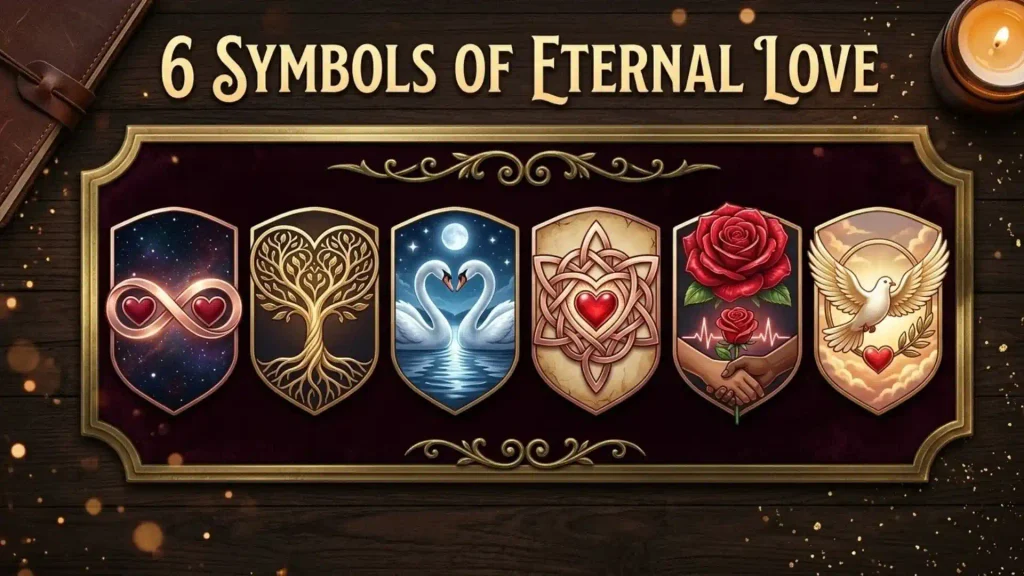
Not every kind of love feels the same. Some symbols emphasize lasting commitment, while others suggest compassion, loyalty, or the freedom to care without demanding something in return.
Symbols of Eternal Love
Symbols of eternal love communicate continuity and the hope that affection will endure.
Common choices include:
- Infinity sign: A visual metaphor for love without end.
- Interlaced knots: Patterns that suggest an ongoing connection.
- Wedding rings: Circular objects associated with marriage and commitment.
- Swans: Romantic imagery connected with partnership and devotion.
- Personalized keepsakes: Objects that preserve shared memories.
These symbols express an intention or ideal rather than guaranteeing a relationship’s future. Their significance grows through the actions and experiences of the people who use them.
For a couple celebrating an anniversary, an infinity pendant may express a lasting bond. Another couple might prefer a ring engraved with a meaningful date.
The best choice reflects the relationship rather than a general ranking of symbols.
Symbols of Unconditional Love
Unconditional love means caring for someone without making that affection depend entirely on rewards, achievements, or convenience. It is often discussed in the context of family relationships, compassion, and spiritual teachings.
No single object universally represents unconditional love. However, several images can communicate related ideas:
- Heart: Broad affection, care, and emotional closeness.
- Parent and child: Nurturing, protection, and family attachment.
- Lotus flower: In selected spiritual contexts, compassion and personal growth.
- Helping hands: Practical support and willingness to care for another person.
- Family keepsakes: Shared history and enduring affection.
Unconditional love doesn’t mean accepting harmful behavior without boundaries. Healthy relationships can combine compassion with honesty and self-respect.
A parent-and-child image may suit a family gift, while a heart or compassion-focused design may better express a broader sense of care.
Symbols of Love and Loyalty
Love and loyalty often reinforce each other, but they describe different qualities. Love involves affection and care, while loyalty involves reliability and dedication.
Several symbols communicate both ideas:
- Claddagh ring: Combines love, friendship, and loyalty in one design.
- Wedding ring: Commonly marks commitment within marriage.
- Interlaced knot: Can suggest an enduring bond in contemporary romantic use.
- Paired swans: Often represent devotion in romantic art.
- Personalized jewelry: Can commemorate a promise or shared experience.
A symbol becomes more meaningful when its message matches the relationship. A Claddagh ring may suit someone who values Irish heritage, while a wedding band may be the clearest choice for a marriage anniversary.
Symbols of Love and Friendship
Romantic relationships aren’t the only bonds worth celebrating. Friendship can involve trust, affection, shared memories, and years of mutual support.
Symbols that may express love and friendship include:
- Claddagh ring: Especially suitable for someone who appreciates its Irish tradition.
- Heart: A flexible sign of affection between friends.
- Quaich: An object connected with hospitality and shared fellowship.
- Matching keepsakes: Personal objects that commemorate a friendship.
- Paired designs: Two connected images that represent a shared history.
You don’t need a romantic symbol to show that someone matters. A gift tied to an inside joke, favorite memory, or shared interest may express friendship more personally than a conventional romantic emblem.
Love Symbols Across Cultures and Traditions
Love takes many forms, and cultures express it through different stories, objects, rituals, and images. Exploring those differences helps you understand a symbol beyond its appearance.
Greek and Roman Love Symbolism
Greek and Roman traditions shaped many familiar Western images of romance. Aphrodite and Venus represented love, beauty, and desire, while Eros and Cupid became associated with attraction.
Roses and doves also developed connections with these deities. Later artists drew on classical imagery to explore courtship, passion, and the influence of desire.
These traditions helped shape modern romantic art and Valentine’s Day imagery. However, their meanings changed across historical periods rather than remaining identical for thousands of years.
Celtic and Irish Love Symbols
Celtic knotwork and the Claddagh ring offer two distinct examples of Irish-associated symbolism.
Interlaced knotwork has a long artistic history in Ireland and Britain. Modern romantic knot designs often interpret its continuous lines as symbols of connection and commitment.
The Claddagh ring has a more specific tradition. Its hands, heart, and crown communicate friendship, love, and loyalty.
These distinctions matter. A modern decorative knot inspired by Celtic art shouldn’t automatically be described as an ancient wedding symbol.
Scottish Traditions of Love and Friendship
The Scottish quaich illustrates how hospitality can express a meaningful bond. Sharing a drink creates a moment of welcome, trust, and fellowship.
Some couples incorporate a quaich into wedding ceremonies to connect their marriage with Scottish heritage. Families may also use one during reunions or celebrations.
Its meaning comes from both the object and the ritual surrounding it. This makes the quaich a useful example of how cultural traditions express connection without relying on familiar romantic images.
Hindu Love Symbolism
Kamadeva’s bow and flower arrows provide a recognizable example of love and desire in Hindu mythology.
His stories explore attraction and desire within a broader mythological setting. These narratives differ from the roles played by Cupid or Eros, even though their imagery sometimes looks similar.
Understanding Hindu symbolism requires attention to its own religious traditions. A familiar-looking bow or arrow doesn’t make two deities culturally identical.
Buddhist Perspectives on Love and Compassion
Buddhist teachings include important concepts of compassion and loving-kindness. These ideas extend beyond romantic attachment to concern for the well-being of living beings.
The lotus appears frequently in Buddhist art and symbolism. It can communicate purity, spiritual development, and awakening, although its exact significance depends on the context.
For someone seeking a spiritual symbol of care, the lotus may feel meaningful. However, it should be understood through the tradition rather than reduced to a generic romantic emblem.
How Love Symbols Differ Across Cultures
A symbol’s meaning can shift across cultures and generations. A flower may carry religious associations in one setting and romantic associations in another.
Before choosing a symbol from a tradition you don’t know well, consider these questions:
- What does the symbol mean in its original cultural context?
- Is its popular meaning historically documented or a modern interpretation?
- Does it have religious or ceremonial significance?
- Could its use be misunderstood outside that context?
- Does the design reflect the meaning you want to communicate?
A little research can prevent confusion and help you appreciate the symbol more fully.
How to Choose a Symbol That Represents Your Love
The most meaningful symbol isn’t necessarily the oldest, rarest, or most expensive. It’s the one that reflects your relationship, values, or personal story.
For Romantic Partners and Couples
If you want a familiar romantic image, consider a heart or red rose. For a design that emphasizes lasting commitment, an infinity sign or interlaced knot may fit better.
You can also choose something personal. A flower connected with your first date or a keepsake from a memorable trip may carry more meaning than a traditional emblem.
Think about the message you want the gift to express. Is it passion, appreciation, loyalty, or a promise to build a future together?
For Marriage and Lifelong Commitment
Wedding rings are a natural choice for marriage because they connect the symbol with a recognized commitment ritual. A Claddagh ring may suit someone with Irish heritage or an appreciation for its three-part meaning.
Interlaced designs can also represent partnership, especially when both people like the artwork. Consider engraving a date or short message to make the object more personal.
The design should fit the couple’s preferences and cultural background. A meaningful ring doesn’t need to follow a trend.
For Family and Unconditional Love
Family gifts often work best when they express care, protection, and shared history. Hearts and parent-and-child designs can communicate these ideas clearly.
You might also choose a symbol linked to a family tradition, a favorite flower, or an object passed between generations. These details can make a keepsake uniquely meaningful.
If the gift celebrates a parent, sibling, or child, choose imagery that reflects the actual relationship rather than assuming every symbol of love must be romantic.
For Tattoos and Jewelry
A tattoo or piece of jewelry may stay with you for many years, so take time to choose its meaning.
Consider these practical factors:
- Meaning: Understand what the design represents to you.
- Historical context: Check claims about ancient origins before relying on them.
- Design: Make sure the details remain clear at the intended size.
- Cultural respect: Research symbols connected with religious or cultural traditions.
- Personal relevance: Choose something that will still matter as your life changes.
Hearts, roses, infinity signs, and Claddagh-inspired designs are popular options. A symbol’s popularity, however, doesn’t determine its personal value.
For Gifts and Anniversaries
Match the symbol to the occasion and the recipient’s tastes.
- Red roses: A familiar choice for romantic affection.
- Wedding rings: Appropriate for marriage and commitment.
- Infinity jewelry: Often chosen to express enduring love.
- Claddagh rings: Meaningful for someone who values Irish heritage.
- Personalized keepsakes: Useful for celebrating shared memories.
- Handwritten notes: A simple way to explain why you chose a particular symbol.
The explanation accompanying a gift can make a major difference. Tell the recipient what the symbol means to you and why it reminded you of them.
Comparison Table: Love Symbols and Their Meanings
Use this table as a quick guide when deciding which image best expresses your feelings.
| Symbol | Common meaning | Cultural or historical context | Best use |
| Heart | Love, affection, compassion | Widely used in modern visual culture | Cards, gifts, and everyday affection |
| Red rose | Romance, passion, admiration | Floral traditions and classical associations | Romantic gifts and anniversaries |
| Celtic knot | Continuity and connection | Historical knotwork with modern romantic interpretations | Jewelry and tattoos |
| Claddagh ring | Love, friendship, loyalty | Irish cultural tradition | Relationship gifts and keepsakes |
| Quaich | Hospitality, trust, fellowship | Scottish tradition | Shared celebrations and ceremonies |
| Infinity sign | Endless love and continuity | Modern romantic use of a mathematical sign | Couple jewelry and tattoos |
| Swan | Partnership, grace, devotion | Art, literature, and mythology | Wedding and romantic imagery |
| Dove | Peace, gentleness, harmony | Classical and religious traditions | Ceremonial art and meaningful gifts |
| Lotus flower | Purity, spiritual growth, compassion | Hindu and Buddhist traditions | Spiritual artwork and personal-growth designs |
| Cupid | Attraction, desire, romance | Roman mythology | Valentine’s Day and romantic art |
| Aphrodite or Venus | Love, beauty, desire | Greek and Roman mythology | Classical artwork and themed jewelry |
| Kamadeva | Love and desire | Hindu mythology | Culturally informed artwork |
| Wedding ring | Marriage and commitment | Marriage customs across cultures | Weddings and anniversaries |
| Strawberry | Sweetness and sensuality | Contemporary romantic imagery | Romantic meals and decorations |
| Heart emoji | Digital affection | Modern online communication | Texts and social media |
The meanings in this table are common associations, not universal rules. Personal experiences and cultural context can change how people interpret a symbol.
Frequently Asked Questions About Symbols of Love
What Is the Most Universal Symbol of Love?
The heart is probably the most widely recognized symbol of love in contemporary visual communication. People use it on cards, jewelry, gifts, and digital platforms to express affection.
However, recognition doesn’t mean every culture interprets the heart in exactly the same way. Its meaning still depends on context.
What Are the 12 Most Famous Symbols of Love?
Twelve recognizable symbols include the heart, red rose, Celtic knot, Claddagh ring, quaich, infinity sign, swan, dove, lotus flower, Cupid, Aphrodite or Venus, and Kamadeva.
They represent different ideas, including romance, loyalty, desire, friendship, compassion, and spiritual growth. This is a practical selection rather than a definitive historical ranking.
What Symbol Represents Eternal Love?
The infinity sign is a popular choice because its continuous shape suggests something without an end. Wedding rings and interlaced knot designs can also communicate enduring commitment.
Swans appear in romantic imagery associated with devotion, although their symbolic meaning varies across cultures. The best choice depends on the message you want to express.
What Symbol Represents Unconditional Love?
There is no single universal symbol for unconditional love. Hearts, parent-and-child imagery, and selected symbols of compassion can communicate related ideas.
A parent-and-child design may suit family affection, while a heart offers a broader expression of care. In spiritual contexts, lotus imagery may connect with compassion and personal growth.
What Symbols Represent Love and Loyalty?
The Claddagh ring is a particularly clear example because its traditional design combines a heart, hands, and crown. These elements represent love, friendship, and loyalty.
Wedding rings also communicate commitment in many cultures. Interlaced knot designs can suggest lasting connection in modern romantic contexts.
What Is the Oldest Symbol of Love?
There isn’t one universally accepted answer because the question depends on what qualifies as a love symbol.
Ancient cultures used images of deities, courtship, fertility, and affection long before modern hearts and Valentine’s Day cards became familiar. However, an ancient image connected with fertility or a love deity isn’t automatically the oldest symbol specifically representing romantic love.
A reliable answer requires identifying a particular object or image and examining its archaeological date, cultural setting, and original purpose. Broad claims about a single oldest love symbol should be treated cautiously.
Conclusion: Finding a Love Symbol That Feels Meaningful
Symbols of love help people express feelings through images, objects, and traditions A heart communicates affection, a red rose suggests romance, and a Claddagh ring connects love with friendship and loyalty.
Other symbols offer different messages. The infinity sign suggests continuity, the lotus can express spiritual growth, and the quaich represents hospitality and shared connection. Mythological figures such as Cupid, Aphrodite, Venus, and Kamadeva reveal how different traditions have explored love and desire.
When choosing a symbol, look beyond its appearance. Learn its history, consider its cultural meaning, and decide whether it reflects your relationship or personal values.
A thoughtful symbol can become a lasting reminder of a shared promise, a meaningful memory, or a bond that matters deeply. Ultimately, the meaning you give it is part of what makes it special.

Clara Miles
Hello! I’m Clara, a lifelong dreamer who finds magic in everyday moments. Writing has always been my way of exploring the world and understanding the people around me. I love creating stories that make readers laugh, cry, and reflect on life’s little surprises. When I’m not writing, you can usually find me sipping coffee at a cozy café or wandering through nature with a notebook in hand. My journey as an author is fueled by curiosity, imagination, and a love for connecting with my readers. Every story I write is a piece of my heart, and I hope it inspires yours too.
Books:
-
Whispers of the Heart
-
Shadows and Sunlight