
Your brain operates as an intricate communication network made up of billions of interconnected neurons organized into distinct functional regions, or neural nodes. When these nodes communicate seamlessly, you process stress efficiently, regulate your emotions, and maintain cognitive focus. However, major depressive disorder and chronic mood conditions disrupt these critical junction points, causing specific nodes in your mood circuit to become underactive or misaligned. At Weston Psychological Associates, advanced neurostimulation offers a targeted way to restore communication across these networks. By utilizing precision magnetic stimulation like TMS Therapy Weston FL, you can reactivate dormant neural nodes and restore healthy functional connectivity throughout your brain.
To understand why persistent depression makes simple tasks feel overwhelming, it helps to view mood regulation through the lens of network neuroscience. Your brain relies on primary neural networks, including the central executive network and the default mode network. In a healthy brain, the central executive network, centered in the dorsolateral prefrontal cortex, manages task-oriented focus and emotional balance. Meanwhile, the default mode network regulates internal thoughts and self-reflection. In individuals experiencing chronic depression, the prefrontal neural nodes experience reduced blood flow and metabolic activity, while default mode nodes become hyperactive, trapping you in endless loops of negative rumination.
The Biophysical Process of Node Activation and Circuit Synchronization
At Weston Psychological Associates, clinical neurostimulation directly targets the key prefrontal nodes that have lost their operational efficiency. Transcranial Magnetic Stimulation delivers rhythmic magnetic pulses through your scalp to induce brief electrical micro-currents in targeted cortical tissue. Rather than overwhelming your whole central nervous system with chemical adjustments, these pulses depolarize sluggish neurons at the exact node site, triggering the release of essential signaling molecules like dopamine, serotonin, and glutamate.
This localized electrical firing initiates a chain reaction across deeper brain structures. As the primary prefrontal node wakes up, it sends downstream electrical signals to connected subcortical regions, such as the limbic system and amygdala. Through repeated daily stimulation over several weeks, this systematic activation prompts neuroplastic changes. Synaptic connections strengthen, cell membrane excitability normalizes, and disrupted networks synchronize once again, allowing your brain to transition smoothly between task execution and quiet relaxation.
Key Network Improvements Achieved Through Targeted Node Activation
- Restored Executive Control: Reactivating dormant prefrontal nodes sharpens concentration, decision-making abilities, and working memory capacity.
- Interruption of Ruminative Loops: Rebalancing node connectivity suppresses hyperactive default mode circuits, reducing involuntary negative thoughts and persistent worry.
- Enhanced Emotional Resilience: Re-establishing proper node communication with the limbic system helps stabilize mood swings and improves your response to everyday stressors.
- Sustained Synaptic Adaptation: Repeated magnetic stimulation encourages long-term potentiation, helping neural nodes maintain healthy firing patterns long after your care plan concludes.
Navigating Your Targeted Neurostimulation Care Plan
Your path toward neural reconnection begins with a comprehensive diagnostic evaluation to evaluate your symptom history and cognitive baseline. During your initial mapping session, clinical specialists locate your primary motor cortex to identify your precise motor threshold. Using these exact anatomical measurements, clinicians calculate the optimal magnetic field intensity and exact spatial coordinates needed to target your prefrontal nodes accurately.
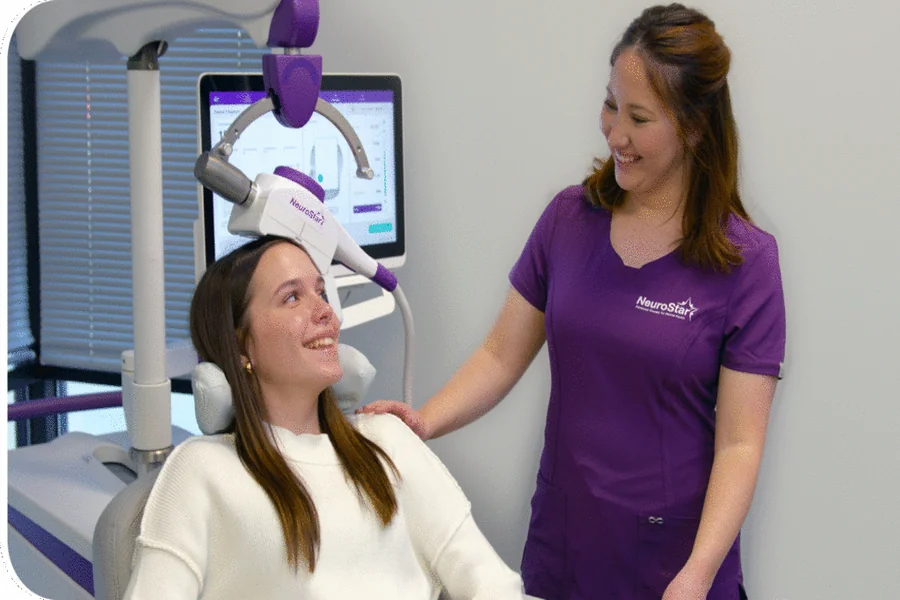
Daily sessions are brief, comfortable, and fit easily into a busy schedule. You recline in a supportive chair while the magnetic coil rests gently against your head. You hear a soft clicking sound and feel a light tapping sensation on your scalp, but you remain fully awake and alert throughout the entire procedure. Because the treatment involves no systemic medication, anesthesia, or cognitive side effects, you can immediately drive back to work, care for your family, or continue your afternoon activities.
Choosing to partner with the dedicated team at Weston Psychological Associates ensures that your care is guided by experienced professionals committed to your long-term mental health. By directly reactivating underperforming neural nodes, modern magnetic therapy addresses the physical foundation of mood disorders, giving you the clarity and emotional stability needed to thrive.
Frequently Asked Questions About Neural Node Reactivation
What are neural nodes and why do they become underactive?
Neural nodes are specialized convergence points within brain networks responsible for processing specific functions like mood regulation and executive control. Prolonged stress, trauma, or genetic predispositions can decrease metabolic activity at these nodes, slowing down communication across brain circuits.
How does TMS target specific neural nodes without affecting the rest of the body?
TMS uses a highly focused magnetic coil placed directly against the scalp. The magnetic field penetrates only a few centimeters into the cortex, stimulating target nodes in the prefrontal cortex without entering the bloodstream or causing systemic side effects in other organs.
How many sessions does it take at Weston Psychological Associates to reactivate brain networks?
While every individual responds uniquely, most care plans involve short daily sessions over about six weeks. Many patients at Weston Psychological Associates begin noticing improvements in focus, mental clarity, and mood stability around the third week as synaptic connections strengthen.
Can node reactivation through TMS provide long-lasting benefits?
Yes. By stimulating long-term potentiation, TMS encourages durable structural and functional changes in neural networks. Many patients maintain healthy node connectivity and mood stability for a year or longer following the completion of their initial treatment protocol.
To learn more or schedule a consultation, call Weston Psychological Associates at (954) 217-2444.
