
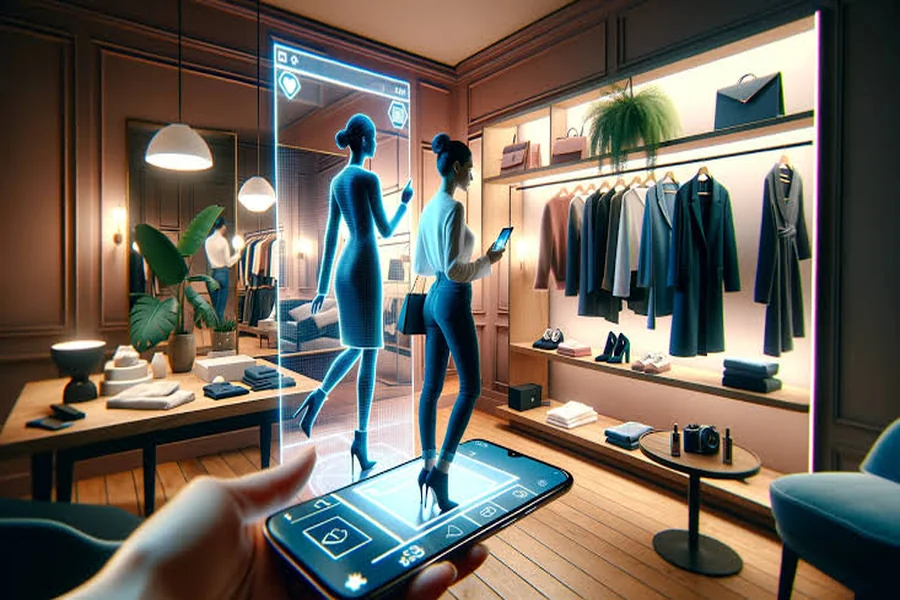
Anyone who has ever shopped for clothes online knows the familiar sense of apprehension that happens right after clicking the checkout button. You found a shirt or a pair of jeans that looks perfect on the model, but a lingering question remains: how will it actually look on you? For years, e-commerce has struggled with this exact barrier, leaving customers to rely on static sizing charts, measuring tapes, and guesswork. Enter a technological breakthrough that is completely changing the way we shop. The Virtual Fitting Room: How AI is Reshaping the Retail Experience is no longer just a futuristic concept; it is an active, rapidly evolving tool that is bridging the gap between digital convenience and physical certainty.
By blending artificial intelligence, augmented reality, and complex body mapping, digital changing rooms are solving one of the apparel industry’s most expensive problems. Shoppers can now use their smartphone cameras or specific in-store smart mirrors to see exactly how a garment will drape, stretch, and fit their unique body shape. This innovation does much more than just provide a fun visual trick. It fundamentally alters consumer confidence, dramatically reduces the environmental and financial toll of product returns, and provides brands with a wealth of data to improve their future designs. As we look at the modern landscape of fashion, it is clear that artificial intelligence is tailoring a completely new reality for both buyers and sellers.
The End of Guesswork in Fashion
For decades, the standard approach to buying clothes online involved a strategy called “bracketing.” Shoppers would purchase the exact same item in three different sizes—small, medium, and large—knowing full well they were going to return the two that did not fit. While this guaranteed the buyer would eventually end up with the right size, it created a logistical nightmare for retailers. Processing a returned item is incredibly expensive. It involves return shipping costs, warehouse labor to inspect the garment, repackaging, and sometimes even discounting the item because it is no longer in season by the time it gets back to the shelf.
Digital fitting rooms eliminate the need for bracketing by offering hyper-personalized sizing recommendations and visual proof of fit. When a user uploads a photo or inputs their specific measurements into a brand’s app, artificial intelligence algorithms analyze the data against the garment’s specific physical properties. The AI considers the fabric’s stretch, the cut of the silhouette, and the brand’s unique sizing standards. The result is a highly accurate digital avatar or an augmented reality overlay that shows the shopper exactly where a dress might be too tight on the hips or where a jacket might hang too loose on the shoulders.
This level of precision completely changes the psychology of buying. When consumers can visually verify that an item flatters their specific body type, their purchase intent skyrockets. They transition from hopeful guessers to confident buyers. Furthermore, this technology heavily promotes body inclusivity. Traditional retail often relies on standard-sized models to showcase clothing, leaving people of different heights, weights, and proportions struggling to visualize the outfit on themselves. AI-driven try-ons democratize the fashion experience, allowing every shopper to become their own runway model and ensuring that style is accessible and visible for absolutely everyone.
How the Technology Actually Works
The seamless experience of seeing a digital dress map perfectly onto your body is the result of incredibly complex technology working behind the scenes. The foundation of the virtual fitting room relies on computer vision, a subset of artificial intelligence that trains computers to interpret and understand the visual world. When you stand in front of a camera for a virtual try-on, computer vision identifies hundreds of distinct data points on your body, tracking your joints, your posture, and your overall outline in three-dimensional space.
Generative AI and machine learning step in next. Retailers feed their clothing catalogs into advanced 3D scanning systems to create digital “twins” of their physical inventory. The software learns how different fabrics behave in the real world. For example, it understands that a heavy wool coat will maintain its rigid shape, while a silk blouse will drape and flow with the wearer’s movements. When the user selects an item, the AI marries the 3D model of the garment with the data points of the user’s body.
In real-time, the system renders the clothing onto the user’s digital reflection, adjusting the shadows, lighting, and wrinkles to make the image look as authentic as possible. If the user shifts their weight or turns to the side, the virtual fabric moves with them. Some advanced systems even use physics-based modeling to simulate how tight or loose a garment feels, translating physical tension into visual cues on the screen. While early iterations of this technology looked like clunky cardboard cutouts pasted over a photograph, today’s advanced neural networks create photorealistic overlays that are often indistinguishable from real-life try-ons.
Sustainability and the Return Epidemic
Beyond improving the customer experience, the widespread adoption of AI try-on technology is serving as a massive catalyst for environmental sustainability. The fashion industry is notoriously resource-intensive, and the modern e-commerce return culture has only exacerbated its carbon footprint. Millions of tons of returned clothing end up in landfills every single year because it is often cheaper for a company to throw away a returned item than to clean, inspect, and restock it. Additionally, the continuous cycle of shipping products back and forth across the globe generates an astronomical amount of greenhouse gas emissions.
By giving shoppers the tools they need to get their size right on the very first try, artificial intelligence directly attacks the root cause of the return epidemic. Brands that have successfully integrated digital changing rooms report massive double-digit decreases in their return rates. When fewer items are shipped back, fewer delivery trucks are on the road, less packaging material is wasted, and significantly fewer garments end up in the trash.
This shift also influences how brands manufacture their clothing. Because digital fitting rooms collect anonymized data on the actual body shapes and sizes of a brand’s customer base, retailers no longer have to rely on generic sizing templates. If a brand notices through its AI data that a large percentage of its customers have broader shoulders or longer torsos than the industry average, it can adjust its future manufacturing runs to better serve its actual audience. This demand-driven approach to production reduces overstock and limits the amount of unsold inventory that ultimately goes to waste.
What This Means for Shoppers and Brands
The transition toward AI-assisted shopping is creating a profound shift in brand loyalty. Consumers naturally gravitate toward retailers that make their lives easier and respect their time. When a shopper has a successful, friction-free experience using a virtual fitting tool, they are far more likely to return to that specific brand for future purchases. They know their digital profile is already saved, their sizing is figured out, and they can shop with zero anxiety.
For brands, this technology serves as a powerful differentiator in an incredibly crowded market. E-commerce sites are no longer just catalogs of products; they are interactive, engaging environments. Retailers can use these tools to cross-sell and up-sell in highly organic ways. If a customer is virtually trying on a pair of slacks, the AI can seamlessly suggest a matching belt or a complementary pair of shoes, instantly rendering the complete outfit on the screen. This replicates the experience of having a highly skilled personal stylist right in your living room.
In-store retail is also getting a massive upgrade. Brick-and-mortar stores are installing smart mirrors in their physical dressing rooms. A customer can bring one dress into the booth, look in the mirror, and use a touchscreen to instantly see how that exact same dress looks in red, blue, or floral print without ever having to leave the booth to search the racks. The lines between online and offline shopping are blurring, creating an omnichannel retail ecosystem where digital convenience enhances physical discovery.
Final Thought
The integration of artificial intelligence into the fashion industry proves that technology is at its best when it solves everyday, practical problems. The frustration of poorly fitting clothes and the environmental guilt of constant returns are being engineered out of the modern shopping experience. The Virtual Fitting Room: How AI is Reshaping the Retail Experience is a testament to the power of computer vision and machine learning applied directly to consumer empowerment. As these tools become even more sophisticated and universally available, we are moving toward a future where every garment we order feels like it was custom-tailored just for us. Retail is no longer just about buying what is available; it is about confidently securing what fits.
FAQs
What is a virtual fitting room?
A virtual fitting room is a digital tool that uses artificial intelligence, computer vision, and augmented reality to allow shoppers to see how clothing will look and fit on their bodies without physically trying the items on.
How does artificial intelligence determine my size?
AI determines your size by analyzing body measurements or photos you input, comparing that physical data against the 3D models and fabric characteristics of a specific garment to predict how it will drape and fit.
Do I need special equipment to use these tools?
No special equipment is required, as most modern virtual fitting rooms are designed to work seamlessly through standard smartphone cameras, tablets, or webcams directly on a retailer’s website or mobile app.
Can digital try-ons help reduce fashion waste?
Yes, digital try-ons significantly reduce fashion waste by lowering the rate of online returns, which in turn reduces shipping emissions, limits the packaging used, and prevents returned garments from ending up in landfills.
Are these systems accurate for all body types?
Modern AI fitting systems are specifically trained on diverse datasets to be highly accurate across a wide variety of body shapes, heights, and weights, making the shopping experience much more inclusive than traditional sizing charts.
Will physical dressing rooms disappear completely?
Physical dressing rooms will not disappear completely, but they are evolving with smart mirrors that combine the tactile experience of touching the fabric with the digital convenience of instantly changing colors or requesting new sizes on a screen.

One thought on “The Virtual Fitting Room: How AI is Reshaping the Retail Experience”