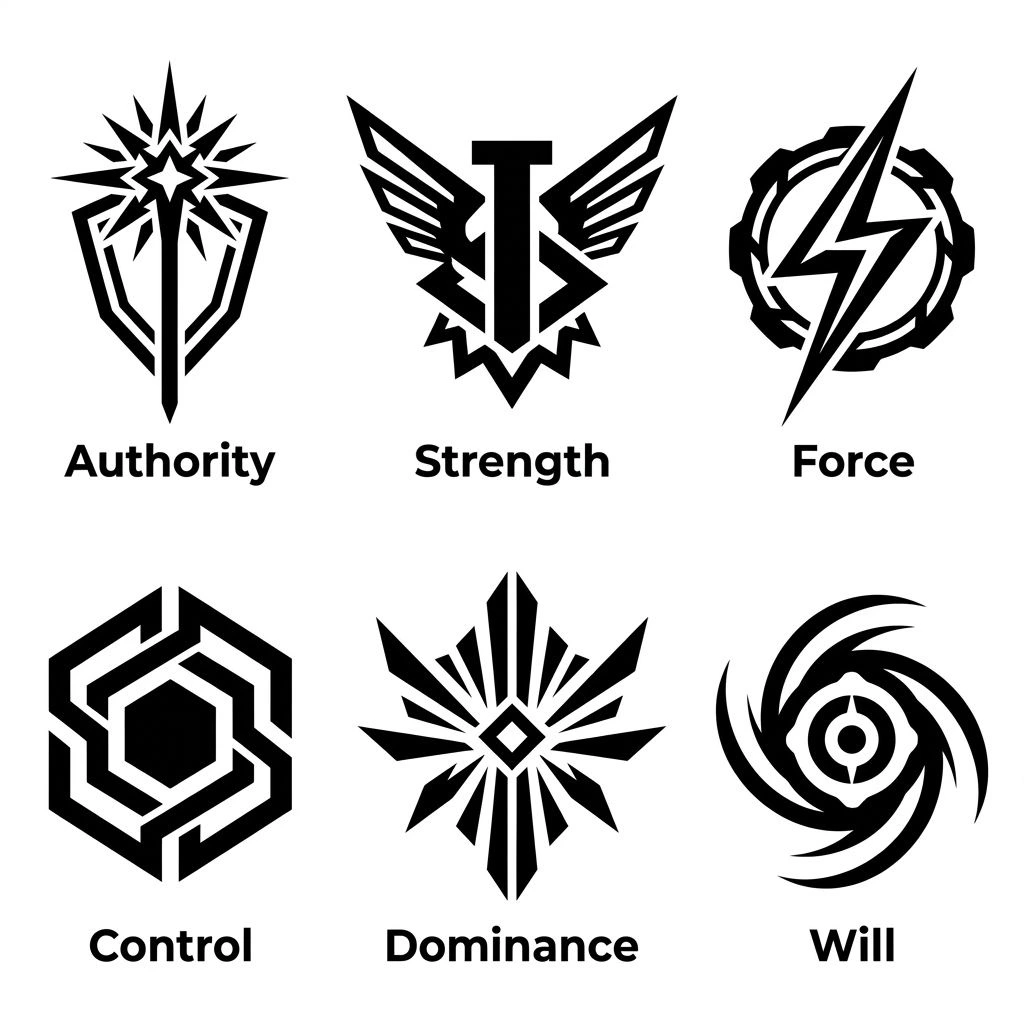
Symbols of power have appeared in human societies for thousands of years. A crown can identify a ruler, a sword can suggest force or authority, an eagle can communicate sovereignty, and a lion can represent courage and strength. In modern life, power can also be expressed through flags, logos, architecture, uniforms, gestures, monuments, and personal symbols.
But symbols of power do not all mean the same thing. Some represent authority, while others suggest physical strength, leadership, protection, independence, resistance, wealth, or influence. Their meanings can also change depending on the culture, historical period, and situation in which they appear.
This guide explores the most common symbols of power, their meanings, historical uses, cultural differences, and modern interpretations. It also explains which symbols may fit ideas such as personal power, leadership, strength, protection, resilience, and transformation.
What Are Symbols of Power? (Quick Answer)
Symbols of power are objects, animals, images, gestures, natural forces, or designs used to communicate authority, strength, influence, leadership, sovereignty, control, resistance, or status.
Some of the best-known examples include:
| Symbol | Common association |
| Crown | Royal authority and leadership |
| Scepter | Command and sovereignty |
| Throne | Institutional authority and status |
| Eagle | Sovereignty, vision, authority, and strength |
| Lion | Courage, strength, and dominance |
| Dragon | Extraordinary or supernatural power in particular traditions |
| Sword | Force, courage, justice, or military authority |
| Shield | Protection and defensive strength |
| Lightning | Sudden and overwhelming natural force |
| Sun | Vitality, authority, life, and power |
| Mountain | Endurance, stability, and resilience |
| Raised fist | Collective strength, resistance, and solidarity |
There is no single universal symbol of power. The same image can have different meanings in different cultures or situations.
What Do Symbols of Power Represent?
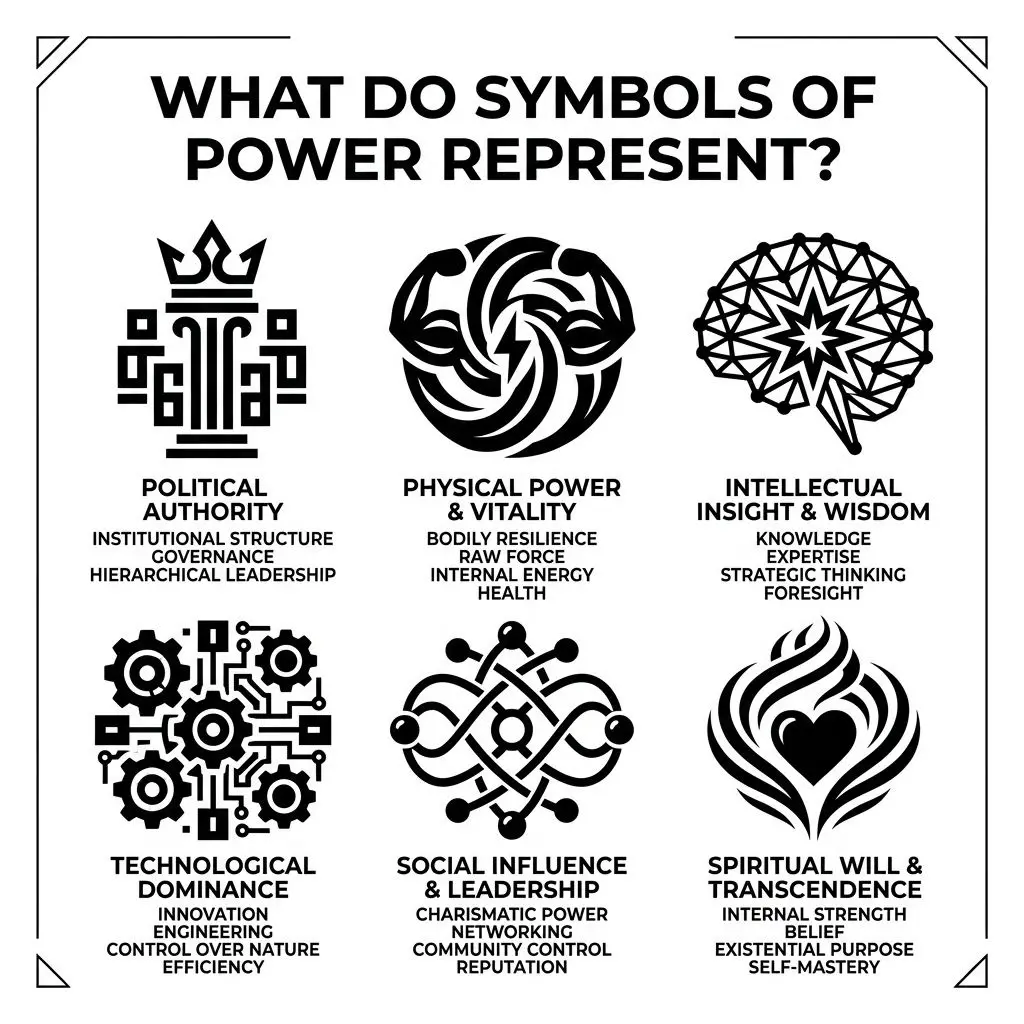
Power is an abstract idea. You cannot physically see authority, influence, leadership, or control in the same way you can see a crown or sword. Symbols give those ideas a visible form.
Throughout history, rulers and institutions have used objects, clothing, architecture, animals, and ceremonial imagery to communicate status and authority. Medieval monarchs, for example, were represented through crowns, thrones, seals, coins, heraldic devices, expensive clothing, jewelry, swords, and other visual elements.
Modern society continues to use similar visual language. Government buildings, corporate offices, uniforms, official seals, podiums, flags, monuments, and logos can all communicate institutional importance or authority.
Power and Authority Are Not Exactly the Same
The words power and authority are closely related, but they describe different ideas.
Power can refer to the ability to influence people, control events, overcome resistance, or make things happen.
Authority usually refers to recognized or accepted power to command or make decisions.
For example, a sword may symbolize force, while a scepter may communicate formal authority. A crown can represent a recognized position, while a raised fist can communicate collective resistance.
Historical art provides a useful example. In imagery of Napoleon’s imperial rule, objects such as the scepter, sword, throne, and imperial eagle were used to communicate authority and legitimacy rather than simply physical strength.
Power and Strength Are Different Too
Strength usually suggests the ability to withstand pressure or exert force.
Power can be broader.
A mountain may represent endurance and strength. A crown may represent authority. A raised fist may represent collective power. A shield may symbolize protective strength.
Understanding these differences makes symbolism much easier to interpret.
Power Can Be Positive or Negative
Power is not automatically a positive idea.
Depending on context, a symbol can communicate:
- Leadership
- Confidence
- Protection
- Responsibility
- Achievement
- Independence
- Sovereignty
- Control
- Domination
- Intimidation
- Aggression
- Resistance
For this reason, the meaning of a power symbol depends partly on who is using it, why they are using it, and how other people understand it.
Common Symbols of Power and Their Meanings
Many symbols have become associated with power because of their historical use, physical characteristics, religious traditions, political institutions, or cultural stories.
Crown
The crown is one of the clearest symbols of royal authority, sovereignty, leadership, and status.
Historically, crowns and other forms of royal regalia helped visually distinguish rulers from other members of society. Crowns were especially important in ceremonial settings because they made rank immediately recognizable.
Today, the crown can have a broader meaning. A person may use a crown to represent:
- Leadership
- Achievement
- Confidence
- Self-respect
- Ambition
- Success
- Personal authority
A crown tattoo, for example, does not necessarily indicate royalty. It may represent taking responsibility for one’s own life.
Scepter
A scepter is traditionally associated with command, sovereignty, and formal authority.
Its importance comes partly from its connection with rulers and ceremonial traditions. It is not primarily a weapon. Instead, its symbolic role is connected to the right or responsibility to govern.
Historical European royal imagery often placed the scepter alongside the crown and other regalia.
Throne
A throne represents institutional power, rank, sovereignty, and position.
Unlike a crown, which is worn, a throne communicates power through physical placement. The person sitting on it is visually separated from everyone else.
Medieval seals and royal portraits frequently depicted rulers seated on thrones while holding objects such as an orb and scepter. These visual arrangements helped communicate royal status and authority.
The modern phrase “claim the throne” shows how strongly the throne has become associated with political leadership.
Eagle
The eagle is widely used as a symbol of authority, sovereignty, strength, freedom, vision, and national identity, although the exact meaning depends on the context.
Its association with power is partly connected to its physical characteristics. It flies at great heights, has strong talons, and is a prominent predator.
The eagle has also played an important role in political and imperial symbolism. The Open University notes the use of the imperial eagle in Roman and later European traditions and its role in visual claims about authority and divine power.
An eagle on a national emblem may therefore communicate something different from an eagle used in a personal tattoo.
Lion
The lion commonly symbolizes courage, strength, leadership, royalty, confidence, and dominance.
Its association with power comes partly from its role as a large predator and partly from centuries of use in royal and heraldic imagery.
Lions have appeared on coats of arms, seals, sculptures, flags, monuments, and royal imagery.
For personal symbolism, a lion may represent courage or the ability to face difficult circumstances.
Dragon
Dragons can represent extraordinary power, mystery, protection, authority, transformation, or supernatural strength, but dragon symbolism varies significantly across cultures.
This is an important example of why symbols should not be given one universal definition.
In some East Asian traditions, dragons have strong associations with cosmic forces, water, weather, imperial authority, and prosperity. In other traditions, dragons may be portrayed as dangerous creatures that heroes must overcome.
Therefore, the meaning of a dragon depends heavily on the cultural tradition being discussed.
Sword
The sword can represent force, courage, justice, military authority, protection, and the ability to act decisively.
It has a dual symbolic character.
On one side, it represents the ability to fight or overcome an opponent. On the other, it can symbolize protection, justice, duty, or defense.
In medieval royal imagery, a sword could be part of a broader visual language of kingship and authority.
Shield
A shield represents protection, defensive strength, security, courage, and readiness.
Unlike a sword, which is primarily associated with offense or action, the shield emphasizes the ability to withstand danger.
This makes the shield particularly useful as a symbol of power used to protect rather than dominate.
Lightning Bolt
Lightning can symbolize sudden force, energy, speed, destruction, divine power, and overwhelming natural strength.
Across different mythological traditions, thunder and lightning have been associated with powerful deities and supernatural forces.
Because lightning is sudden and difficult for humans to control, it naturally lends itself to symbolism involving immense or uncontrollable power.
Sun
The sun can represent:
- Vitality
- Life
- Leadership
- Renewal
- Authority
- Illumination
- Energy
- Cosmic power
Its symbolism often comes from the sun’s central role in sustaining life and regulating natural cycles.
A sun symbol can therefore express power in a different way from a sword or crown. It may suggest life-giving or sustaining power rather than physical dominance.
Fire
Fire can symbolize energy, transformation, courage, destruction, passion, and renewal.
Its meaning can change depending on how it is presented.
A controlled flame may suggest determination or creative energy, while a destructive fire may represent uncontrolled force.
Mountain
A mountain often represents strength, endurance, stability, permanence, and overcoming challenges.
Unlike a crown, the mountain does not usually communicate formal authority. Instead, it represents a quieter form of power: the ability to remain standing through pressure and time.
Raised Fist
The raised fist can symbolize collective strength, resistance, solidarity, determination, and defiance.
Its meaning is especially connected with people acting together rather than one ruler exercising authority.
This makes it an important example of collective power rather than hierarchical power.
Animals That Symbolize Power
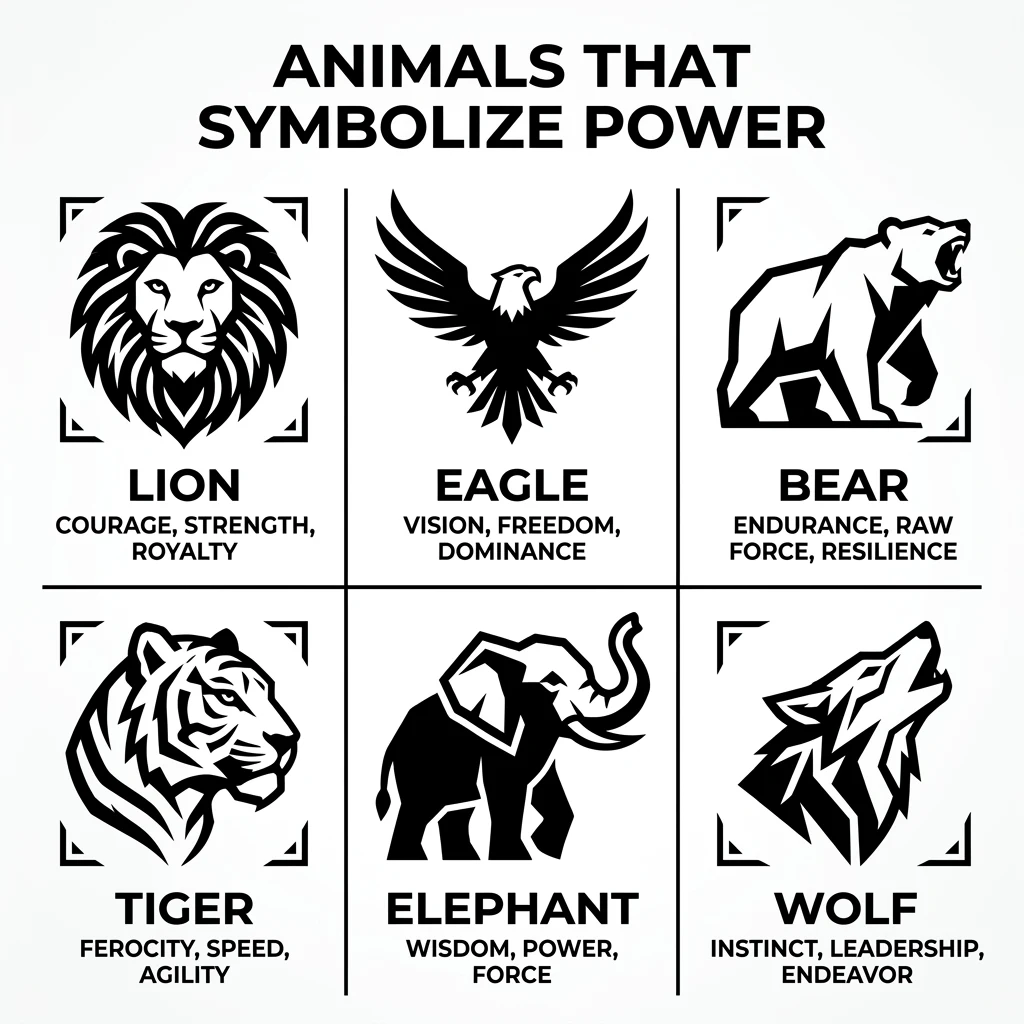
Animals have long been used to communicate human qualities because people associate certain physical or behavioral characteristics with symbolic ideas.
Lion
The lion commonly suggests:
- Courage
- Strength
- Leadership
- Royalty
- Confidence
- Dominance
Its use in heraldry and royal imagery helped strengthen these associations.
Eagle
The eagle can suggest:
- Authority
- Freedom
- Vision
- Sovereignty
- Strength
- National identity
The surrounding symbols are important. An eagle on a government seal has a different context from an eagle in a nature-themed tattoo.
Dragon
The dragon can symbolize:
- Supernatural power
- Protection
- Wisdom
- Transformation
- Authority
- Cosmic forces
Its interpretation must always consider the cultural tradition.
Bear
The bear is often used in modern symbolism to represent:
- Physical strength
- Protection
- Courage
- Endurance
- Resilience
These meanings are commonly connected to the animal’s size, strength, and ability to survive difficult environments.
Tiger
The tiger may symbolize:
- Courage
- Physical power
- Confidence
- Fearlessness
- Independence
Tiger symbolism is particularly diverse across Asian cultural traditions, so the exact interpretation should not be generalized.
Horse
The horse can represent:
- Strength
- Movement
- Freedom
- Endurance
- Status
- Military power
The meaning may change depending on whether the horse appears in mythology, royal imagery, warfare, sport, or modern art.
Ancient and Historical Symbols of Power
Historical power symbolism often involved much more than a single object. Rulers combined clothing, architecture, weapons, animals, ceremonies, and precious materials to create an entire visual system.
Crowns and Royal Regalia
Crowns, scepters, orbs, robes, and ceremonial objects helped make royal authority visible.
Royal regalia was not simply decorative. Such objects could communicate rank, succession, sovereignty, responsibility, and continuity.
The symbolism of medieval monarchy is especially clear in royal seals and portraits, where rulers could appear crowned and seated on a throne while holding an orb and scepter.
Scepters and Staffs
A staff or scepter can symbolize command because it is held by the person exercising authority.
The scepter therefore belongs more to the category of institutional power than raw physical strength.
Swords
Swords often communicate a combination of:
- Military authority
- Courage
- Justice
- Protection
- Force
- Duty
Their meaning depends heavily on the surrounding imagery.
Thrones
A throne represents authority through position.
An elevated or visually separated seat can make the person occupying it appear important, powerful, and distant from ordinary subjects.
Imperial Eagles
The eagle became an important imperial image in several historical contexts.
The Open University notes that Napoleon adopted the imperial eagle as part of a broader visual program connecting his authority with Roman and Carolingian traditions.
This illustrates an important point: symbols of power can be deliberately adopted to connect a present ruler or institution with a respected historical tradition.
Symbols of Power Across Cultures
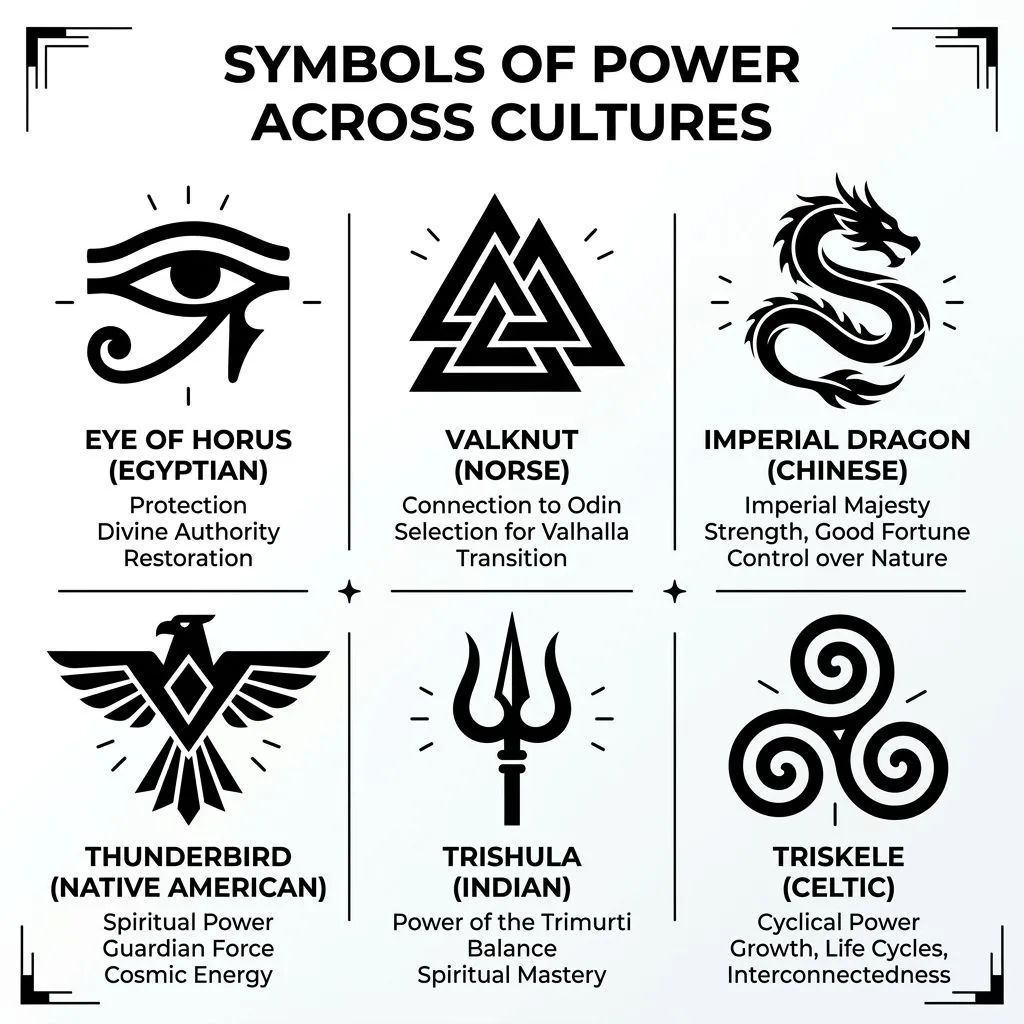
There is no single global dictionary of symbolism.
A symbol can have one meaning in one culture and a very different meaning somewhere else.
Ancient Egypt
Ancient Egyptian rulers used crowns, royal clothing, staffs, animals, and divine imagery to communicate kingship and religious authority.
Egyptian symbolism frequently connected political leadership with religious ideas, so royal power could be presented as part of a larger cosmic or sacred order.
Ancient Rome
Roman political imagery frequently connected power with military success, imperial authority, law, and divine associations.
The eagle became particularly important in Roman military and imperial symbolism and later influenced European political imagery.
Medieval Europe
Medieval European rulers used:
- Crowns
- Scepters
- Thrones
- Swords
- Orbs
- Seals
- Heraldic animals
- Castles
- Expensive fabrics
- Jewelry
These objects helped make social hierarchy and political authority visible. Medieval seals, for example, could depict a ruler seated on a throne with an orb and scepter.
East Asian Traditions
Dragon symbolism is an important example of why cultural context matters.
In Chinese traditions, the dragon became strongly associated with imperial authority and cosmic forces. It should not simply be treated as having exactly the same meaning as the European dragon.
The broader lesson is that the physical image may look similar while its cultural meaning differs.
Modern Western Culture
Modern Western societies still use traditional power imagery, but they also use newer forms.
Examples include:
- Government seals
- National flags
- Corporate logos
- Military uniforms
- Official buildings
- Monuments
- Podiums
- Formal portraits
- Luxury goods
- Public ceremonies
Power symbolism has therefore moved beyond crowns and swords into everyday visual communication.
Symbols of Personal Power
Not all power is about ruling other people.
Personal power can mean confidence, independence, resilience, self-direction, courage, or the ability to recover from hardship.
Crown for Self-Leadership
A crown can represent personal leadership rather than literal monarchy.
Someone may use it to express the idea of taking responsibility for their own decisions.
Lion for Courage
A lion can represent the courage to face difficult situations.
For personal symbolism, the emphasis may be on bravery rather than dominance.
Mountain for Resilience
A mountain can symbolize the ability to remain steady when life becomes difficult.
Its great size and permanence make it a natural metaphor for endurance.
Phoenix for Transformation
The phoenix is commonly used in modern symbolism to represent renewal, rebirth, and transformation.
It can be meaningful for someone who wants a symbol of starting again after a difficult period.
Flame for Determination
A flame can represent motivation, passion, energy, and an inner drive that continues burning.
Sun for Confidence
The sun can express vitality, confidence, optimism, and personal energy.
The meaning is less about controlling others and more about having an internal source of strength.
Symbols of Power and Protection
Power and protection overlap, but they are not identical.
A crown communicates authority. A shield communicates defense.
This distinction can help you select a symbol that fits your intended message.
Shield
The shield is one of the clearest symbols of defensive strength.
It can represent:
- Safety
- Protection
- Courage
- Defense
- Security
Armor
Armor symbolizes preparedness and resistance to harm.
It can also represent emotional resilience in modern personal symbolism.
Guardian Animals
Animals such as lions, bears, dogs, or mythical creatures may be used to represent guardianship.
The meaning depends on the specific culture and the way the animal is portrayed.
Sword and Shield Together
A sword and shield together can communicate a balance between action and defense.
The sword suggests the ability to confront a threat, while the shield suggests the ability to protect oneself or others.
Symbols of Power for Tattoos
Power symbols are popular tattoo choices because they can express personal values in a visual form.
However, a tattoo does not have to follow one fixed historical definition.
Leadership Tattoos
Consider imagery such as:
- Crown
- Eagle
- Lion
- Scepter
These can communicate leadership, authority, confidence, or responsibility.
Strength Tattoos
Possible choices include:
- Lion
- Bear
- Mountain
- Sword
- Lightning
Choose based on the type of strength you want to express.
Personal Power Tattoos
A crown, flame, sun, mountain, or phoenix can represent self-confidence, determination, resilience, or transformation.
Protective Power Tattoos
A shield, armor, guardian animal, or sword-and-shield design may communicate protection and readiness.
Transformation Tattoos
Phoenixes, fire, lightning, and rising-sun imagery can be used to express change, renewal, and personal growth.
Before choosing a culturally specific symbol, research its original context. A design can carry meanings that differ from the personal interpretation you intended.
Symbols of Power in Modern Culture
Power symbolism is not limited to historical rulers.
Logos and Branding
Businesses sometimes use lions, eagles, crowns, shields, mountains, or other strong imagery to communicate qualities such as confidence, reliability, prestige, performance, or leadership.
The symbol’s meaning is shaped by the brand surrounding it.
Architecture
Buildings can communicate power through:
- Height
- Size
- Symmetry
- Entrances
- Columns
- Monumental scale
- Elevated positions
A large government building can communicate institutional permanence without displaying a crown or sword.
Clothing and Uniforms
Uniforms communicate membership, rank, responsibility, and institutional authority.
Badges, medals, insignia, colors, and formal clothing can add layers of symbolic meaning.
Flags and National Symbols
Flags can represent sovereignty, unity, identity, independence, or collective power.
The meaning depends on the specific country, movement, or institution represented.
Gestures
Gestures can communicate power without physical objects.
A raised fist, for example, can symbolize solidarity, resistance, or collective action.
Positive and Negative Meanings of Power Symbols
A power symbol can communicate very different ideas depending on context.
Positive Associations
Power may represent:
- Responsibility
- Leadership
- Protection
- Courage
- Independence
- Confidence
- Achievement
- Resilience
- Justice
Negative Associations
The same concept can also be connected with:
- Domination
- Oppression
- Intimidation
- Control
- Abuse
- Aggression
- Inequality
A crown, for example, may represent leadership and responsibility in one context but excessive privilege or domination in another.
A raised fist may represent solidarity and resistance for one audience while being interpreted through a specific political or historical context by another.
The safest approach is to consider who uses the symbol, where it appears, and what message surrounds it.
Power Symbols by Meaning
If you are searching for a symbol to express a particular idea, it is more useful to choose by meaning than to ask which symbol is “the most powerful.”
| Intended meaning | Symbols to consider |
| Leadership | Crown, eagle, lion |
| Authority | Crown, scepter, throne |
| Courage | Lion, sword, bear |
| Physical strength | Bear, lion, tiger |
| Protection | Shield, armor |
| Resilience | Mountain, tree, phoenix |
| Independence | Eagle, flame, open wings |
| Transformation | Phoenix, fire |
| Determination | Flame, mountain, sword |
| Resistance | Raised fist |
| Sovereignty | Crown, eagle, national emblem |
| Royal status | Crown, scepter, throne |
| Collective power | Raised fist, flag |
| Natural power | Lightning, sun, fire |
| Endurance | Mountain, bear, horse |
| Personal confidence | Crown, sun, lion |
These are useful starting points rather than universal rules.
How to Choose a Symbol of Power
Choosing a symbol becomes easier when you first decide what kind of power you want it to represent.
Decide What You Mean by Power
Ask yourself whether you mean:
- Authority
- Courage
- Strength
- Leadership
- Protection
- Independence
- Resilience
- Transformation
- Resistance
- Achievement
A crown may fit authority better than a mountain, while a mountain may fit endurance better than a crown.
Consider the Cultural Background
If you are choosing an ancient, religious, or culturally specific symbol, learn about its history first.
Don’t assume that a symbol means the same thing everywhere.
Think About the Visual Message
Consider how the design looks.
A sword can appear aggressive in one design but protective in another. A lion can communicate courage or dominance depending on its posture and surrounding imagery.
Consider Your Personal Meaning
Your personal interpretation can be meaningful, especially for tattoos and artwork.
However, it helps to understand the established meanings first so you know what other people may associate with the image.
Avoid Choosing Based Only on a List
A long list of symbols can be useful for inspiration, but the best choice depends on the message you want to communicate.
Instead of asking:
“Which symbol is the strongest?”
ask:
“Which symbol communicates the type of power I mean?”
That question usually produces a much clearer answer.
Why Do Symbols Communicate Power?
Power symbolism works partly because people learn visual associations through repeated use.
Height
Elevated objects or people can appear more important or dominant.
Thrones, stages, monuments, towers, and elevated seats can all use height to create visual hierarchy.
Size
Large objects naturally attract attention.
Monumental buildings and statues can therefore communicate importance, permanence, or institutional strength.
Precious Materials
Gold, jewels, and elaborate fabrics have often been associated with wealth and high social status.
Their use can make authority visually obvious.
Weapons
Weapons such as swords can communicate the ability to use force.
When paired with royal or judicial imagery, they may also represent justice or official authority.
Predatory Animals
Animals such as lions and eagles can symbolize strength because people associate them with physical power, hunting ability, speed, or dominance.
Ceremony
A crown becomes more than a piece of metal when it is used in a formal ceremony.
Repeated ceremonies teach people how to interpret an object and connect it with a particular office or institution.
Common Mistakes When Interpreting Power Symbols
Symbolism articles often become inaccurate when they treat every meaning as universal.
Mistake 1: Assuming One Symbol Has One Meaning
A lion may symbolize courage in one context and royalty in another.
Mistake 2: Mixing Cultures Together
A dragon in one cultural tradition should not automatically be given the meaning associated with dragons elsewhere.
Mistake 3: Calling Every Strong Image a Symbol of Power
A symbol can represent strength, protection, freedom, wisdom, or resilience without specifically representing authority.
Mistake 4: Treating Modern Interpretations as Ancient Facts
Someone’s modern tattoo interpretation is not automatically an ancient historical meaning.
Mistake 5: Ranking Symbols as “Most Powerful”
Symbolic meaning cannot be objectively scored.
It is more accurate to classify symbols by the type of power they represent.
Mistake 6: Ignoring Negative Meanings
Power can involve domination and control as well as leadership and protection.
A balanced explanation should acknowledge both.
Frequently Asked Questions
What is the most common symbol of power?
There is no universally accepted single symbol of power. The crown, scepter, throne, eagle, and lion are among the most recognizable examples, but each communicates a somewhat different form of power. A crown generally emphasizes authority, while an eagle or lion may emphasize strength, sovereignty, or leadership.
What animal symbolizes power?
The lion and eagle are two widely recognized examples, while dragons, bears, tigers, and horses can also represent power in particular cultural or symbolic contexts. Their meanings should be interpreted according to the tradition in which they appear.
What symbolizes personal power?
Personal power can be represented by symbols such as a crown, lion, mountain, sun, flame, phoenix, or sword. The best choice depends on whether you want to express confidence, courage, resilience, leadership, independence, or transformation.
What symbolizes strength and power?
Lions, bears, mountains, swords, shields, lightning, and eagles can all be associated with strength or power. Their specific meanings differ, so it is useful to decide whether you want to emphasize physical strength, authority, endurance, protection, or influence.
What symbolizes authority?
Crowns, scepters, thrones, seals, and royal regalia are common symbols of formal authority. Historical examples show how these objects were combined to communicate a ruler’s position and legitimacy.
What symbolizes power and protection?
Shields and armor are especially clear symbols of protection, while swords, lions, eagles, and guardian figures can combine ideas of strength and defense. The meaning depends on how the symbol is presented.
What is a good symbol of power for a tattoo?
Choose according to the message you want the tattoo to express. A crown may suggest leadership, a lion courage, a mountain resilience, a phoenix transformation, a shield protection, and a raised fist collective resistance. Research culturally specific designs before using them.
Can a symbol of power have a negative meaning?
Yes. Power symbolism can communicate domination, intimidation, aggression, control, or oppression as well as leadership, courage, protection, and responsibility. Context is essential when interpreting the message.
Why are crowns associated with power?
Crowns became closely associated with rulers because they visibly identified the person holding a royal position. Their use in ceremonies and royal imagery reinforced associations with sovereignty, rank, and authority.
What is the difference between a symbol of power and a symbol of strength?
A symbol of strength usually emphasizes physical or emotional ability to withstand or overcome something. A symbol of power can communicate broader ideas such as authority, influence, control, sovereignty, or leadership. The two categories overlap but are not identical.
Conclusion
Symbols of power turn abstract ideas such as authority, strength, leadership, influence, and resistance into visible forms.
The crown, scepter, and throne are strongly connected with formal authority, while the lion, eagle, sword, and lightning can communicate strength or force in different contexts.
Other symbols express different forms of power. A shield emphasizes protection, a mountain can suggest resilience, a phoenix can represent transformation, and a raised fist can communicate collective strength and resistance.
The most important point is that no symbol has one universal meaning. Culture, history, context, and personal interpretation all influence symbolism.
If you are choosing a symbol for art, jewelry, a tattoo, branding, or personal expression, start by deciding what kind of power you want to communicate. Once that is clear, the right symbol becomes much easier to identify.

Clara Miles
Hello! I’m Clara, a lifelong dreamer who finds magic in everyday moments. Writing has always been my way of exploring the world and understanding the people around me. I love creating stories that make readers laugh, cry, and reflect on life’s little surprises. When I’m not writing, you can usually find me sipping coffee at a cozy café or wandering through nature with a notebook in hand. My journey as an author is fueled by curiosity, imagination, and a love for connecting with my readers. Every story I write is a piece of my heart, and I hope it inspires yours too.
Books:
-
Whispers of the Heart
-
Shadows and Sunlight