
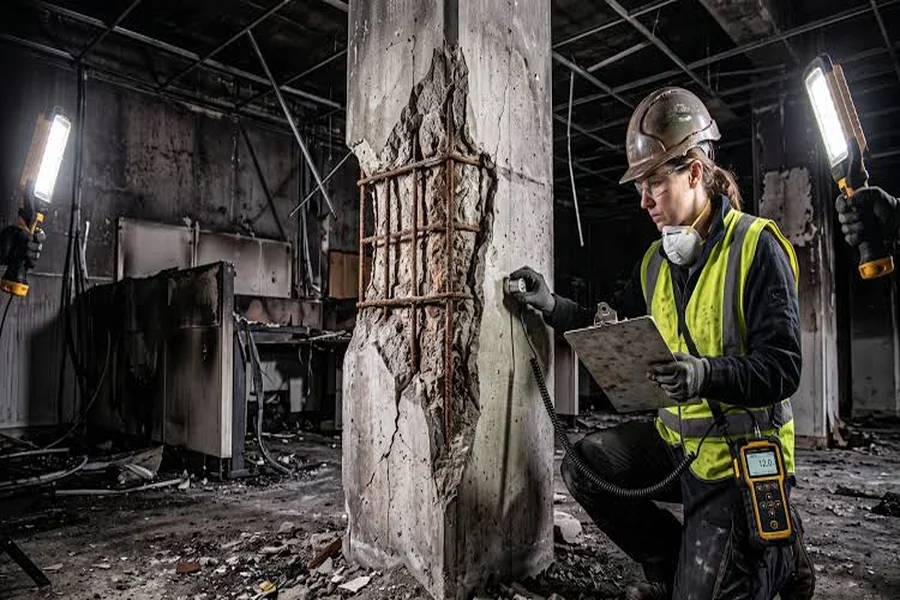
A property fire leaves obvious scars on a building. You see the charred wood, melted plastics, and blackened drywall immediately. But the most severe danger often hides out of plain sight within the very bones of your structure. When temperatures soar during a blaze, the underlying framework takes a massive hit. This makes Heat-Weakened Steel & Concrete Fire Damage Repair Inspections an absolute requirement before you even think about starting the rebuilding process.
You cannot rely on a simple visual walk-through to determine if a building is safe. Extreme heat changes the physical properties of building materials at a molecular level. If you ignore these hidden changes, you risk catastrophic structural failure down the road. Addressing this reality requires a deep understanding of how specific materials react to fire and what professional assessments actually look for.
How Extreme Heat Alters Concrete and Steel
Building materials are incredibly tough, but they have their limits. When exposed to the intense temperatures of a property fire, both concrete and steel undergo significant and often irreversible changes. Understanding these reactions helps you see why specialized testing is so important.
The Problem with Heated Concrete
Concrete seems indestructible because it does not burn. However, it reacts poorly to extreme heat. Concrete holds trapped moisture inside its porous structure. When a fire breaks out, the temperature of this trapped water rises rapidly. The water turns into steam and expands quickly. This rapid expansion builds massive internal pressure within the concrete element.
Eventually, the pressure forces the outer layers of the concrete to break away and pop off violently. Experts call this process explosive spalling. Spalling exposes the reinforcing steel rebar inside the concrete directly to the fire. Once the fire reaches the rebar, the structural integrity of the entire concrete element drops fast.
Even if you do not see obvious spalling, the heat causes silent damage. High temperatures dehydrate the cement paste that binds the sand and gravel together. The heat breaks the chemical bonds that give Portland cement its strength. This leaves the concrete brittle, chalky, and highly prone to cracking under normal loads. You might look at a concrete pillar that appears structurally sound, only to find out it has the internal consistency of dry clay.
The Deformation of Structural Steel
Steel is the backbone of modern commercial and residential construction. It supports heavy loads and keeps frameworks rigid. But steel loses its strength rapidly as temperatures rise in a building fire. Around 600 degrees Fahrenheit, steel begins to lose its load-bearing capacity. If the fire reaches 1100 degrees Fahrenheit, steel loses about half of its original strength.
Under these intense conditions, steel beams and columns expand, warp, and buckle. The heat causes the metal to expand outward. When the fire is extinguished and the metal cools down with water from fire hoses, it contracts rapidly. This sudden heating and cooling cycle distorts the steel permanently. It twists out of shape and pulls away from vital connections.
The steel might look totally intact after a pressure washer removes the soot. But its internal grain structure is permanently compromised. The fire acts like an uncontrolled forge. It heats the metal and changes its temper, effectively softening it. A compromised beam can no longer support the weight it was designed to carry.
The Hidden Dangers at the Connections
The middle of a steel beam or concrete column is not the only place you need to worry about. The connections are often the weakest links in a fire-damaged building. You must pay close attention to the bolts, welds, and joints where steel meets steel or where steel anchors into concrete.
When a steel beam expands from the heat, it pushes aggressively against its connection points. This immense pressure can shear steel bolts right off. It can snap heavy welds. It can also crack the concrete foundation where the base plates are anchored. A thorough inspection evaluates these connection points to ensure the entire structural grid remains tied together securely.
The Assessment Process for Fire-Damaged Materials
You cannot simply guess the safety of a fire-damaged building. Proper Heat-Weakened Steel & Concrete Fire Damage Repair Inspections require specific scientific methods and specialized equipment operated by licensed structural engineers.
Engineers do not just look at the damage. They run physical tests. For concrete, they might use rebound hammers to test the surface hardness. They also take physical core samples. Taking a core sample involves drilling a small cylinder out of the concrete and sending it to a specialized laboratory. The lab crushes the cylinder in a machine to determine its exact remaining compressive strength. Ground-penetrating radar is also used to check the condition of the hidden rebar without tearing the wall apart.
Testing steel is just as rigorous. Engineers look for signs of permanent deflection. They measure exactly how much a beam has sagged or twisted out of its original alignment. They use ultrasonic testing equipment to find internal microscopic cracks that the naked eye cannot see. In many cases, they remove small coupons of the steel and run metallurgical tests in a lab. These tests confirm if the steel lost its temper and original strength due to the heat exposure.
The primary goal of these detailed assessments is to map out exactly what you can save and what you must tear down. Knowing this prevents you from wasting money trying to repair materials that are beyond saving. You want to make sure your commercial fire damage restoration efforts are built on a safe and solid foundation.
Navigating Insurance and Planning Your Repairs
Insurance adjusters often look for the cheapest route to close a claim. They might look at a soot-covered beam and suggest it just needs a good cleaning and a fresh coat of paint. You need professional inspections to provide the hard data required to push back on lowball offers. Detailed engineering reports give you the leverage you need to ensure your insurance claim covers the true cost of the structural damage.
Once the inspection is complete and approved, you receive a highly detailed report outlining the true condition of your building. This report dictates your exact next steps.
- Shoring and Stabilization: If the inspection reveals severe weaknesses, you must immediately shore up the building. This involves installing temporary steel supports and bracing to prevent a total collapse while you plan the permanent repairs.
- Targeted Demolition: You will likely need to remove sections of concrete or steel that failed the testing phase. Precision is key here. You want to remove the damaged sections carefully without harming the adjacent healthy materials.
- Structural Reinforcement: Sometimes, you can reinforce weakened materials instead of replacing them entirely. Engineers might design custom steel jackets to wrap around damaged concrete columns. They might also specify new steel plates to be welded onto slightly warped beams to restore their load-bearing capacity safely.
- Protective Coatings: When you rebuild, you should consider applying intumescent paint or other fireproofing materials to the new steel and concrete. These coatings expand when heated and create a thick insulating layer. This buys you precious time and protects the structural integrity if another fire ever occurs in the future.
Dealing with the aftermath of a fire is incredibly stressful. You want to move quickly and get your property back to normal as fast as possible. But rushing the rebuilding phase without proper assessments is a massive mistake. Taking the time to properly evaluate the unseen damage ensures your building is safe for everyone who steps inside it again.
