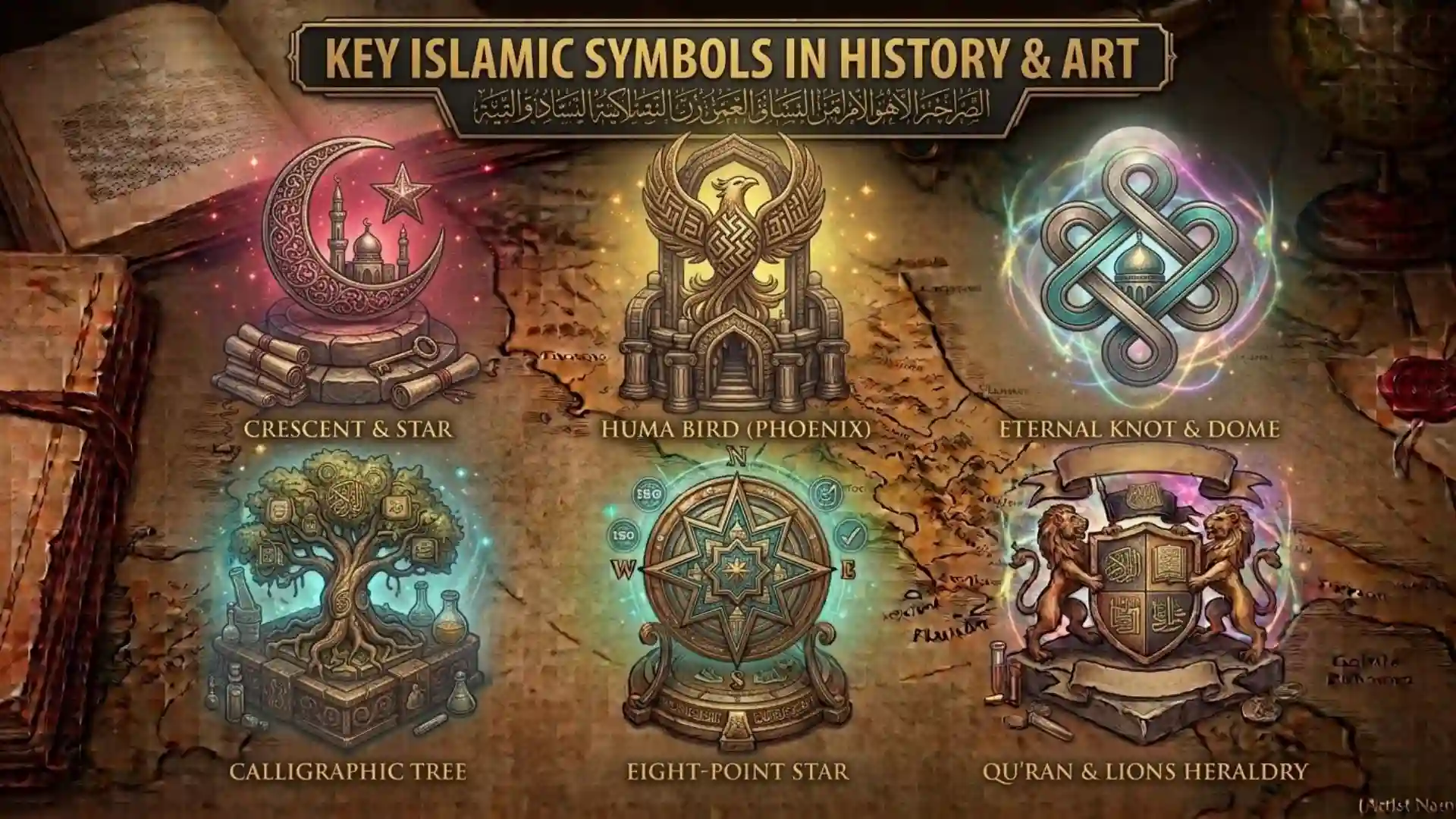
Islamic symbols appear in mosques, historical manuscripts, national flags, decorative artwork, and homes around the world. Some communicate religious beliefs directly, while others reflect centuries of history, architecture, and cultural expression. Understanding the difference helps you appreciate their meanings without confusing tradition with religious teaching.
When people search for Islamic symbols and meanings, they often expect to find one official emblem that represents the entire Muslim faith. However, Islam does not prescribe one universal visual symbol.
The crescent and star are widely associated with Islam, but other elements have deeper religious or practical roles. These include the Shahadah, Arabic calligraphy of Allah’s name, the Rub el Hizb, and the Kaaba in Mecca.
Islamic art also includes intricate geometric patterns, flowing Arabic calligraphy, floral ornamentation, and architectural designs. These artistic traditions developed across different regions and historical periods. Their meanings can reflect faith, scholarship, local identity, and artistic skill.
This guide explains common Islamic symbols, their meanings, their historical background, and their use in modern home decor. It also separates established religious facts from cultural interpretations so you can understand what each symbol actually represents.
What Are Islamic Symbols?
Islamic symbols are visual elements associated with Islam, Muslim communities, religious practices, or Islamic artistic traditions. Some have direct connections to religious beliefs, while others gained recognition through historical events and cultural use.
Unlike traditions that center on one official emblem, Islam communicates its beliefs primarily through scripture, worship, religious teachings, and the declaration of faith. Muslims express these beliefs through many forms of art and cultural practice.
For example, the Shahadah expresses a central Islamic belief. The Rub el Hizb helps organize sections of Quranic text. The crescent and star, meanwhile, became widely associated with Muslim identity through historical and political developments.
Religious Symbols, Sacred Text, and Cultural Motifs
It helps to separate Islamic symbols into a few broad categories.
- Religious declarations: The Shahadah expresses the fundamental belief in Allah’s oneness and Muhammad’s prophethood.
- Sacred names and writing: Arabic calligraphy often displays Allah’s name or passages from the Quran.
- Quranic markers: The Rub el Hizb serves a practical purpose in organizing Quranic text.
- Sacred places: The Kaaba holds a central role in Muslim prayer direction and pilgrimage.
- Historical emblems: The crescent and star appear in flags and other emblems associated with Muslim communities.
- Artistic motifs: Geometric patterns, arabesques, and floral designs decorate buildings, manuscripts, textiles, and household objects.
These categories can overlap. A geometric pattern may decorate a mosque, for instance, without carrying one specific religious meaning.
Does Islam Have an Official Religious Symbol?
Islam has no universally prescribed visual emblem that all Muslims must use. The Quran and the teachings of Islam establish religious beliefs and practices rather than designating the crescent and star as an official logo.
Nevertheless, the crescent and star remain widely recognized as a symbol associated with Islam. Their prominence reflects historical use, especially the influence of the Ottoman Empire and the adoption of similar designs by several national flags.
Muslim communities also differ in their views about using the crescent as a religious emblem. Some embrace it as a familiar cultural sign, while others point out that it has no prescribed status in Islamic teachings.
The important distinction is simple: a symbol can become associated with a religion without being required by that religion.
Common Islamic Symbols and Their Meanings
Several visual elements appear frequently in Islamic religious settings, cultural traditions, and artwork. However, each has a different function and history.
| Symbol or element | Main meaning or function | Important context |
| Crescent moon | Lunar timekeeping and cultural identity | Widely associated with Islam, but not a prescribed universal emblem |
| Star and crescent | Historical and cultural association with Muslim identity | Appears in national flags and historical emblems |
| Allah calligraphy | The Arabic name of God | Expresses Islamic belief in one God |
| Shahadah | Declaration of Islamic faith | One of the Five Pillars of Islam |
| Rub el Hizb | Marker used to divide Quranic text | Helps organize recitation and reading |
| Kaaba | Sacred structure in Mecca | Determines the direction Muslims face during prayer |
| Geometric patterns | Decorative order, repetition, and symmetry | Prominent in Islamic architecture and visual arts |
| Islamic calligraphy | Artistic writing and textual expression | Includes Quranic inscriptions and other Arabic writing |
| Mihrab | Architectural niche indicating prayer direction | A functional feature in many mosques |
This overview shows why the phrase Islamic religious symbols needs careful explanation. A declaration of faith, a sacred building, and a decorative pattern do not serve the same purpose.
The Crescent Moon in Islam
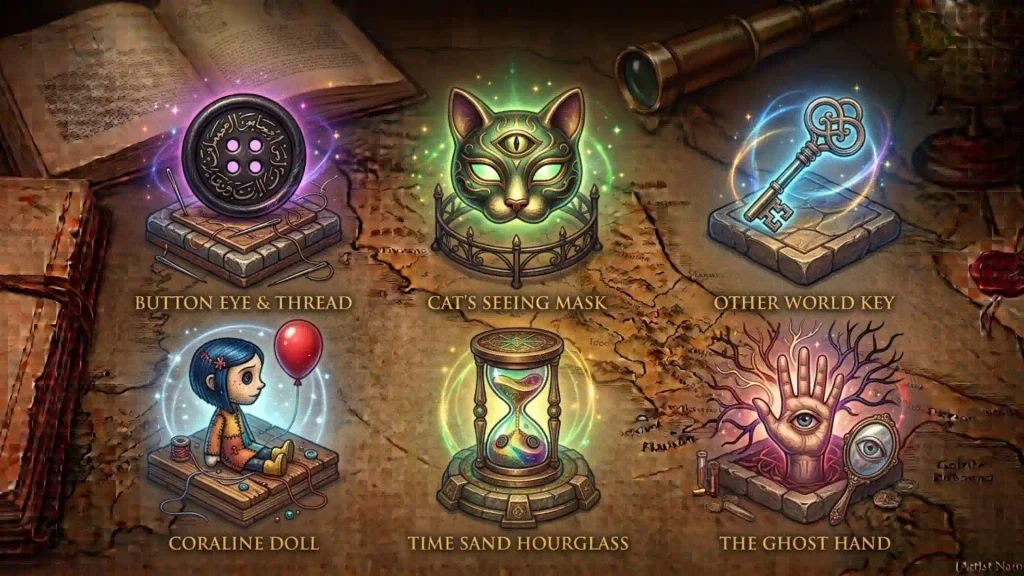
The crescent moon is among the most recognizable images associated with Muslim communities. It appears on flags, in Ramadan decorations, and in various forms of Islamic-inspired artwork.
Its association with Islam has both historical and practical dimensions. The lunar crescent helps mark the beginning of Islamic months, while its use as an emblem developed through historical traditions.
What Does the Crescent Moon Mean in Islam?
The Arabic word for the visible crescent is hilal. Lunar observation plays an important role in the Islamic calendar, which follows the cycles of the Moon rather than the Gregorian calendar.
Islamic months generally contain 29 or 30 days. Depending on the calendar method and the relevant religious authority, the beginning of a month may be established through crescent sighting or calculated astronomical criteria.
The crescent therefore has a genuine connection to Islamic timekeeping. However, that practical role does not mean the crescent itself is an object of worship or a required religious emblem.
People may also interpret the crescent as a sign of renewal or new beginnings. Such interpretations can be meaningful in art and personal reflection, but they should not automatically be presented as established Islamic doctrine.
The Crescent Moon During Ramadan and Eid
The crescent receives particular attention during Ramadan, the month of fasting, and Eid al-Fitr, the celebration that follows Ramadan.
Traditionally, lunar observation helps determine the beginning of Ramadan and the end of the fasting month. The relevant date may differ between countries and communities because they follow different sighting practices or calendar methods.
Crescent imagery is also common in seasonal decorations, greeting cards, lantern displays, and public celebrations.
For example, a family might place crescent-shaped ornaments beside lanterns during Ramadan. This is a cultural and decorative choice rather than a requirement of fasting or worship.
The Historical Origins of the Crescent Symbol
The crescent existed as a visual motif long before it became widely associated with Islam. Different ancient societies used lunar imagery in their art, coinage, and political emblems.
The crescent’s later association with Islam grew through historical developments, particularly its use by the Ottoman state. Over time, the emblem became familiar in Muslim-majority societies and appeared in national flags and other public symbols.
This history explains why the crescent is recognizable today. It does not establish that Islam originally adopted the crescent as a universal religious sign.
The Star and Crescent Symbol
The star and crescent combines a curved lunar shape with a star, often a five-pointed one. It is one of the most familiar emblems associated with Islam in modern visual culture.
Its meaning depends on the context. On a national flag, it may express national identity and historical heritage. On decorative artwork, it may signal an Islamic cultural theme.
What Does the Star and Crescent Represent?
Many people associate the star and crescent with Islam, Muslim unity, or spiritual guidance. These interpretations are common in modern explanations and decorative contexts.
However, there is no single universally established religious meaning for the paired design. The Quran does not prescribe it as Islam’s official emblem, and Muslims differ in how they interpret its religious significance.
It is more accurate to describe the design as a historical and cultural emblem associated with Islam than to claim that every Muslim understands it in exactly the same way.
The Star and Crescent in History and Flags
The emblem became especially prominent through the Ottoman Empire, whose influence helped spread its association with Muslim identity. Its appearance in modern flags strengthened that connection.
For example, the flags of Türkiye and Pakistan both feature a crescent and star. Their national designs have their own historical and civic contexts, so the emblem should not be treated as having one identical meaning in every country.
The Red Crescent is another important example. It is an internationally recognized humanitarian emblem used by Red Crescent organizations within the International Red Cross and Red Crescent Movement. Its role is humanitarian rather than a declaration of religious doctrine.
Is the Star and Crescent Mentioned in the Quran?
The Quran refers to celestial bodies, including the Moon and stars. However, these references do not establish the combined star-and-crescent design as a prescribed emblem of Islam.
This distinction matters when researching Islamic symbols meaning. A celestial object mentioned in scripture is not automatically the same thing as a later emblem combining two celestial shapes.
Allah Calligraphy and the Meaning of God’s Name
The Arabic word Allah means God. In Islam, belief in Allah’s oneness forms the foundation of faith, a concept commonly described as tawhid.
The name appears in Quranic text, prayer, religious writing, inscriptions, and artistic compositions. Arabic calligraphy offers artists a way to present sacred words through carefully shaped letters and balanced designs.
What Does Allah Mean in Islam?
Islam teaches that Allah is the one God, the Creator and Sustainer of the universe. Muslims direct their worship to Allah and understand the prophets as messengers who conveyed God’s guidance.
The word Allah is not merely a decorative term. It carries profound religious significance because it names the one God worshiped in Islam.
Consequently, Allah’s name often appears in contexts associated with devotion, learning, and religious reflection.
Allah in Arabic Calligraphy
Arabic calligraphy developed into a major artistic tradition across the Muslim world. Calligraphers refined letterforms, proportions, spacing, and composition to create writing that serves both textual and visual purposes.
Allah’s name may appear in traditional scripts, modern compositions, carved panels, manuscript decoration, and architectural inscriptions.
However, not every calligraphic design containing Arabic letters necessarily quotes the Quran. Some works display a divine name, a religious phrase, a poem, or another text. Understanding the actual wording helps you interpret the artwork correctly.
Allah Calligraphy in Islamic Home Decor
Allah calligraphy appears in framed artwork, wall panels, decorative tiles, and other household objects.
If you choose such artwork, consider these practical points:
- Verify the Arabic spelling and the meaning of the inscription.
- Choose a clean, dignified location for religious writing.
- Avoid displaying sacred text where it may be damaged or treated carelessly.
- Consider the room’s lighting and surrounding decorations.
- Remember that personal preferences about placement vary among Muslim households.
Allah calligraphy can express faith and cultural heritage while also showcasing the skill of the artist. Its religious significance comes from the name itself, not simply from the materials or colors used to display it.
The Shahadah: The Islamic Declaration of Faith
The Shahadah, also spelled Shahada, is the Islamic declaration of faith. It states that there is no deity worthy of worship except Allah and that Muhammad is the Messenger of Allah.
This declaration expresses two central beliefs: the oneness of God and the prophethood of Muhammad. It holds a much more direct religious role than a cultural emblem such as the crescent and star.
What Is the Shahadah?
The Shahadah is commonly rendered in English as:
There is no deity worthy of worship except Allah, and Muhammad is the Messenger of Allah.
This translation conveys the declaration’s central meaning. Exact English wording may vary slightly between translations.
The declaration is fundamental to Islamic belief and has a prominent place in Muslim religious life. It appears in teaching, prayer-related contexts, calligraphy, inscriptions, and historical works.
The Shahadah and the Five Pillars of Islam
The Shahadah is one of the Five Pillars of Islam, which summarize major acts and commitments in Islamic religious practice.
| Pillar | Meaning |
| Shahadah | Declaration of faith |
| Salah | The five daily prayers |
| Zakat | Obligatory almsgiving for eligible Muslims |
| Sawm | Fasting during Ramadan |
| Hajj | Pilgrimage to Mecca for those who are able |
Together, these pillars describe central dimensions of Islamic belief and practice. The Shahadah expresses faith, while the other pillars involve worship, generosity, fasting, and pilgrimage.
Shahadah Calligraphy and Religious Artwork
Artists often display the Shahadah in Arabic calligraphy. It may appear on architectural inscriptions, historical objects, flags, and framed artwork.
Because the declaration contains sacred wording, accurate reproduction matters. An attractive design can still contain a spelling mistake or incorrectly arranged text.
Before purchasing or displaying Shahadah artwork, check the inscription with a reliable Arabic reader or knowledgeable source. This is particularly important when the design uses heavily stylized lettering.
The Rub el Hizb: The Eight-Pointed Islamic Star
The Rub el Hizb is an eight-pointed geometric mark formed by two overlapping squares. It is especially recognizable from its use as a textual marker in many printed editions of the Quran.
Unlike the crescent and star, its key function is practical: it helps readers identify divisions within Quranic text.
What Is the Rub el Hizb?
The name is commonly transliterated as Rub el Hizb or Rub al-Hizb. The mark resembles an eight-pointed star, with a small space or circle often appearing at its center.
In Quranic organization, the text is divided into ajza’ (parts) and ahzab (sections or groups). A hizb is commonly divided into four quarters, and the Rub el Hizb can mark those quarter divisions.
This structure helps readers organize recitation and track progress through the text.
What Does the Rub el Hizb Mean?
The symbol’s main significance lies in its role as a Quranic textual marker. It helps readers navigate the text rather than serving as a universal emblem of the Islamic faith.
Some geometric designs carry additional cultural or artistic interpretations. Those interpretations should not be confused with the marker’s established textual function.
For readers studying the Quran, this distinction is useful. The mark provides information about the text’s organization, much like a section marker in a book.
The Rub el Hizb in Islamic Art and Design
The eight-pointed form also appears in geometric ornament, tilework, manuscripts, and architectural decoration.
However, not every eight-pointed star is a Rub el Hizb. Artists have used many star-shaped geometric patterns across Islamic artistic traditions, and similar shapes can serve different purposes.
When identifying a design, look at its construction and context. A marker printed inside a Quran may have a specific textual function, while a similar shape on a tile may be purely decorative.
The Kaaba: Meaning and Religious Significance
The Kaaba is a sacred structure located within Masjid al-Haram in Mecca, Saudi Arabia. It stands at the center of Muslim prayer direction and holds a central place in the Hajj pilgrimage.
Although the Kaaba may appear in lists of Islamic symbols, it is more accurately described as a sacred structure with a specific religious role.
What Is the Kaaba?
The Kaaba is a roughly cube-shaped structure situated in the Grand Mosque of Mecca. Muslims face its direction when performing their obligatory prayers.
The direction is called the Qibla. Mosques often indicate it through a mihrab, a niche or architectural feature that identifies the prayer direction.
The Kaaba’s importance comes from its place in Islamic worship and tradition, not from a belief that the structure itself is a deity.
Why Is the Kaaba Important in Islam?
The Kaaba is closely connected to two major aspects of Muslim religious life.
Daily prayer: Muslims around the world face the Qibla during their formal prayers. This shared direction gives prayer a consistent orientation across different countries.
Pilgrimage: Hajj, the annual pilgrimage to Mecca, includes rites performed around the Kaaba. Umrah, a separate pilgrimage that can take place at other times, also includes circumambulation of the structure.
During tawaf, pilgrims walk around the Kaaba seven times. This ritual forms part of the pilgrimage practices associated with the sacred mosque.
The Kaaba therefore has a direct religious role that differs from the cultural associations of the crescent and star.
The Kaaba in Islamic Art and Decor
Images of the Kaaba may appear in pilgrimage photographs, educational materials, framed prints, and personal artwork. For many Muslims, such images recall Hajj, Umrah, prayer, or a meaningful visit to Mecca.
When choosing Kaaba wall art, consider the accuracy of the image and the context in which you intend to display it. Some households prefer sacred-place imagery in a dedicated prayer area, while others choose a different setting.
The central point is to distinguish a depiction of a sacred place from the religious practices associated with that place.
Islamic Geometric Patterns and Their Meanings
Islamic geometric patterns are among the most recognizable features of Islamic art. They use circles, squares, polygons, stars, and repeating arrangements to create intricate decorative surfaces.
You can find these patterns on mosque walls, ceramic tiles, wooden screens, manuscripts, metalwork, textiles, and household objects.
The Metropolitan Museum of Art’s study of geometric patterns in Islamic art explains how artists combine basic geometric forms into complex designs. It also discusses their relationship with calligraphy and vegetal ornament.
What Are Islamic Geometric Patterns?
Geometric ornament relies on the careful arrangement of shapes. Artists may repeat a single motif, interlock several forms, or build a larger design from a small set of geometric units.
Common elements include:
- Circles and interlocking circles
- Squares and four-sided polygons
- Five-, six-, and eight-pointed star patterns
- Multisided polygons
- Repeating grids and tessellations
- Interlaced lines and symmetrical arrangements
These elements can produce detailed designs without relying on pictures of people or animals. However, Islamic art is diverse, and figurative imagery also appears in some historical and regional contexts.
The Eight-Pointed Star and Other Geometric Designs
The eight-pointed star appears in many forms of Islamic ornament. Artists may create it by combining squares, triangles, or other geometric units.
Its appearance alone does not establish a specific religious meaning. A star can function as a decorative element, part of an architectural pattern, or a textual marker in a particular context.
Other designs use six-pointed stars, polygons, and repeating networks. Their forms reflect different artistic choices and regional traditions.
Why Geometry Is Prominent in Islamic Art
Geometric patterns allow artists to create order, balance, repetition, and visual complexity. A relatively small set of shapes can generate a design that extends across a large wall or architectural surface.
Geometry also connects Islamic art with mathematics, craftsmanship, and architectural planning. Artists and builders needed to understand proportions, measurements, symmetry, and the relationships between shapes.
The result can be visually intricate without requiring every element to carry a fixed symbolic message.
It is also important to recognize that Islamic art includes more than geometry. Calligraphy, floral ornament, ceramics, textiles, metalwork, architecture, and regional decorative traditions all contribute to its richness.
Islamic Geometric Patterns in Modern Interiors
Geometric patterns adapt well to modern spaces because they can add detail without overwhelming a room.
Consider these practical applications:
- Wall panels: Use one geometric panel as a focal point behind a sofa or in an entryway.
- Ceramic tiles: Add repeating motifs to a backsplash or a small decorative wall.
- Rugs and cushions: Introduce pattern through textiles that you can easily replace.
- Wooden screens: Use geometric cutouts to create visual separation between spaces.
- Bedding and curtains: Choose simpler repeating patterns when the room already contains detailed furnishings.
For a balanced look, combine one prominent pattern with solid colors and simpler textures. This lets the geometric design stand out without making the room feel crowded.
Islamic Calligraphy and Quranic Art
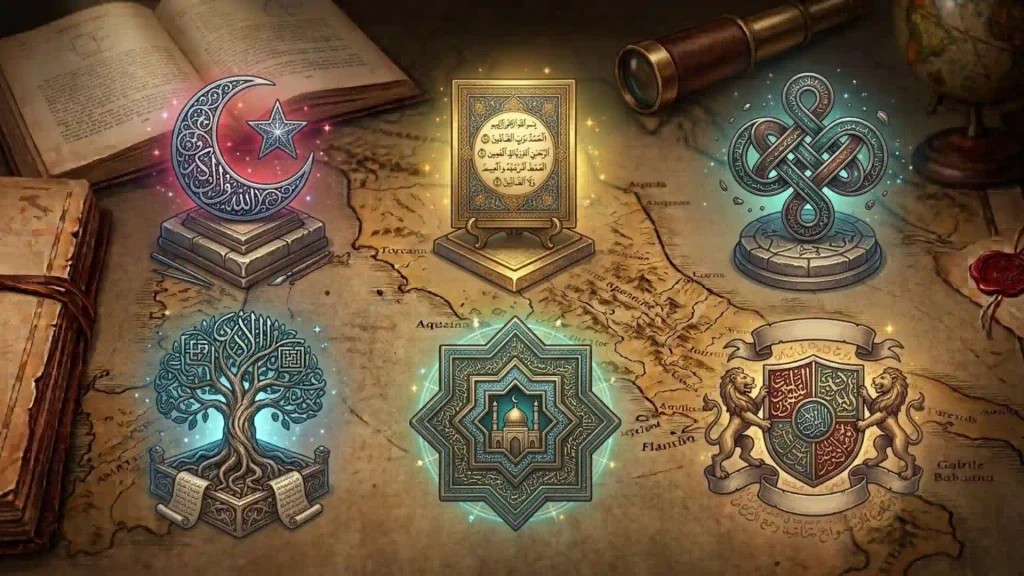
Islamic calligraphy brings writing into the visual arts. Artists shape letters, adjust proportions, and arrange words to create compositions that communicate language while also creating visual beauty.
Calligraphy has a long history in Quran manuscripts, mosque inscriptions, architectural decoration, and other forms of Islamic artistic expression.
What Is Islamic Calligraphy?
Islamic calligraphy often uses Arabic script, although the broader artistic traditions of Muslim societies include other scripts and languages.
Arabic calligraphy can display Quranic verses, religious phrases, poetry, names, and other texts. Quranic calligraphy specifically refers to calligraphic writing that contains text from the Quran.
This distinction matters because Arabic lettering is not automatically Quranic text. You need to know what the inscription says before interpreting its religious significance.
Common Forms of Islamic Calligraphy
Several calligraphic styles developed across different regions and historical periods.
- Kufic: A family of scripts known for angular and structured letterforms. It appears in early Quran manuscripts and architectural inscriptions.
- Naskh: A highly influential script with clear, rounded forms. It became widely used for copying books and Quranic manuscripts.
- Thuluth: A monumental style often used for architectural inscriptions, headings, and decorative compositions.
- Regional and modern styles: Artists continue to adapt calligraphic techniques for contemporary artwork and design.
These styles differ in their letterforms, proportions, readability, and historical uses. Their visual appearance also depends on the artist’s technique and the surface being decorated.
Quranic Verses and Sacred Inscriptions
Quranic verses appear in manuscripts, mosque decoration, tiles, framed artwork, and other objects. Such works can combine textual meaning with careful artistic design.
However, accuracy remains essential. A decorative inscription should preserve the intended wording and avoid presenting a paraphrase as an exact Quranic quotation.
When researching a verse, consult a reliable Quran text and a trustworthy translation. Check the chapter and verse reference before including the wording in an article or purchasing a design.
Islamic Calligraphy in Home Decor
Calligraphy can work in traditional and contemporary interiors. Some people choose framed verses, while others prefer a single word or a more restrained composition.
Before displaying a piece, consider:
- Whether the text is accurate and correctly translated.
- Whether the artwork contains Quranic verses or another Arabic phrase.
- Whether the location offers a dignified setting.
- Whether the design complements the room without obscuring the text.
- Whether the artist or seller explains the inscription clearly.
These checks help you appreciate both the artistic craftsmanship and the meaning of the words.
Islamic Architecture and Decorative Motifs
Islamic architecture combines practical building needs with regional artistic traditions. Mosques, schools, palaces, gardens, and other structures may feature arches, domes, minarets, carved surfaces, tilework, calligraphy, and geometric ornament.
Not every architectural feature is a religious symbol. Some serve structural, practical, or aesthetic purposes.
The Mihrab and Its Meaning
A mihrab is a niche or architectural feature in a mosque that indicates the direction of prayer. It helps worshippers identify the Qibla.
Mihrabs may be decorated with calligraphy, geometric patterns, tiles, carved stone, or other materials. Their designs vary widely across regions and historical periods.
The mihrab’s practical role is central to understanding it. Decoration can add artistic and historical significance, but the feature itself identifies the prayer direction.
Domes, Minarets, and Arches
Domes, minarets, and arches are common in many Islamic architectural traditions, although their forms and prevalence differ.
- Domes: These cover spaces and create distinctive interior and exterior forms.
- Minarets: These towers are traditionally associated with the call to prayer and can serve as prominent architectural landmarks.
- Arches: These help shape doorways, arcades, windows, and interior spaces.
- Decorative ceilings: These may feature painted, carved, tiled, or geometric designs.
A mosque does not need every one of these features. Architectural styles reflect available materials, local building practices, historical influences, and the needs of the community.
Arabesque, Floral Motifs, and Tilework
Arabesque ornament uses flowing, interconnected forms, often based on stylized plants, leaves, and stems. Floral motifs also appear in tiles, manuscripts, textiles, carved wood, and architectural decoration.
Artists may combine these motifs with geometry and calligraphy. The result can create layered surfaces that reward close inspection.
Islamic decorative traditions developed across many regions, including North Africa, the Middle East, Central Asia, South Asia, and parts of Europe. Each region contributed distinctive techniques, materials, and visual styles.
Islamic Architectural Details in Modern Design
You can incorporate selected architectural elements without recreating a historic mosque or palace.
For example, an arched doorway can add shape to an interior. A geometric screen can separate two areas while allowing light to pass through. Patterned tiles can bring a traditional visual language into a modern kitchen or entryway.
The best results come from understanding the original design and adapting it thoughtfully rather than treating every feature as a religious emblem.
Colors in Islam and Islamic Art
Colors can carry religious, literary, political, and cultural associations in Muslim societies. However, Islamic colors and meanings do not follow one universal code.
A color’s significance depends on its context. A Quranic passage may use a color in a specific description, while a flag or ceramic object may use the same color for a different reason.
Green in Islamic Culture
Green has a prominent place in many Muslim cultural settings. It is also associated with gardens and descriptions of paradise in several Quranic passages.
These connections help explain why green appears frequently in Islamic-themed artwork, flags, architecture, and decor.
However, green is not the only color used in Islamic art, nor is it a mandatory color for Muslim homes or religious spaces.
White and Black in Islamic Traditions
White and black appear in clothing, flags, manuscripts, architecture, and many other contexts. Their meanings depend on the specific tradition or object.
White may be associated with simplicity, cleanliness, or particular forms of religious dress. Black may appear in clothing, inscriptions, flags, and architectural details.
It would be inaccurate to label white as universally pure or black as inherently evil in Islam. Historical and cultural meanings are more varied than that.
Blue, Gold, Red, and Yellow in Islamic Art
Blue and turquoise appear in many ceramic and architectural traditions. Gold is used in manuscripts and decorative arts, while red and yellow pigments appear in textiles, tiles, and painted surfaces.
These colors may reflect artistic preferences, available materials, local traditions, and the intended effect of a design.
A gold calligraphic panel, for example, might create visual contrast against a dark background. That design choice does not automatically give gold one fixed religious meaning.
When discussing colors mentioned in the Quran, refer to the relevant passage and explain its context. Avoid claiming that every color has a single spiritual interpretation throughout Islam.
Choosing Colors for Islamic Home Decor
If you’re planning Islamic-inspired decor, choose colors based on the room, the artwork, and your personal preferences.
Some combinations worth considering include:
- Green and cream: A calm palette for a living room or study.
- Blue and white: A clean combination for patterned tiles or decorative ceramics.
- Gold and neutral shades: A way to highlight calligraphy or a geometric panel.
- Earth tones and natural wood: A subtle setting for traditional patterns.
- Black and white: A high-contrast background for contemporary geometric artwork.
These are interior design suggestions, not religious rules. Lighting, room size, furniture, and existing colors all influence the final effect.
Islamic Symbols in Home Decor
Islamic symbols in home decor can express personal faith, cultural heritage, or appreciation for Islamic art. The best choices depend on the meaning of the artwork and the atmosphere you want to create.
Some people prefer religious calligraphy. Others choose geometric patterns or architectural motifs without sacred wording.
Islamic Wall Art and Framed Calligraphy
Islamic wall art can include Quranic verses, Allah calligraphy, the Shahadah, geometric compositions, and images of historic architecture.
Before buying a piece, identify its actual content. This is particularly important when a seller uses stylized Arabic lettering that may be difficult to read.
Choose artwork that fits the room’s scale and color palette. A large calligraphic panel may suit a spacious wall, while a smaller geometric print can work better in a compact room.
Crescent Moon and Star Decorations
Crescent and star motifs are common in Ramadan displays and Islamic-inspired decorative products. They appear on lanterns, banners, wall hangings, ornaments, and seasonal table arrangements.
These designs can help create a festive atmosphere, particularly during Ramadan and Eid. However, their use is cultural and decorative rather than a requirement of Islamic worship.
If you prefer a subtle style, use a small crescent ornament or a simple star pattern instead of filling the room with themed decorations.
Geometric Patterns for Modern Interiors
Geometric designs are useful when you want an Islamic artistic influence without displaying sacred text.
Consider these options:
- Patterned cushions or rugs for a modest decorative accent.
- A geometric wall panel for a stronger focal point.
- Ceramic tiles that echo historic Islamic ornament.
- A carved wooden screen that filters light.
- Simple bedding with repeating star or polygon patterns.
To keep the room balanced, pair intricate designs with plain furnishings. A single detailed feature often creates more impact than several competing patterns.
Kaaba Artwork and Sacred-Place Imagery
Artwork depicting the Kaaba or Masjid al-Haram can recall pilgrimage, prayer, and personal religious experiences.
Some people place these images in a prayer room or a quiet area. Others display them in shared living spaces.
Choose accurate imagery and consider the significance of the place being depicted. Preferences about placement vary, so avoid treating one household’s choice as a universal religious rule.
Islamic Decor for Prayer Rooms
A prayer space does not need elaborate decoration. A clean area, a suitable prayer rug, and a clear direction toward the Qibla are more important than decorative objects.
If you want to personalize the space, you might add:
- A simple prayer rug.
- A discreet Qibla indicator.
- A shelf for religious books.
- Geometric wall art.
- Calligraphy placed where it can be treated respectfully.
- Soft lighting that makes the room comfortable.
Decorative choices should support the purpose of the space rather than create unnecessary clutter.
Ramadan and Eid Decorations
Ramadan and Eid decorations often include lanterns, crescent motifs, banners, table arrangements, and festive lighting.
Customs differ between countries and families. Some communities decorate extensively, while others prefer a simple home environment.
You can create a welcoming setting with a small lantern display, a decorative table arrangement, or a crescent ornament. These choices express seasonal celebration without being confused with prescribed religious practices.
How to Use Islamic Symbols Respectfully
Understanding a design’s meaning is the first step toward displaying it respectfully. A motif may contain sacred words, represent a religious practice, or simply reflect a regional artistic tradition.
Understand the Meaning Before Choosing a Design
Do not rely entirely on product titles or sellers’ descriptions. A listing may label a generic star as an Islamic symbol without explaining its origin or use.
Instead, check whether the design contains Arabic writing, a Quranic marker, a historical emblem, or a geometric pattern. If the seller provides a translation, verify it before making religious claims about the artwork.
Display Sacred Text with Care
Many Muslims prefer to display sacred text in clean, dignified settings. However, household practices and individual preferences vary.
If a piece contains Quranic verses or Allah’s name, consider whether the location protects it from damage and careless handling. Check the wording before displaying it, especially if the design uses elaborate calligraphy.
Recognize Differences Across Muslim Cultures
Muslim communities span many countries, languages, and artistic traditions. A motif that feels familiar in one region may have a different history or level of importance elsewhere.
Respectful interpretation means avoiding broad claims about what all Muslims believe. It also means recognizing that religious devotion can be expressed through prayer, learning, charity, architecture, calligraphy, and many other practices.
Islamic Symbols vs. Cultural Symbols Associated with Islam
The difference between religious teachings and cultural associations is central to understanding Islamic symbolism.
| Example | Accurate description | Key distinction |
| Shahadah | Declaration of Islamic faith | Expresses a core religious belief |
| Rub el Hizb | Quranic textual marker | Helps organize sections of Quranic text |
| Kaaba | Sacred structure in Mecca | Determines the Qibla and has a central role in pilgrimage |
| Crescent and star | Historical and cultural emblem | Not prescribed as Islam’s universal symbol |
| Allah calligraphy | Artistic rendering of God’s name | Combines sacred wording with artistic expression |
| Geometric patterns | Decorative tradition in Islamic art | A pattern does not necessarily have a fixed religious meaning |
| Green | Color with varied cultural and religious associations | No single color code applies to all Muslim communities |
| Mihrab | Architectural feature indicating prayer direction | Has a practical role in mosque design |
This distinction prevents common misunderstandings. It also allows readers to appreciate Islamic art without attributing unsupported religious meanings to every design.
Frequently Asked Questions About Islamic Symbols
What Are the Most Common Islamic Symbols?
Common examples include the crescent and star, Allah calligraphy, the Shahadah, the Rub el Hizb, and Islamic geometric patterns. The Kaaba is also frequently discussed in connection with Islamic symbolism because of its central role in prayer direction and pilgrimage. These examples serve different purposes, so they should not all be treated as equivalent religious emblems.
What Is the Main Symbol of Islam?
Islam has no single universally prescribed visual emblem. The crescent and star are widely recognized as symbols associated with Islam, while the Shahadah expresses a central religious belief. The distinction is important because cultural recognition does not make a symbol a religious requirement.
What Does the Crescent Moon Mean in Islam?
The crescent has a practical connection to the Islamic lunar calendar and helps mark the beginnings of lunar months under relevant sighting practices. It also became a widely recognized cultural emblem associated with Muslim identity. Its use as a religious emblem, however, is not universally prescribed.
Is the Star and Crescent Mentioned in the Quran?
The Quran refers to the Moon and stars, but it does not prescribe the combined star-and-crescent design as Islam’s official emblem. The paired symbol became associated with Muslim identity through historical and cultural developments, particularly its later use in political emblems and flags.
What Is the Most Important Symbol in Islam?
The answer depends on what you mean by symbol. The Shahadah expresses a fundamental Islamic belief, while the Kaaba has a central role in prayer direction and pilgrimage. Neither should be confused with a cultural emblem such as the crescent and star.
What Colors Are Associated with Islam?
Green is prominent in many Muslim cultural settings and has associations with gardens and paradise in Islamic tradition. White, black, blue, gold, red, and other colors also appear in Muslim art and cultural traditions. Their meanings vary by context rather than following one universal color code.
Can You Use Islamic Symbols in Home Decor?
Yes, many people use calligraphy, geometric patterns, crescent motifs, and sacred-place imagery in their homes. Choose designs with meanings you understand, verify any sacred wording, and display religious text respectfully. Remember that decorative motifs are not necessarily religious requirements.
Conclusion
Islamic symbols and their meanings become easier to understand when you separate religious teachings from cultural history and artistic expression. The Shahadah expresses a central belief, the Rub el Hizb helps organize Quranic text, and the Kaaba holds a central role in prayer and pilgrimage.
The crescent and star are widely associated with Islam, but they are not prescribed as a universal religious emblem. Meanwhile, calligraphy, geometric patterns, arabesques, and architectural details reveal the diversity of Islamic artistic traditions.
If you’re exploring Islamic symbols for learning, research, or home decor, start by identifying what each design actually represents. Verify historical claims and sacred wording rather than relying on assumptions. Most importantly, recognize the differences among Muslim communities and their traditions.
With accurate information and thoughtful choices, you can appreciate Islamic art, Islamic culture, and Islamic-inspired decor without confusing cultural associations with religious requirements.

Elliot Kensington
Elliot Kensington is a storyteller at heart, always fascinated by the hidden corners of human imagination. From a young age, he found comfort in books and the worlds they created, inspiring him to craft tales that blend emotion, suspense, and wonder. His writing journey began with short stories that captured fleeting moments of life, and over time, evolved into novels that explore both the extraordinary and the everyday. Elliot believes that every story holds a piece of the soul, and his mission is to connect readers to those moments that linger long after the last page. When he’s not writing, he enjoys exploring nature, capturing moments through photography, and seeking inspiration in the little things.
Books by Elliot Kensington:
-
Shadows of Tomorrow
-
The Whispering Path