Hermes symbols are powerful images, objects, and emblems associated with Hermes, the ancient Greek god of travel, communication, commerce, luck, and messengers.
In short, Hermes symbols represent speed, intelligence, guidance, protection, and the ability to move between different worlds.
These symbols have influenced art, religion, medicine, business, and popular culture for thousands of years.
From the famous winged sandals to the caduceus staff, Hermes symbols continue to appear in logos, literature, architecture, and modern branding. Understanding these symbols provides fascinating insight into Greek mythology and their lasting impact on society today.
Who Was Hermes?

Hermes was one of the most important gods in ancient Greek mythology. He was the son of the supreme god Zeus and the nymph Maia.
Hermes served many roles, including:
- Messenger of the gods
- Protector of travelers
- Patron of merchants
- Guide of souls to the underworld
- God of communication
- God of trade and commerce
- Patron of thieves and tricksters
Because of these diverse responsibilities, Hermes became associated with numerous symbols that reflected his powers and personality.
Why Hermes Symbols Matter
Symbols connected to Hermes were not merely decorative. Ancient Greeks believed these emblems reflected divine qualities and offered protection or guidance.
Hermes symbols often represent:
- Wisdom
- Quick thinking
- Diplomacy
- Prosperity
- Mobility
- Opportunity
- Communication
Even today, many organizations use Hermes-inspired symbols to represent speed, trust, and efficiency.
The Caduceus: The Most Famous Hermes Symbol
What Is the Caduceus?
The caduceus is the most recognized symbol associated with Hermes.
It consists of:
- A staff
- Two intertwined snakes
- A pair of wings at the top
This iconic image appears throughout history and remains widely recognized around the world.
Meaning of the Caduceus
The caduceus symbolizes:
- Peace
- Negotiation
- Balance
- Communication
- Trade
- Harmony
The two snakes are often interpreted as opposing forces working together in balance.
Mythological Origins
According to legend, Hermes encountered two fighting snakes. He placed his staff between them, causing them to stop fighting and coil peacefully around the rod.
This story helped establish the caduceus as a symbol of reconciliation and diplomacy.
Modern Applications
Today the caduceus appears in:
- Business logos
- Transportation industries
- Government agencies
- Communication services
It is sometimes mistakenly used as a medical symbol, although the Rod of Asclepius is traditionally associated with medicine.
The Winged Sandals (Talaria)

Symbol of Speed
Hermes’ winged sandals, known as Talaria, are among his most famous attributes.
These magical sandals allowed him to travel swiftly between heaven, earth, and the underworld.
Symbolic Meaning
The winged sandals represent:
- Speed
- Freedom
- Mobility
- Travel
- Efficiency
Historical Importance
Ancient artists frequently depicted Hermes wearing winged sandals to emphasize his role as the divine messenger.
Modern Influence
Many shipping, logistics, and delivery companies use wing imagery inspired by Hermes to symbolize fast service.
The Winged Helmet (Petasos)
A Distinctive Feature
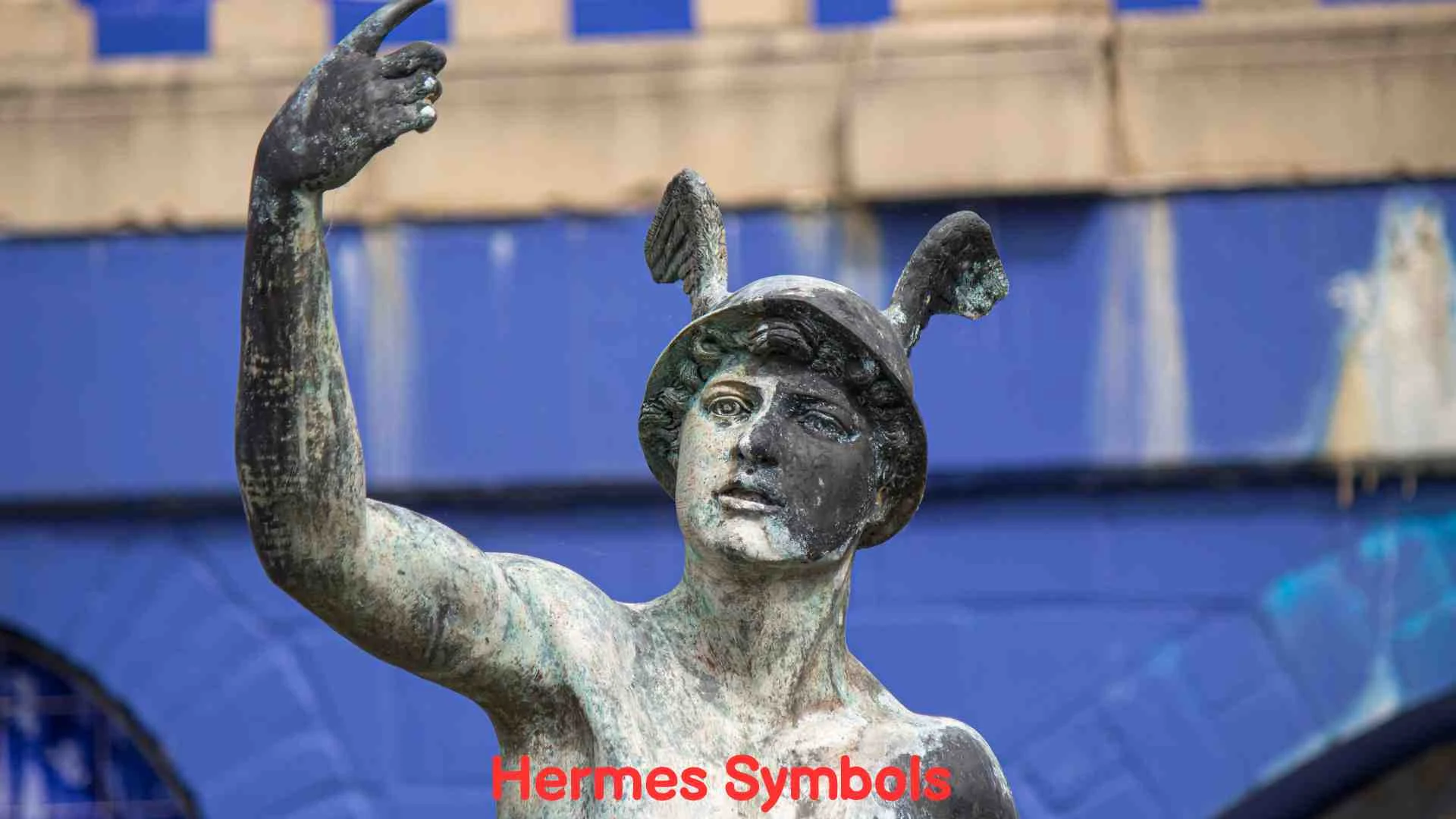
Hermes is often shown wearing a broad-brimmed traveling hat called the Petasos.
In later artistic representations, the hat gained wings.
Meaning
The winged helmet symbolizes:
- Alertness
- Intelligence
- Movement
- Adventure
Why It Matters
The Petasos highlighted Hermes’ role as a traveler who could move quickly between distant places.
The Herald’s Staff
Ancient Communication Tool
Before becoming the famous caduceus, Hermes carried a herald’s staff.
Ancient messengers used staffs to identify themselves and prove their authority.
Symbolism
The staff represented:
- Authority
- Trust
- Diplomacy
- Official communication
Historical Significance
Messengers carrying such staffs were often granted safe passage through enemy territories.
The Rooster
A Lesser-Known Hermes Symbol
The rooster was closely associated with Hermes in ancient Greece.
Symbolic Meaning
The rooster represents:
- Vigilance
- Awareness
- New beginnings
- Alertness
Connection to Hermes
Because Hermes often traveled at dawn and served as a messenger, the rooster’s habit of greeting the sunrise made it a fitting companion symbol.
The Ram
Symbol of Protection
The ram was another sacred animal linked to Hermes.
Meaning
The ram symbolizes:
- Leadership
- Strength
- Guidance
- Fertility
Mythological Connection
Hermes was sometimes depicted carrying a ram over his shoulders as a protector of shepherds and livestock.
The Tortoise
The Origin of the Lyre
One of the most interesting Hermes symbols is the tortoise.
Mythological Story
According to legend, Hermes found a tortoise shell shortly after birth.
He transformed it into the first lyre, a musical instrument later given to Apollo.
Symbolism
The tortoise represents:
- Creativity
- Innovation
- Resourcefulness
- Intelligence
This story highlights Hermes’ clever and inventive nature.
The Lyre
Symbol of Creativity
Although Apollo became more strongly associated with the lyre, Hermes was its inventor.
Meaning
The lyre symbolizes:
- Artistic expression
- Harmony
- Inspiration
- Cultural achievement
Lasting Influence
The lyre remains one of the most recognizable symbols of music and creativity.
Money Bags and Coin Purses
Patron of Commerce
As the god of merchants and trade, Hermes was often depicted carrying money pouches.
Symbolic Meaning
These objects represent:
- Wealth
- Prosperity
- Opportunity
- Business success
Historical Relevance
Ancient merchants frequently prayed to Hermes for profitable journeys and successful transactions.
Roads and Boundary Stones
Hermes and Travel
Ancient Greeks placed stone markers called Herms along roads and property boundaries.
What Were Herms?
Herms were carved stone pillars featuring the head of Hermes.
Purpose
They served as:
- Boundary markers
- Protective symbols
- Travel guides
Importance
Travelers believed these monuments offered protection during journeys.
The Wing Motif
A Universal Hermes Symbol
Wings appear repeatedly in Hermes-related imagery.
What Wings Represent
- Freedom
- Movement
- Progress
- Communication
Modern Usage
Winged designs inspired by Hermes are common in:
- Airlines
- Delivery services
- Logistics companies
- Sports brands
Hermes Symbols in Ancient Art
Greek Pottery
Artists frequently painted Hermes carrying:
- The caduceus
- Winged sandals
- The Petasos hat
Sculptures
Ancient sculptures often portrayed Hermes as a youthful and athletic figure.
Temples
Hermes symbols decorated temples, marketplaces, and public buildings throughout Greece.
Practical Applications of Hermes Symbols Today
Hermes symbols remain surprisingly relevant in modern life.
Business and Commerce
Companies use Hermes-inspired imagery to represent:
- Fast service
- Reliable communication
- Efficient transportation
Logistics and Delivery
Winged symbols often suggest:
- Speed
- Accuracy
- Mobility
Education
Hermes symbols help students learn about:
- Greek mythology
- Ancient cultures
- Symbolism in art
Leadership Development
Many organizations use Hermes-inspired themes to teach:
- Communication skills
- Negotiation
- Strategic thinking
Hermes Symbols in Literature and Popular Culture
Fantasy Novels
Many fictional messengers and magical travelers borrow traits from Hermes.
Movies and Television
Greek mythology frequently features Hermes and his recognizable symbols.
Video Games
Numerous games incorporate:
- Winged footwear
- Magical staffs
- Messenger characters
Inspired by ancient depictions of Hermes.
Benefits of Hermes Symbols for Society
Preserving Historical Knowledge
These symbols connect modern audiences with ancient civilizations.
Encouraging Cultural Appreciation
Learning about Hermes helps people understand Greek mythology and history.
Inspiring Innovation
Hermes’ inventive nature encourages creativity and problem-solving.
Promoting Communication
His symbols remind us of the importance of effective communication.
Supporting Global Commerce
The association with trade and travel highlights the value of economic connections between communities.
Interesting Facts About Hermes Symbols
- Hermes was considered one of the fastest gods in Greek mythology.
- The caduceus is often confused with the Rod of Asclepius.
- Ancient road markers called Herms were named after Hermes.
- Hermes was believed to guide souls to the underworld.
- The winged sandals remain one of mythology’s most recognizable symbols.
- The tortoise shell lyre story emphasizes Hermes’ intelligence and creativity.
- Many modern logos still use wings inspired by Hermes.
The Enduring Legacy of Hermes Symbols
More than two thousand years after their creation, Hermes symbols continue to influence art, design, education, and business.
Their enduring appeal comes from the universal ideas they represent:
- Communication
- Intelligence
- Adaptability
- Exploration
- Opportunity
These values remain just as important in today’s interconnected world as they were in ancient Greece.
Frequently Asked Questions (FAQs)
1. What is the most famous Hermes symbol?
The caduceus, a winged staff with two intertwined snakes, is the most famous symbol associated with Hermes.
2. What do Hermes’ winged sandals symbolize?
They represent speed, travel, freedom, and Hermes’ role as the messenger of the gods.
3. Why is the caduceus associated with Hermes?
According to mythology, Hermes used his staff to bring peace between two fighting snakes, leading them to coil around it.
4. What animal is most associated with Hermes?
Several animals are linked to Hermes, including the rooster, ram, and tortoise, each representing different aspects of his character.
5. Are Hermes symbols still used today?
Yes. Hermes symbols appear in business logos, transportation industries, educational materials, literature, and popular culture worldwide.
Conclusion
Hermes symbols offer a fascinating glimpse into one of the most dynamic figures in Greek mythology. From the caduceus and winged sandals to the rooster, ram, and tortoise, each symbol reflects qualities such as communication, speed, intelligence, creativity, and guidance. These emblems helped ancient people understand Hermes’ many roles while also serving as powerful cultural symbols.
Today, Hermes symbols continue to inspire businesses, artists, educators, and storytellers around the world. Their lasting presence demonstrates how ancient mythology still shapes modern culture and values. By exploring the meanings behind these symbols, we gain a deeper appreciation for history, symbolism, and the timeless human desire to communicate ideas through meaningful images.

Isaac Wellington
I’ve always been fascinated by the hidden stories in everyday life and the power of words to change how we see the world. Writing, for me, isn’t just a profession—it’s a way to explore human emotions, mysteries, and the unexpected twists of life. Over the years, I’ve dedicated myself to creating stories that linger in your mind long after the last page. When I’m not writing, you’ll usually find me wandering through old libraries or sketching ideas in a notebook. I believe every story has a heartbeat, and I aim to capture that rhythm in my work. Join me on a journey where imagination meets reality, and the ordinary becomes extraordinary.
Books:
-
Shadows of the Forgotten
-
Whispers Through Time