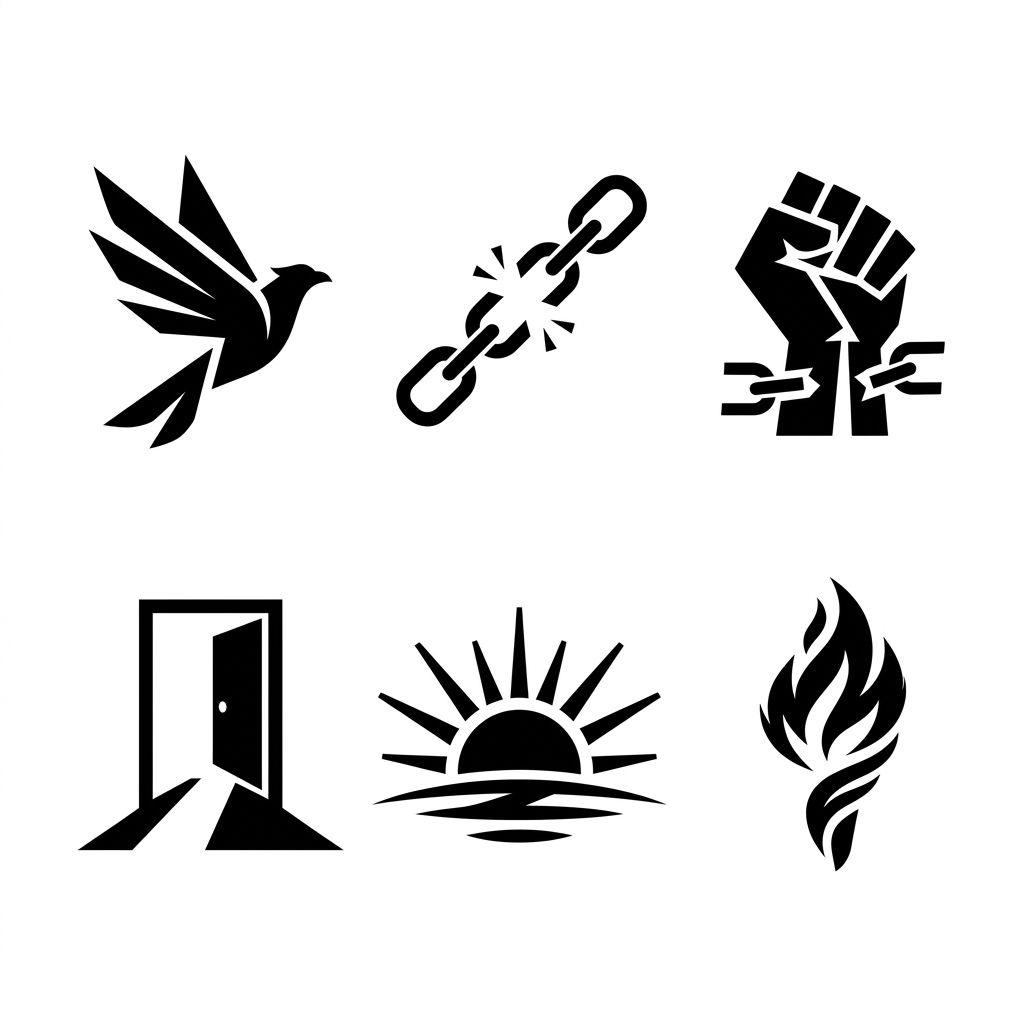
Freedom is an idea people have expressed through images, objects, animals, monuments, gestures, and works of art for centuries. Symbols of freedom can represent liberty, independence, liberation, human rights, personal choice, escape from oppression, or the opportunity to begin again.
Some symbols have a well-documented historical connection with liberty. The Statue of Liberty, for example, was intentionally designed as a representation of liberty and has developed additional meanings connected with democracy, human rights, immigration, abolition, and opportunity. Other symbols, such as a flying bird or butterfly, are more commonly used as personal or artistic expressions of freedom.
The important thing to remember is that not every freedom symbol has one universal meaning. A dove is primarily associated with peace, while a broken chain more directly suggests liberation from restriction. A bald eagle can communicate freedom and independence but can also carry strong national and patriotic meanings.
Understanding those differences makes it easier to choose the right symbol for a tattoo, artwork, piece of jewelry, logo, personal project, or historical discussion.
What Are Symbols of Freedom?
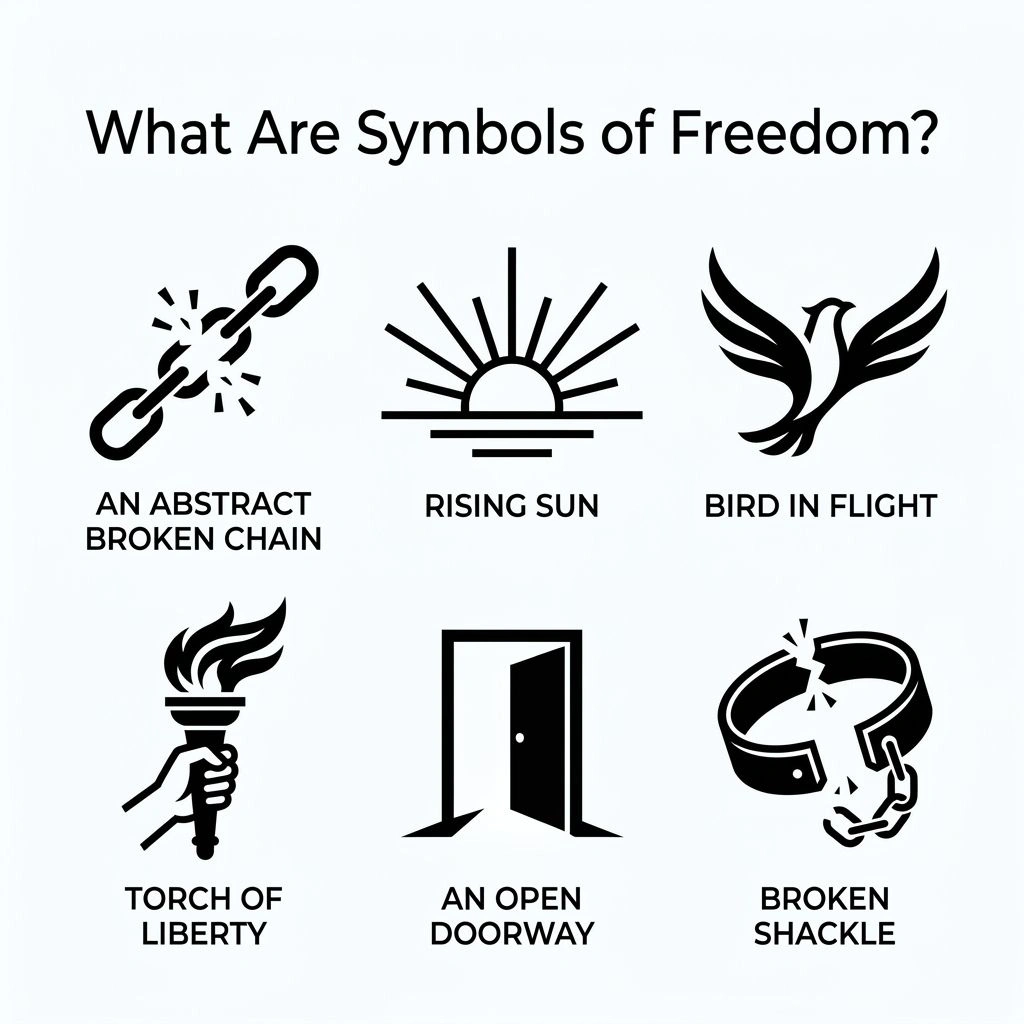
Symbols of freedom are visual or physical representations that communicate the idea of being free from unwanted control, restriction, captivity, or oppression.
Freedom can take several forms. It may mean being able to make personal decisions, move freely, express an opinion, practice a religion, participate in government, or live without unjust control.
Common forms of freedom include:
- Personal freedom — the ability to make your own choices.
- Political freedom — participation in political and civic life.
- National independence — freedom from external rule.
- Social freedom — equal participation and rights.
- Freedom of movement — the ability to travel or move without unjust restriction.
- Spiritual freedom — freedom understood through a religious or philosophical tradition.
- Liberation — release from captivity, oppression, or another restrictive condition.
Because freedom has many meanings, there is no single image that represents every form of liberty.
Quick Answer: What Symbols Represent Freedom?
Some of the most recognizable symbols associated with freedom include:
| Symbol | Common association |
| Statue of Liberty | Liberty, democracy, opportunity |
| Broken chains | Liberation and freedom from oppression |
| Flying bird | Personal freedom and movement |
| Bald eagle | Freedom, independence, and national identity |
| Liberty Bell | Liberty, independence, and civil rights |
| Torch | Enlightenment, hope, and liberty |
| Open door | Opportunity and personal choice |
| Open wings | Independence and unrestricted movement |
| Butterfly | Transformation and personal freedom |
| Wild horse | Independence and movement |
| Open cage | Escape and release |
| Raised fist | Resistance, solidarity, and liberation |
| Liberty cap | Historical associations with freedom from tyranny |
| Liberty Tree | Revolutionary-era resistance and liberty |
The meaning of each symbol depends on its historical, cultural, and personal context.
Most Recognized Symbols of Freedom
Statue of Liberty
The Statue of Liberty is among the world’s most recognizable symbols of liberty.
Its formal name is Liberty Enlightening the World, and the monument was presented by France to the United States. The National Park Service describes it as a symbol of freedom to millions of people around the world.
The statue contains several symbolic elements.
Her torch is associated with enlightenment, while the tablet in her left hand bears the date July 4, 1776, connecting the monument with the Declaration of Independence. A broken chain and shackle lie at her feet, providing a direct visual association with liberation.
Over time, the statue has developed additional meanings. The National Park Service notes that its symbolism has included liberty, equality, democracy, human rights, abolition of slavery, peace, and opportunity.
This makes the Statue of Liberty particularly useful when discussing political freedom, civic liberty, immigration, and national ideals.
Broken Chains
Broken chains are one of the clearest visual representations of liberation.
A chain normally suggests restraint, captivity, or control. Once it is broken, the image changes from confinement to release.
Broken chains can therefore represent:
- Freedom from oppression
- Liberation
- Emancipation
- Release from captivity
- Resistance to control
- Breaking away from limitations
- A new stage of life
The symbol also has important historical associations. Broken chains and shackles have appeared in imagery connected with emancipation and struggles against slavery and oppression.
The symbol can also have a personal meaning. Someone may use broken chains to represent leaving a restrictive situation, overcoming an obstacle, or beginning an independent chapter.
Flying Bird
A bird in flight is one of the simplest nature-based symbols of freedom.
Birds can move through the sky without the physical boundaries that normally restrict people on the ground. This makes flight an intuitive metaphor for independence and unrestricted movement.
A flying bird may represent:
- Personal freedom
- Independence
- Freedom of movement
- Escape
- Adventure
- Emotional release
- A new beginning
The particular bird can also affect the meaning. A dove may suggest peaceful freedom, while an eagle can add ideas of strength and national identity.
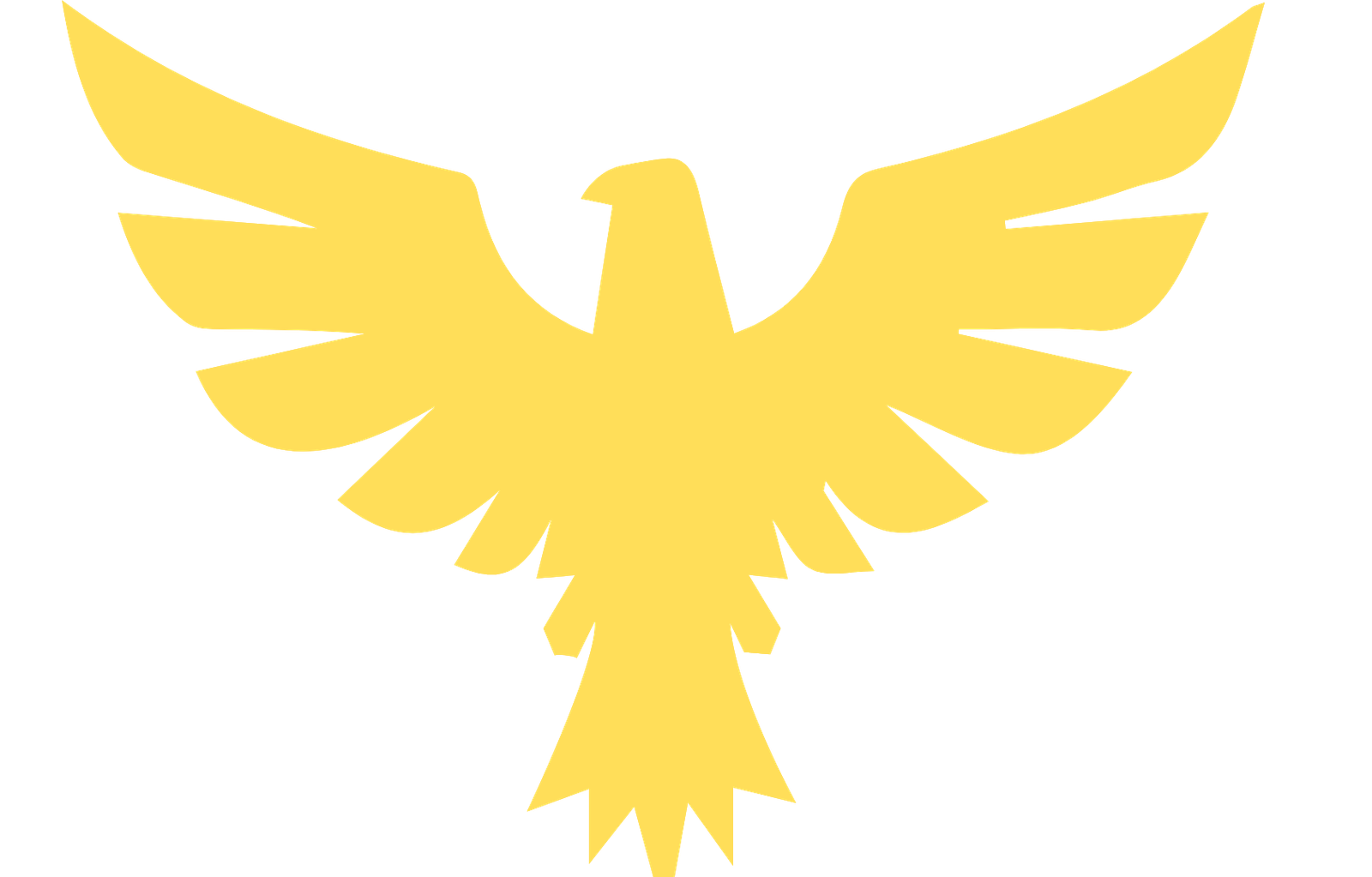
Bald Eagle
The bald eagle has strong associations with freedom and independence in the United States.
The Library of Congress identifies the bald eagle as one of the major symbols included in its educational collection of U.S. national symbols.
The eagle’s ability to fly high, its strength, and its distinctive appearance have made it an enduring image in American symbolism.
It can represent:
- Freedom
- Independence
- Strength
- Courage
- National identity
- Leadership
- Patriotism
However, the bald eagle should not automatically be interpreted as a universal freedom symbol in every culture. Much of its modern symbolic meaning is closely connected with the United States.
Liberty Bell
The Liberty Bell is another major symbol associated with freedom and liberty.
The bell was commissioned in 1752 for Pennsylvania’s State House. Its inscription refers to proclaiming liberty throughout the land. Although there is no proof that the bell was rung when the Declaration of Independence was read in 1776, abolitionists in the nineteenth century adopted it as a symbol of their campaign against slavery and helped popularize the name “Liberty Bell.”
The National Park Service describes the Liberty Bell as having developed into an international symbol of freedom and democracy. It was later used by activists, including people involved in the civil rights movement, to draw attention to campaigns for equality.
The Liberty Bell can therefore represent:
- Liberty
- Independence
- Equality
- Civil rights
- Historical freedom
- Democratic ideals
Torch
The torch is commonly associated with light, knowledge, enlightenment, and hope.
Its connection with freedom is especially visible in the Statue of Liberty, where Liberty raises a torch above the harbor.
A torch can symbolize:
- Liberty
- Enlightenment
- Knowledge
- Hope
- Guidance
- Progress
- A brighter future
The meaning becomes stronger when the torch appears alongside other liberty symbols.
Open Door
An open door is a simple symbol of opportunity and personal freedom.
A closed door can suggest limitation, exclusion, or confinement. An open door creates the opposite visual message: a path is available.
It can represent:
- Choice
- Opportunity
- Escape
- A fresh start
- Freedom of movement
- Personal independence
Unlike the Statue of Liberty or Liberty Bell, the open door does not have one specific historical origin as a freedom symbol. Its meaning is primarily visual and contextual.
Open Wings
Open wings represent the ability to move, rise, explore, and leave limitations behind.
Wings appear in many forms of art and personal symbolism. When spread wide, they create a strong image of movement without confinement.
Open wings can symbolize:
- Personal freedom
- Independence
- Growth
- Emotional release
- Exploration
- New possibilities
This makes wings particularly popular in tattoos, jewelry, illustrations, and motivational artwork.
Butterfly
A butterfly is often used to symbolize transformation and personal freedom.
Its life cycle provides an easy metaphor for change. The butterfly emerges from a very different stage of life and gains the ability to move freely through the air.
As a freedom symbol, it can represent:
- Transformation
- Personal growth
- Independence
- Emotional freedom
- New beginnings
- Self-expression
Unlike the Liberty Bell or Statue of Liberty, the butterfly’s association with freedom is largely metaphorical and personal.
Wild Horse
A wild horse can represent movement, independence, strength, and freedom.
The image of a horse running across an open landscape is often used to communicate unrestricted movement.
It may symbolize:
- Independence
- Adventure
- Freedom of movement
- Strength
- Exploration
- A desire for an unrestricted life
The horse can be especially meaningful for people who connect freedom with travel and open spaces.
Open Cage
An open cage provides a direct visual message of release.
The cage represents confinement, while the open door represents the opportunity to leave.
This symbol can communicate:
- Escape
- Liberation
- Release
- Personal freedom
- Breaking restrictions
- Starting again
An empty open cage can suggest that the individual or creature that was once confined has already escaped.
Raised Fist
The raised fist is associated with resistance, solidarity, strength, and liberation in a variety of historical and social contexts.
Unlike a flying bird, the raised fist does not usually communicate freedom simply through the idea of movement. Instead, it can communicate the struggle to obtain or defend rights.
Its meaning can vary significantly according to the movement, period, and community using it.
Possible associations include:
- Resistance
- Solidarity
- Liberation
- Collective action
- Defiance
- Social change
Because it can carry political meanings, context is particularly important when interpreting this symbol.
Historical Symbols of Freedom
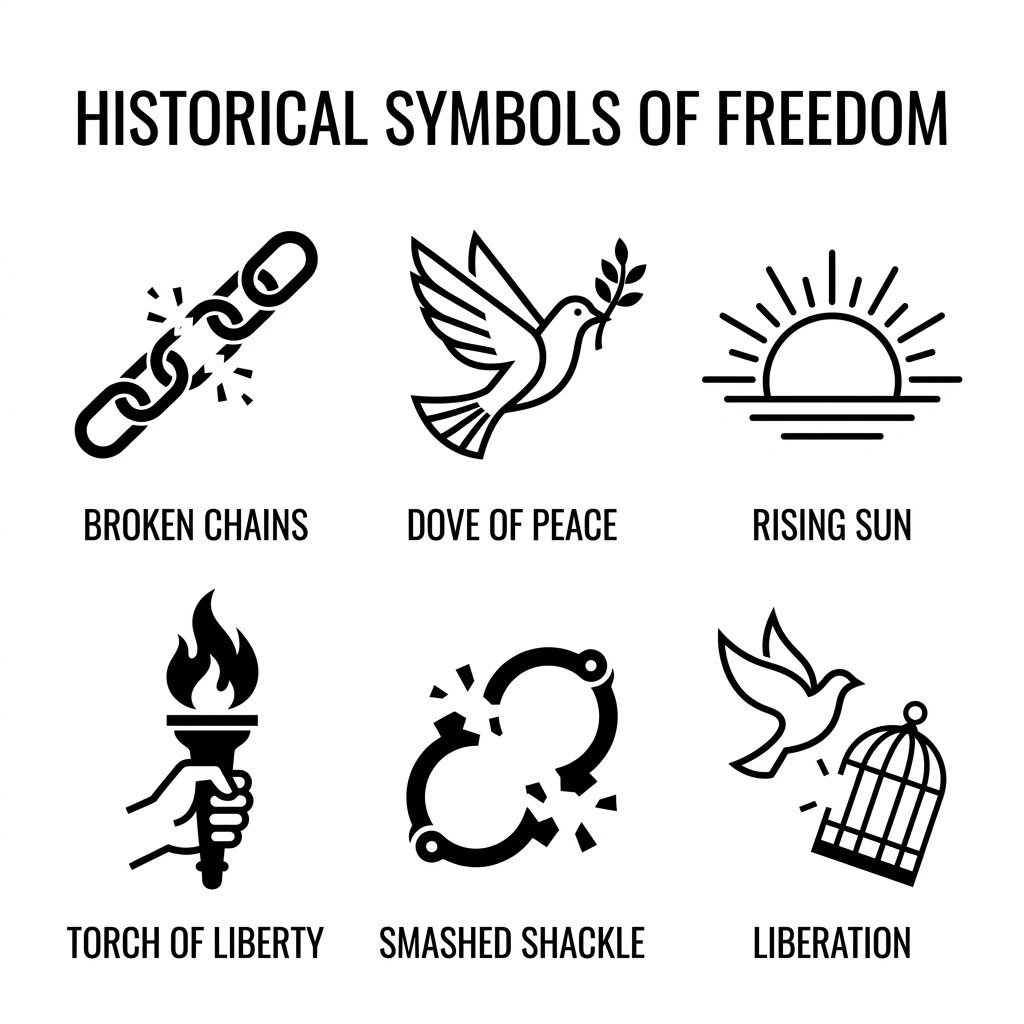
Modern freedom imagery did not appear all at once. Earlier generations also developed visual symbols to express liberty and resistance to tyranny.
Liberty Tree
The Liberty Tree became associated with resistance and liberty during the period surrounding the American Revolution.
Trees were used as gathering places and symbols of resistance to British policies in the American colonies. The image later became part of a wider tradition of liberty symbolism.
The Liberty Tree is useful when discussing the historical development of freedom symbols rather than only modern images.
Liberty Cap
The liberty cap, also known as a Phrygian cap in some historical contexts, became associated with freedom and opposition to tyranny.
National Park Service educational material identifies the liberty cap and liberty pole as ancient symbols associated with the quest for freedom from tyranny.
The symbol appeared in political art, decorative objects, seals, and revolutionary-era imagery.
It is less immediately recognizable today than the Statue of Liberty or bald eagle, but it is historically important.
Liberty Pole
A liberty pole was another historical symbol associated with resistance and liberty.
In revolutionary-era America, liberty poles were used in political demonstrations and became visual reminders of resistance to perceived oppression.
The liberty pole and liberty cap can therefore help readers understand that freedom symbolism existed long before today’s familiar monuments and logos.
Liberty and the Rising Sun
The rising sun can communicate hope, renewal, and the beginning of a new political era.
A famous example appears on the chair used by George Washington during the Constitutional Convention. The chair contains a carved sun as well as a liberty pole and liberty cap. National Park Service material records Benjamin Franklin’s observation that he had come to view the sun as a rising rather than setting sun at the end of the convention.
This makes the rising sun a useful symbol when discussing hope after political change or the beginning of a new chapter.
Symbols of Freedom by Meaning
Not everyone searching for freedom symbols means the same thing. Choosing a symbol becomes easier when you first identify the kind of freedom you want to express.
| Type of freedom | Symbols that can express it |
| Personal freedom | Flying bird, open wings, butterfly |
| Freedom from oppression | Broken chains, broken shackles, open cage |
| Political liberty | Statue of Liberty, Liberty Bell |
| National independence | Bald eagle, national flags |
| Freedom of movement | Bird, horse, open road |
| New beginning | Sunrise, open door, butterfly |
| Resistance | Raised fist, liberty pole |
| Peaceful freedom | Dove |
| Historical liberty | Liberty Tree, liberty cap |
| Opportunity | Open door, torch |
This table is useful because a symbol’s meaning should match the specific idea of freedom being communicated.
Symbols of Freedom in Nature
Nature provides many images that naturally suggest freedom.
Birds
Birds are associated with flight, movement, and open skies.
Butterflies
Butterflies are commonly used for transformation and personal change.
Horses
Wild horses can communicate independence and unrestricted movement.
Open Sky
A wide, unobstructed sky can represent limitless possibility.
Ocean
An open ocean can symbolize exploration, travel, and freedom from physical boundaries.
Sunrise
A sunrise can represent renewal and freedom to begin again.
Natural symbols are particularly common in tattoos, paintings, poetry, photography, and personal designs because they can express freedom without relying on a specific political tradition.
Symbols of Freedom Around the World
Freedom symbolism varies between cultures and historical periods.
A symbol that is deeply connected with political liberty in one country may have a different meaning elsewhere. This is why it is better to describe the context of a symbol instead of calling any image the universal symbol of freedom.
For example, the Statue of Liberty has become an international symbol, but its historical development is strongly connected with France, the United States, abolition, immigration, democracy, and political liberty. The National Park Service notes that the statue’s meanings have changed and expanded over time.
Similarly, the Liberty Bell has a specifically American historical background but later became associated with broader campaigns for freedom and equality.
This shows why cultural context matters when interpreting freedom symbols.
Freedom, Liberty, Independence, and Liberation
These words are related, but they are not identical.
Freedom
Freedom generally describes the ability to act, choose, move, or live without unjust restrictions.
Liberty
Liberty is closely related to freedom and is often used in civic, legal, and political contexts.
Independence
Independence emphasizes self-rule or freedom from outside control. It is especially important when discussing nations.
Liberation
Liberation emphasizes release from a condition of captivity, oppression, or control.
For example, a broken chain can represent liberation, while a flying bird can suggest freedom. A national independence monument may represent independence, while the Statue of Liberty can communicate liberty and political freedom.
Understanding these differences prevents the article from treating every related concept as exactly the same.
Freedom vs. Peace: Why the Difference Matters
Freedom and peace often appear together, but they are different ideas.
A dove is strongly associated with peace. It can also communicate peaceful freedom when used in an appropriate context, but calling it a universal symbol of freedom would be too broad.
An olive branch is similarly associated primarily with peace and reconciliation.
By contrast, broken chains communicate liberation more directly.
This distinction makes symbolic interpretation more accurate:
- Dove → primarily peace
- Olive branch → peace and reconciliation
- Broken chains → liberation
- Flying bird → movement and freedom
- Statue of Liberty → liberty and political freedom
- Liberty Bell → liberty and historical civic ideals
Symbols of Freedom for Tattoos
Freedom symbols are popular tattoo subjects because they can represent a personal experience rather than simply an abstract idea.
Bird Tattoo
A flying bird can represent independence, movement, or leaving the past behind.
Broken Chain Tattoo
A broken chain can symbolize overcoming a restrictive situation or gaining freedom after a difficult period.
Butterfly Tattoo
A butterfly can represent transformation and personal growth.
Wing Tattoo
Wings can communicate independence, possibility, and emotional release.
Open Cage Tattoo
An open cage can represent escape and liberation.
Horse Tattoo
A running horse can represent independence, adventure, and freedom of movement.
Eagle Tattoo
An eagle can symbolize strength and freedom while also carrying national or patriotic associations.
When choosing a tattoo, the personal meaning is often more important than finding a supposedly universal definition.
Symbols of Freedom in Art, Jewelry, and Logos
Freedom symbolism appears beyond tattoos.
Art
Artists may use birds, chains, doors, wings, light, open landscapes, or monuments to communicate liberty.
Jewelry
Small pendants featuring wings, feathers, birds, chains, or butterflies can serve as personal reminders of independence or transformation.
Logos
Organizations may use wings, birds, open doors, rising shapes, or torches to suggest movement, opportunity, progress, or freedom.
However, a logo’s meaning should be determined by the organization and its surrounding context rather than by the symbol alone.
How to Choose a Freedom Symbol
Start by identifying exactly what you want the symbol to communicate.
Ask yourself:
- Do I mean personal freedom?
- Do I mean freedom from oppression?
- Do I mean political liberty?
- Do I mean national independence?
- Do I mean emotional freedom?
- Do I mean a fresh start?
- Do I want the symbol to communicate strength or peace?
- Does the symbol need to have a historical meaning?
- Is this for a tattoo, artwork, jewelry, or another purpose?
Then match the symbol to the idea.
For example:
Personal freedom: flying bird, wings, butterfly
Freedom from oppression: broken chains, open cage
Political liberty: Statue of Liberty, Liberty Bell
National independence: bald eagle or an appropriate national symbol
Peaceful freedom: dove
New beginning: sunrise, open door, butterfly
Historical liberty: Liberty Tree, liberty cap, liberty pole
The best choice is the one whose established or personal meaning matches the message you want to communicate.
Why Freedom Symbols Have Different Meanings
Symbols are not dictionaries with one permanent definition.
Their meanings can change because of:
- Historical events
- Religious traditions
- Political movements
- National identity
- Popular culture
- Art
- Personal experiences
- Changes in society
The Statue of Liberty is a good example. The National Park Service explains that the statue has carried different meanings for different groups and that its symbolism has evolved over time.
The Liberty Bell provides another example. It began as a colonial state-house bell, later became associated with abolitionists, and eventually became a broader symbol used in campaigns for equality and civil rights.
This is why symbolic meaning should always be considered within context.
Frequently Asked Questions
What is the most common symbol of freedom?
There is no single universal symbol of freedom. The Statue of Liberty, flying bird, broken chains, bald eagle, Liberty Bell, torch, and open wings are among the widely recognized images associated with different forms of freedom.
What animal represents freedom?
Birds are among the most common animals associated with freedom because flight naturally suggests unrestricted movement. Eagles, horses, and butterflies can also communicate independence or personal freedom depending on the context.
What symbolizes freedom from oppression?
Broken chains are one of the clearest symbols of freedom from oppression. Broken shackles and an open cage can communicate a similar idea of release from captivity or restriction.
What symbolizes personal freedom?
Flying birds, open wings, butterflies, open doors, and wild horses are commonly used to express personal freedom. Their meanings are generally more metaphorical and personal than historically fixed.
Why is the Statue of Liberty a symbol of freedom?
The Statue of Liberty was designed as a representation of liberty and became associated with ideals including freedom, democracy, human rights, abolition, and opportunity. Its torch, tablet, and broken chain all contribute to its symbolism.
What does a broken chain symbolize?
A broken chain commonly symbolizes liberation, release from captivity, freedom from oppression, and breaking away from restrictions. Its meaning can be historical, political, or deeply personal.
What symbol represents freedom and peace?
The dove is primarily a symbol of peace, but it can also be used to communicate peaceful freedom. The olive branch is similarly associated more strongly with peace and reconciliation than with freedom itself.
What symbol represents independence?
An eagle can represent independence in national contexts, while a flying bird, wild horse, or open wings can represent personal independence. The appropriate symbol depends on whether the intended meaning is national or personal.
What are good freedom symbols for tattoos?
Popular choices include flying birds, broken chains, butterflies, wings, open cages, horses, feathers, and eagles. The best design depends on whether the tattoo is intended to express personal freedom, liberation, independence, transformation, or another meaning.
Is the dove a symbol of freedom?
The dove is more strongly established as a symbol of peace. It can represent freedom when the surrounding artwork or context connects peace with liberation, but it should not automatically be described as a universal freedom symbol.
What is an ancient symbol of freedom?
The liberty cap is an important historical example. National Park Service educational material identifies the liberty cap and liberty pole as ancient symbols associated with the pursuit of freedom from tyranny.
Conclusion
Symbols of freedom allow people to communicate ideas that can be difficult to express with words alone. A flying bird can suggest personal independence, while broken chains can communicate liberation from restriction. The Statue of Liberty and Liberty Bell carry deeper historical associations with liberty, democracy, equality, and civic struggles.
Nature also provides meaningful images. Butterflies can suggest transformation, wings can represent possibility, horses can communicate independence, and an open cage can show release.
The most important point is that freedom does not have only one symbol or one definition. The meaning depends on history, culture, context, and personal experience.
If you are choosing a freedom symbol for a tattoo, artwork, jewelry piece, logo, or personal project, first decide what kind of freedom you want to express. Then choose an image whose established or personal meaning fits that idea.

Elliot Kensington
Elliot Kensington is a storyteller at heart, always fascinated by the hidden corners of human imagination. From a young age, he found comfort in books and the worlds they created, inspiring him to craft tales that blend emotion, suspense, and wonder. His writing journey began with short stories that captured fleeting moments of life, and over time, evolved into novels that explore both the extraordinary and the everyday. Elliot believes that every story holds a piece of the soul, and his mission is to connect readers to those moments that linger long after the last page. When he’s not writing, he enjoys exploring nature, capturing moments through photography, and seeking inspiration in the little things.
Books by Elliot Kensington:
-
Shadows of Tomorrow
-
The Whispering Path