
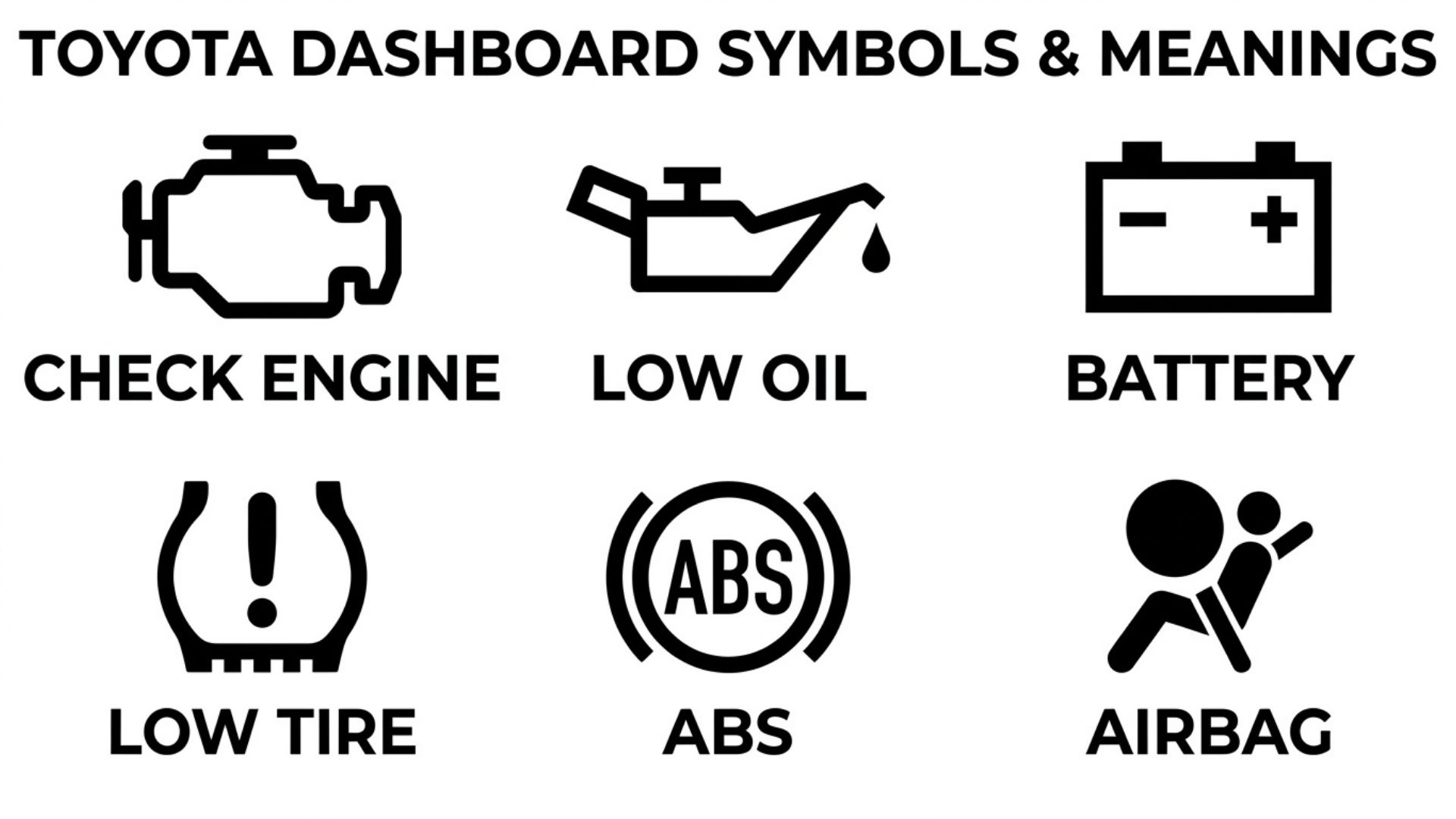
When a strange symbol appears on your Toyota dashboard, the first question is usually simple: What does this light mean, and do I need to stop driving? Toyota dashboards can display warning lights, normal indicators, maintenance messages, hybrid-system information, safety-system alerts, and driving-assistance symbols. The exact symbols can also differ by Toyota model, model year, trim, drivetrain, and market.
This Toyota dashboard symbols and meanings PDF guide gives you a practical reference for understanding common Toyota dashboard lights. It explains what the symbols generally mean, how serious they may be, whether you should continue driving, and what action to consider. Toyota also provides an official warning-light reference and model-specific Owner’s Manuals, which should always be checked for the exact vehicle.
Important: This is a general reference, not a replacement for your Toyota Owner’s Manual. If a warning light stays on, flashes, appears with an unusual noise or driving problem, or concerns a critical system, follow the instructions for your exact Toyota model.
What Do Toyota Dashboard Symbols Mean? (Quick Answer)
Toyota dashboard symbols communicate the condition or status of different vehicle systems. Some are warning lights that indicate a malfunction or condition requiring attention, while others are simply indicators showing that a feature is operating.
Color can provide a useful first clue. Toyota explains that dashboard icon colors depend on the vehicle and system. In general, red icons indicate conditions requiring immediate attention, while yellow icons indicate an important condition that may need attention but is not necessarily an emergency.
Toyota Dashboard Symbols and Meanings Chart
| Symbol or Icon Type | Name | General Meaning | Urgency | Can You Drive? |
| Brake / ! | Brake System Warning | Possible brake-system issue or parking-brake condition | High | Depends on the cause |
| Oil Can | Low Engine Oil Pressure | Engine oil pressure is too low | Critical | Stop safely |
| Thermometer | High Coolant Temperature | Engine coolant temperature is too high | Critical | Stop safely |
| Battery | Charging System Warning | Possible charging-system malfunction | High | Have it checked |
| Engine | Check Engine Light | A malfunction has been detected | Varies | Depends on symptoms |
| ABS | ABS Warning | ABS or related brake-assist malfunction | High | Drive cautiously and inspect |
| Airbag | SRS Warning | Possible airbag/restraint-system malfunction | High | Have it inspected |
| Tire + ! | Tire Pressure Warning | Low tire pressure or system fault | Medium | Check promptly |
| Steering Wheel + ! | EPS Warning | Electric power steering malfunction | High | Use caution and inspect |
| Fuel Pump | Low Fuel | Fuel level is low | Low | Refuel |
| Skidding Car | Slip Indicator | Traction/VSC system is operating or a related condition exists | Varies | Depends on situation |
| TRAC OFF | Traction Control Off | Traction control has been switched off | Low/Status | Usually yes |
| VSC OFF | Vehicle Stability Control Off | VSC/TRAC-related system has been disabled | Low/Status | Use caution |
| Seat Belt | Seat Belt Reminder | Seat belt needs to be fastened | Medium | Fasten belt |
| Turn Arrows | Turn Signal | Turn signal is active | Normal | Yes |
| Blue Headlamp | High Beam | High beams are on | Normal | Yes |
| Cruise Symbol | Cruise Control | Cruise-control system is active | Normal | Yes |
Toyota’s official dashboard reference includes common warnings such as ABS, charging system, EPS, high coolant temperature, low oil pressure, SRS, tire pressure, and several indicators including cruise control, turn signals, TRAC OFF, VSC OFF, and the slip indicator.
Toyota Warning Lights vs. Indicator Lights
One of the easiest ways to misunderstand a dashboard is to assume that every illuminated symbol means something is broken.
Toyota manuals distinguish between warning lights and indicators. Warning lights communicate possible malfunctions or important conditions, while indicators provide information about the status or operation of vehicle systems.
Warning Lights
Warning lights can indicate conditions involving systems such as:
- Brakes
- Engine
- Oil pressure
- Charging system
- ABS
- Airbags
- Tires
- Steering
- Coolant temperature
- Hybrid systems
- Safety systems
A warning light that remains illuminated after startup should be interpreted according to the exact symbol and your vehicle’s manual.
Indicator Lights
Indicators can simply tell you that something is operating.
Examples include:
- Turn signals
- High beams
- Cruise control
- Certain driving modes
- Automatic high beams
- Lane-assistance status
- Four-wheel-drive settings
- Traction-control operation
Seeing a green or blue indicator does not normally mean your vehicle has developed a fault.
Toyota Dashboard Symbol Colors Explained
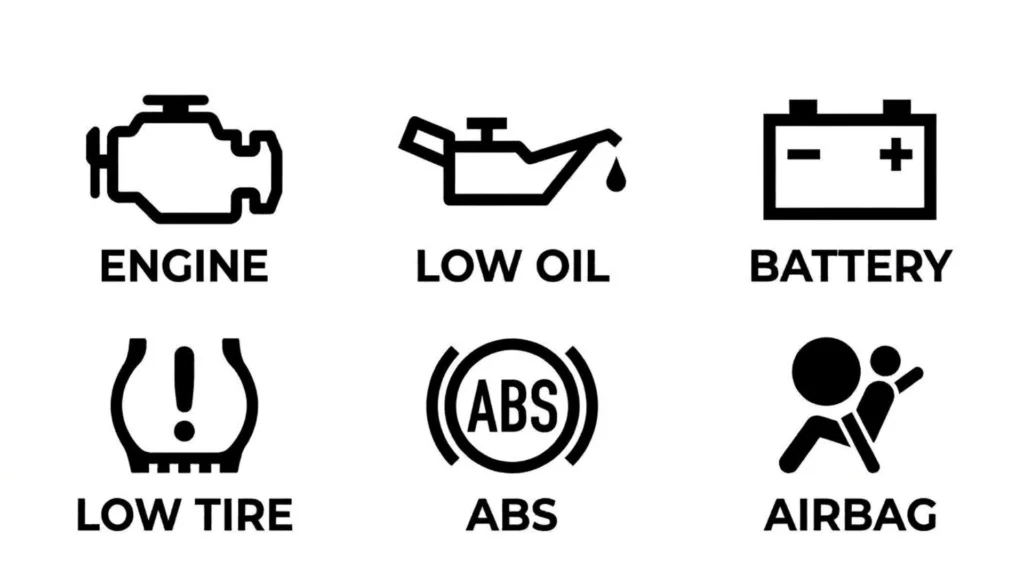
Color is useful, but it should not be used as the only method of diagnosis.
Red Dashboard Symbols
Red symbols generally represent conditions requiring immediate attention. Toyota lists examples such as low engine oil pressure and high coolant temperature among its warning lights.
If a red warning appears, check the dashboard message and Owner’s Manual before continuing.
Yellow or Amber Dashboard Symbols
Yellow or amber symbols generally indicate a condition that needs attention.
Examples can include:
- Check engine
- ABS
- Tire pressure
- SRS
- Electric power steering
- Traction-related warnings
A yellow light does not automatically mean you must stop immediately, but it should not be ignored.
Green Dashboard Symbols
Green indicators commonly show that a feature is active.
A turn-signal indicator is a familiar example.
Blue Dashboard Symbols
Blue indicators can show that a particular function is active. The high-beam indicator is a common example.
Why Color Alone Is Not Enough
The same color can be associated with different levels of urgency depending on the symbol. Toyota also notes that icon colors vary according to the system and vehicle.
Always identify the actual symbol rather than assuming that its color gives you the complete answer.
Toyota Red Dashboard Warning Lights
Red warnings deserve particular attention because they can involve systems that affect safe operation or the vehicle’s mechanical condition.
Brake System Warning Light
The brake warning symbol can indicate a brake-system condition. On some vehicles, it can also relate to the parking brake.
If the light remains on after the parking brake has been released, consult your Owner’s Manual and determine whether the vehicle can be safely moved.
Urgency: High.
What to do: Stop safely if braking performance seems abnormal or if the manual instructs you to stop.
Low Engine Oil Pressure Warning Light
The low engine oil pressure symbol commonly resembles an oil can.
It indicates that engine oil pressure is too low. This is different from simply receiving a routine oil-change reminder.
Urgency: Critical.
What to do: Safely stop and follow the instructions in your Toyota manual. Do not assume that continuing to drive is safe.
Toyota identifies low engine oil pressure as one of its dashboard warning conditions.
High Coolant Temperature Warning Light
This symbol can resemble a thermometer or temperature gauge.
It indicates that engine coolant temperature is too high and the engine may be overheating.
Urgency: Critical.
What to do: Stop the vehicle in a safe place and follow the manufacturer’s overheating instructions.
Toyota specifically advises drivers to immediately stop in a safe place when the high coolant temperature warning appears.
Charging System Warning Light
A battery-shaped symbol is commonly associated with the vehicle’s charging system.
It does not necessarily mean that the battery itself simply needs replacement. It can indicate a charging-system malfunction.
Urgency: High.
What to do: Arrange an inspection and avoid assuming the warning will disappear on its own.
Toyota lists the charging system warning among its common dashboard warnings.
Toyota Yellow and Amber Dashboard Symbols
Yellow or amber lights cover a wide range of conditions, from maintenance-related issues to important safety-system faults.
Check Engine Light
The check engine light is usually displayed as an engine-shaped icon.
Toyota may refer to this as the malfunction indicator lamp in its manuals.
The light can be associated with a variety of engine, emissions, or related-system conditions, so the icon alone cannot tell you the exact cause.
Urgency: Varies.
What to do: Check the dashboard for additional messages and arrange appropriate diagnosis if the light remains on.
If the vehicle is running poorly, losing power, overheating, or displaying additional serious warnings, do not treat the check engine light as an isolated issue.
ABS Warning Light
The ABS symbol indicates a possible malfunction involving the Anti-lock Braking System or, depending on the Toyota model, the Brake Assist system. Toyota’s official warning-light reference lists ABS as a system warning.
Urgency: High.
What to do: Have the system inspected, particularly if braking behavior changes or other brake warnings appear.
SRS Airbag Warning Light
The SRS symbol is associated with the Supplemental Restraint System, including airbag-related components and, depending on the vehicle, seatbelt pretensioner or occupant-classification systems.
Urgency: High.
What to do: Arrange professional inspection.
Toyota warns that safety-system lights such as ABS and SRS should not be ignored if they fail to operate normally during startup or indicate a malfunction.
Tire Pressure Warning Light
The tire-pressure symbol usually looks like a tire outline with an exclamation mark inside.
It can indicate low tire inflation pressure or a malfunction in the tire-pressure warning system.
What to do:
- Check all tires.
- Use the recommended inflation pressure for your vehicle.
- Look for obvious damage.
- Follow the vehicle’s reset or initialization instructions if applicable.
- Have the system inspected if the warning remains.
Electric Power Steering Warning Light
The EPS symbol can resemble a steering wheel with an exclamation mark.
It indicates a possible malfunction in the electric power steering system.
Urgency: High.
What to do: If steering becomes unusually heavy or difficult, stop in a safe place and seek assistance.
Toyota Green and Blue Dashboard Indicators
Not every Toyota dashboard symbol is a warning.
Turn Signal Indicator
Green arrows normally indicate that the left or right turn signal is operating.
If an indicator behaves differently from normal, check the vehicle’s lighting system and manual.
High Beam Indicator
A blue headlamp symbol generally indicates that the high beams are switched on.
This is a normal status indicator.
Cruise Control Indicator
A cruise-control symbol can indicate that cruise control has been activated or is operating, depending on the model.
Toyota lists cruise control among its common dashboard indicators.
Automatic High Beam Indicator
Some Toyota vehicles include automatic high-beam assistance.
The exact symbol and color can vary by model, so check the manual if you are unfamiliar with the icon.
Toyota Traction and Stability Symbols
Toyota vehicles can display several symbols related to traction and stability systems.
Slip Indicator
The slip indicator is commonly represented by a vehicle with curved lines beneath it.
It can illuminate or flash when the vehicle’s stability or traction systems operate.
A flashing slip indicator does not necessarily mean that the system has failed. It can indicate that the system is actively responding to wheel slip.
TRAC OFF Indicator
TRAC refers to traction control.
When the TRAC OFF indicator is illuminated, traction control has been switched off or disabled according to the vehicle’s operating conditions.
The reason for switching it off can vary, so consult the Owner’s Manual for your model.
VSC OFF Indicator
VSC refers to Vehicle Stability Control.
An illuminated VSC OFF indicator means that the relevant stability/traction functions have been turned off or otherwise disabled.
Toyota’s official dashboard information lists both TRAC OFF and VSC OFF among its indicators.
Toyota Hybrid Dashboard Symbols
Hybrid Toyotas can display additional symbols that are not found on every gasoline-powered model.
READY Indicator
The READY indicator is particularly important on Toyota hybrid vehicles.
It can indicate that the hybrid vehicle is ready to move even when the gasoline engine is not running.
Do not assume that a quiet hybrid vehicle is switched off simply because the engine cannot be heard.
Hybrid System Warning
A hybrid-system warning can indicate a problem involving the hybrid powertrain or related components.
The exact meaning depends on the model.
What to do: Read the dashboard message and consult the exact hybrid Toyota Owner’s Manual.
EV-Related Indicators
Some Toyota hybrids display information related to electric driving or energy use.
These can include indicators for EV operation, energy flow, or driving efficiency.
The availability and appearance of these symbols vary by model and equipment.
Hybrid Battery-Related Information
Hybrid dashboards can display battery-charge or energy-flow information.
These displays should not automatically be interpreted as warning lights. Some are simply providing information about how the hybrid system is operating.
Toyota 4WD, TRAC, and Off-Road Symbols
Toyota trucks and SUVs may have additional dashboard indicators related to four-wheel drive and off-road systems.
4WD Indicator
A four-wheel-drive symbol can show that the vehicle is operating in a particular 4WD mode.
The exact indicator depends on the Toyota’s drivetrain.
4LO Indicator
Some Toyota 4WD vehicles have a low-range mode.
A 4LO indicator generally relates to low-range four-wheel drive.
Use it according to the vehicle’s operating instructions rather than treating it as a warning.
Differential Lock Indicator
Certain Toyota trucks and off-road vehicles have a rear differential-lock indicator.
When activated, it communicates the status of that feature.
Off-Road Assistance Indicators
Depending on the Toyota model, drivers may also encounter symbols associated with systems such as crawl control, downhill assistance, drive modes, or other terrain-focused features.
Toyota manuals show that instrument-cluster symbols can differ significantly between vehicles and equipment levels.
Toyota Safety and Driver-Assistance Symbols
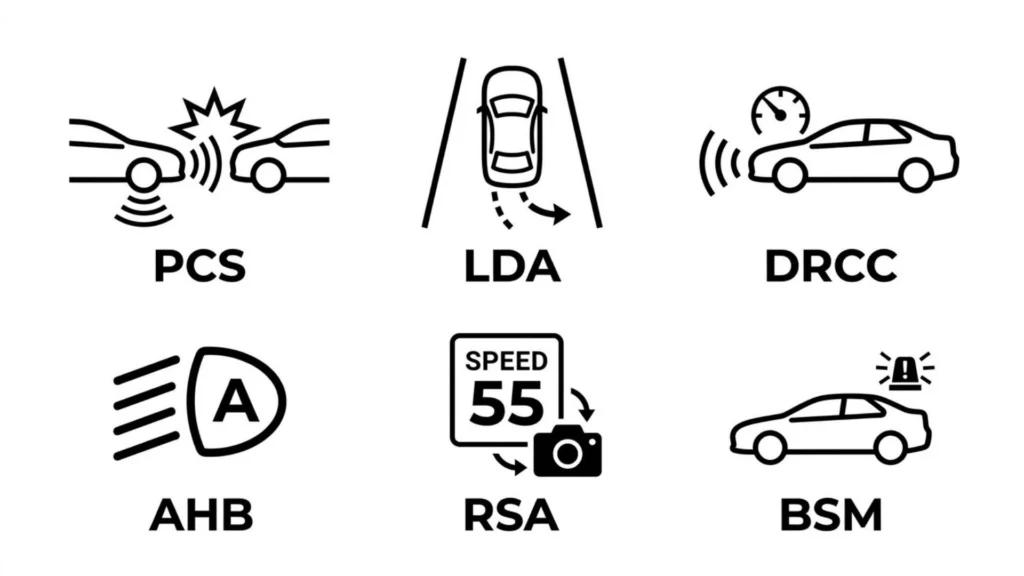
Modern Toyota vehicles can display many symbols associated with driver-assistance technology.
Pre-Collision System
The Pre-Collision System can provide warnings when the vehicle detects a potential collision situation.
A warning or indicator related to this system does not necessarily mean the vehicle has a mechanical fault. It can reflect system operation, temporary unavailability, or a detected condition.
Lane Departure Alert
Lane Departure Alert can display indicators or warnings related to lane position.
Some Toyota manuals show lane-related indicators and flashing warnings when the system detects certain conditions.
Lane Tracing Assist
Lane Tracing Assist can have its own status indicator.
Its availability depends on the vehicle and equipment.
Blind Spot Monitor
Vehicles equipped with Blind Spot Monitor can display indicators associated with vehicles detected in adjacent areas.
The symbol is a system-status indicator rather than a general engine warning.
Dynamic Radar Cruise Control
Toyota vehicles equipped with Dynamic Radar Cruise Control may display dedicated cruise-control indicators.
The symbol can indicate that the system has been selected, set, or is operating.
Because driver-assistance features differ by model, the exact dashboard symbol should always be checked against the applicable manual.
Toyota Dashboard Symbols by Model
A major reason generic dashboard charts can be misleading is that Toyota does not use exactly the same dashboard on every vehicle.
Toyota Camry Dashboard Symbols
A Camry can have common warning lights for systems such as brakes, engine, ABS, tires, airbags, and charging.
Hybrid versions can have additional indicators related to the hybrid system.
Toyota Corolla Dashboard Symbols
The Corolla family can include common engine, brake, tire-pressure, safety, and driver-assistance indicators.
The exact display varies by year and trim.
Toyota RAV4 Dashboard Symbols
RAV4 models can include additional indicators related to available all-wheel-drive, hybrid, safety, and driver-assistance systems.
Toyota Prius Dashboard Symbols
Prius models can display hybrid-system, READY, energy, and other electrified-vehicle indicators alongside common warning lights.
Toyota provides model-specific Prius manuals because the instrument cluster and available systems differ from other Toyota vehicles.
Toyota Tacoma Dashboard Symbols
Tacoma models can include symbols related to four-wheel drive, off-road functions, traction, stability, towing, and driver assistance.
The available symbols depend on the specific configuration.
Toyota Highlander Dashboard Symbols
Highlander dashboards can include standard vehicle warnings plus indicators for safety, driver assistance, hybrid operation, and available drivetrain features.
Toyota 4Runner and Tundra Dashboard Symbols
These vehicles can have additional truck and SUV indicators involving 4WD, drive modes, traction, differential functions, and other equipment.
Toyota Hilux and Fortuner Dashboard Symbols
Toyota vehicles sold in different countries can have different equipment, dashboard layouts, symbols, and terminology.
This is why a North American Toyota dashboard reference should not automatically be treated as an exact guide for every Toyota sold worldwide.
Toyota Dashboard Symbols and Meanings PDF
A useful Toyota dashboard symbols and meanings PDF should be designed as a quick reference rather than simply being a long list of names.
What a Printable Toyota Dashboard PDF Should Include
A practical reference should include:
- Symbol or icon
- Symbol name
- Color
- Meaning
- Urgency
- Recommended action
- Whether continued driving may be appropriate
- Model/year limitation
- A reminder to consult the Owner’s Manual
Printable Quick Reference Chart
| Dashboard Symbol | Meaning | Urgency | Recommended Action |
| Brake warning | Brake-system or parking-brake condition | High | Check immediately |
| Oil pressure | Low engine oil pressure | Critical | Stop safely |
| Coolant temperature | Engine temperature too high | Critical | Stop safely |
| Charging system | Charging-system malfunction | High | Arrange inspection |
| Check engine | Malfunction detected | Varies | Diagnose the cause |
| ABS | ABS/brake-assist issue | High | Inspect promptly |
| SRS | Airbag/restraint-system issue | High | Professional inspection |
| Tire pressure | Low tire pressure/system issue | Medium | Check tires |
| EPS | Electric power steering issue | High | Use caution and inspect |
| Low fuel | Fuel level low | Low | Refuel |
| Slip | Traction/stability operation | Varies | Check conditions |
| TRAC OFF | Traction control disabled | Status | Reactivate if appropriate |
| VSC OFF | Stability control disabled | Status | Check vehicle conditions |
| Turn signal | Turn signal active | Normal | No action |
| High beam | High beams active | Normal | Switch off when needed |
| Cruise control | Cruise system active | Normal | No action |
Why a General PDF Is Not Enough
A general PDF can help you recognize common Toyota symbols, but it cannot replace the manual for your exact vehicle.
Toyota’s official Owners site allows owners to select their vehicle and access manuals and warranties, while Toyota’s digital manuals provide model-specific information.
For an exact dashboard symbol, identify your:
- Model
- Model year
- Trim
- Engine or powertrain
- Hybrid/non-hybrid configuration
- Market or country
Then check the applicable Owner’s Manual.
What to Do When a Toyota Warning Light Comes On
Seeing a dashboard light does not automatically mean that the vehicle must be towed. The correct response depends on the symbol and the vehicle’s behavior.
Stop Safely
Stop as soon as it is safe when the warning concerns a critical condition such as overheating or another warning for which the manual instructs you to stop.
Toyota specifically instructs drivers to stop in a safe place for a high coolant temperature warning.
Check the Dashboard Message
Modern Toyota vehicles can display additional information in the multi-information display.
The written message can provide context that the symbol alone cannot.
Check Simple Conditions
Depending on the warning, you may be able to check:
- Fuel level
- Tire pressure
- Parking brake
- Seat belts
- Whether a feature was intentionally switched off
Do not attempt repairs beyond your knowledge or the instructions provided by the manufacturer.
Check Your Owner’s Manual
Toyota’s official manuals are the best source for the exact warning light on your particular vehicle.
Arrange Professional Inspection
If a warning remains illuminated, repeatedly returns, or is accompanied by unusual vehicle behavior, arrange appropriate inspection.
Toyota itself advises using the Owner’s Manual for more information when a warning light is not covered by its common dashboard-light reference.
Can You Drive With a Toyota Dashboard Warning Light On?
There is no single answer because different symbols have different meanings.
Usually Stop or Treat as Critical
Examples include warnings involving:
- Low engine oil pressure
- High coolant temperature
- Serious brake-system conditions
- Certain critical system warnings
Toyota specifically identifies low oil pressure and high coolant temperature as important warning conditions.
Check as Soon as Possible
Examples can include:
- ABS warning
- SRS warning
- EPS warning
- Persistent tire-pressure warning
- Charging-system warning
The exact action depends on the vehicle and any other symptoms.
Usually Normal Indicators
Examples include:
- Turn signal
- High beam
- Cruise-control status
- Certain driving-mode indicators
The key is to identify the symbol before deciding whether it is safe to continue.
What If Multiple Toyota Dashboard Lights Come On?
Several dashboard lights can sometimes appear at the same time.
Do not automatically assume that each light represents a separate problem.
A single underlying fault can sometimes cause several related systems to report warnings. Multiple lights can also appear because several systems have detected a related condition.
What You Should Do
- Stay calm and assess how the vehicle is behaving.
- Check the dashboard message.
- Identify all illuminated symbols.
- Pay special attention to red or critical warnings.
- Follow the Owner’s Manual.
- Avoid continuing to drive if the vehicle becomes difficult to steer, brake, or control.
A combination of warning lights should not be diagnosed from a generic internet chart alone.
Flashing vs. Solid Toyota Dashboard Lights
The way a symbol behaves can sometimes provide additional information.
Solid Warning Light
A continuously illuminated warning may indicate that a condition or fault has been detected.
The meaning depends on the specific symbol.
Flashing Warning Light
A flashing light can indicate an active condition or a more urgent situation depending on the system.
Do not assume that every flashing symbol means the same thing across Toyota models.
Flashing Slip Indicator
A flashing slip indicator can be associated with the vehicle’s traction or stability-control system operating.
Toyota’s official information explains that the slip indicator can be associated with VSC operation.
Why Did My Toyota Warning Light Come On and Then Go Away?
A warning light that disappears does not necessarily mean that the underlying issue should be forgotten.
Some indicators are designed to illuminate temporarily during startup as the vehicle performs a system check. Toyota manuals explain that certain lights come on when the vehicle is switched on and then turn off after startup or after a short period.
However, if a warning appears while driving and later disappears, pay attention to whether it returns.
Keep Track of Repeated Warnings
If the same light repeatedly appears and disappears, note:
- When it happens
- Weather or road conditions
- Vehicle speed
- Whether the engine feels different
- Whether other lights appear
- Any message shown on the dashboard
This information can help when the vehicle is inspected.
How to Find the Correct Toyota Owner’s Manual
The most reliable source for a specific dashboard symbol is the Owner’s Manual for your Toyota.
Toyota’s official Manuals & Warranties page lets owners select their vehicle and access available manuals and warranty information.
Identify Your Vehicle First
Before searching for a manual, know:
- Toyota model
- Model year
- Trim
- Engine or hybrid configuration
- Country or market
Use Toyota’s Official Manual Resource
Toyota provides digital and downloadable manuals for many vehicles. Some model pages include downloadable Owner’s Manuals and other documents.
Search the Manual for the Symbol
Look for terms such as:
- Warning lights
- Indicators
- Instrument cluster
- Dashboard
- Warning message
- Brake
- ABS
- SRS
- Tire pressure
- Hybrid system
This is generally more reliable than trying to identify an unfamiliar symbol from a generic image.
Frequently Asked Questions About Toyota Dashboard Symbols and Meanings PDF
What do Toyota dashboard symbols mean?
Toyota dashboard symbols provide information about warnings, vehicle-system status, safety features, driver assistance, maintenance, and other functions. The exact meaning depends on the symbol and Toyota model.
What does a red Toyota dashboard light mean?
A red dashboard symbol generally indicates a condition requiring immediate attention. Toyota gives examples such as low engine oil pressure and high coolant temperature. The exact action depends on the symbol and vehicle.
What does a yellow Toyota dashboard light mean?
A yellow or amber symbol generally indicates an important condition that needs attention. It does not automatically mean that you must stop immediately. Toyota notes that yellow icons are not necessarily warnings in the same sense as red icons.
Which Toyota warning lights mean stop immediately?
The correct response depends on the vehicle and warning. Critical conditions such as high coolant temperature and low engine oil pressure require particularly serious attention. Toyota specifically instructs drivers to stop safely for a high coolant temperature warning.
Can I drive with the Toyota check engine light on?
It depends on the situation. A check engine light can have many causes. If the vehicle is operating normally, the situation may not require immediate stopping, but the cause should be diagnosed. If the vehicle is running badly or additional serious warnings appear, follow the Owner’s Manual and seek appropriate assistance.
What does the Toyota tire pressure symbol mean?
The tire-pressure warning light generally indicates low tire inflation pressure or a malfunction in the tire-pressure warning system. Check the tire pressures using the manufacturer’s recommended specifications.
What does the Toyota triangle with an exclamation mark mean?
The meaning can depend on the Toyota model and dashboard system. It may be associated with a master warning or another vehicle message. Check the accompanying dashboard message and the Owner’s Manual instead of assuming the triangle has one universal meaning.
Why are multiple Toyota warning lights on?
Several warning lights can appear together when related vehicle systems detect a condition. The combination can be more informative than any one light, so record the symbols and dashboard messages and consult the vehicle-specific manual.
Why does a Toyota warning light come on and then disappear?
Some lights illuminate temporarily during the startup system check. Others may appear because a condition occurred and then disappeared. Toyota manuals explain that certain lights normally turn off after startup; a warning that repeatedly returns should still be investigated.
Are Toyota dashboard symbols the same for every model?
No. Toyota dashboard symbols vary by model, year, equipment, drivetrain, and market. Official Toyota manuals show different instrument clusters and available indicators across vehicles.
Can I use one Toyota dashboard symbols PDF for every Toyota?
A general PDF can help you recognize common symbols, but it should not replace the Owner’s Manual for your exact Toyota. Model-specific manuals provide the most accurate information for that vehicle.
Where can I find an official Toyota dashboard symbols reference?
Toyota provides a dashboard warning-light reference and a Manuals & Warranties resource where owners can select their vehicle.
Conclusion
Understanding Toyota dashboard symbols and meanings can make an unexpected warning much less confusing. The most important first step is to determine whether the symbol is a warning light, an indicator, or a system-status message. Color can provide a useful clue, but the actual symbol and dashboard message are more important.
Red warnings involving critical systems such as oil pressure, coolant temperature, or braking deserve immediate attention, while yellow warnings generally indicate that a condition needs investigation or service. Green and blue symbols are often normal indicators showing that a feature is active.
A Toyota dashboard symbols and meanings PDF can be an excellent quick-reference tool, especially when it includes the symbol, name, meaning, color, urgency, and recommended action. However, Toyota models do not all use the same dashboard symbols. The safest approach is to use a general chart for quick identification and then check the official Owner’s Manual for your exact model, year, and equipment. Toyota provides both a dashboard warning-light reference and model-specific manuals for this purpose.

Isaac Wellington
I’ve always been fascinated by the hidden stories in everyday life and the power of words to change how we see the world. Writing, for me, isn’t just a profession—it’s a way to explore human emotions, mysteries, and the unexpected twists of life. Over the years, I’ve dedicated myself to creating stories that linger in your mind long after the last page. When I’m not writing, you’ll usually find me wandering through old libraries or sketching ideas in a notebook. I believe every story has a heartbeat, and I aim to capture that rhythm in my work. Join me on a journey where imagination meets reality, and the ordinary becomes extraordinary.
Books:
-
Shadows of the Forgotten
-
Whispers Through Time