
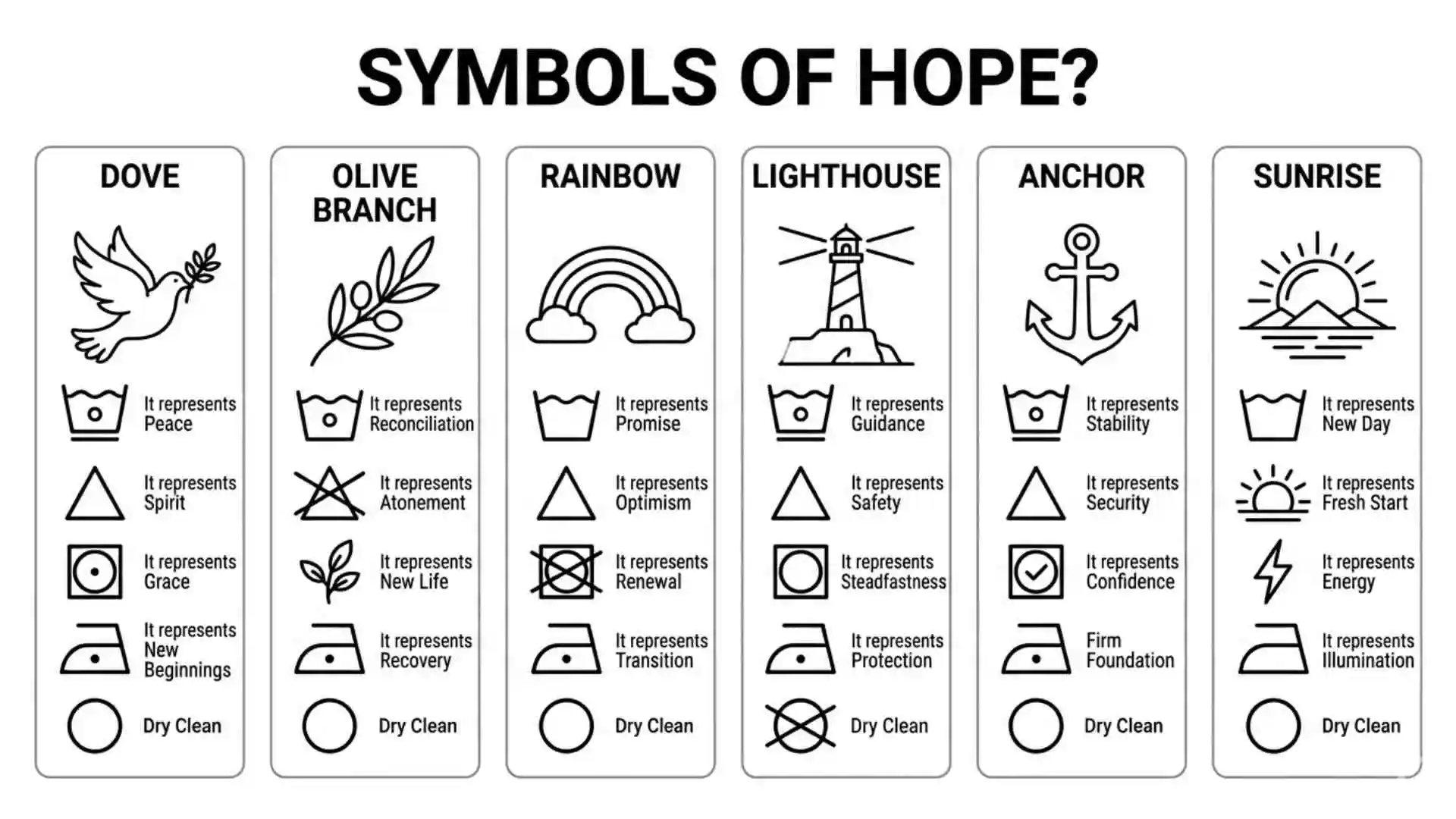
Symbols of hope have inspired people for centuries during difficult times, emotional struggles, and moments of uncertainty.
From the dove and rainbow to candles and anchors, these symbols remind people that brighter days are ahead.
In simple words, symbols of hope are objects, signs, animals, colors, or images that represent positivity, healing, courage, and the belief that things can improve.
Whether someone is facing personal hardship, recovering from loss, or simply searching for motivation, symbols of hope can provide emotional comfort and inner strength. Across cultures, religions, and generations, these symbols continue to carry deep meaning and powerful messages of resilience.
What Are Symbols of Hope?
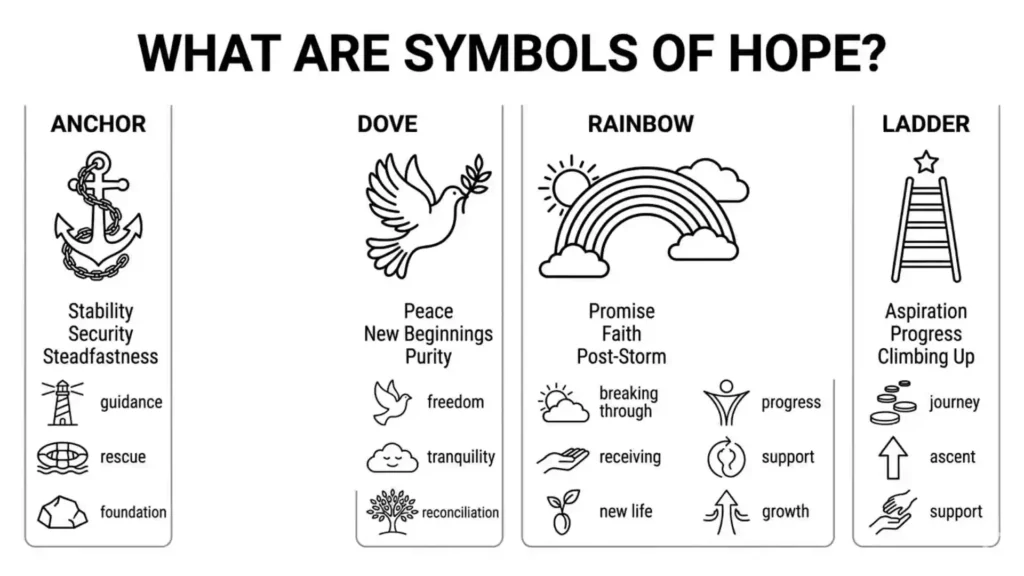
Symbols of hope are visual or meaningful representations connected to optimism, healing, survival, peace, and emotional renewal. People use them to express encouragement, faith, and confidence in the future.
These symbols can appear in:
- Art
- Jewelry
- Tattoos
- Religious traditions
- Literature
- Memorials
- Social media
- Everyday life
Some symbols are ancient and spiritual, while others became modern signs of support and positivity.
What Animal Symbolizes Hope?
Many animals are associated with hope because of their behavior, life cycles, or cultural meanings. The dove, butterfly, phoenix, and swallow are among the animals most commonly connected with hope and renewal. For example, a butterfly can symbolize hope because it changes from a caterpillar into something completely different, reminding us that difficult periods can lead to positive change. The dove is also often linked with peace, new beginnings, and the hope for a better future.
What Are Some Symbols of Hope?
Symbols of hope can be found in nature, religion, art, and different cultures around the world. Common examples include the sunrise, rainbow, dove, olive branch, butterfly, lotus flower, star, candle, and anchor. Each symbol expresses hope in a slightly different way. A sunrise can suggest a fresh start, while a candle can represent light during a difficult or uncertain time.
What Is a Symbol of Hope?
A symbol of hope is an object, image, animal, color, or natural event that reminds people of optimism, renewal, strength, or the possibility of better days ahead. The meaning can vary depending on personal beliefs and cultural traditions. A simple candle, for instance, may symbolize hope because its small flame provides light even when everything around it is dark.
What Represents Hope?
Many things can represent hope, including light, new growth, spring, sunrise, rainbows, flowers, stars, and open hands. Nature provides some of the clearest examples because growth and renewal often happen after difficult conditions. A green plant growing through the soil, for example, can represent the idea that life and possibility can continue even after hardship.
What Animal Is a Symbol of Hope?
Several animals are commonly used as symbols of hope. The dove is associated with peace and a hopeful future, while the butterfly can represent transformation and new beginnings. The phoenix, although mythological rather than a real animal, is especially powerful as a symbol of rising again after destruction. These meanings make such animals popular in artwork, tattoos, jewelry, stories, and personal symbols.
Symbols for Hope
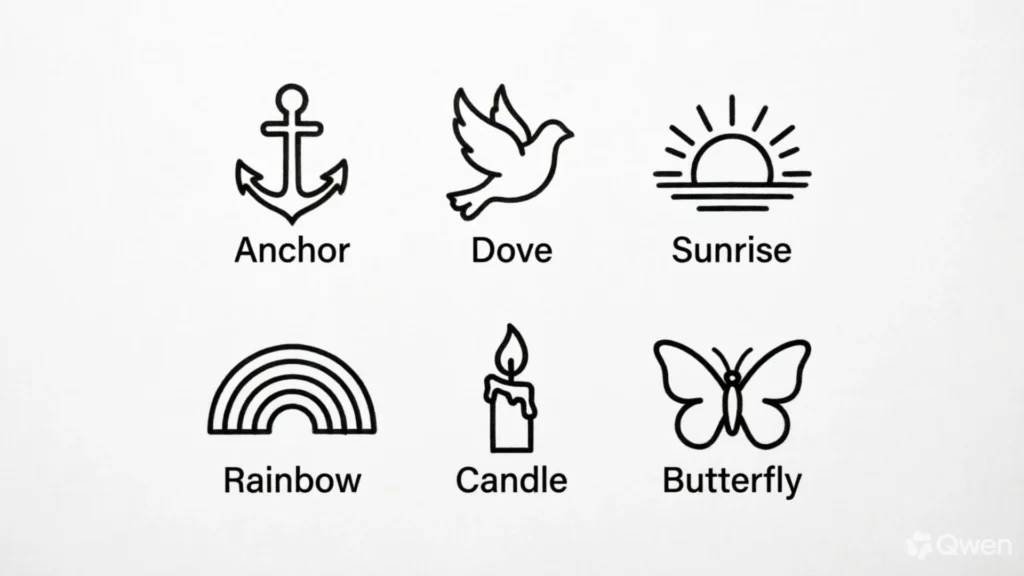
If you are looking for a simple symbol for hope, consider a sunrise, candle, rainbow, dove, butterfly, lotus, olive branch, anchor, or star. A symbol can be chosen according to the kind of hope you want it to express. For example, a sunrise may represent a new beginning, while an anchor can represent staying strong and holding on during challenging times.
What Is Hope?
Hope is the feeling or belief that something positive is possible, even when the present situation is difficult. It can give people motivation to continue, make plans, overcome challenges, and look toward the future with greater optimism. Hope does not mean ignoring problems; instead, it can help a person believe that circumstances can change and that better possibilities still exist.
Sign of Hope Meaning
A sign of hope is something that gives a person encouragement or suggests that positive change may be possible. It can be something personal, such as receiving unexpected support from a friend, or something symbolic, such as seeing a sunrise after a difficult night. The meaning depends on the situation and the person, but the central idea is usually light, possibility, renewal, and encouragement during challenging times.
What Are Some Symbols of Hope?
Symbols of hope are images, objects, colors, or signs that remind people of better days, new beginnings, courage, and the possibility of positive change. Common symbols include the dove, sunrise, rainbow, lotus flower, olive branch, butterfly, star, and green shoots. Their meanings can vary across cultures, religions, and personal experiences, but they often share the idea that difficult times can lead to something brighter.
Symbolism of Hope
The symbolism of hope is often connected with light after darkness, growth after hardship, and renewal after loss. A sunrise can suggest a fresh start, while a growing plant can represent life continuing despite difficult conditions. Hope symbolism does not always mean that everything is perfect; instead, it can represent the belief that change and better possibilities are still ahead.
Symbol of Hope and Strength
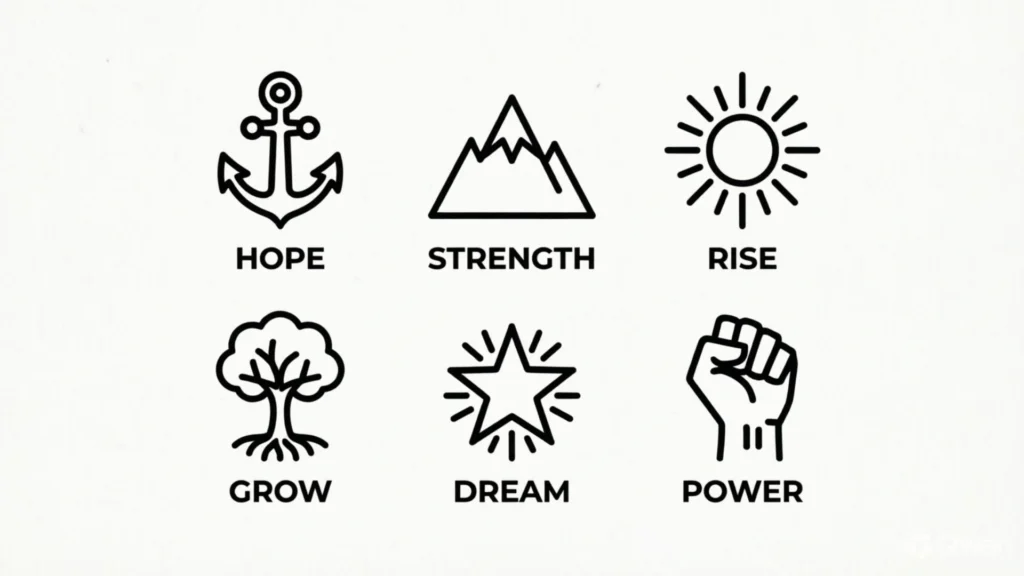
Some symbols represent both hope and strength because they show the ability to survive, recover, and keep moving forward. The mountain, oak tree, phoenix, lotus, and butterfly are examples often associated with resilience and transformation. These symbols can remind someone that strength is not only about avoiding challenges but also about continuing through them.
What Is a Symbol for Hope?
A symbol for hope can be anything that gives a person a sense of optimism or encouragement. The rainbow is a familiar example because it appears after a storm and can suggest that difficult moments will eventually pass. Other symbols for hope include a candle, star, sunrise, dove, and green leaf, each offering its own interpretation of renewal or possibility.
What Symbolizes Hope?
Many things can symbolize hope, including light, flowers, birds, stars, trees, and natural events. A candle shining in darkness may symbolize hope during challenging times, while a flower blooming can represent new life and renewal. Because symbolism is personal, the same image may have a different meaning depending on someone’s culture, beliefs, or life experience.
Symbol of Hope Meaning
The meaning of a symbol of hope usually centers on optimism, renewal, endurance, and the possibility of a better future. For example, a dove may be associated with peace, while a sunrise can represent a new beginning. Understanding the meaning behind a symbol can make it more meaningful when used in artwork, jewelry, tattoos, gifts, or personal reminders.
What Symbolises Hope?
Across different cultures and traditions, several things symbolise hope. Sunrise, rainbows, lotus flowers, butterflies, doves, stars, olive branches, and budding plants are commonly understood as hopeful images. Their meanings come from ideas such as renewal, peace, transformation, growth, and light overcoming darkness.
What Symbol Represents Hope?
There is no single symbol that represents hope for everyone. However, the sunrise is one of the simplest and most universal examples because each new day can suggest a fresh opportunity. A rainbow can represent hope after hardship, while a lotus flower can symbolize growth and renewal despite difficult surroundings.
Symbols of Hope in Life
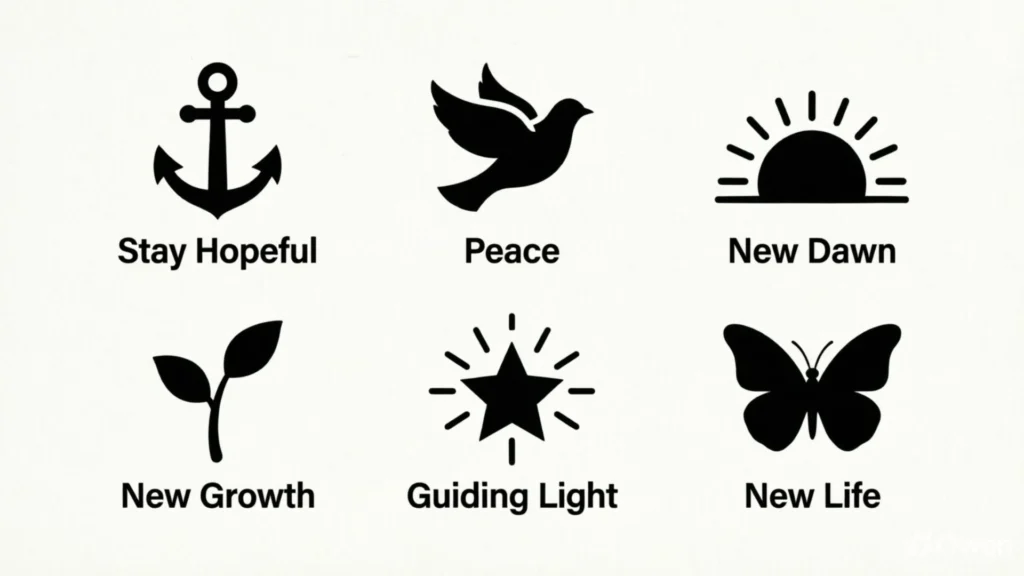
Symbols of hope in life can serve as small reminders to keep going when circumstances feel difficult. A sunrise may remind you that every day offers a new beginning, while a tree can represent patience, growth, and resilience. Whether displayed as artwork, worn as jewelry, chosen as a tattoo, or simply remembered personally, symbols of hope can provide encouragement and meaning during different stages of life.Symbols of Hope Tattoos
Symbols of hope tattoos allow people to carry a meaningful reminder of strength and positivity wherever they go. Many people choose these designs to represent overcoming difficult times, healing from emotional pain, or starting a new chapter in life.
Popular symbols of hope tattoos include the anchor, butterfly, lotus flower, semicolon, dove, rising sun, and infinity symbol. Each design can have a personal meaning depending on the person’s life experience.
For example, an anchor tattoo often represents staying strong during difficult times, while a butterfly can symbolize transformation and a fresh beginning. A lotus flower is commonly connected with growth because it rises beautifully from muddy water.
The most meaningful hope tattoo is usually one that connects with your personal journey and reminds you that difficult moments do not last forever.
Symbols of Hope in the Bible
The Bible contains many powerful symbols that represent hope, faith, renewal, and God’s promises. These symbols have inspired believers for centuries and continue to provide comfort during challenging times.
One important biblical symbol of hope is the rainbow. In the story of Noah, the rainbow represents God’s covenant and serves as a reminder of promise after the storm.
The dove is another meaningful symbol. It is associated with peace, the Holy Spirit, and hope. The cross represents faith, sacrifice, salvation, and the hope of eternal life for Christians.
Other biblical symbols connected with hope include:
- The olive branch
- The rainbow
- The dove
- The cross
- Light
- The lamb
- The anchor
Together, these symbols remind believers that hope can remain strong even during times of uncertainty and hardship.
Symbols of Hope in Nature
Nature is full of beautiful symbols of hope. The changing seasons, growing plants, and returning sunlight can remind us that life continues and new beginnings are always possible.
The sunrise is one of the strongest natural symbols of hope because it represents a new day and another opportunity to begin again. No matter how dark the night becomes, the morning eventually arrives.
The butterfly symbolizes transformation and personal growth. Its journey from caterpillar to butterfly reminds people that change can lead to something beautiful.
Other symbols of hope in nature include:
- Rainbow: Promise and positivity after difficult times
- Lotus flower: Growth through challenges
- Spring flowers: Renewal and fresh beginnings
- Green leaves: Life and growth
- Birds: Freedom and possibility
- Ocean waves: The ability to continue moving forward
Nature often teaches us an important lesson: difficult seasons are temporary, and life has the ability to grow again.
Symbols of Hope and Strength
Hope and strength often work together. Hope gives people a reason to continue, while strength helps them face difficult situations.
The anchor is one of the most popular symbols of hope and strength. It represents stability and reminds us to stay grounded when life feels uncertain.
The lion is another powerful symbol. It is often connected with courage, confidence, leadership, and inner strength. Similarly, the mountain can represent overcoming challenges and continuing to move forward despite obstacles.
Other symbols of hope and strength include:
- Anchor
- Lion
- Tree
- Mountain
- Phoenix
- Arrow
- Celtic knot
These symbols can remind us that being strong does not mean life is always easy. True strength often means continuing to move forward even when the journey becomes difficult.
Ancient Symbols of Hope
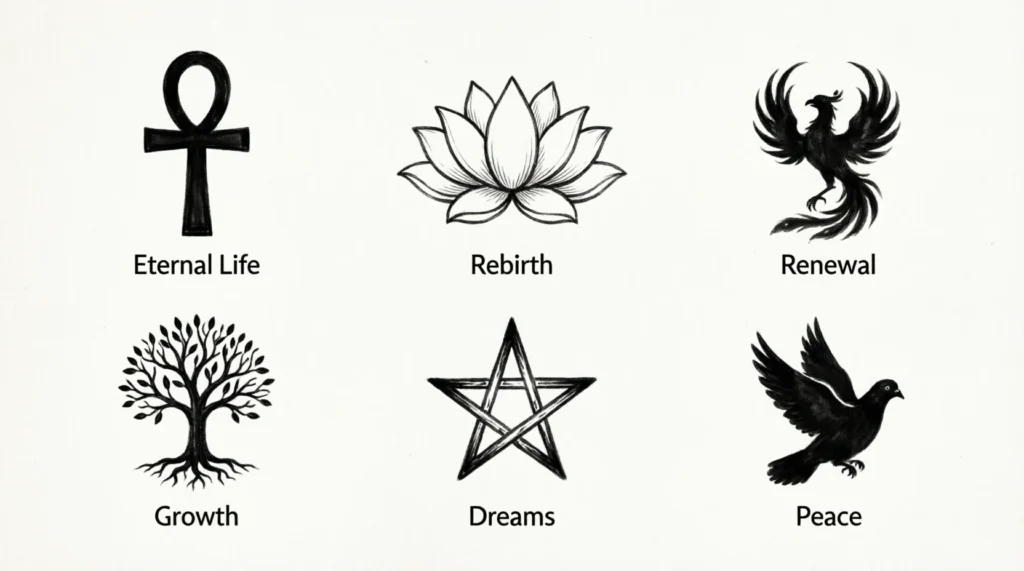
Ancient civilizations used symbols to express important ideas about life, protection, renewal, and hope. Many of these symbols are still recognized and appreciated today.
The ankh, an ancient Egyptian symbol, represents life and is often associated with eternal existence and renewal. The phoenix, found in several ancient traditions, symbolizes rebirth because it rises again after destruction.
Ancient Greek and Roman cultures also used symbols connected with light, nature, and new beginnings. The olive branch, for example, became a lasting symbol of peace and hope.
Some well-known ancient symbols of hope include:
- Ankh
- Phoenix
- Olive branch
- Lotus flower
- Sun symbol
- Spiral
- Tree of life
Although their meanings may differ between cultures, many ancient symbols share a similar message: life can continue, change can bring renewal, and hope can survive difficult times.
Symbols of Hope in Art
Artists have used symbols of hope for centuries to communicate emotions and ideas that words cannot always express. Paintings, sculptures, drawings, and other forms of art often use light, color, nature, and meaningful objects to represent hope.
A rising sun in artwork may symbolize a new beginning. Bright light breaking through darkness can represent optimism and the possibility of better days ahead.
Flowers are also common symbols in art. A blooming flower can represent growth, healing, and the beauty of new opportunities. Birds flying across an open sky may symbolize freedom and hope for the future.
Artists may use symbols such as:
- Sunlight
- Rainbows
- Birds
- Flowers
- Open doors
- Paths
- Stars
The meaning of a symbol in art can depend on the artist and the viewer. This makes symbolic art especially powerful because people can connect the image with their own experiences and emotions.
Symbols of Hope and Healing
Hope plays an important role in the process of healing. Whether someone is recovering from a difficult experience, emotional pain, or a major life change, meaningful symbols can serve as gentle reminders of progress and renewal.
The lotus flower is one of the strongest symbols of hope and healing. It grows from muddy water and becomes a beautiful flower, making it a powerful image of overcoming challenges.
The butterfly also represents healing and transformation. It reminds people that change can take time, but growth is possible.
Other symbols of hope and healing include:
- Lotus flower
- Butterfly
- Dove
- Green leaves
- Rainbow
- Phoenix
- Heart
- Rising sun
These symbols can provide comfort by reminding us that healing is often a journey. Progress may happen slowly, but every step forward can represent growth and hope.
Symbolic Symbols of Hope
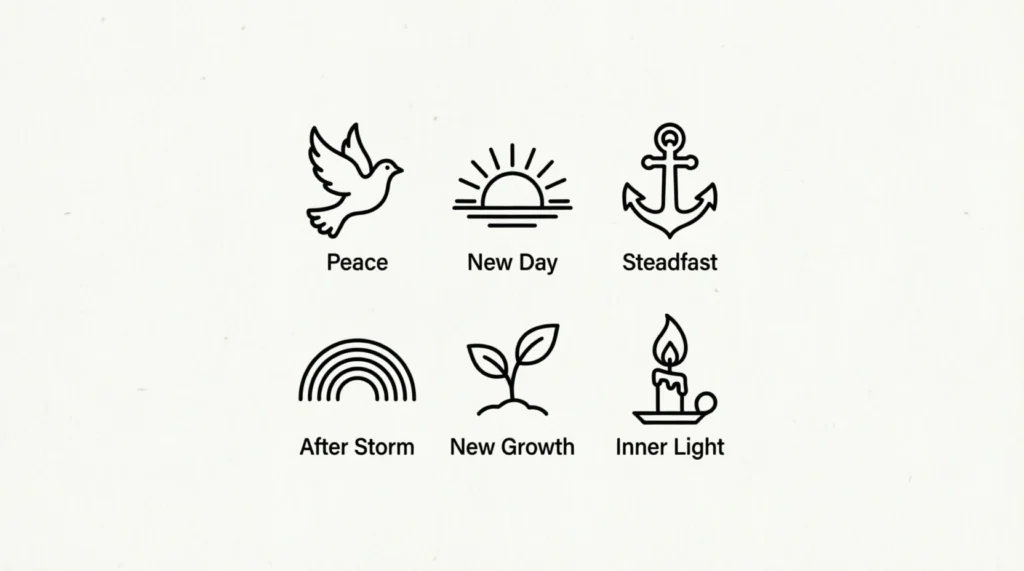
Symbolic symbols of hope are visual signs that represent positive ideas such as renewal, courage, faith, peace, and the possibility of a better future. Different cultures and individuals may interpret these symbols in their own unique ways.
Some of the most widely recognized symbolic symbols of hope include the anchor, rainbow, dove, butterfly, lotus flower, star, and rising sun.
Each symbol communicates a slightly different message. A star can represent guidance during darkness, while a rainbow may represent hope after difficult times. An anchor suggests stability, and a butterfly represents positive transformation.
The beauty of symbols of hope is that they can be both universal and personal. A symbol may have a traditional meaning, but it can also become meaningful because of someone’s individual experiences.
Ultimately, symbolic symbols of hope remind us of a simple but powerful idea: even during difficult moments, there is always the possibility of renewal, growth, and a brighter future.
Why Symbols of Hope Matter
Hope is one of the strongest human emotions. It helps people move forward during pain, fear, sadness, or uncertainty.
Symbols of hope matter because they:
- Provide emotional comfort
- Inspire courage
- Encourage healing
- Strengthen communities
- Remind people they are not alone
A simple symbol can become deeply personal. For example, a candle may remind someone of survival after hardship, while a butterfly may represent emotional transformation.
Common Symbols of Hope and Their Meanings
The Dove
The dove is one of the most famous symbols of hope and peace in the world.
It often represents:
- Peace
- Freedom
- Spiritual healing
- New beginnings
In many traditions, a white dove symbolizes calm after chaos. The image became especially powerful after wars and global conflicts.
Interesting Fact
In ancient stories, doves were believed to carry messages of peace between heaven and earth.
The Rainbow
Rainbows are universal symbols of hope, promise, and positivity.
They symbolize:
- Better days ahead
- Emotional healing
- Unity
- Beauty after storms
People often connect rainbows with overcoming difficult times because they appear after rain and darkness.
Modern Meaning
During global crises, rainbow drawings became symbols of strength and community support.
The Anchor
The anchor symbolizes stability and hope during emotional storms.
It represents:
- Strength
- Security
- Faith
- Staying grounded
Sailors once viewed anchors as signs of survival and safe return home.
Today, many people wear anchor jewelry or tattoos to symbolize emotional resilience.
The Butterfly
Butterflies symbolize transformation and hope through change.
Their journey from caterpillar to butterfly represents:
- Personal growth
- Healing
- New beginnings
- Emotional freedom
Many people see butterflies as reminders that difficult periods can lead to beautiful changes.
The Candle
Candles represent light during darkness.
They symbolize:
- Guidance
- Faith
- Spiritual hope
- Comfort
People light candles during prayers, memorials, celebrations, and difficult moments.
Even a small flame can symbolize strength during hard times.
The Lotus Flower
The lotus flower grows in muddy water yet blooms beautifully.
Because of this, it symbolizes:
- Rising above struggles
- Purity
- Spiritual growth
- Hope through hardship
The lotus is especially important in Buddhism and Hinduism.
The Olive Branch
The olive branch has long symbolized peace and reconciliation.
It represents:
- Hope for harmony
- Forgiveness
- Friendship
- Calm after conflict
Ancient civilizations used olive branches as signs of peace agreements and unity.
The Phoenix
The phoenix is a legendary bird that rises from ashes after destruction.
It symbolizes:
- Rebirth
- Survival
- Inner strength
- Hope after failure
The phoenix reminds people that recovery and renewal are possible even after painful experiences.
Symbols of Hope in Different Cultures
Native American Symbols of Hope
Many Native American traditions connect hope with nature and animals.
Common symbols include:
- Eagles for spiritual strength
- Feathers for guidance
- Bears for protection
These symbols often represent balance between humans and the natural world.
Chinese Symbols of Hope
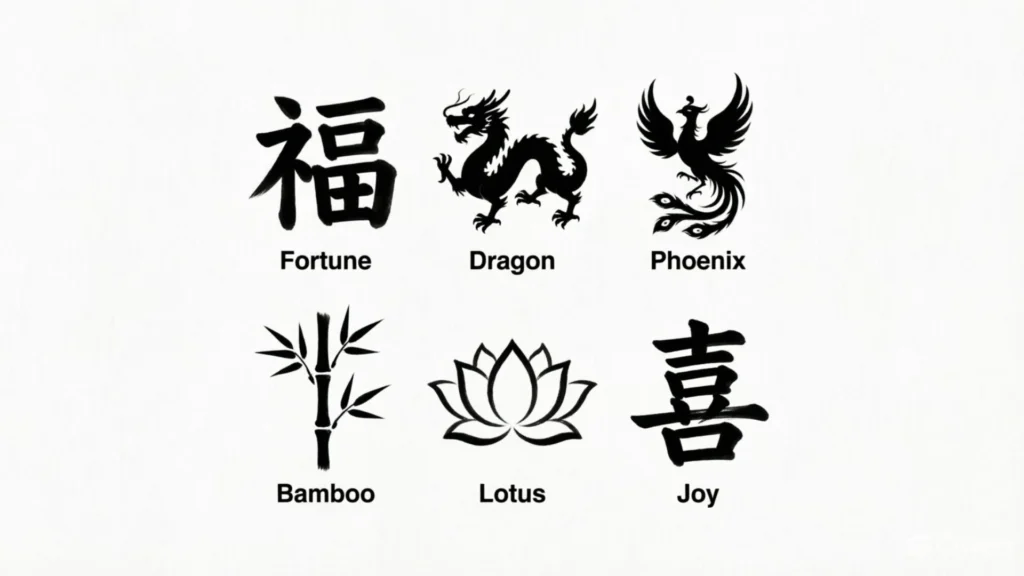
Chinese culture uses symbols connected to luck, happiness, and renewal.
Popular examples include:
- Bamboo for resilience
- Cranes for peace and long life
- Dragons for strength and protection
Red and gold colors are also associated with hope and prosperity.
African Symbols of Hope
African traditions often use symbolic patterns called Adinkra symbols.
One famous example is:
- Sankofa — representing learning from the past to build a better future
This symbol encourages growth, wisdom, and hope through reflection.
Celtic Symbols of Hope
Celtic culture values connection and continuity.
Common hopeful symbols include:
- Celtic knots for eternal connection
- Spirals for growth and life cycles
- Trees for wisdom and strength
These symbols often represent endurance through difficult times.
Religious Symbols of Hope
Christianity
Christian symbols of hope include:
- The cross
- The dove
- Light
- Angels
These symbols often represent faith, salvation, and spiritual comfort.
Buddhism
Buddhist symbols of hope focus on peace and enlightenment.
Common examples:
- Lotus flower
- Dharma wheel
- Meditation symbols
These signs encourage inner calm and spiritual growth.
Islam
In Islamic tradition, hope is strongly connected to faith, prayer, and patience.
Important symbolic themes include:
- Light
- Crescent moon
- Water
- Gardens
These symbols often represent mercy, peace, and spiritual guidance.
Animal Symbols of Hope
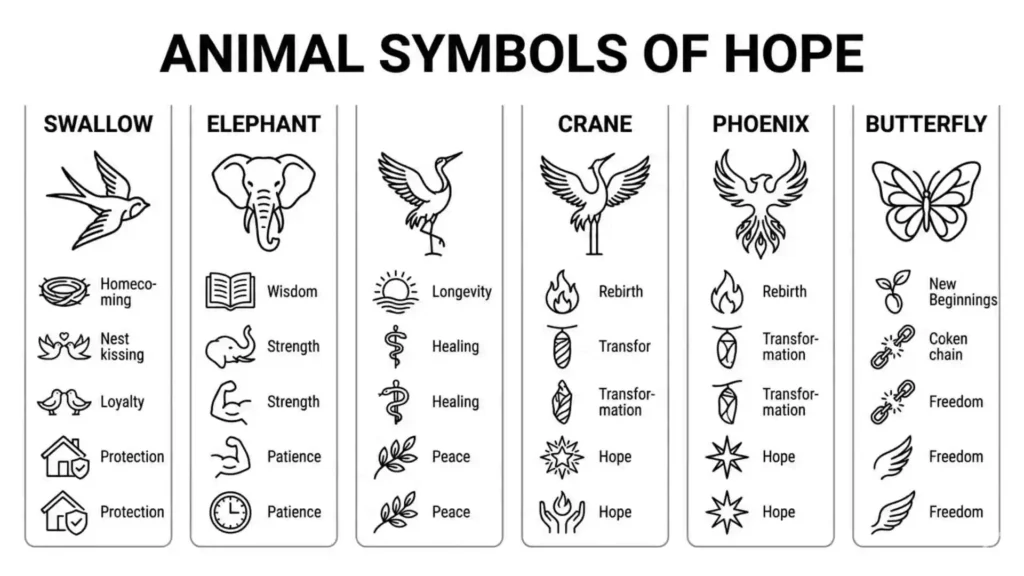
Animals have always carried symbolic meanings in stories and traditions.
Birds
Birds often symbolize:
- Freedom
- Possibility
- Positive change
Dolphins
Dolphins represent:
- Joy
- Protection
- Emotional healing
Elephants
Elephants symbolize:
- Wisdom
- Family support
- Strength during hardship
Wolves
Wolves often represent:
- Loyalty
- Survival
- Emotional resilience
Colors That Symbolize Hope
Colors also carry emotional meaning.
| Color | Meaning |
| Green | Growth and renewal |
| Blue | Peace and trust |
| Yellow | Positivity and happiness |
| White | Purity and healing |
| Gold | Success and optimism |
These colors are commonly used in art, branding, and awareness campaigns.
Symbols of Hope in Literature and Art
Writers and artists often use symbols of hope to create emotional connection.
Examples include:
- A sunrise after tragedy
- A blooming flower in difficult conditions
- Light shining through darkness
These visual ideas help audiences emotionally connect with stories and characters.
Symbols of Hope in Modern Society
Today, symbols of hope appear everywhere:
- Social media campaigns
- Mental health awareness movements
- Charities
- Tattoos
- Jewelry
- Fashion
- Community events
People use these symbols to show support, encouragement, and unity.
Practical Uses of Symbols of Hope
In Mental Health Support
Therapists and counselors sometimes encourage symbolic objects to help emotional healing.
For example:
- Journals with hopeful imagery
- Motivational jewelry
- Inspirational artwork
These reminders can help people stay emotionally grounded.
In Hospitals and Recovery Centers
Hope symbols are often used in healthcare spaces to create comfort and positivity.
Paintings of nature, butterflies, and calming colors can reduce stress and anxiety.
In Awareness Campaigns
Organizations use symbols to spread messages of unity and encouragement.
Examples include:
- Awareness ribbons
- Candles for memorials
- Community murals
These symbols help people feel connected during difficult times.
Famous Historical Symbols of Hope
The Statue of Liberty
The Statue of Liberty became a symbol of hope for immigrants arriving in America seeking freedom and opportunity.
The Peace Sign
The peace sign became globally recognized during anti-war movements and still represents hope for unity and nonviolence.
The Red Cross Symbol
The Red Cross represents humanitarian aid, care, and hope during emergencies and disasters.
Psychological Impact of Hope Symbols
Symbols can deeply affect emotions and mindset.
Studies in psychology suggest hopeful imagery may:
- Reduce anxiety
- Increase motivation
- Improve emotional resilience
- Encourage positive thinking
People naturally connect with symbols because the brain responds strongly to visual meaning and emotional association.
Interesting Facts About Symbols of Hope
- Rainbows appear in myths and legends worldwide.
- Ancient sailors tattooed anchors for protection and hope.
- Butterflies are connected to transformation in many cultures.
- Candles are used in nearly every major religion.
- The phoenix appears in Greek, Egyptian, and Asian mythology.
How Social Media Changed Hope Symbolism
Social media platforms helped modern symbols spread quickly.
Popular hopeful symbols online include:
- Sunflowers
- Blue hearts
- Mental health ribbons
- Butterfly emojis
- Rainbow artwork
Hashtags and visual campaigns allow millions of people to share encouragement instantly.
Choosing a Personal Symbol of Hope
A personal symbol of hope should feel meaningful and emotionally comforting.
People often choose symbols connected to:
- Recovery
- Faith
- Loved ones
- Personal growth
- Life experiences
The strongest symbols are usually personal rather than trendy.
Common Misunderstandings About Hope Symbols
Thinking Symbols Are Superstitions
Many symbols are emotional or cultural, not magical.
Assuming One Meaning Fits Everyone
Different cultures interpret symbols differently.
Ignoring Historical Background
Some symbols have deep spiritual or historical importance that deserves respect.
Symbols of Hope in Tattoos
Hope tattoos are extremely popular because they carry emotional meaning.
Popular choices include:
- Anchors
- Butterflies
- Semicolons
- Birds
- Lotuses
- Phoenixes
Many people choose these tattoos after overcoming difficult life experiences.
Symbols of Hope in Daily Life
Hope symbols are not only spiritual or artistic. People see them daily in:
- Jewelry
- Home decoration
- Clothing
- Greeting cards
- Religious spaces
- Public memorials
These symbols quietly remind people to stay strong and positive.
FAQs About Symbols of Hope
What is the universal symbol of hope?
The dove and rainbow are often considered universal symbols of hope because they represent peace, healing, and better days ahead.
Why do people use symbols of hope?
People use symbols of hope for emotional comfort, encouragement, healing, motivation, and spiritual support during difficult times.
What flower symbolizes hope?
The lotus flower is one of the strongest symbols of hope because it blooms beautifully even in muddy water.
Are symbols of hope different in every culture?
Yes. Different cultures connect hope with different animals, colors, objects, and spiritual traditions.
What tattoo symbolizes hope?
Popular hope tattoos include anchors, butterflies, phoenixes, semicolons, and birds because they represent survival and transformation.
Conclusion
Symbols of hope have guided humanity through fear, hardship, loss, and uncertainty for thousands of years. Whether found in nature, religion, art, history, or modern culture, these symbols remind people that healing and brighter days are always possible.
From the peaceful dove to the resilient phoenix, every symbol carries a message of strength, courage, and emotional renewal. In difficult moments, even the smallest symbol can inspire someone to keep moving forward.
Hope may not always remove pain, but it gives people the strength to face tomorrow with courage and belief.

Elliot Kensington
Elliot Kensington is a storyteller at heart, always fascinated by the hidden corners of human imagination. From a young age, he found comfort in books and the worlds they created, inspiring him to craft tales that blend emotion, suspense, and wonder. His writing journey began with short stories that captured fleeting moments of life, and over time, evolved into novels that explore both the extraordinary and the everyday. Elliot believes that every story holds a piece of the soul, and his mission is to connect readers to those moments that linger long after the last page. When he’s not writing, he enjoys exploring nature, capturing moments through photography, and seeking inspiration in the little things.
Books by Elliot Kensington:
-
Shadows of Tomorrow
-
The Whispering Path