

If you searched for Karen Lynch and Elizabeth Taylor, you may expect to find a family connection, a shared career, a business relationship, or some hidden story linking the two women.
The public record tells a different story.
Karen S. Lynch built her career in the American healthcare industry and became president and CEO of CVS Health in 2021. Elizabeth Taylor was a British-American Hollywood legend whose six-decade career included major films, business ventures, and an extraordinary second act as an HIV/AIDS activist.
There is no well-established public evidence showing that the two women were relatives, business partners, close associates, or participants in a documented joint project.
That doesn’t make the search meaningless. In fact, it makes the topic more interesting. When two prominent people from completely different worlds appear together in searches, the best approach is to separate documented facts from speculation.
This article examines who Karen Lynch and Elizabeth Taylor were, what each accomplished, Elizabeth Taylor’s healthcare and humanitarian work, Karen Lynch’s role in healthcare leadership, and what the available evidence actually says about a connection between them.
Are Karen Lynch and Elizabeth Taylor Related? (Quick Answer)
No documented family relationship between Karen Lynch and Elizabeth Taylor has been established in reliable public sources.
The two women came from different generations and developed careers in very different fields.
Karen Lynch became a major figure in healthcare leadership, particularly through her work with Aetna and CVS Health. CVS Health appointed her president and CEO effective February 1, 2021. She previously served as executive vice president of CVS Health and president of Aetna.
Elizabeth Taylor became one of the world’s most recognizable actors and later one of the most prominent celebrity advocates for people living with HIV and AIDS. She co-founded amfAR and established The Elizabeth Taylor AIDS Foundation.
So, if you’re looking for a Karen Lynch Elizabeth Taylor family connection, Karen Lynch Elizabeth Taylor relationship, or documented partnership between them, the responsible answer is that no credible evidence currently establishes one.
The names can be discussed together, but the available record does not establish that the two women had a direct personal or professional relationship.
Who Is Karen Lynch?
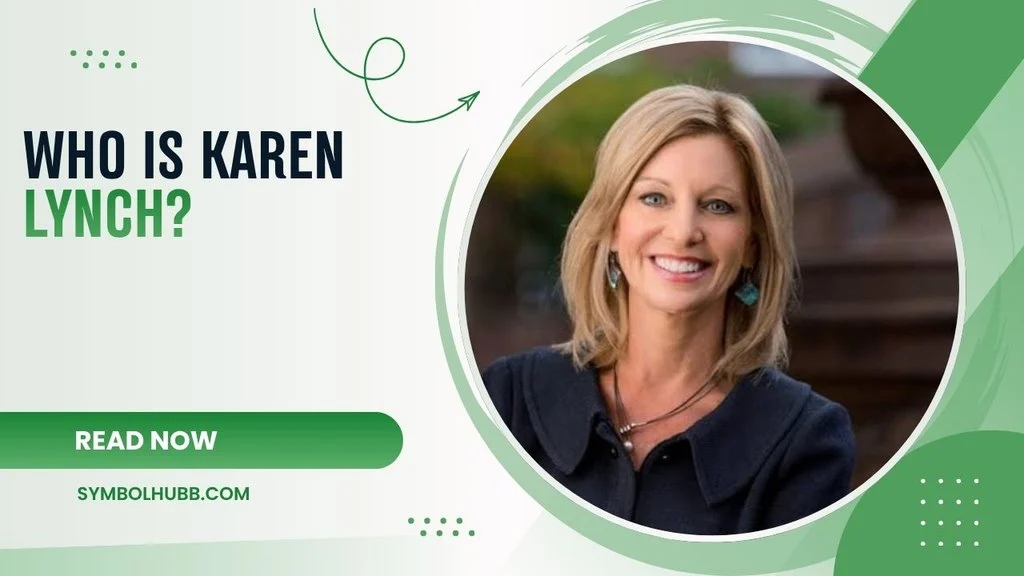
Karen S. Lynch is an American healthcare executive best known for her leadership at CVS Health and Aetna.
Her career developed inside the healthcare and insurance industries rather than entertainment or celebrity culture. Before becoming CVS Health’s CEO, she had already spent years in senior healthcare positions.
CVS Health appointed Lynch president and CEO effective February 1, 2021. At the time, she was executive vice president of CVS Health and president of Aetna. She had joined Aetna in 2012 and brought extensive experience from earlier leadership positions at Magellan Health Services and Cigna.
Her rise mattered because CVS Health was no longer simply a traditional pharmacy company. The business had developed into a large diversified healthcare organization with pharmacy, insurance, pharmacy-benefit, clinical, and other health services.
Karen Lynch’s Education and Early Career
Lynch earned a bachelor’s degree from Boston College and later completed an executive MBA at Boston University.
She also began her professional career in accounting, working at Ernst & Young before moving into healthcare leadership.
Her career illustrates a path that is very different from the traditional celebrity route. She built influence through business management, healthcare strategy, insurance, operations, and organizational leadership.
That distinction is important when comparing her with Elizabeth Taylor.
Taylor became famous because millions of people watched her on screen. Lynch became influential because she helped lead one of America’s largest healthcare organizations.
Karen Lynch and Aetna
Lynch joined Aetna in 2012.
She eventually became president of Aetna in 2015. Her responsibilities expanded considerably after CVS Health acquired Aetna in 2018.
By the time CVS Health announced her promotion to CEO, Lynch had already spent years working on the integration of Aetna into the larger CVS Health organization.
CVS Health specifically highlighted her work on products and services designed to connect insurance with the company’s broader healthcare assets. The company also pointed to strong Medicare Advantage membership growth during her leadership.
Karen Lynch as CVS Health CEO
Lynch became CVS Health’s president and CEO on February 1, 2021.
Her tenure placed her at the center of major healthcare issues, including access, affordability, pharmacy services, insurance, primary care, and the changing relationship between patients and healthcare providers.
CVS Health’s own history records Lynch succeeding Larry Merlo as CEO in 2021. The company later announced that David Joyner would replace her, effective October 17, 2024.
That makes Lynch a former CVS Health CEO as of 2026.
Who Was Elizabeth Taylor?
Elizabeth Taylor was one of the most famous actors of the 20th century.
Born in London in 1932, she moved with her family to the United States as a child and became a professional actor at a remarkably young age.
Her career lasted roughly six decades.
Taylor earned five Academy Award nominations and won the Academy Award for Best Actress twice. Her most famous films include National Velvet, A Place in the Sun, Giant, Cat on a Hot Tin Roof, Butterfield 8, and Who’s Afraid of Virginia Woolf?
Her official biography also identifies her as a pioneering celebrity entrepreneur. She negotiated a $1 million acting contract for Cleopatra, an extraordinary figure for its era. She later developed a successful fragrance business.
But reducing Elizabeth Taylor to movie stardom misses one of the most important parts of her legacy.
Her work as an HIV/AIDS activist became one of the defining chapters of her later life.
Elizabeth Taylor’s HIV/AIDS Advocacy
This is where the story of Elizabeth Taylor becomes especially significant.
During the 1980s, HIV and AIDS carried intense fear and stigma. Public understanding was limited, misinformation spread rapidly, and many people living with the disease faced discrimination.
Taylor used her celebrity status to challenge that environment.
Her activism began to take shape after the death of her friend and fellow actor Rock Hudson from AIDS in 1985. According to amfAR, Taylor became determined to challenge the discrimination and lack of compassion surrounding the epidemic.
Rather than simply donating money privately, she placed herself in the public conversation.
That distinction matters.
She appeared at fundraising events, spoke publicly, worked with researchers and advocates, traveled internationally, and eventually testified before Congress.
Elizabeth Taylor and amfAR
Taylor played a major role in the formation of amfAR, the Foundation for AIDS Research.
The organization emerged in 1985 through the combination of Elizabeth Taylor’s National AIDS Research Foundation and the AIDS Medical Foundation associated with Dr. Mathilde Krim and other researchers.
Taylor became amfAR’s founding national chairman and its most recognizable public spokesperson.
Her celebrity gave the organization something that scientific institutions often struggled to obtain at the time: enormous public attention.
She could walk into a room and instantly attract journalists, television cameras, donors, politicians, and members of the public.
That visibility became a fundraising and advocacy tool.
Taylor’s Congressional Advocacy
Taylor didn’t limit her activism to Hollywood events.
She also testified before Congress in support of AIDS funding and the Ryan White CARE Act.
AmfAR notes that Taylor advocated for Senate support of the legislation, which became a major federal mechanism for funding HIV/AIDS services.
This part of her legacy is easy to overlook because her movie career was so enormous.
Yet it demonstrates why Taylor’s humanitarian work deserves to be evaluated independently from her celebrity image.
She wasn’t merely attaching her name to a charitable campaign.
She repeatedly used her public position to pressure institutions, raise money, and change public attitudes.
The Elizabeth Taylor AIDS Foundation
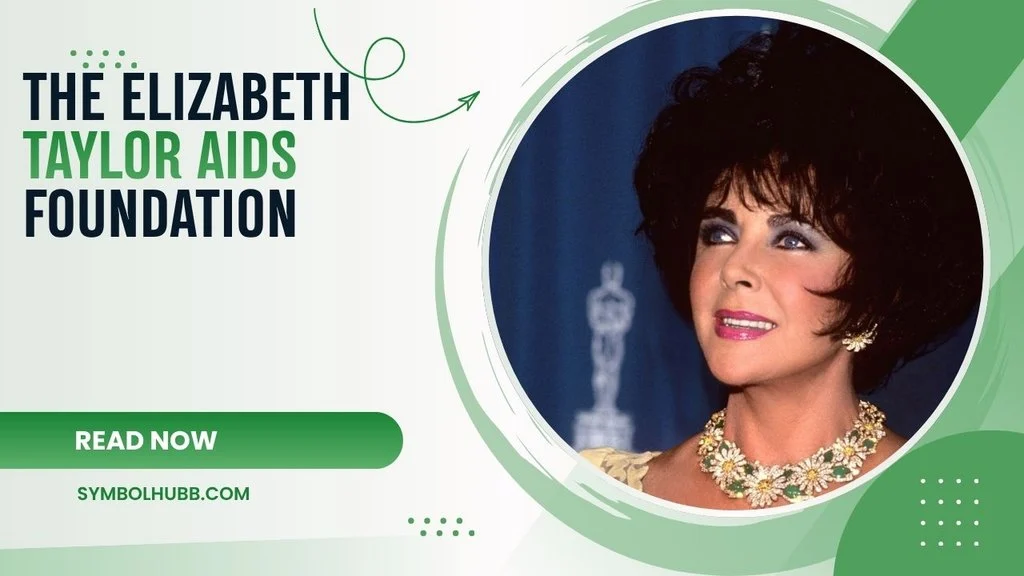
In 1991, Taylor established The Elizabeth Taylor AIDS Foundation (ETAF).
The foundation was created to support direct-service initiatives for people living with HIV and AIDS.
The distinction between research and direct services is important.
Research seeks better scientific answers, treatments, and eventually cures. Direct services help people facing immediate practical challenges.
Taylor wanted her humanitarian work to reach people who needed help directly.
The foundation’s historical timeline records major fundraising and advocacy activities throughout the 1980s and 1990s. It also documents Taylor’s efforts to support organizations providing services to people affected by HIV/AIDS.
Today, ETAF continues its work in Taylor’s name.
Its current mission includes social justice, human rights, HIV education, advocacy, community partnerships, and support for people living with HIV/AIDS.
Karen Lynch and Elizabeth Taylor: Is There a Documented Connection?
This is the central question behind the search.
After examining the publicly documented careers of both women, there is no reliable evidence establishing a direct family, professional, business, or personal relationship between Karen Lynch and Elizabeth Taylor.
That conclusion needs careful wording.
It would be too strong to claim that the women could never have encountered one another or that they never appeared at the same event. Public records don’t prove every moment of two people’s lives.
Instead, the evidence supports a narrower and more defensible statement:
No significant documented relationship between Karen Lynch and Elizabeth Taylor has been identified in authoritative sources.
Family Connection
There is no established public evidence that Karen Lynch was related to Elizabeth Taylor.
Taylor’s official biography documents her family history, marriages, children, grandchildren, and broader life story. It does not identify Karen Lynch as a relative.
Lynch’s professional biographies likewise focus on her education, healthcare career, executive positions, and leadership experience.
Nothing in those authoritative biographies establishes a Taylor-Lynch family relationship.
Professional Connection
The professional worlds of the two women were also substantially different.
| Karen Lynch | Elizabeth Taylor |
| Healthcare executive | Actor and humanitarian |
| CVS Health | Hollywood film industry |
| Aetna | Metro-Goldwyn-Mayer and major film productions |
| Healthcare strategy | Acting and entertainment |
| Insurance and health services | HIV/AIDS advocacy |
| Corporate leadership | Celebrity philanthropy |
There are broad thematic overlaps around healthcare, public service, and advocacy, but thematic similarity isn’t evidence of a personal relationship.
Business Connection
Karen Lynch led major healthcare businesses.
Elizabeth Taylor built commercial ventures of her own, particularly through her fragrance business and other entrepreneurial activities.
However, there is no credible evidence that Lynch and Taylor operated a shared company, partnership, foundation, product, or business initiative.
Charitable Connection
This area requires a little more nuance.
Elizabeth Taylor’s philanthropic record is heavily connected to HIV/AIDS advocacy. Her work included amfAR and ETAF.
Karen Lynch’s professional career was deeply connected to healthcare delivery and healthcare organizations.
That creates an obvious conceptual overlap.
Both women contributed to conversations about health and public welfare, but they did so in very different capacities.
Similarity does not establish collaboration.
Why Are Karen Lynch and Elizabeth Taylor Names Searched Together?
This question is more difficult because search engines don’t provide a reliable explanation for every unusual name pairing.
A search query can arise from many situations:
- A user may be checking whether two people are related.
- A database or article may mention both names.
- A person may have encountered conflicting biographical information.
- Search engines may connect entities based on recurring online text.
- A low-quality article may repeat an unsupported association.
- Someone may be investigating two prominent women connected broadly to healthcare or philanthropy.
Without a primary source explaining the origin of the pairing, it would be irresponsible to invent one.
Search Association Is Not Proof
This is one of the most important lessons when researching celebrity and executive biographies.
Suppose a page repeatedly places two names next to each other. That doesn’t automatically establish a relationship.
For example:
Karen Lynch → healthcare leadership
and
Elizabeth Taylor → HIV/AIDS advocacy
Both subjects can appear in discussions about healthcare without ever having worked together.
Search engines organize information around language, entities, pages, links, and user behavior. A search association isn’t the same thing as a documented relationship.
Karen Lynch vs. Elizabeth Taylor: Career Comparison
The contrast becomes clearer when their careers are placed side by side.
| Category | Karen Lynch | Elizabeth Taylor |
| Primary field | Healthcare | Film and entertainment |
| Best known for | CVS Health and Aetna leadership | Acting career and humanitarian activism |
| Major organization | CVS Health | amfAR and ETAF |
| Public influence | Healthcare management | Popular culture and advocacy |
| Major health connection | Insurance and healthcare services | HIV/AIDS activism |
| Education | Boston College; Boston University | Hollywood professional training and schooling |
| Major public role | Corporate executive | Actor, activist, philanthropist |
| Leadership style | Institutional and corporate | Public advocacy and celebrity activism |
| Era of greatest influence | Modern healthcare era | Mid-20th century through early 21st century |
| Legacy | Healthcare leadership | Film, philanthropy, and HIV/AIDS advocacy |
The table shows why the two names can feel connected while still representing very different stories.
Both became influential women.
Both operated at a national level.
Both had important connections to healthcare.
But their careers followed separate paths.
What Karen Lynch’s Career Says About Modern Healthcare
Karen Lynch’s career provides a useful window into how healthcare has changed.
Traditional healthcare organizations often operated in separate silos. Insurance companies handled insurance. Pharmacies filled prescriptions. Hospitals provided treatment. Physicians delivered clinical care.
Large healthcare companies increasingly try to connect these pieces.
CVS Health’s acquisition of Aetna reflected that broader movement toward an integrated healthcare model.
Lynch played a significant role in that transition. Before becoming CEO, she helped lead Aetna inside CVS Health and worked on integrating insurance with other healthcare assets.
That makes her career relevant beyond one executive title.
It illustrates the growing importance of healthcare integration, consumer access, insurance strategy, pharmacy services, and value-based care.
What Elizabeth Taylor’s Activism Says About Public Health
Taylor’s story reveals a different side of healthcare.
Medical progress depends on more than laboratories and hospitals. Public attitudes matter too.
During the AIDS crisis, stigma could discourage people from seeking testing, treatment, information, or support.
Taylor used fame to confront that stigma.
Her involvement with amfAR helped bring HIV/AIDS into mainstream public discussion. She also supported legislation, fundraising, research, education, and direct services.
Her approach demonstrated the potential power of celebrity advocacy when a public figure commits substantial time, money, and personal credibility to a cause.
Why Taylor’s Celebrity Mattered
Imagine trying to explain a complicated public health crisis to millions of people through scientific reports alone.
Now imagine one of the world’s most famous actors standing in front of television cameras and talking about compassion, discrimination, funding, and human dignity.
That was Taylor’s advantage.
Her fame opened doors.
Her willingness to use it gave her advocacy weight.
Her personal commitment helped transform celebrity philanthropy from a side activity into a serious form of public advocacy.
What the Public Record Actually Shows
The safest way to understand the Karen Lynch and Elizabeth Taylor search is to divide known facts from unsupported assumptions.
| Claim | Evidence status |
| Karen Lynch led CVS Health | Documented |
| Lynch became CVS Health CEO in 2021 | Documented |
| Lynch previously led Aetna | Documented |
| Elizabeth Taylor was a major Hollywood actor | Documented |
| Taylor won two Best Actress Oscars | Documented |
| Taylor became a major HIV/AIDS activist | Documented |
| Taylor helped establish amfAR | Documented |
| Taylor founded ETAF | Documented |
| Lynch and Taylor were family | No reliable evidence identified |
| Lynch and Taylor were business partners | No reliable evidence identified |
| Lynch and Taylor had a documented joint charity | No reliable evidence identified |
| Lynch and Taylor had a documented close personal relationship | No reliable evidence identified |
This distinction protects readers from one of the biggest problems in online biography writing: turning an interesting search query into a fictional story.
What Should Not Be Claimed About Karen Lynch and Elizabeth Taylor
Several claims would require evidence that isn’t currently established.
Don’t Claim They Were Relatives
There is no reliable basis for describing Karen Lynch as Elizabeth Taylor’s sister, daughter, cousin, niece, or other relative.
Don’t Invent a Healthcare Partnership
Lynch’s healthcare career and Taylor’s AIDS activism can be discussed together as separate stories.
That doesn’t mean they collaborated.
Don’t Claim They Were Close Friends
A biography should not transform two recognizable names into personal acquaintances without documentation.
Don’t Treat Search Results as Historical Evidence
A page appearing in search results doesn’t automatically make its claims reliable.
For historical and biographical questions, primary sources and established organizations are much stronger evidence.
Elizabeth Taylor’s Legacy After Her Death
Elizabeth Taylor died in Los Angeles in 2011 at the age of 79.
Her legacy didn’t end with her acting career.
Her official biography describes a woman whose influence eventually expanded from film into business, philanthropy, and humanitarian advocacy.
Her HIV/AIDS work remains particularly significant because it addressed both the disease itself and the social stigma surrounding it.
ETAF continues that mission today, working on advocacy, education, community partnerships, and human rights for people living with HIV/AIDS.
In that sense, Taylor’s later life changed the meaning of her celebrity.
She wasn’t simply remembered as the star of Cleopatra or Who’s Afraid of Virginia Woolf?
She became part of the history of HIV/AIDS advocacy.
Karen Lynch’s Legacy in Healthcare Leadership
Karen Lynch’s legacy belongs to a different category.
Her career reflects the rise of women into some of the most influential positions in American corporate healthcare.
She became CEO of CVS Health during a period when healthcare companies faced enormous challenges involving affordability, access, digital transformation, chronic disease, pharmacy services, and changing consumer expectations.
CVS Health’s leadership transition in October 2024 marked the end of her tenure as CEO. David Joyner succeeded her effective October 17, 2024.
Her professional record remains significant because she reached the highest level of leadership at one of America’s largest healthcare companies.
The Real Connection Between Their Stories

Although no direct relationship has been established, there is an interesting conceptual connection between Karen Lynch and Elizabeth Taylor.
Both women became influential through health-related work.
But they represented two completely different forms of influence.
Lynch represented institutional healthcare leadership.
She worked inside large organizations and dealt with healthcare systems, insurance, services, operations, and business strategy.
Taylor represented public advocacy.
She used celebrity, personal conviction, fundraising, political pressure, and public communication to draw attention to HIV/AIDS.
One worked primarily through corporate institutions.
The other worked primarily through public influence and humanitarian activism.
That contrast makes the comparison worthwhile even without a personal connection.
Karen Lynch and Elizabeth Taylor: Two Very Different Forms of Influence
It’s tempting to assume that people appearing in the same search must share a story.
Sometimes they do.
Sometimes the real story is the absence of a documented connection.
Karen Lynch’s career shows how a person can influence healthcare through executive leadership. Elizabeth Taylor’s career shows how a celebrity can influence public health by turning fame into advocacy.
Their methods were different.
Their industries were different.
Their generations were different.
Yet both demonstrate how public influence can extend beyond a person’s official job title.
Lynch’s Influence
Lynch’s influence came through:
- Healthcare leadership
- Corporate strategy
- Insurance
- Aetna
- CVS Health
- Healthcare integration
- Consumer-focused healthcare services
- Executive management
Taylor’s Influence
Taylor’s influence came through:
- Film and entertainment
- Celebrity advocacy
- HIV/AIDS awareness
- amfAR
- The Elizabeth Taylor AIDS Foundation
- Fundraising
- Political advocacy
- Public education
- Human rights
Those are meaningful achievements on their own.
There is no need to manufacture a connection between them to make either woman’s story interesting.
Frequently Asked Questions About Karen Lynch and Elizabeth Taylor
Are Karen Lynch and Elizabeth Taylor related?
There is no reliable public evidence establishing a family relationship between Karen Lynch and Elizabeth Taylor. Their documented biographies describe separate family histories and professional lives.
Did Karen Lynch work with Elizabeth Taylor?
No documented joint professional project has been identified in reliable sources. Lynch’s career centered on healthcare organizations such as Aetna and CVS Health, while Taylor worked in entertainment and HIV/AIDS advocacy.
Was Elizabeth Taylor involved in healthcare?
Yes, although she wasn’t a healthcare executive or medical professional. Taylor became a major HIV/AIDS activist, helped establish amfAR, advocated for AIDS funding, and founded The Elizabeth Taylor AIDS Foundation.
What was Karen Lynch known for?
Karen Lynch became known for senior leadership in the healthcare industry. She served as president of Aetna and later became president and CEO of CVS Health in 2021. CVS Health announced that she stepped down as CEO in October 2024.
What did Elizabeth Taylor accomplish besides acting?
Taylor became a major humanitarian and HIV/AIDS advocate. She helped establish amfAR, testified before Congress regarding AIDS legislation, raised substantial funds, and founded The Elizabeth Taylor AIDS Foundation in 1991.
Why do people search for Karen Lynch and Elizabeth Taylor together?
The precise origin of the search pairing isn’t established by authoritative sources. It may reflect online associations, biographical research, mistaken identity, or curiosity about whether two prominent women connected to health-related causes were related. Without evidence, it’s better not to claim a specific reason.
Final Takeaway on Karen Lynch and Elizabeth Taylor
The search for Karen Lynch and Elizabeth Taylor can easily lead to speculation.
The documented record provides a much clearer picture.
Karen Lynch built a distinguished career in healthcare leadership. She became president of Aetna, later served as president and CEO of CVS Health, and played a major role in the company’s healthcare strategy and integration efforts. CVS Health appointed her CEO in 2021 and announced her replacement by David Joyner in October 2024.
Elizabeth Taylor followed a completely different path. She became one of Hollywood’s greatest stars before turning much of her public influence toward HIV/AIDS advocacy. Her work with amfAR, her congressional advocacy, and the creation of The Elizabeth Taylor AIDS Foundation became important parts of her legacy.
There is no established public evidence of a family, business, or personal relationship between the two women.
The more useful story is the comparison itself.
One woman transformed healthcare through executive leadership. The other transformed celebrity activism by using her fame to confront one of the most devastating public health crises of her era.
Their names may appear together in searches, but their documented histories stand independently.
And sometimes, that’s the most important fact of all: not every unusual name pairing hides a secret connection. Sometimes careful research simply shows where the evidence ends.

Elliot Kensington
Elliot Kensington is a storyteller at heart, always fascinated by the hidden corners of human imagination. From a young age, he found comfort in books and the worlds they created, inspiring him to craft tales that blend emotion, suspense, and wonder. His writing journey began with short stories that captured fleeting moments of life, and over time, evolved into novels that explore both the extraordinary and the everyday. Elliot believes that every story holds a piece of the soul, and his mission is to connect readers to those moments that linger long after the last page. When he’s not writing, he enjoys exploring nature, capturing moments through photography, and seeking inspiration in the little things.
Books by Elliot Kensington:
-
Shadows of Tomorrow
-
The Whispering Path