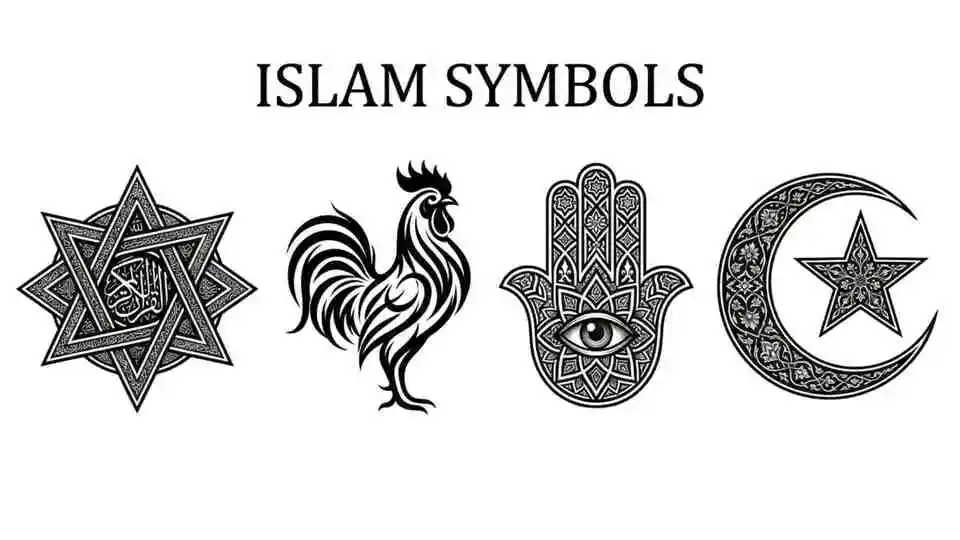
Islam symbols are visual signs, designs, or objects associated with Islamic culture, faith, and identity.
Short answer: Islam symbols are images or artistic elements that represent Islamic beliefs, traditions, unity, and spirituality, often seen in mosques, art, architecture, and cultural practices.
The focus keyword Islam symbols highlights how these visuals help express faith and heritage without depicting living beings.
What Are Islam Symbols?
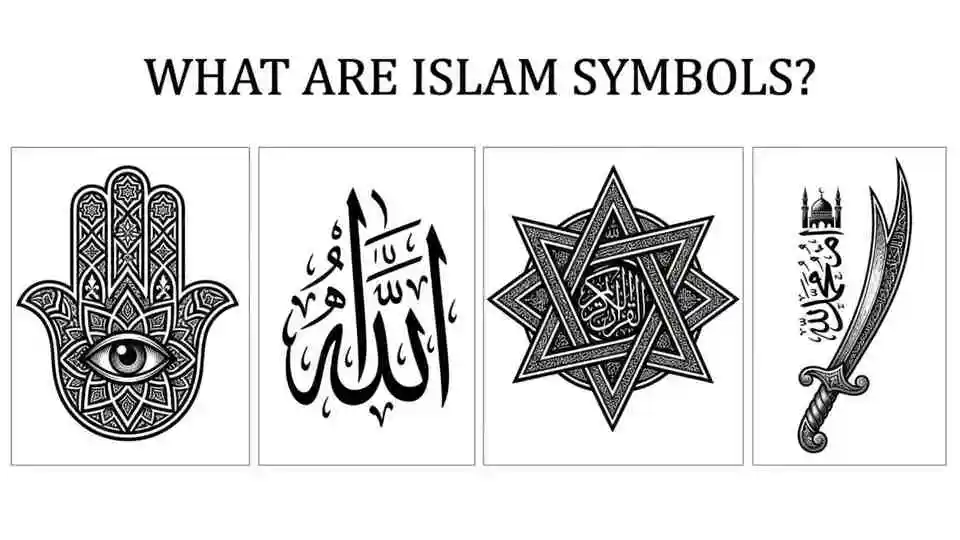
Islam symbols are visual representations connected to Islamic beliefs, traditions, and cultural identity. Unlike many other religions, Islam generally avoids drawing images of prophets or living beings in religious spaces. Instead, Islamic culture uses abstract patterns, calligraphy, and meaningful shapes to express faith.
These symbols are not objects of worship. Rather, they serve as reminders of faith, unity, and devotion to God (Allah).
Key Features of Islam Symbols
Most Islam symbols share unique artistic qualities:
- Use of geometric patterns
- Arabic calligraphy (beautiful writing of Quranic verses)
- Repeating shapes and symmetry
- Nature-inspired designs like stars and flowers
- Absence of human or animal figures in sacred settings
These features reflect the Islamic belief in order, unity, and harmony in creation.
The Historical Origins of Islam Symbols
Islam began in the 7th century in the Arabian Peninsula. As Islam spread across different regions, art and architecture developed unique symbolic styles.
Early Islamic Art and Symbolism
In the early days of Islam, symbols were simple. The focus was mainly on:
- Writing Quranic verses
- Designing mosques
- Creating patterns that reflected unity
Muslim artists believed that repeating patterns symbolized the infinite nature of God.
Spread of Islamic Symbols Across Regions
As Islam expanded to different lands, symbols evolved.
Middle East
In early Islamic lands, geometric patterns became popular in:
- Mosques
- Tiles
- Manuscripts
These designs represented order and perfection.
South Asia
In regions like India and Pakistan, Islamic architecture combined local artistic traditions.
Examples include:
- Decorative mosque walls
- Intricate carvings
- Floral patterns in monuments
These designs became part of cultural identity.
North Africa and Spain
Islamic rule in Spain introduced stunning symbolic architecture.
Famous structures featured:
- Star-shaped tiles
- Complex arches
- Decorative calligraphy
These patterns influenced European art.
Common Islam Symbols and Their Meanings
Several symbols are widely recognized as connected to Islamic culture.
1. The Crescent Moon and Star
The crescent moon and star are among the most recognized Islam symbols.
Meaning and Significance
This symbol represents:
- Guidance
- Light in darkness
- The passage of time
- The Islamic calendar (based on the moon)
Although widely associated with Islam today, this symbol originally appeared in earlier civilizations before becoming popular in Islamic empires.
Where It Is Used
You can find the crescent moon and star:
- On mosque domes
- On flags of several Muslim-majority countries
- During celebrations such as Ramadan
2. Arabic Calligraphy
Arabic calligraphy is considered one of the most important Islamic art forms.
Meaning
Calligraphy represents:
- Respect for the Quran
- Beauty of language
- Spiritual devotion
Common phrases written in calligraphy include:
- Names of Allah
- Verses from the Quran
- Expressions of faith
Practical Use
Calligraphy is widely used in:
- Mosque decoration
- Home décor
- Islamic books
- Educational materials
3. The Kaaba Symbol
The Kaaba is the sacred structure located in Mecca.
Symbolic Meaning
It represents:
- Unity of Muslims worldwide
- Direction of prayer (Qibla)
- Central focus of pilgrimage (Hajj)
Muslims face the Kaaba during daily prayers.
Interesting Fact
Millions of Muslims gather around the Kaaba each year during the pilgrimage.
4. The Prayer Rug (Sajjada)
Prayer rugs are commonly used in Muslim households.
Symbolic Meaning
They represent:
- A clean place for prayer
- Spiritual discipline
- Personal connection with God
Design Elements
Prayer rugs often include:
- Mosque arches
- Geometric patterns
- Floral motifs
These patterns help create a peaceful prayer environment.
5. Geometric Patterns
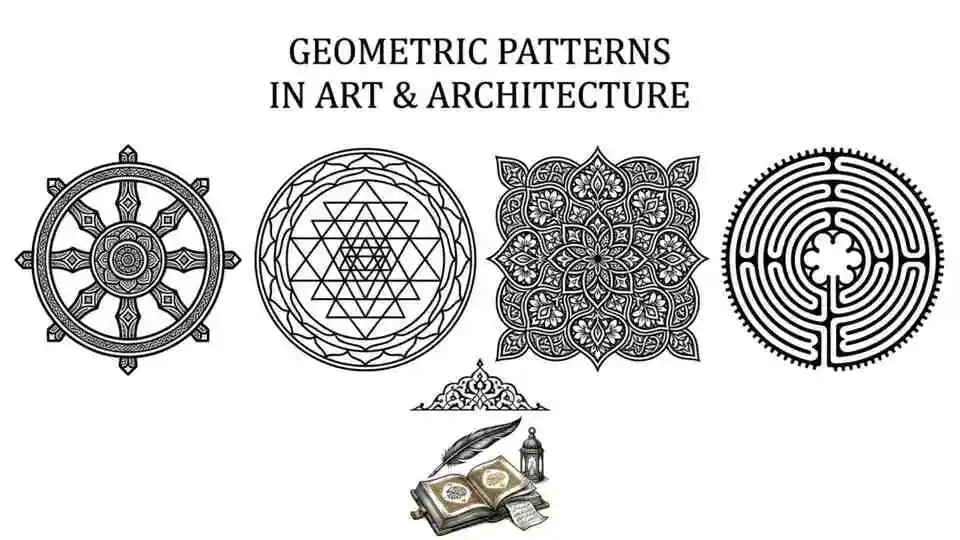
Geometric patterns are a hallmark of Islamic art.
Symbolic Meaning
They represent:
- Infinity
- Order
- Unity
- Balance
These patterns are created using repeating shapes such as:
- Circles
- Squares
- Stars
They symbolize the perfection of God’s creation.
6. The Eight-Pointed Star
The eight-pointed star is a common Islamic design.
Meaning
It symbolizes:
- Harmony
- Balance
- Creation
This symbol is often found in:
- Tiles
- Windows
- Decorative art
7. Mosque Architecture Symbols
Mosques themselves contain symbolic elements.
Common Features
These include:
- Domes: Represent the sky and heavens
- Minarets: Used historically to call people to prayer
- Mihrab: Shows direction of prayer
Each part has both functional and symbolic meaning.
Islam Symbols in Daily Life
Islam symbols are not limited to religious buildings. They are part of everyday life.
In Homes
Many Muslim homes display:
- Calligraphy frames
- Decorative geometric art
- Quranic verses
These items remind family members of faith and values.
In Clothing and Accessories
Islamic symbols sometimes appear in:
- Jewelry
- Scarves
- Cultural clothing
These designs reflect identity and tradition.
In Education
Islam symbols are used in teaching.
Examples include:
- Islamic history books
- School decorations
- Educational posters
They help students understand cultural heritage.
Practical Applications of Islam Symbols
Islam symbols serve many practical roles in society.
1. Architectural Design
Islamic architecture is famous for its beauty.
Examples include:
- Mosques
- Palaces
- Schools
- Libraries
Symbolic patterns improve aesthetics while reflecting faith.
2. Art and Decoration
Islamic symbols inspire artwork worldwide.
Artists use:
- Calligraphy
- Pattern design
- Tile work
These forms are admired globally.
3. Cultural Preservation
Symbols help preserve cultural identity.
Benefits include:
- Passing traditions to future generations
- Protecting historical heritage
- Teaching cultural values
This keeps traditions alive.
4. Tourism and Heritage Sites
Many tourists visit Islamic architectural landmarks.
These sites showcase:
- Historical craftsmanship
- Symbolic design
- Cultural beauty
Tourism supports economic growth.
Impact and Benefits of Islam Symbols on Society
Islam symbols contribute positively to communities worldwide.
Promoting Unity
Shared symbols bring people together.
For example:
- Muslims praying toward the same direction
- Communities gathering in mosques
- Shared cultural traditions
These practices strengthen unity.
Encouraging Creativity
Islamic art inspires creativity in many fields.
Examples include:
- Modern graphic design
- Interior decoration
- Textile production
Artists continue to innovate using traditional patterns.
Supporting Education
Symbols help students learn history and culture.
Benefits include:
- Understanding Islamic civilization
- Learning art techniques
- Appreciating cultural diversity
Education strengthens respect between cultures.
Boosting Global Cultural Exchange
Islamic symbols influence global art and architecture.
For example:
- Islamic patterns appear in modern buildings
- Designers use geometric styles
- Cultural exhibitions display Islamic artwork
These exchanges promote understanding.
Interesting Facts About Islam Symbols
Here are some fascinating facts:
- Islamic geometric patterns can be extremely complex.
- Some patterns repeat endlessly without exact duplication.
- Arabic calligraphy is considered both writing and art.
- Many Islamic designs are based on mathematical principles.
- Some ancient Islamic buildings still stand after hundreds of years.
These facts highlight the skill behind Islamic art.
Misconceptions About Islam Symbols
Many people misunderstand Islamic symbols.
Common Misunderstandings
Myth: Muslims worship symbols
Truth: Symbols are reminders, not objects of worship.
Myth: Crescent moon and star were always Islamic
Truth: The symbol existed before Islam and became popular later.
Myth: Islamic art lacks creativity
Truth: Islamic art is among the most complex artistic traditions.
Learning the truth helps reduce misunderstanding.
Legends and Historical Stories Related to Islam Symbols
Stories from history make Islamic symbols more meaningful.
The Story of Early Mosque Designs
Early Muslims built mosques using simple materials. Over time, designs became more detailed, showing creativity and dedication.
Architects developed:
- Unique domes
- Beautiful calligraphy
- Decorative arches
These features became iconic symbols of Islamic culture.
The Development of Calligraphy
Arabic calligraphy evolved as Muslims copied Quranic verses carefully. Skilled writers spent years mastering writing styles.
Some manuscripts took decades to complete due to their detail.
Modern Uses of Islam Symbols
Islam symbols continue to evolve in modern society.
In Modern Architecture
Many new buildings include Islamic patterns.
Examples include:
- Cultural centers
- Museums
- Mosques
Modern architects combine tradition with innovation.
In Digital Art and Media
Islamic symbols appear in:
- Website designs
- Educational videos
- Social media graphics
Technology helps share Islamic art globally.
In Fashion and Design
Designers incorporate Islamic patterns into:
- Clothing
- Jewelry
- Home décor
These styles reflect cultural pride.
5 Frequently Asked Questions (FAQ)
1. Are Islam symbols worshipped in Islam?
No. Islam teaches worship of God alone. Symbols are used only as reminders or decoration.
2. Why does Islamic art use geometric patterns?
Geometric patterns represent order, unity, and the infinite nature of God.
3. Is the crescent moon an official symbol of Islam?
It is widely associated with Islam but is not officially required in Islamic teachings.
4. Why is Arabic calligraphy important in Islam?
It honors the Quran and expresses religious messages in beautiful artistic form.
5. Can Islam symbols be used in modern design?
Yes. Many modern designers use Islamic patterns in architecture, art, and digital media.
Conclusion
Islam symbols are powerful expressions of faith, culture, and creativity. From the crescent moon and star to geometric patterns and Arabic calligraphy, these symbols reflect unity, harmony, and spiritual devotion. They have shaped architecture, art, and daily life for centuries while promoting education, cultural pride, and global understanding. By learning about Islam symbols, people gain a deeper appreciation for Islamic heritage and the artistic beauty that continues to inspire the world.

Ivy Reynolds
Hi, I’m Ivy Reynolds, a storyteller at heart who loves exploring the small wonders of everyday life. Writing gives me a chance to turn ordinary moments into extraordinary tales, and I’m always chasing inspiration from the world around me. I believe stories have the power to connect people, heal hearts, and spark imagination. When I’m not writing, you’ll find me wandering through nature, sipping tea, or lost in a good book. My journey as an author is all about sharing emotions, laughter, and little lessons that stay with you. Thank you for being part of this adventure with me.
Books:
-
Whispers of the Willow
-
Echoes of the Heart