
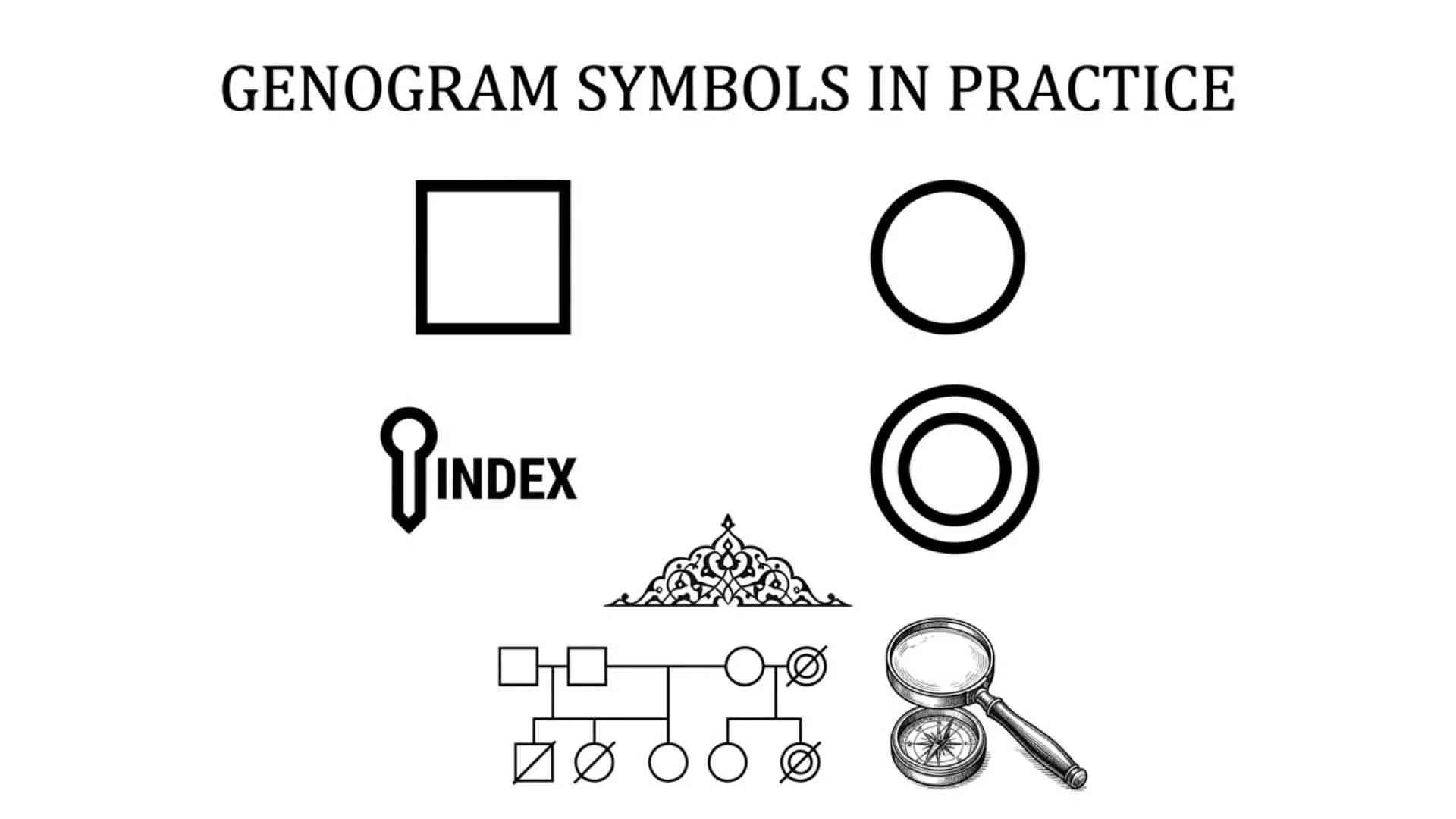
Genogram symbols are special shapes and signs used to create family diagrams that show relationships, medical history, and emotional connections.
Short answer: Genogram symbols are standardized visual icons used to represent family members, relationships, and life events in a structured family tree diagram.
The focus keyword genogram symbols is essential because these symbols help professionals understand complex family patterns quickly and clearly.
What Are Genogram Symbols?
Genogram symbols are the visual building blocks of a genogram—a detailed version of a family tree. Unlike a simple family tree, a genogram includes emotional relationships, medical history, behavior patterns, and social connections.
These symbols help represent:
- Family members
- Gender and identity
- Relationships (positive or negative)
- Health conditions
- Emotional bonds
Genograms are widely used in psychology, healthcare, and social work.
Why Genogram Symbols Are Important
Genogram symbols make complex family data easy to understand.
They help:
- Visualize relationships clearly
- Track inherited diseases
- Understand emotional patterns
- Support therapy and counseling
- Identify behavioral cycles in families
Without symbols, this information would be difficult to organize.
History and Development of Genograms
Genograms were developed in the 1970s by family therapist Dr. Murray Bowen and later expanded by Dr. Monica McGoldrick.
Purpose Behind Genograms
Originally, genograms were created to:
- Study family emotional systems
- Understand patterns passed through generations
- Improve therapy outcomes
Over time, genograms became widely used in:
- Psychology
- Medicine
- Education
- Social services
Today, they are an essential tool for understanding family structures.
Basic Genogram Symbols and Their Meanings
Genogram symbols are standardized so professionals worldwide can understand them easily.
1. Gender Symbols
Gender is the starting point of any genogram.
Common Symbols
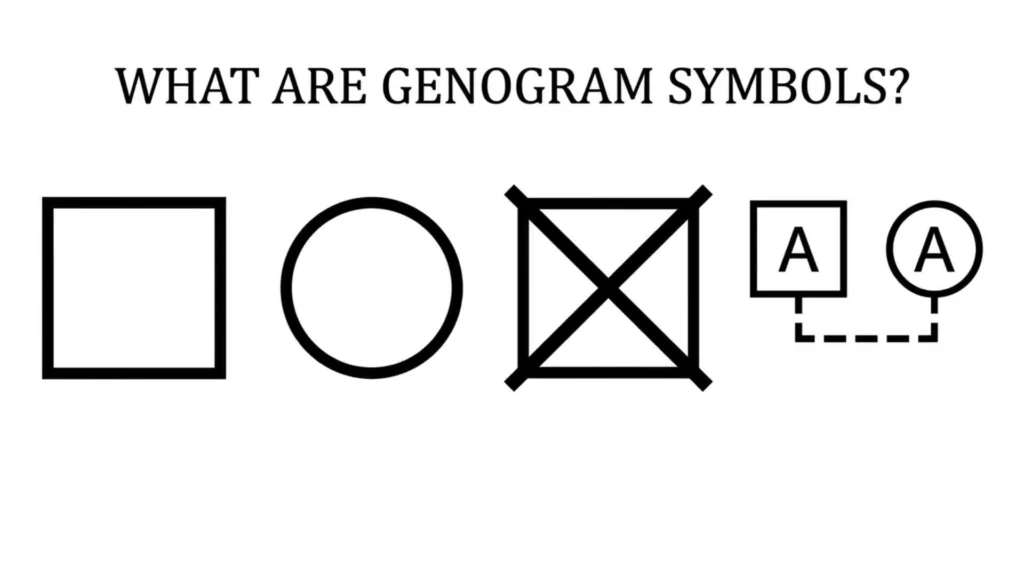
- Square: Male
- Circle: Female
- Diamond: Unknown or unspecified gender
Example
A family genogram might show:
- Father → square
- Mother → circle
- Child → square or circle depending on gender
These simple shapes form the foundation of the diagram.
2. Relationship Lines
Lines show how people are connected emotionally or biologically.
Types of Relationship Lines
- Single line: Normal relationship
- Double line: Strong bond
- Broken line: Weak or distant relationship
- Jagged line: Conflict or tension
Example
A mother-child double line shows a strong emotional bond, while a jagged line between siblings indicates conflict.
3. Marriage and Partnership Symbols
Genograms show different types of relationships clearly.
Common Symbols
- Straight line between partners = marriage or relationship
- Slash through line = separation
- Double slash = divorce
Example
A divorced couple is shown with two parallel slashes on the connecting line.
4. Children and Birth Order Symbols
Children are connected below parents using vertical lines.
Meaning
- Left to right = birth order
- Vertical lines = parent-child connection
Example
The oldest child is placed on the left, youngest on the right.
5. Emotional Relationship Symbols
These symbols describe feelings between family members.
Types
- Close relationship
- Conflicted relationship
- Cut-off relationship (no contact)
- Fusion (overly dependent relationship)
Example
A cut-off relationship is shown when a line is crossed or broken, indicating no communication.
6. Medical and Health Symbols
Genograms often include medical information.
Common Health Indicators
- Heart symbol = heart disease
- X inside symbol = deceased person
- Shading = illness or condition
Example
If a family has a history of diabetes, shaded symbols may indicate affected members.
7. Psychological Symbols
These symbols represent mental health conditions or behavioral patterns.
Examples
- Depression
- Anxiety
- Substance abuse
- Personality disorders
Representation
A symbol may be marked with initials or shading to indicate conditions.
8. Living and Deceased Symbols
Genograms also show life status.
Symbols
- Empty symbol = living
- Cross or X = deceased
- Date of death may be added
Example
A deceased grandfather might be shown as a square with an X inside.
Practical Examples of Genogram Symbols in Real Life
Genogram symbols are not just theoretical—they are widely used in real-world situations.
Example 1: Family Therapy
A therapist uses genograms to understand emotional patterns.
For example:
- A child showing anxiety may be linked to parental conflict
- Genogram reveals hidden family stress patterns
This helps therapists design better treatment plans.
Example 2: Medical History Tracking
Doctors use genograms to track inherited diseases.
For example:
- Heart disease running in family
- Cancer history across generations
This helps in early diagnosis and prevention.
Example 3: Social Work Cases
Social workers use genograms to understand family structure.
For example:
- Identifying neglect
- Understanding custody issues
- Mapping support systems
This improves decision-making.
Example 4: Education and Research
Students and researchers use genograms to study:
- Family behavior patterns
- Psychological development
- Social relationships
It helps in academic understanding of human behavior.
How to Read Genogram Symbols Easily
Reading genograms becomes simple with practice.
Step-by-Step Guide
- Start with gender symbols
- Identify family structure
- Check relationship lines
- Look for emotional connections
- Note medical or psychological indicators
With this method, even complex diagrams become easy to understand.
Benefits of Using Genogram Symbols in Society
Genogram symbols have a wide impact across different fields.
1. Improving Mental Health Understanding
Genograms help therapists:
- Identify emotional patterns
- Understand trauma history
- Create personalized treatment plans
This leads to better mental health care.
2. Enhancing Medical Diagnosis
Doctors can:
- Detect genetic risks
- Predict health conditions
- Suggest preventive care
This improves patient outcomes.
3. Strengthening Family Relationships
Families can use genograms to:
- Understand conflicts
- Improve communication
- Rebuild broken relationships
It encourages emotional healing.
4. Supporting Education
Teachers and counselors use genograms to:
- Understand student backgrounds
- Provide emotional support
- Improve learning outcomes
5. Helping Social Research
Researchers use genograms to:
- Study generational behavior
- Analyze social patterns
- Understand cultural dynamics
Interesting Facts About Genogram Symbols
Here are some fascinating insights:
- Genograms are used in over 50 countries worldwide
- They are more detailed than traditional family trees
- Therapists often update genograms during sessions
- Genograms can include up to 3–4 generations
- Digital software now allows interactive genogram creation
Common Mistakes When Using Genogram Symbols
Many beginners make errors while creating genograms.
Mistakes to Avoid
- Incorrect gender symbols
- Missing relationship lines
- Overcomplicating diagrams
- Ignoring emotional connections
- Not updating information
Avoiding these mistakes improves accuracy.
Modern Tools for Creating Genograms
Today, genograms can be created digitally.
Popular Tools
- Genogram software apps
- Online diagram tools
- Psychology platforms
- Healthcare systems
Benefits of Digital Genograms
- Easy editing
- Clear visualization
- Data storage
- Sharing with professionals
Genogram Symbols vs Family Tree Symbols
Many people confuse genograms with family trees.
Key Differences
- Family tree = basic ancestry
- Genogram = emotional + medical + behavioral data
Genograms are much more detailed and useful for professionals.
Psychological Importance of Genogram Symbols
Genogram symbols help psychologists understand human behavior deeply.
Key Insights
- Family conflicts often repeat across generations
- Emotional trauma can be inherited socially
- Relationship patterns influence personality
This makes genograms powerful tools in psychology.
5 Frequently Asked Questions (FAQ)
1. What are genogram symbols used for?
Genogram symbols are used to represent family relationships, medical history, and emotional connections in a visual diagram.
2. Who uses genogram symbols?
They are used by psychologists, doctors, social workers, educators, and researchers.
3. What is the difference between a genogram and a family tree?
A family tree shows lineage, while a genogram shows emotional, medical, and behavioral patterns.
4. Are genogram symbols universal?
Yes, most genogram symbols are standardized and used internationally.
5. Can genograms help in therapy?
Yes, they help therapists identify emotional patterns and family issues for better treatment.
Conclusion
Genogram symbols are powerful tools for understanding human relationships, family history, and emotional patterns. From simple gender shapes to complex relationship lines and medical indicators, these symbols provide deep insights into how families function across generations. They are widely used in psychology, medicine, education, and social work to improve understanding and decision-making. By learning genogram symbols, anyone can gain a clearer view of family dynamics and human behavior, making them an essential part of modern analysis and care.

Isaac Wellington
I’ve always been fascinated by the hidden stories in everyday life and the power of words to change how we see the world. Writing, for me, isn’t just a profession—it’s a way to explore human emotions, mysteries, and the unexpected twists of life. Over the years, I’ve dedicated myself to creating stories that linger in your mind long after the last page. When I’m not writing, you’ll usually find me wandering through old libraries or sketching ideas in a notebook. I believe every story has a heartbeat, and I aim to capture that rhythm in my work. Join me on a journey where imagination meets reality, and the ordinary becomes extraordinary.
Books:
-
Shadows of the Forgotten
-
Whispers Through Time