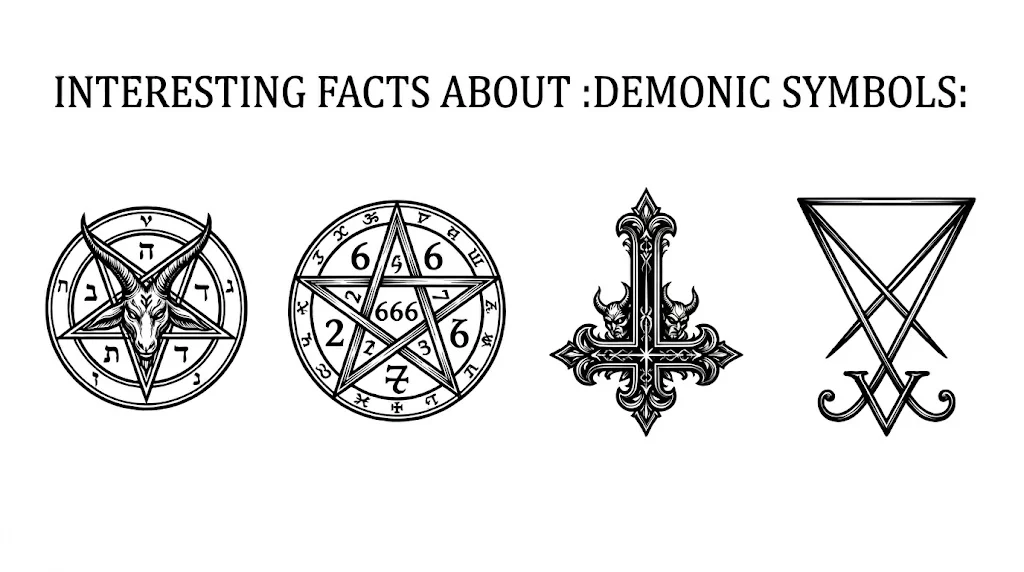
Demonic symbols are mysterious signs often linked with demons, dark forces, protection rituals, or ancient beliefs.
Short answer: Demonic symbols are visual signs believed to represent demons, spirits, or supernatural power, often used in myths, religion, folklore, and modern media.
These symbols appear in history, legends, art, and even pop culture today, making them both fascinating and misunderstood.
What Are Demonic Symbols?
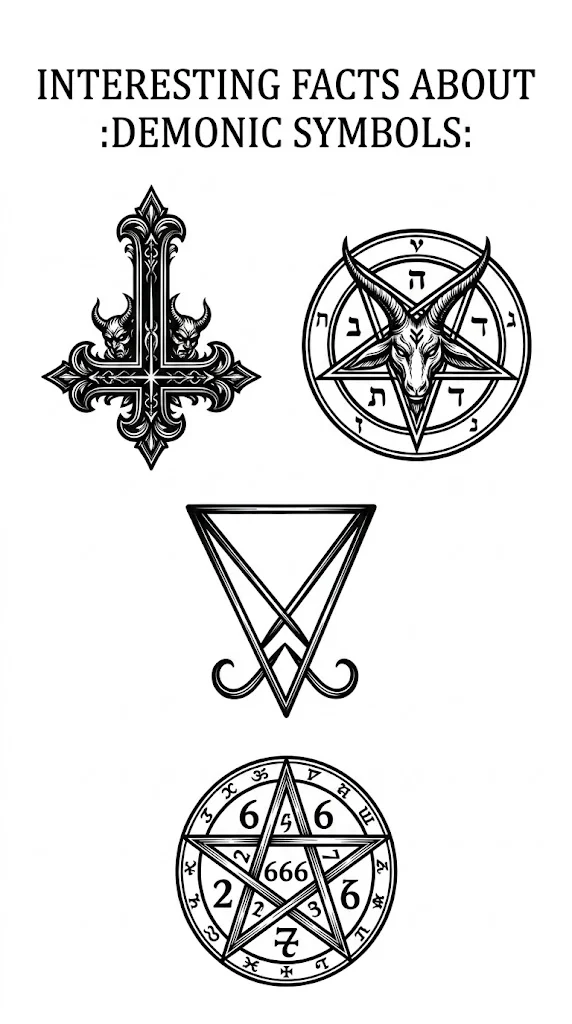
Demonic symbols are images, signs, or marks that people believe are connected to demons, evil spirits, or supernatural forces. These symbols may be found in old books, carvings, tattoos, magical texts, and folklore.
In many traditions, these symbols were not always used to worship demons. Sometimes, they were believed to control, trap, or protect against evil spirits rather than support them.
Key Characteristics of Demonic Symbols
Most demonic symbols share certain features:
- Geometric shapes such as circles, triangles, and stars
- Strange letters or ancient alphabets
- Animal imagery such as goats, snakes, or dragons
- Repeating patterns and symmetrical designs
- Hidden meanings based on mythology or religion
These elements often made the symbols look mysterious and powerful.
The Historical Origins of Demonic Symbols
The story of demonic symbols begins thousands of years ago. Many ancient cultures believed in spirits—both good and evil. To deal with these spirits, people created symbols.
Ancient Civilizations and Spirit Beliefs
Early civilizations used symbols to explain events they didn’t understand, such as disease, storms, or death.
Some civilizations known for symbolic traditions include:
- Mesopotamia: Used protective symbols against demons believed to cause illness.
- Ancient Egypt: Created magical signs believed to guide souls and protect the dead.
- Ancient Greece: Wrote about spirits and magical seals used in rituals.
- Medieval Europe: Produced grimoires (books of magic) that included detailed demonic symbols.
Many symbols that people call “demonic” today actually began as protective signs, not evil ones.
Common Demonic Symbols and Their Meanings
Over time, several symbols became widely known as demonic symbols. Their meanings often vary depending on culture and interpretation.
1. The Pentagram
The pentagram is a five-pointed star drawn inside a circle.
Meanings Associated with the Pentagram
- Protection against evil spirits
- Balance of natural elements (earth, air, fire, water, spirit)
- Spiritual power
- Inverted pentagram: sometimes linked with dark rituals
Interestingly, the pentagram was once used as a symbol of protection, especially in ancient Greece and medieval Europe.
2. Sigils
Sigils are custom-designed symbols believed to represent a specific spirit or intention.
Features of Sigils
- Often look like complex drawings
- Created using letters or magical alphabets
- Used in rituals or meditation
- Found in historical magical texts
Sigils became popular during the Middle Ages when people believed they could control spirits using special seals.
3. The Goat Symbol
The goat is often associated with demonic imagery due to its historical connections to wilderness and chaos.
Symbolic Meanings
- Rebellion
- Nature’s wild side
- Transformation
- Darkness or hidden knowledge
Goat imagery became strongly linked with demon symbolism during medieval European religious periods.
4. The Hexagram and Occult Stars
The hexagram is a six-pointed star made of overlapping triangles.
Although commonly known as a sacred symbol in many cultures, it also appeared in magical traditions where it represented:
- Power
- Protection
- Balance
- Magical energy
Its meaning depends heavily on context.
5. Demonic Seals from Grimoires
Old magical books called grimoires contained seals believed to represent demons.
These seals were:
- Unique symbols assigned to individual demons
- Used in ritual magic
- Drawn carefully according to instructions
- Believed to allow communication with spirits
Many of these seals are still studied today by historians and scholars.
Legends and Stories About Demonic Symbols
Stories about demonic symbols are found across cultures. Some are based on fear, others on imagination.
The Tale of the Forbidden Book
In medieval Europe, legends told of secret books filled with demonic symbols. These books were said to contain powerful knowledge.
People believed:
- Reading the symbols could summon spirits
- Misusing them could bring danger
- Priests and scholars guarded these texts
One famous legend speaks of a monk who supposedly created a massive book in one night with supernatural help.
Folklore from Different Regions
Many cultures created stories involving demonic symbols.
Examples include:
- Symbols carved into doors to keep demons out
- Marks painted on walls to protect homes
- Ritual drawings made during special ceremonies
These traditions often blended fear and protection.
How Demonic Symbols Were Used in the Past
In ancient times, symbols were practical tools—not just mysterious drawings.
Protection Rituals
Many people used symbols to protect themselves from harm.
Examples include:
- Drawing symbols near doorways
- Wearing amulets with protective signs
- Marking animals or tools for safety
These practices were common in rural communities.
Healing and Medicine
Some cultures believed illness came from evil spirits. Symbols were used in healing rituals.
Practices included:
- Writing symbols on paper and burning them
- Placing symbols near sick individuals
- Chanting prayers along with symbol drawing
Although modern medicine replaced these practices, they remain part of cultural history.
Communication with Spirits
Some traditions believed symbols allowed communication with supernatural beings.
This included:
- Calling spirits for knowledge
- Seeking answers to questions
- Requesting protection or guidance
These rituals were often performed by trained practitioners.
Modern Uses of Demonic Symbols
Today, demonic symbols appear in many modern settings. Most uses are symbolic or artistic rather than supernatural.
In Movies and Television
Many horror films use demonic symbols to create fear and suspense.
Common uses include:
- Drawing symbols on walls
- Creating mysterious ritual scenes
- Adding visual drama to storytelling
These symbols help make fictional worlds feel realistic.
In Video Games
Video games often include symbols to build fantasy worlds.
Examples:
- Magical spells represented by symbols
- Puzzle-solving using ancient signs
- Decorative symbols in dark environments
These designs enhance creativity and immersion.
In Fashion and Tattoos
Some people use symbols as personal expression.
Reasons include:
- Interest in mythology
- Appreciation of art and design
- Desire to express individuality
- Cultural or spiritual identity
However, understanding the meaning before using a symbol is important.
Practical Examples and Real-World Applications
While many people think of demonic symbols as purely mythical, they have practical roles in several fields.
1. Academic Research
Historians study symbols to understand ancient beliefs.
Researchers analyze:
- Ancient texts
- Carvings on monuments
- Symbolic drawings in manuscripts
This helps uncover hidden parts of history.
2. Archaeology
Archaeologists often discover mysterious symbols during excavations.
These findings help them:
- Identify religious practices
- Understand cultural rituals
- Determine time periods
Symbols act like clues to ancient life.
3. Psychology and Symbolism Studies
Psychologists study symbols to understand fear and belief systems.
They explore:
- Why people fear certain shapes
- How symbols affect emotions
- The role of symbols in dreams
Symbols can reveal deep parts of the human mind.
4. Graphic Design and Art
Artists use symbolic styles inspired by historical imagery.
Applications include:
- Book covers
- Album artwork
- Game designs
- Film posters
Symbol-based art creates mystery and interest.
Impact of Demonic Symbols on Society
Demonic symbols have influenced society in both positive and negative ways.
Positive Impacts
Despite their dark reputation, these symbols helped advance knowledge.
Benefits include:
- Preserving cultural traditions
- Inspiring literature and art
- Encouraging historical research
- Expanding creative expression
They also helped people cope with fear in ancient times.
Negative Impacts
Misunderstanding symbols can create fear or conflict.
Some challenges include:
- Superstitions leading to fear
- False accusations in history
- Misuse in harmful rituals
- Cultural misunderstandings
Education helps reduce these problems.
Interesting Facts About Demonic Symbols
Here are some surprising facts:
- Many “demonic” symbols were originally protective symbols.
- Some symbols date back over 4,000 years.
- Medieval scholars spent years copying symbolic texts by hand.
- Modern horror movies revived interest in ancient symbols.
- Some symbols appear similar across different cultures.
These facts show how symbols evolve over time.
Misconceptions About Demonic Symbols
Many myths exist about demonic symbols. Not all are true.
Common Misunderstandings
- Myth: All demonic symbols are evil
Truth: Many were used for protection. - Myth: Seeing a symbol brings danger
Truth: Symbols alone have no physical power. - Myth: All symbols come from the same culture
Truth: Different cultures created unique symbols.
Learning the facts helps reduce fear and confusion.
Safety and Ethical Considerations
Understanding symbols responsibly is important.
Guidelines to Follow
- Research meanings before using symbols
- Respect cultural traditions
- Avoid spreading harmful myths
- Use symbols responsibly in art or education
Ethical awareness prevents misuse.
Why People Are Fascinated by Demonic Symbols
Human curiosity plays a big role in their popularity.
Reasons for Fascination
- Mystery and fear create excitement
- Symbols look visually striking
- Stories and legends make them memorable
- Media exposure increases interest
Fear and curiosity often go hand in hand.
Demonic Symbols in Literature and Storytelling
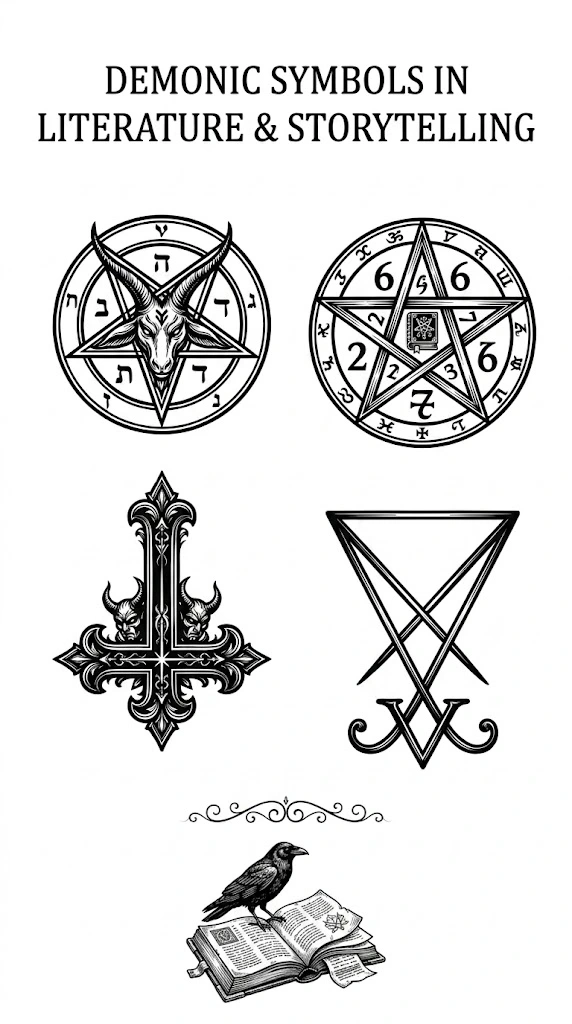
Many famous books and stories include symbolic themes.
Writers use symbols to:
- Represent danger
- Show hidden forces
- Build suspense
- Create mysterious worlds
Symbols make stories richer and more dramatic.
Demonic Symbols in Religious and Cultural Contexts
Not all religions view symbols the same way.
Some cultures treat symbols as:
- Sacred objects
- Spiritual tools
- Cultural heritage
- Artistic traditions
Understanding context is essential.
The Role of Demonic Symbols in Popular Culture
Modern entertainment has transformed ancient symbols into creative elements.
Examples in Pop Culture
You may see symbols in:
- Horror movies
- Fantasy novels
- Comic books
- Halloween decorations
- Music artwork
These uses are usually fictional rather than spiritual.
Educational Value of Studying Demonic Symbols
Learning about symbols can be educational and meaningful.
Skills Developed
Studying symbols helps:
- Improve historical knowledge
- Enhance critical thinking
- Build cultural awareness
- Encourage artistic creativity
Education turns fear into understanding.
5 Frequently Asked Questions (FAQ)
1. Are demonic symbols real or fictional?
Demonic symbols are real drawings found in history and culture. However, their supernatural power is based on belief, not scientific proof.
2. Are all demonic symbols evil?
No. Many symbols were created for protection or spiritual balance rather than evil purposes.
3. Why are demonic symbols used in movies?
Movies use them to create suspense, fear, and dramatic visual effects.
4. Can demonic symbols cause harm?
Symbols themselves do not cause harm. Fear often comes from misunderstanding or cultural beliefs.
5. Should people use demonic symbols in art or tattoos?
Yes, but it is wise to research the meaning first to avoid misunderstanding or cultural disrespect.
Conclusion
Demonic symbols have traveled through centuries of human history, shaping myths, traditions, and artistic expression. While many people fear them, understanding their origins reveals that they were often tools for protection, communication, and cultural storytelling.
From ancient rituals to modern movies, these symbols continue to inspire curiosity and creativity. Studying demonic symbols not only helps us understand the past but also encourages respectful learning about human beliefs and imagination.

Elliot Kensington
Elliot Kensington is a storyteller at heart, always fascinated by the hidden corners of human imagination. From a young age, he found comfort in books and the worlds they created, inspiring him to craft tales that blend emotion, suspense, and wonder. His writing journey began with short stories that captured fleeting moments of life, and over time, evolved into novels that explore both the extraordinary and the everyday. Elliot believes that every story holds a piece of the soul, and his mission is to connect readers to those moments that linger long after the last page. When he’s not writing, he enjoys exploring nature, capturing moments through photography, and seeking inspiration in the little things.
Books by Elliot Kensington:
-
Shadows of Tomorrow
-
The Whispering Path