
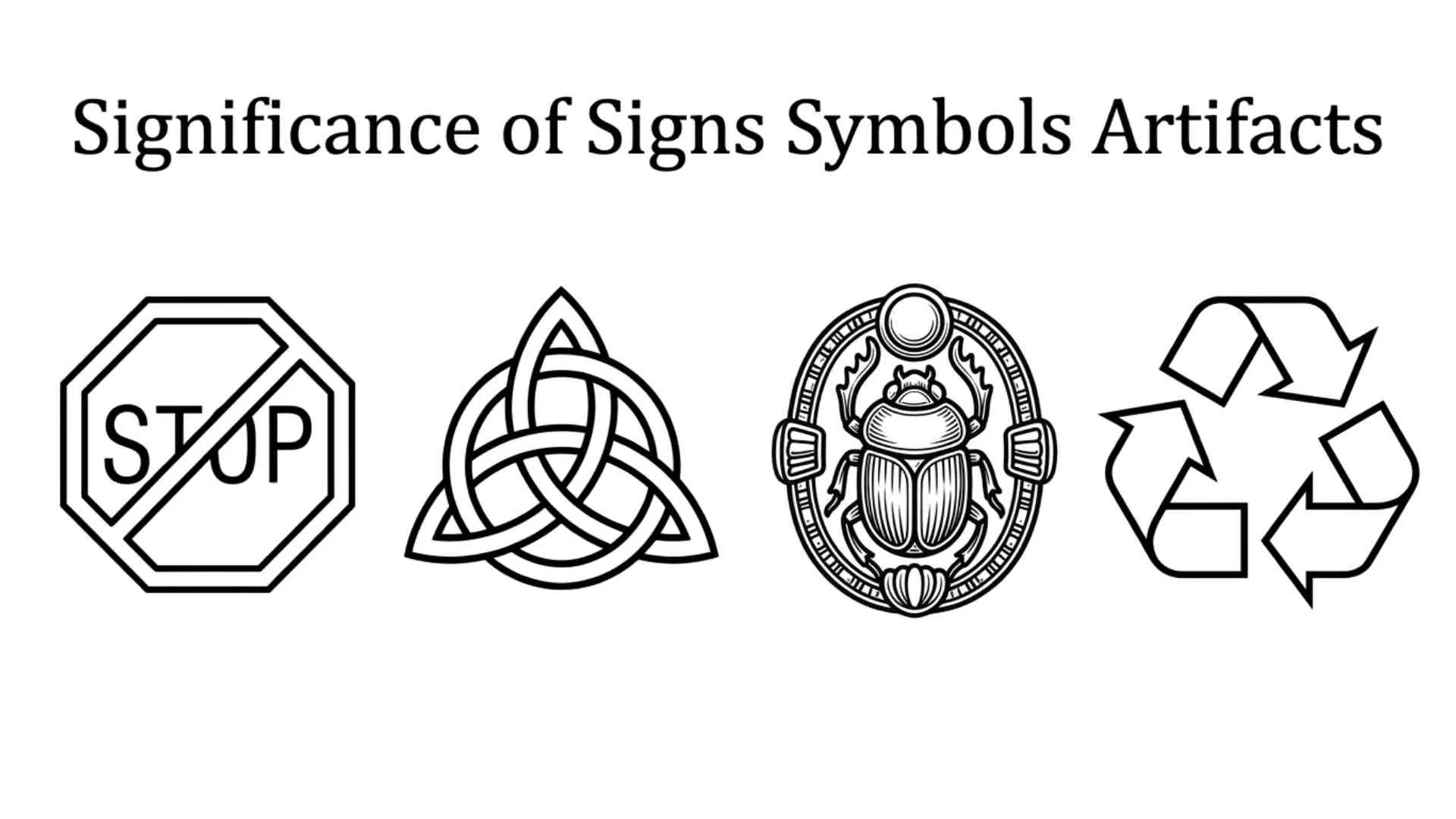
Significance of signs symbols artifacts lies in how they help humans communicate ideas, preserve history, and express culture without using words.
In short, signs, symbols, and artifacts are powerful tools that connect the past to the present and help people understand traditions, beliefs, and knowledge. From road signs to ancient relics, these elements shape how societies function and remember their history.
Understanding Signs, Symbols, and Artifacts
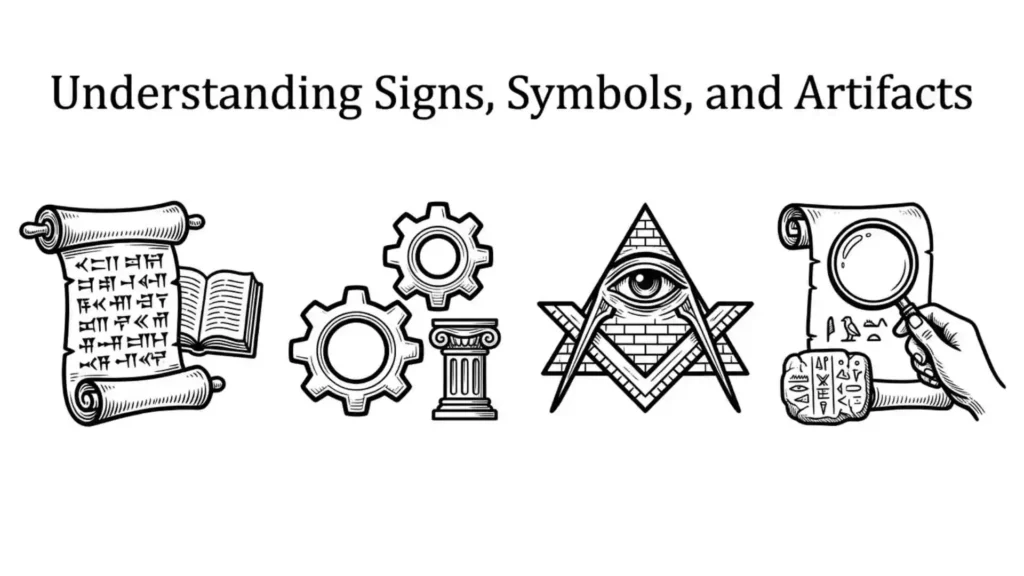
To fully understand the significance of signs symbols artifacts, it is helpful to first define each term.
What Are Signs?
Signs are visual indicators that provide clear instructions or information. They are often used in public spaces to guide behavior.
Examples of signs include:
- Traffic signs
- Warning signs
- Directional signs
- Safety signs
Signs are usually simple and direct. They tell people what to do or what to avoid.
What Are Symbols?
Symbols represent ideas, beliefs, or concepts through images or shapes.
Unlike signs, symbols often have deeper meanings beyond simple instructions.
Examples of symbols include:
- Heart symbol representing love
- Dove representing peace
- Flag representing a nation
Symbols help people express emotions, values, and identity.
What Are Artifacts?
Artifacts are objects made or used by humans that hold historical or cultural importance.
Examples of artifacts include:
- Tools used by ancient civilizations
- Pottery and sculptures
- Coins and jewelry
- Weapons and farming tools
Artifacts provide physical evidence of past human activity.
The Historical Significance of Signs Symbols Artifacts
Signs, symbols, and artifacts have existed since the earliest days of human civilization.
Early Human Communication Through Signs
Before written languages developed, early humans used signs to communicate.
Cave Markings as Signs
Ancient cave drawings often included:
- Animal shapes
- Hunting scenes
- Handprints
These markings acted as early signs to share knowledge about survival.
Development of Symbolic Communication
Over time, humans created more complex symbols.
These symbols allowed people to:
- Record stories
- Share religious beliefs
- Track time and seasons
Symbolic communication led to the development of written language.
Artifacts as Historical Evidence
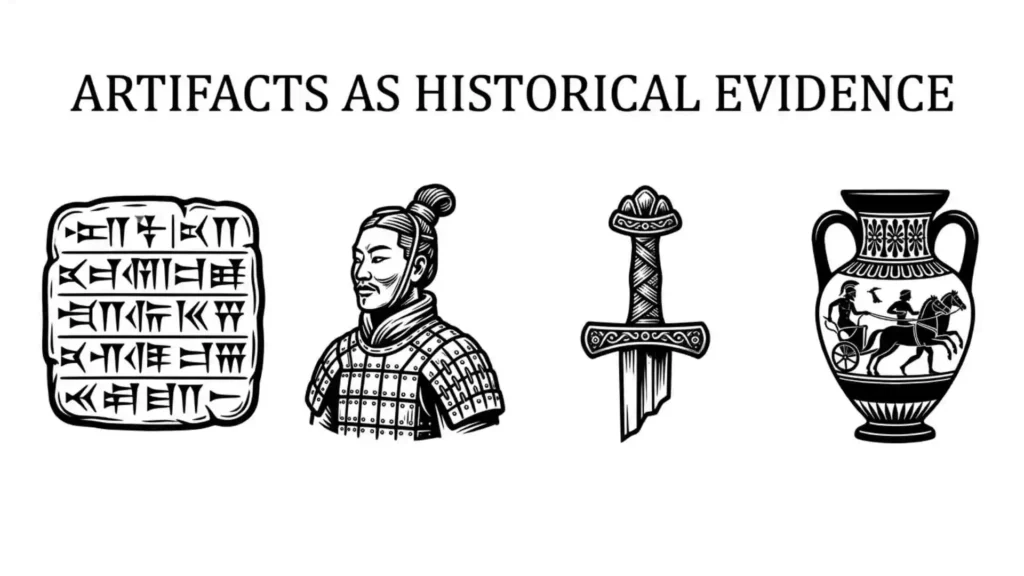
Artifacts provide valuable clues about ancient life.
How Artifacts Tell Stories
Archaeologists study artifacts to learn:
- What people ate
- How they dressed
- What tools they used
- How they lived
Artifacts are like time capsules that preserve history.
Cultural Significance of Signs Symbols Artifacts
Culture is deeply connected to visual communication and material objects.
Symbols as Cultural Identity
Symbols represent traditions and shared values.
Examples include:
- National flags
- Religious emblems
- Cultural patterns
These symbols create a sense of belonging.
Artifacts as Cultural Heritage
Artifacts preserve traditions across generations.
Examples include:
- Traditional clothing
- Musical instruments
- Ceremonial objects
These items keep cultural memories alive.
Signs in Social Organization
Signs help societies function smoothly.
Examples:
- School signs
- Workplace instructions
- Emergency signs
Without signs, daily life would become confusing and unsafe.
Educational Importance of Signs Symbols Artifacts
Learning about these elements supports education.
Teaching Through Symbols
Teachers use symbols to explain ideas.
Examples include:
- Mathematical symbols
- Scientific diagrams
- Map symbols
These visuals simplify learning.
Artifacts in Museums
Museums display artifacts to educate visitors.
Students learn about:
- Ancient civilizations
- Historical events
- Cultural traditions
Artifacts make history feel real and engaging.
Signs in Learning Environments
Schools use signs to maintain order.
Examples:
- Exit signs
- Classroom labels
- Safety instructions
These signs improve organization.
Practical Applications of Signs Symbols Artifacts
These elements are used daily in modern life.
Transportation and Navigation
Signs play a crucial role in travel.
Examples include:
- Road signs
- Airport signs
- Railway signals
These signs prevent accidents and guide travelers.
Communication in Public Spaces
Symbols help people communicate quickly.
Examples:
- Restroom symbols
- Emergency icons
- Elevator buttons
These symbols are understood across languages.
Technology and Digital Communication
Modern technology uses symbols frequently.
Examples include:
- App icons
- Emoji symbols
- Notification alerts
Symbols simplify digital communication.
Impact of Signs Symbols Artifacts on Society
The influence of signs symbols artifacts is wide-ranging.
Improving Safety
Safety signs save lives.
Examples:
- Fire exit signs
- Hazard warnings
- Safety instructions
These signs prevent accidents and injuries.
Preserving History
Artifacts protect historical knowledge.
They help societies:
- Remember past achievements
- Learn from mistakes
- Celebrate cultural milestones
History remains alive through artifacts.
Strengthening Communication
Symbols improve communication speed.
They allow:
- Quick understanding
- Universal recognition
- Reduced misunderstandings
Symbols connect people worldwide.
Signs Symbols Artifacts in Religion and Spirituality
Religious traditions rely heavily on visual and material elements.
Religious Symbols
Many religions use symbols to express beliefs.
Examples:
- Sacred shapes
- Religious icons
- Ceremonial markings
These symbols represent spiritual values.
Sacred Artifacts
Artifacts are used during religious rituals.
Examples:
- Prayer tools
- Sacred books
- Ritual objects
These items hold deep spiritual meaning.
Signs in Sacred Spaces
Signs guide behavior in religious places.
Examples include:
- Silence reminders
- Direction markers
- Ritual instructions
These signs maintain order and respect.
Economic Importance of Signs Symbols Artifacts
These elements also influence economic systems.
Branding and Marketing
Businesses rely on symbols for identity.
Examples:
- Company logos
- Product symbols
- Brand marks
Symbols help customers recognize products quickly.
Tourism and Heritage Sites
Artifacts attract tourists.
Examples include:
- Museums
- Historical monuments
- Cultural exhibitions
Tourism supports local economies.
Manufacturing and Safety
Industrial environments rely on safety signs.
Examples include:
- Danger warnings
- Equipment labels
- Safety instructions
These signs reduce workplace accidents.
Psychological Significance of Signs Symbols Artifacts
These elements affect human thinking and emotions.
Symbols and Memory
Symbols help people remember information.
Examples:
- School badges
- National emblems
- Award symbols
These visuals create emotional connections.
Artifacts and Emotional Value
Artifacts often hold personal meaning.
Examples:
- Family heirlooms
- Old photographs
- Gifts passed down generations
These objects connect people to memories.
Signs and Behavior
Signs influence behavior.
Examples:
- Speed limit signs encourage safer driving
- Warning signs prevent risky actions
They guide decision-making.
Signs Symbols Artifacts in Modern Media
Media uses visual communication extensively.
Film and Television
Movies use symbols to represent ideas.
Examples include:
- Costume designs
- Visual motifs
- Symbolic objects
These enhance storytelling.
Advertising and Social Media
Brands use symbols to capture attention.
Examples:
- Hashtags
- Logos
- Icons
These tools increase engagement.
Gaming and Virtual Worlds
Games rely on visual symbols.
Examples:
- Health indicators
- Map icons
- Character symbols
These help players understand gameplay.
Interesting Facts About Signs Symbols Artifacts
Here are some fascinating details:
- Some artifacts are over 10,000 years old.
- Symbols existed before alphabets were invented.
- Road signs are standardized internationally.
- Many ancient artifacts are still studied today.
These facts show the lasting importance of visual communication.
Challenges in Preserving Signs Symbols Artifacts
Despite their importance, preservation is challenging.
Damage Over Time
Artifacts can be damaged by:
- Weather
- Natural disasters
- Human activity
Preservation requires careful protection.
Loss of Meaning
Over time, meanings of symbols can be forgotten.
Education helps preserve their significance.
Misinterpretation
Symbols sometimes have different meanings across cultures.
Understanding cultural context prevents confusion.
Benefits of Studying Signs Symbols Artifacts
Learning about these elements provides many benefits.
Cultural Awareness
People learn to respect traditions and diversity.
This promotes harmony between communities.
Historical Understanding
Artifacts reveal past achievements.
They help people appreciate history.
Problem-Solving Skills
Learning symbols improves logical thinking.
It also strengthens observation skills.
Inspiration for Creativity
Artists and designers use symbols and artifacts as inspiration.
This leads to innovation in art and design.
Frequently Asked Questions (FAQs)
1. What is the significance of signs symbols artifacts?
They help humans communicate ideas, preserve history, and express cultural identity.
2. How do artifacts help us understand history?
Artifacts provide physical evidence of past human activities and lifestyles.
3. Why are symbols important in communication?
Symbols allow quick and universal understanding across different languages.
4. Where are artifacts usually found?
Artifacts are often discovered in archaeological sites, museums, and historical locations.
5. How do signs improve safety?
Signs provide warnings and instructions that help prevent accidents and injuries.
Conclusion
The significance of signs symbols artifacts is deeply connected to the development of human civilization. These visual and physical elements have guided communication, preserved history, and strengthened cultural identity for thousands of years. From ancient cave paintings to modern safety signs, they continue to shape how people learn, interact, and remember their past. Understanding signs, symbols, and artifacts helps us appreciate the creativity and intelligence of earlier generations while preparing us to preserve knowledge for the future.
