
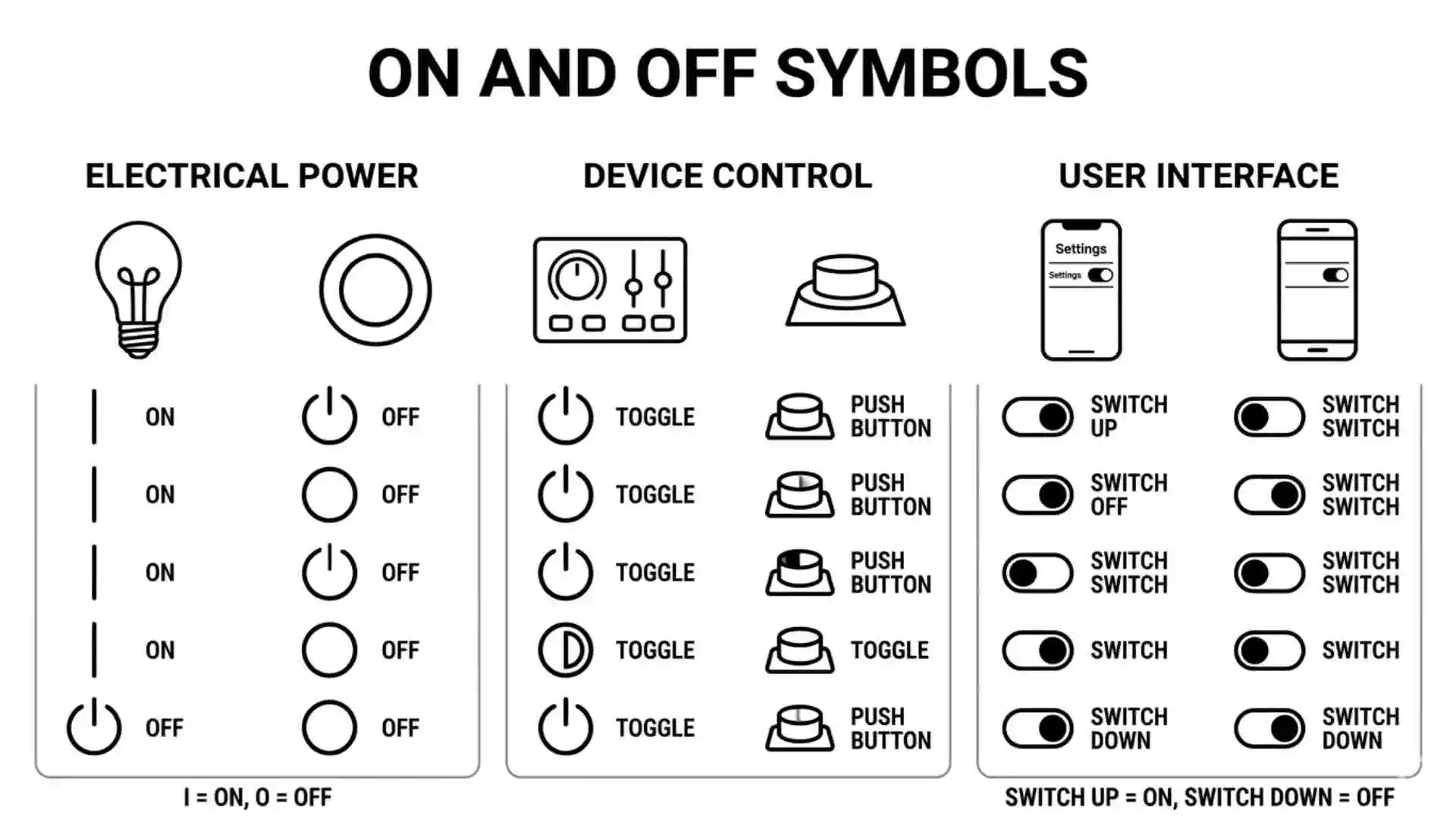
On and off symbols are universal signs used on electronic devices, machines, appliances, and technology to show whether something is powered on or turned off.
These symbols may look simple, but they are among the most recognized icons in the modern world.
In simple words, the on and off symbols help people quickly understand how to operate devices without needing language instructions.
From smartphones and laptops to washing machines and televisions, these symbols appear almost everywhere. They save space, improve communication, and make technology easier for people around the world to use.
What Are On and Off Symbols?
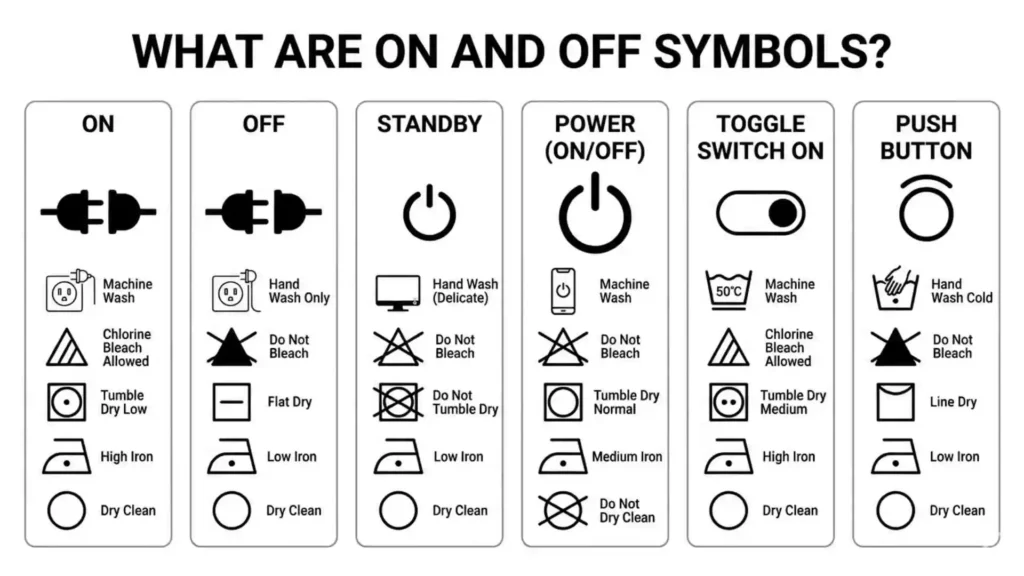
On and off symbols are graphical icons used to control electrical power on devices.
The most common symbols are:
- A vertical line (|) for “on”
- A circle (O) for “off”
- A combined power symbol (⏻) for power switching
These symbols are internationally recognized and help people operate devices regardless of language or location.
On and off symbols circle and line
The circle and line symbols are internationally recognized indicators for power controls. A vertical line represents the “on” state, while a circle represents the “off” state. These symbols are easy to identify and eliminate confusion across different countries and languages.
Manufacturers use them on computers, televisions, power supplies, and industrial systems to provide a consistent user experience. The combination of both symbols also forms the familiar power button icon seen on modern electronics.
On and off symbols electrical
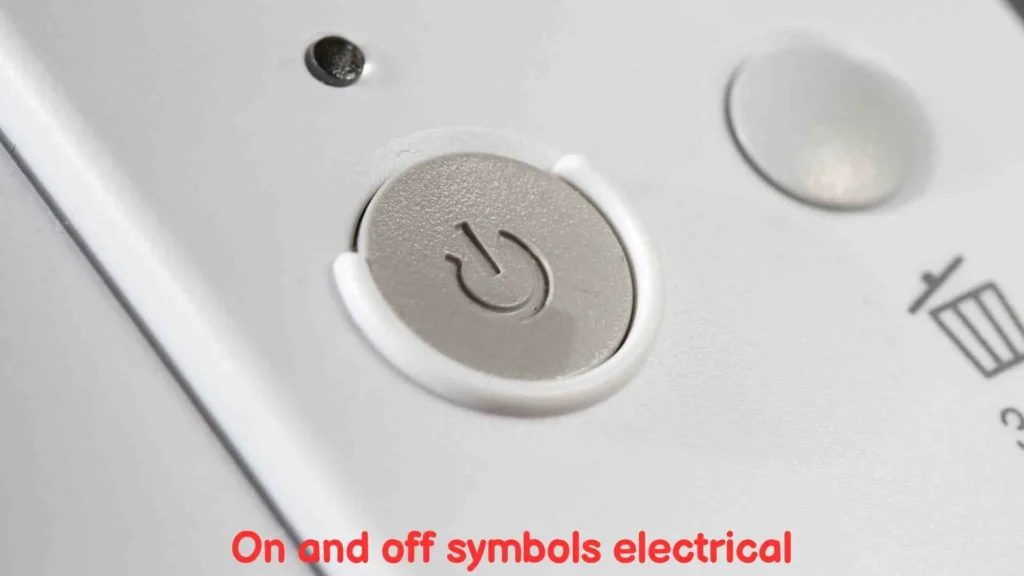
In electrical systems, on and off symbols serve as visual instructions for operating equipment safely. The line symbol indicates that electrical current can flow through the device, whereas the circle shows that the circuit is interrupted.
These markings are standardized to improve usability and reduce operational errors. Electricians, maintenance personnel, and engineers rely on these symbols when working with switches, control panels, and automated systems.
Choke on and off symbols
Choke controls on engines and machinery may use dedicated icons to indicate whether the choke is open or closed. In many cases, symbols include directional arrows, a flap illustration, or simple indicators showing rich or normal fuel mixtures.
When the choke is turned on, it restricts airflow to help cold engines start more easily. Turning the choke off returns the engine to normal operating conditions. Understanding these symbols helps users operate generators, lawn equipment, and small engines effectively.
On/off switch which is on
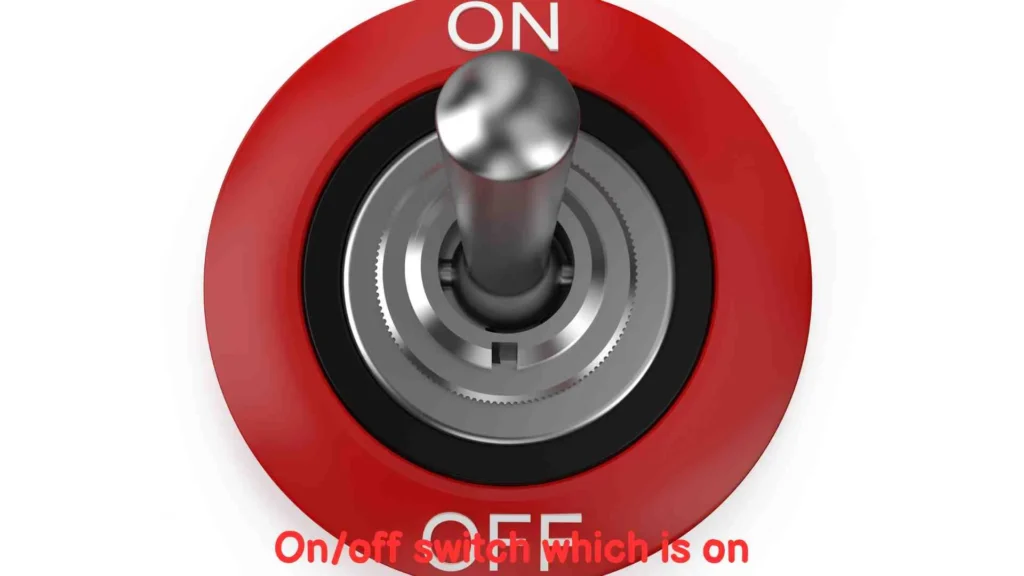
On a standard switch marked with universal symbols, the side with the vertical line (I) represents the ON position. When the switch is moved toward the line symbol, electrical power is supplied to the device.
The circle (O) indicates the OFF position, meaning the electrical connection is disconnected. This convention is widely used across home appliances, industrial equipment, and electronic devices.
Switch on off symbol in circuit
Circuit diagrams also use symbols to indicate switch positions and power states. An open switch generally represents an OFF condition because current cannot flow through the circuit. A closed switch represents an ON condition, allowing electricity to pass.
Understanding these symbols is essential for reading schematics, troubleshooting faults, and designing electrical systems. Students and professionals alike depend on accurate interpretation of circuit symbols.
On off switch symbols line circle meaning
The meanings behind the line and circle symbols come from binary notation. The line symbol (I) corresponds to the number one, representing an active electrical state. The circle symbol (O) corresponds to zero, representing an inactive state.
This simple concept has become an international standard and appears on countless products worldwide. The symbols create a universal language for power controls regardless of the user’s native language.
Symbol on off switch images
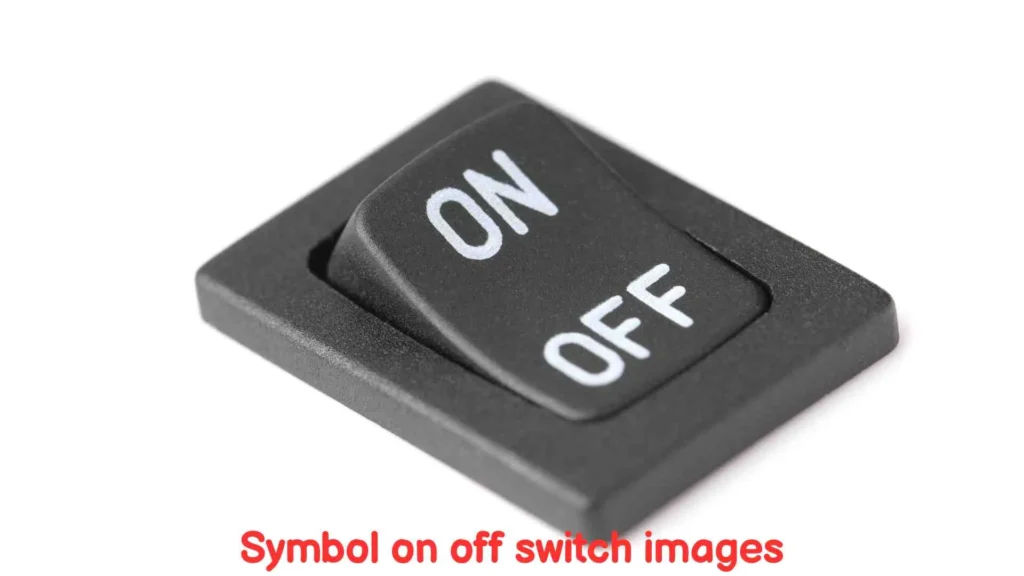
Many educational resources and technical manuals include images showing the appearance of on and off switch symbols. These illustrations help users quickly identify the correct switch positions and understand equipment operation.
Visual references are especially useful for beginners, electronics students, and individuals working with unfamiliar devices. Learning to recognize these symbols improves safety and operational confidence.
On/off symbol io
The combined I/O power symbol merges the line and circle into a single icon. This design indicates a button that can both turn a device on and switch it off. It is commonly found on computers, monitors, gaming consoles, and modern appliances.
The I/O symbol reflects international electrical standards and provides a clean, intuitive way to control power functions. Its widespread adoption makes it one of the most recognizable icons in consumer electronics today.
The Meaning Behind On and Off Symbols
The modern on and off symbols come from binary code, which is the basic language of computers and electronics.
In binary:
- 1 means on
- 0 means off
The symbols were designed based on these concepts:
- The line (|) represents 1 or active power
- The circle (O) represents 0 or no power
The combined power symbol merges both ideas into one universal icon.
History of On and Off Symbols
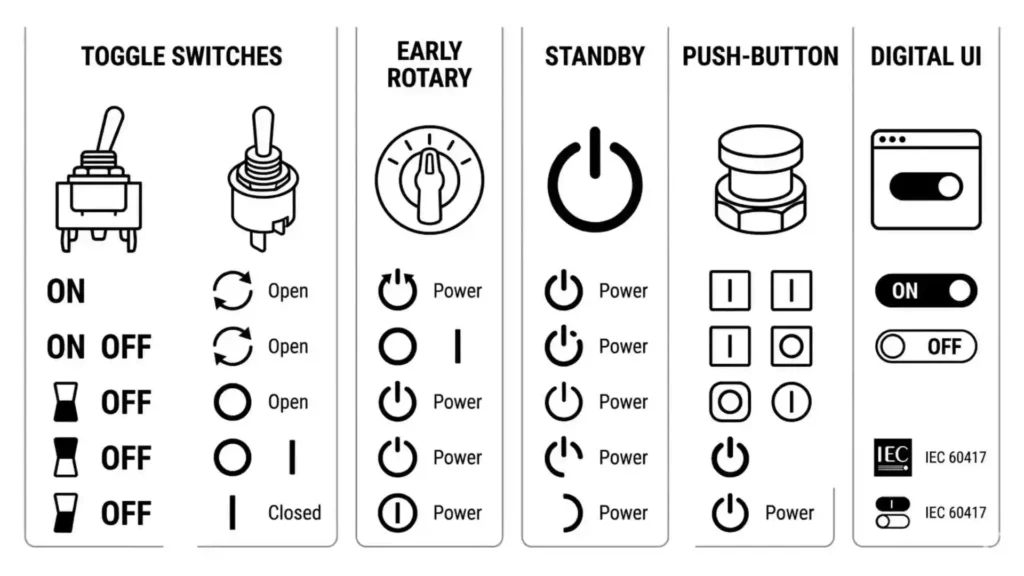
Before universal symbols existed, devices often used written labels like:
- ON
- OFF
- START
- STOP
However, manufacturers faced problems because different countries used different languages.
To solve this issue, engineers and designers created simple international symbols that anyone could understand.
The International Electrotechnical Commission (IEC) later standardized these symbols for global use.
Today, billions of devices use the same symbols worldwide.
The Most Common On and Off Symbols
The Line Symbol (|)
The line symbol means:
- Power on
- Active state
When the line appears on a switch, it usually means electricity is flowing through the device.
Common Uses
- Power strips
- Light switches
- Computer monitors
- Audio systems
The Circle Symbol (O)
The circle symbol means:
- Power off
- No electrical connection
It shows the device is inactive or disconnected from power.
Common Uses
- Appliance switches
- Fans
- Kitchen devices
- Industrial machines
The Universal Power Symbol (⏻)
The combined power icon is now the most recognized power button symbol in the world.
It combines:
- The line for on
- The circle for off
Why It Became Popular
It saves space and removes language barriers.
Today, nearly every modern electronic device uses this symbol.
Why On and Off Symbols Are Important
These symbols may seem small, but they play a huge role in modern technology.
They help:
- Simplify device operation
- Create universal understanding
- Improve safety
- Reduce language confusion
- Make products easier to use
Without universal symbols, global technology would be much harder to navigate.
Practical Uses of On and Off Symbols
Smartphones
Power buttons on smartphones use the universal power symbol to:
- Turn devices on
- Restart systems
- Lock screens
Most users recognize the symbol instantly.
Computers and Laptops
Computers use power icons on:
- Keyboards
- Startup buttons
- Shutdown menus
- Power settings
The symbol became closely associated with modern computing culture.
Household Appliances

Home appliances use on and off symbols because they:
- Save space
- Improve readability
- Work internationally
Examples include:
- Microwaves
- Washing machines
- Coffee makers
- Refrigerators
Cars and Vehicles
Modern cars use power-related symbols on:
- Push-start buttons
- Dashboard controls
- Electric vehicle systems
These icons help drivers quickly understand controls while driving.
Industrial Machines
Factories and industrial systems rely heavily on clear symbols for safety and efficiency.
Workers must quickly identify:
- Power controls
- Emergency shutoffs
- Equipment status
Universal symbols help reduce mistakes and accidents.
The Science Behind On and Off Symbols
The symbols are closely connected to electronics and digital logic.
Electronic systems operate using:
- Binary code
- Electrical circuits
- Digital states
The symbols visually represent these concepts in a simple and user-friendly way.
Binary Code and Technology
Computers understand information using only:
- 1
- 0
This system is called binary.
The on and off symbols reflect these same digital ideas:
- 1 = active
- 0 = inactive
This connection makes the symbols especially meaningful in modern electronics.
The Role of On and Off Symbols in Design
Designers value these symbols because they:
- Are simple
- Require little space
- Work across languages
- Improve user experience
Minimalist technology design depends heavily on recognizable icons.
Interesting Facts About On and Off Symbols
- The universal power symbol became common in the late 20th century.
- Binary systems inspired modern electronic design.
- The power icon appears on billions of devices worldwide.
- Some early machines used text instead of symbols.
- The power symbol is officially standardized internationally.
On and Off Symbols in Everyday Life
Most people interact with these symbols dozens of times daily without noticing.
You can find them on:
- TVs
- Air conditioners
- Game consoles
- Elevators
- Bluetooth speakers
- Smart home devices
These icons became part of everyday visual language.
Different Types of Power Symbols
Sleep Mode Symbol
Some devices use symbols representing:
- Standby mode
- Sleep mode
- Energy-saving functions
These symbols often include:
- Crescent moons
- Blinking lights
- Modified power icons
Restart Symbols
Restart icons usually feature:
- Circular arrows
- Rotating lines
These indicate rebooting rather than complete shutdown.
Reset Symbols
Reset buttons may use:
- Tiny holes
- Rotating arrows
- Technical labels
These restore default system settings.
The Importance of Universal Symbols
Universal symbols improve communication worldwide.
Benefits include:
- Easier travel
- Safer product use
- Faster understanding
- Reduced translation costs
People can operate devices even if they cannot read the local language.
Accessibility and On and Off Symbols
Symbols help users with:
- Limited language skills
- Reading difficulties
- International travel needs
Clear icons improve accessibility for millions of people worldwide.
On and Off Symbols in Smart Technology
Smart homes use these symbols in:
- Voice assistants
- Smart lighting
- Security systems
- Wireless devices
As technology evolves, symbols remain essential for user interaction.
Symbols and Human Psychology
Humans process images faster than text.
Simple symbols:
- Reduce mental effort
- Improve recognition
- Increase speed of understanding
This is why symbols are so powerful in design and communication.
How Children Learn On and Off Symbols
Children quickly learn these icons because they repeatedly see them on:
- Tablets
- TVs
- Toys
- Game consoles
Many children recognize the power symbol before learning technical words.
Cultural Impact of Power Symbols
The power symbol became more than a technical sign.
Today, it often represents:
- Technology
- Connectivity
- Digital culture
- Modern innovation
The icon appears in:
- Logos
- Fashion
- Movies
- Graphic design
On and Off Symbols in Pop Culture
The power symbol appears in:
- Gaming culture
- Science fiction movies
- Technology branding
- Social media graphics
Its simple shape made it visually iconic.
Safety Benefits of Power Symbols
Clear symbols improve safety by helping users quickly identify:
- Active devices
- Shutoff switches
- Emergency controls
This is especially important in:
- Hospitals
- Factories
- Laboratories
- Transportation systems
Common Misunderstandings About On and Off Symbols
Thinking the Circle Means “Open”
Some people misunderstand the circle symbol, especially on older devices.
However, in electronics:
- Circle = off
- Line = on
Confusing Power and Sleep Mode
Sleep mode does not always mean the device is fully off.
Many modern systems stay partially active while sleeping.
Assuming Every Device Uses the Same Style
Some manufacturers slightly modify symbols for design purposes.
Still, the basic meanings remain similar.
Real-World Examples of On and Off Symbols
Example 1: Television Remote
The power button usually combines:
- A line
- A circle
This instantly tells users how to control power.
Example 2: Gaming Console
Game systems use illuminated power icons that glow when active.
Example 3: Electric Car
Push-start buttons often feature sleek modern power symbols.
The Future of On and Off Symbols
As technology evolves, symbols may become:
- Animated
- Voice-controlled
- Gesture-based
However, the traditional power icon will likely remain important because it is globally recognized.
On and Off Symbols in Digital Communication
People sometimes use power symbols creatively online to represent:
- Logging off
- Taking breaks
- Starting something new
- Recharging mentally
This shows how technology symbols entered everyday communication culture.
Why Simplicity Makes Symbols Powerful
The success of on and off symbols comes from simplicity.
Good symbols should:
- Be easy to recognize
- Require no explanation
- Work universally
The power symbol achieves all three goals perfectly.
Frequently Asked Questions About On and Off Symbols
What do the on and off symbols mean?
The line symbol means on, the circle means off, and the combined icon represents power control.
Why is the power symbol shaped that way?
The design comes from binary code, where 1 represents on and 0 represents off.
Who created the power symbol?
The symbol was standardized by international engineering organizations to improve global communication.
Why are on and off symbols important?
They make technology easier, safer, and more accessible for people worldwide.
Are power symbols universal?
Yes. Most countries and manufacturers use the same standardized symbols on electronic devices.
Conclusion
On and off symbols are among the most important visual icons in modern technology. Although they appear simple, these symbols represent a brilliant combination of design, communication, engineering, and global accessibility.
From smartphones and computers to cars and household appliances, these tiny icons help billions of people interact with technology every day. Their universal design removes language barriers, improves safety, and makes modern life more convenient.
The next time you press a power button, you are using a symbol recognized almost everywhere in the world proof that simple design can have an enormous impact.

Elliot Kensington
Elliot Kensington is a storyteller at heart, always fascinated by the hidden corners of human imagination. From a young age, he found comfort in books and the worlds they created, inspiring him to craft tales that blend emotion, suspense, and wonder. His writing journey began with short stories that captured fleeting moments of life, and over time, evolved into novels that explore both the extraordinary and the everyday. Elliot believes that every story holds a piece of the soul, and his mission is to connect readers to those moments that linger long after the last page. When he’s not writing, he enjoys exploring nature, capturing moments through photography, and seeking inspiration in the little things.
Books by Elliot Kensington:
-
Shadows of Tomorrow
-
The Whispering Path