
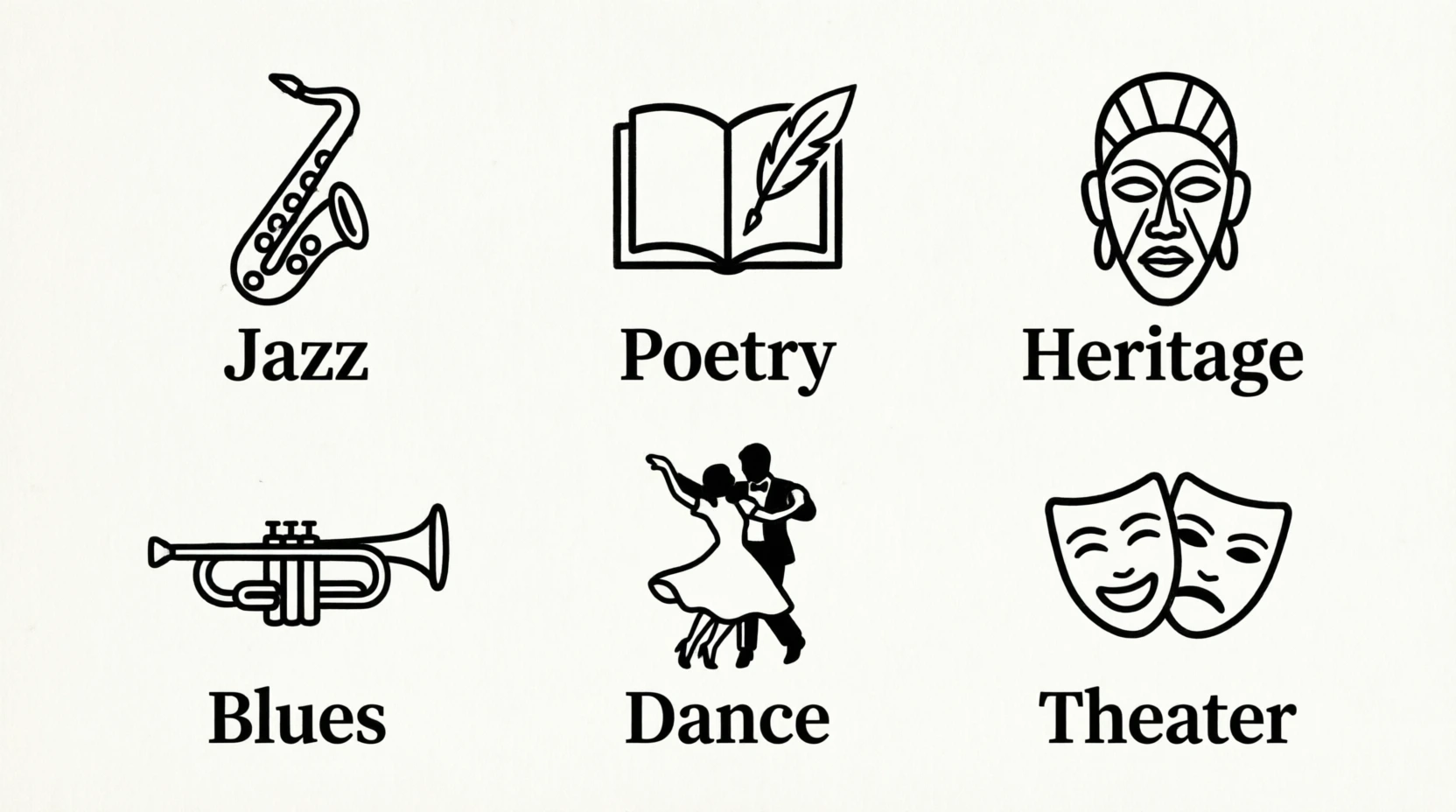
When I first started learning about the Harlem Renaissance, I realized it was much more than an artistic movement.
It was a celebration of identity, resilience, and creative freedom. If you’re exploring harlem renaissance symbols, you may be searching for meaningful artwork, tattoo ideas, educational insights, or design inspiration.
These symbols tell stories of hope, heritage, and cultural pride that still inspire people today. Understanding their history helps you appreciate not only their beauty but also the voices and experiences they represent.
What Symbol Represents Harlem Renaissance? (Quick Answer)
The African mask is one of the most recognized symbols of the Harlem Renaissance. It reflects a renewed appreciation for African heritage and inspired many artists, writers, and performers during the movement. Other important Harlem Renaissance symbols include the rising sun, jazz instruments, books, the lion, and the cotton blossom, each highlighting themes of creativity, freedom, cultural identity, and artistic achievement.
What Are Harlem Renaissance Symbols?
Harlem Renaissance symbols are visual images, objects, and artistic themes connected with the cultural movement that flourished during the 1920s and early 1930s in Harlem, New York. They express ideas such as Black identity, artistic excellence, education, resilience, freedom, community, and pride in African heritage.
Unlike formal religious symbols, many Harlem Renaissance symbols gained meaning through literature, music, painting, sculpture, and poetry. Their interpretations can vary depending on historical context, artistic style, and personal understanding. While some draw directly from African traditions, others reflect the experiences of African Americans during a period of cultural transformation.
Harlem Renaissance Symbols Comparison Table
| Symbol | Main Meaning | Best Use |
| African Mask | African heritage and identity | Tattoos, artwork, museums |
| Rising Sun | Hope and new beginnings | Posters, personal art |
| Jazz Saxophone | Musical innovation | Logos, music branding |
| Open Book | Education and knowledge | School designs, libraries |
| Lion | Courage and leadership | Tattoos, inspirational art |
| Cotton Blossom | History and resilience | Educational displays |
| Phoenix | Renewal and transformation | Tattoos, motivational art |
| Fountain Pen | Literature and storytelling | Writer logos, gifts |
| Drum | Cultural rhythm and unity | Community artwork |
| Harlem Skyline | Cultural home and legacy | Posters, prints |
| Laurel Wreath | Achievement and excellence | Awards, creative branding |
| Chain Breaking | Freedom and progress | Personal reminders, murals |
Top 12 Harlem Renaissance Symbols and Their Meanings
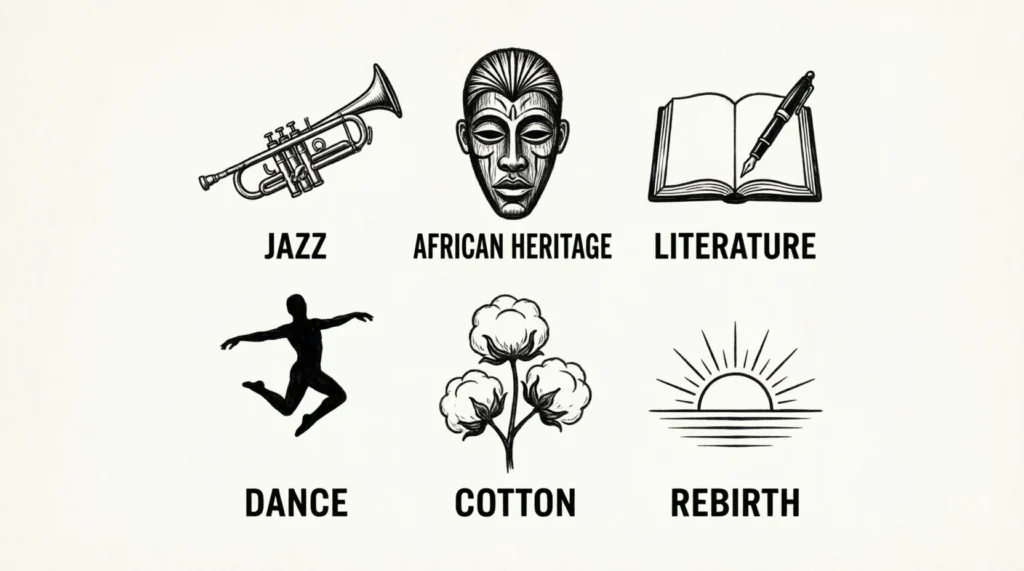
African Mask: Honoring African Heritage
African masks became an important artistic influence during the Harlem Renaissance as many creators embraced African history and traditions. Rather than copying specific sacred objects, artists found inspiration in African craftsmanship, symbolism, and cultural identity. This renewed connection challenged stereotypes and celebrated Black heritage.
Today, African mask-inspired artwork appears in museums, educational spaces, cultural events, and personal collections. If used in tattoos or designs, it’s important to understand the specific cultural origin of the mask rather than treating it as a generic decorative element.
Best for: Cultural artwork, educational displays, meaningful tattoos, home décor, heritage projects.
Rising Sun: A New Beginning
The rising sun reflects hope, opportunity, and a brighter future. During the Harlem Renaissance, many writers and artists expressed optimism despite facing racial discrimination. Their work often looked toward progress and a more equal society.
The image remains popular in inspirational artwork because it communicates growth without relying on words. Its simple design also makes it suitable for modern logos and tattoos.
Best for: Small tattoos, motivational artwork, journal covers, posters, personal reminders.
Jazz Saxophone: The Sound of Creative Freedom
Jazz became one of the defining art forms of the Harlem Renaissance. The saxophone symbolizes innovation, self-expression, and cultural influence. Legendary musicians transformed American music while inspiring generations worldwide.
Today, the saxophone is widely used in music logos, event branding, murals, and artistic tattoos celebrating creativity and passion.
Best for: Music logos, sleeve tattoos, concert posters, album art, creative branding.
Open Book: Knowledge and Literary Excellence
Books symbolize the extraordinary literary achievements of Harlem Renaissance writers. Poetry, novels, and essays gave voice to experiences that had often been ignored or misunderstood.
An open book represents learning, storytelling, and intellectual growth. It reminds readers that literature can inspire change and preserve history for future generations.
Best for: Library logos, educational programs, teacher gifts, literary tattoos, book clubs.
Lion: Courage and Leadership
The lion is widely recognized across many cultures as a symbol of courage, dignity, and leadership. Within Harlem Renaissance-inspired artwork, it often reflects confidence, resilience, and the determination to overcome barriers.
Although the lion is not exclusive to the movement, its qualities align with the spirit of artists and activists who challenged social limitations through creativity.
Best for: Bold tattoos, motivational artwork, leadership programs, family art, inspirational logos.
Cotton Blossom: Remembering History
The cotton blossom carries a complex meaning. It reminds us of the painful history of slavery and forced labor while also acknowledging the perseverance of African American communities who transformed hardship into cultural strength.
Because of this historical background, it should be used thoughtfully and respectfully. Educational projects often use it to encourage honest conversations about history.
Best for: Educational exhibits, historical artwork, museum displays, reflective designs.
Phoenix: Renewal Through Creativity
Although the phoenix comes from ancient mythology rather than Harlem itself, many people connect it with themes of rebirth, resilience, and transformation that echo the Harlem Renaissance.
Artists often use the phoenix to symbolize rising above injustice and creating something beautiful from difficult circumstances.
Best for: Inspirational tattoos, motivational branding, recovery journeys, personal artwork.
Fountain Pen: The Power of Words
The fountain pen celebrates the writers whose poetry, essays, and novels shaped the Harlem Renaissance. Their words explored identity, equality, dreams, and everyday life with honesty and creativity.
Today, the pen symbolizes thoughtful communication and artistic expression, making it popular among writers, students, and educators.
Best for: Writer logos, author tattoos, graduation gifts, notebooks, educational branding.
Drum: Rhythm and Community
Drums have deep roots in many African cultures and symbolize communication, celebration, and shared identity. During the Harlem Renaissance, music became a bridge connecting African traditions with modern artistic expression.
Because drums have important cultural significance, it’s helpful to understand their specific origins before using traditional designs commercially.
Best for: Community murals, music festivals, cultural artwork, educational projects.
Harlem Skyline: A Place That Changed History
The skyline of Harlem represents more than buildings. It symbolizes a neighborhood that became the center of extraordinary artistic and intellectual achievement.
Designers often use stylized skylines in posters, apparel, and community organizations to celebrate Harlem’s lasting cultural influence.
Best for: Posters, travel art, nonprofit logos, city-inspired prints, community projects.
Laurel Wreath: Excellence and Achievement
The laurel wreath has symbolized honor since ancient times. When paired with Harlem Renaissance themes, it celebrates artistic excellence, academic success, and cultural achievement.
Its clean shape also works well in modern graphic design, making it useful for awards and educational branding.
Best for: Certificates, awards, logos, graduation artwork, recognition programs.
Broken Chain: Freedom and Progress
A broken chain represents liberation, equality, and the ongoing pursuit of justice. While it connects to broader civil rights themes beyond the Harlem Renaissance, it reflects the movement’s emphasis on breaking social barriers through art and education.
Its simple design makes it one of the most recognizable symbols of hope and progress.
Best for: Tattoos, murals, advocacy campaigns, inspirational artwork, personal reminders.
Harlem Renaissance Art
Harlem Renaissance art was an important part of the broader cultural movement that developed among African Americans during the 1920s and 1930s. Painters, sculptors, printmakers, photographers, and illustrators used art to portray Black identity, everyday life, history, cultural heritage, and hopes for the future.
Artists such as Aaron Douglas, Archibald Motley Jr., Richmond Barthé, James Lesesne Wells, and Lois Mailou Jones explored different approaches rather than following one single artistic style. Their work included realistic portraits, stylized figures, geometric compositions, printmaking, sculpture, and scenes of urban life.
Aaron Douglas became especially associated with the movement because he combined influences from African art with modern European movements such as Cubism and Art Deco. His distinctive silhouettes, geometric shapes, repeated circles, and rhythmic compositions became an important visual language of the Harlem Renaissance.
Harlem Renaissance art also reflected the influence of music and literature. Jazz, blues, and gospel were central to the cultural environment, and visual artists sometimes incorporated musicians, dancers, instruments, and rhythmic forms into their compositions.
Harlem Renaissance Symbols and Their Meanings
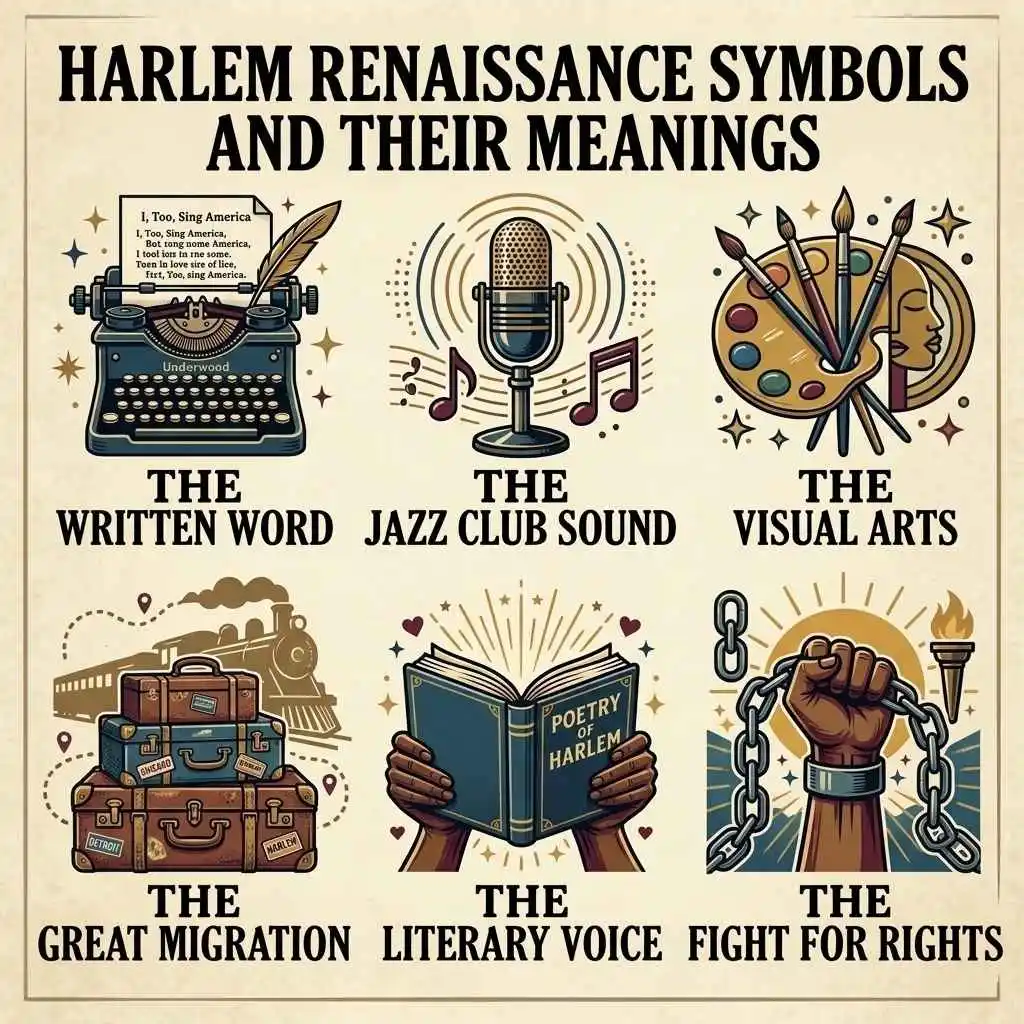
There was no single official Harlem Renaissance symbol. Instead, artists repeatedly used visual subjects and motifs that communicated ideas connected with Black identity, African heritage, freedom, history, community, creativity, and cultural pride.
Common symbolic elements include:
- African-inspired forms: References to African masks, sculpture, patterns, and visual traditions connected artists with African heritage.
- Silhouettes: Stylized human figures allowed artists to create dramatic scenes while emphasizing movement, identity, and collective experience.
- Circles and radiating lines: In Aaron Douglas’s work, repeated circles could create a sense of rhythm, movement, light, or sound.
- Musical instruments: Horns, trumpets, dancers, and other musical imagery connected visual art with jazz, blues, and gospel traditions.
- Light and stars: Light could be used visually to draw attention toward important figures or suggest hope and transformation.
- Geometric patterns: Angular forms and repeated shapes reflected modernist influences and helped create movement across a composition.
- Historical imagery: Ships, chains, migration, and other historical references could connect African American experiences with slavery, displacement, struggle, and freedom.
- African and Egyptian motifs: Some artists looked toward African and ancient Egyptian art as sources of cultural connection and artistic inspiration.
These elements should not automatically be treated as fixed symbols with one universal meaning. Their significance can change according to the individual artwork, artist, historical context, and surrounding imagery.
The Harlem Renaissance Symbols
The symbols associated with the Harlem Renaissance are best understood as recurring themes and visual motifs rather than a standardized symbol system. The movement encouraged artists to present Black life and culture from perspectives that challenged stereotypical representations.
Africa and African heritage were particularly important sources of inspiration. Some artists studied or incorporated stylized forms associated with art from places such as Benin, Congo, and Senegal. Ancient Egyptian art also influenced artists including Aaron Douglas.
Music was another major visual and cultural theme. Jazz, blues, and gospel were closely connected to Harlem’s creative environment, so instruments, dancing, rhythm, and performance frequently appeared in visual representations of the period.
Migration and urban life also became important subjects. The Great Migration brought many African Americans from the rural South to Northern cities, including New York, helping create new artistic and cultural communities.
Other recurring ideas include racial pride, freedom, education, community, dignity, historical memory, creativity, and resistance to discrimination. Together, these themes help explain why the movement remains important in American art history.
Harlem Renaissance Characteristics
The characteristics of Harlem Renaissance art varied from artist to artist, but several recognizable features appear across the movement.
African and African American Influences
Artists explored African visual traditions as a way of connecting contemporary Black identity with African heritage. Stylized masks, sculpture, patterns, and forms influenced some artists’ approaches to figures and composition.
Modernist Design
Modern European movements influenced many Harlem Renaissance artists. Cubism, Art Deco, and other modern approaches encouraged artists to simplify forms, experiment with geometry, and move away from purely realistic representation.
Strong Geometric Forms
Triangles, circles, angular lines, repeated shapes, and simplified figures appear prominently in some Harlem Renaissance visual art. These forms could create movement and rhythm while giving historical or contemporary scenes a modern appearance.
Black Identity and Cultural Pride
Many artists presented Black people as central subjects rather than background figures. Portraits and scenes of everyday life emphasized individuality, dignity, beauty, community, and cultural identity.
Music and Rhythm
The influence of jazz, blues, and gospel can be seen in subjects and compositions involving musicians, dancers, instruments, and repeated visual patterns. Some artists attempted to make paintings and prints feel rhythmic in much the same way music does.
Historical Storytelling
Harlem Renaissance artists also used visual art to address slavery, discrimination, migration, African heritage, and the struggle for greater freedom. Aaron Douglas’s Into Bondage, for example, uses historical imagery to address the transatlantic slave trade while also suggesting hope for the future.
Harlem Renaissance Art and African Influences
African art was an important source of inspiration for several Harlem Renaissance artists. Rather than simply reproducing African artworks, artists explored selected forms, patterns, and visual ideas as part of a broader search for connections with African heritage.
Aaron Douglas is a particularly important example. His work combined African-inspired forms with Cubism, Art Deco, and other modern influences. The result was a distinctive style featuring silhouettes, geometric structures, overlapping forms, and rhythmic patterns.
This relationship between African art and Harlem Renaissance art was also part of a larger international exchange of artistic ideas. Artists were looking at both African traditions and modern European art while developing new approaches to representing Black experiences.
Harlem Renaissance Symbols Tattoos
There is no historically established category called “Harlem Renaissance symbols tattoos.” Modern tattoo designs using Harlem Renaissance themes are contemporary interpretations of the movement’s art, people, history, and visual motifs.
Someone interested in this type of tattoo might draw inspiration from:
- Aaron Douglas-style silhouettes
- Jazz instruments or musical figures
- African-inspired geometric patterns
- Harlem architecture or city scenes
- Portraits of Harlem Renaissance artists and writers
- Art Deco-inspired shapes
- Books, poetry, or writing imagery
- Motifs representing creativity, cultural pride, or freedom
- Historical imagery connected with the Great Migration
A tattoo based on Harlem Renaissance art should ideally identify the original artwork or historical reference when possible. This helps distinguish a modern design inspired by the movement from a symbol that was actually used as an established Harlem Renaissance emblem.
Harlem Renaissance Symbols PDF
People searching for a Harlem Renaissance symbols PDF may be looking for a printable study guide, classroom worksheet, symbol chart, artwork reference, or historical summary.
A useful PDF should explain the historical context behind each symbol or motif rather than simply presenting a list of images. For example, a study guide could organize information into categories such as African heritage, music, migration, identity, freedom, history, and modern art influences.
For students, a helpful PDF can also include the artist’s name, artwork title, approximate date, medium, and a short explanation of the imagery. This makes it easier to understand how a particular visual element functions within its original historical context.
Famous Paintings From the Harlem Renaissance
Several important paintings and visual works are frequently studied when learning about the Harlem Renaissance. Aaron Douglas’s Into Bondage (1936) is especially significant because it combines African and modernist influences with historical storytelling about the transatlantic slave trade.
Aaron Douglas’s The Judgment Day (1939) is another important work. The painting uses a dramatic central figure, silhouettes, radiating forms, and contrasting colors. The National Gallery of Art explains that Douglas’s composition draws on the imagery of Gabriel and connects visual rhythm with the sound of a trumpet.
Other artists associated with Harlem Renaissance visual culture include Archibald Motley Jr., Richmond Barthé, James Lesesne Wells, Lois Mailou Jones, and James Van Der Zee. Their work demonstrates that the movement was not limited to one style or medium. Photography, sculpture, painting, printmaking, and illustration all contributed to its visual culture.
James Van Der Zee’s photography is particularly valuable for understanding everyday Harlem life. His photographs documented families, social gatherings, businesses, religious life, and entertainment, providing a visual record of a growing and diverse African American community.
A Few Important Works to Know
| Artist | Work | Why It Matters |
| Aaron Douglas | Into Bondage | Connects African American history, slavery, African influences, and hope |
| Aaron Douglas | The Judgment Day | Combines biblical imagery, silhouettes, geometry, and musical rhythm |
| Archibald Motley Jr. | Portrait of My Grandmother | Shows his interest in intimate African American portraiture |
| Richmond Barthé | Head of a Boy | Demonstrates a sensitive realist approach to Black subjects |
| James Lesesne Wells | Looking Upward | Combines African-inspired forms with modern printmaking |
| James Van Der Zee | Harlem photographs | Documents people and everyday life in the Harlem community |
These works also show why it is difficult to reduce the Harlem Renaissance to one visual style. Artists used realism, modernism, geometric design, photography, sculpture, printmaking, and African-inspired forms in different ways.
Harlem Renaissance Art, Symbols, and Cultural Identity
Harlem Renaissance art was more than a collection of paintings and decorative designs. It was part of a larger cultural movement in which African American artists and intellectuals explored identity, heritage, modern life, creativity, and social conditions.
The visual language developed by artists such as Aaron Douglas helped place Black experiences at the center of modern American art. At the same time, photographers, sculptors, painters, and printmakers showed the diversity of Black life rather than presenting a single definition of African American identity.
For readers searching for Harlem Renaissance symbols, the most useful approach is therefore to study the recurring themes, artistic influences, and individual artworks together. That provides more historical context than assigning one fixed meaning to every shape, color, or image.
Why Was the Harlem Renaissance Important?
The Harlem Renaissance was important because it created a major cultural space for Black writers, artists, musicians, and thinkers during the 1920s and 1930s. It helped bring greater attention to Black creativity, history, identity, and experiences in American culture.
The movement also challenged negative stereotypes by giving Black creators opportunities to express their lives in their own voices. Literature, visual art, jazz, theater, photography, and other forms of expression became important ways to explore race, identity, freedom, community, and social change.
Its influence continued beyond the Harlem Renaissance itself. Later generations of artists and writers drew inspiration from the creativity and cultural confidence developed during this period.
Harlem Renaissance Art Style
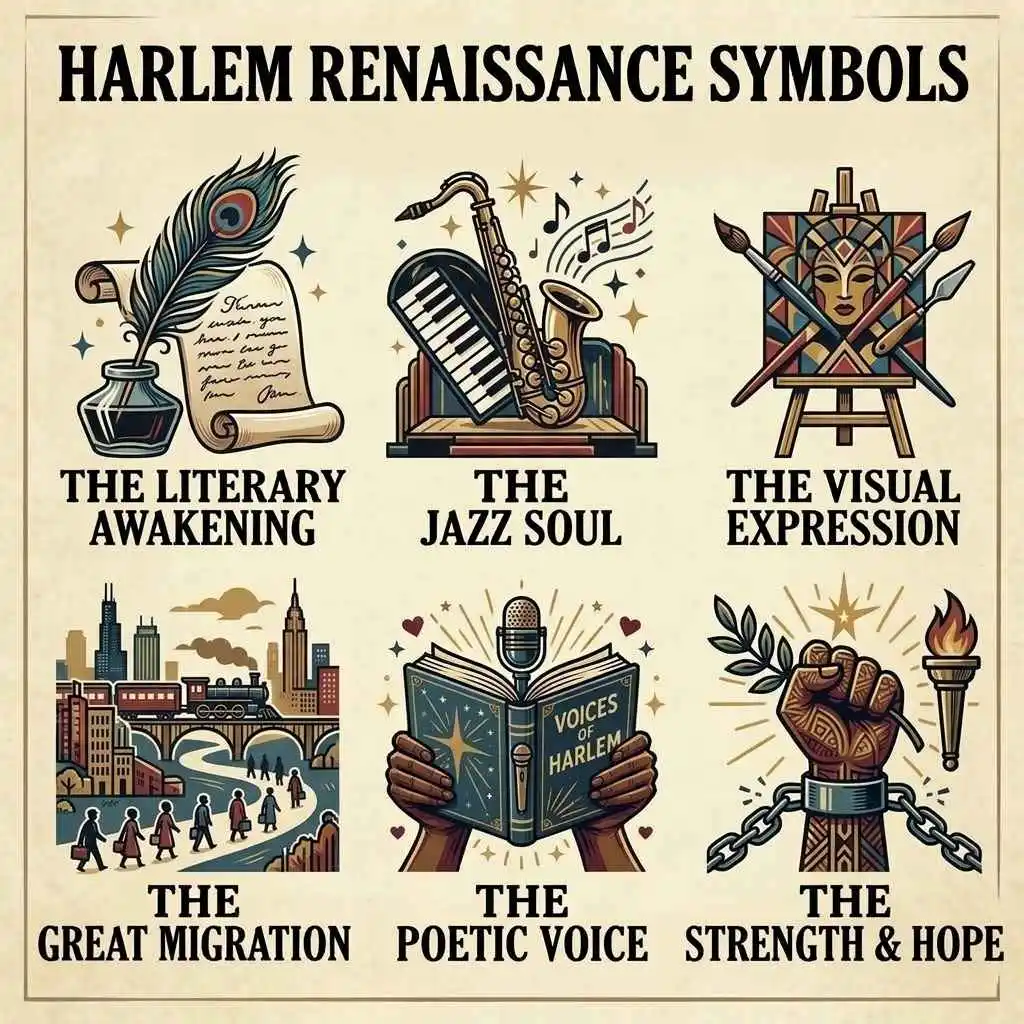
Harlem Renaissance art did not follow one single visual style. Instead, artists combined modern artistic approaches with African American experiences, history, cultural traditions, and everyday life.
Common characteristics included bold forms, expressive figures, geometric patterns, African-inspired imagery, rich colors, and scenes showing Black life and culture. Some artists also explored themes of African heritage, racial identity, spirituality, work, family, and community.
Artists such as Aaron Douglas became particularly associated with imagery that blended modern design with African and African American themes. His work often used simplified silhouettes, strong geometric shapes, and repeated forms to communicate historical and cultural ideas.
Harlem Renaissance Synonym
There is no perfect synonym for the Harlem Renaissance, because the term refers to a specific historical and cultural movement. However, several expressions can describe related ideas.
Depending on context, you may see terms such as New Negro Movement, Harlem cultural movement, Black cultural renaissance, or African American cultural renaissance.
The New Negro Movement is especially important because it was closely connected with the intellectual and cultural developments of the period. However, these terms should not always be treated as exact replacements for “Harlem Renaissance,” since each can emphasize a somewhat different aspect of the era.
Quotes About the Harlem Renaissance
Many writers and artists associated with the Harlem Renaissance expressed ideas about racial identity, creativity, dignity, freedom, and Black cultural life. Their words help readers understand the intellectual atmosphere surrounding the movement.
For example, Langston Hughes frequently explored Black identity, dreams, everyday life, and racial inequality in his poetry and prose. Zora Neale Hurston emphasized Black culture, language, folklore, and community in her writing. Alain Locke promoted the idea of a new generation of Black artists and intellectuals expressing themselves with greater cultural confidence.
When using quotes about the Harlem Renaissance, it is useful to identify the original speaker or writer and consider the historical context rather than presenting an isolated quotation as a complete explanation of the movement.
Harlem Renaissance Quotes
Harlem Renaissance quotes can provide a quick way to explore the ideas that shaped the movement. Writers such as Langston Hughes, Zora Neale Hurston, Claude McKay, Countee Cullen, and Alain Locke addressed themes including identity, racial pride, creativity, dreams, inequality, and the search for greater freedom.
These quotations are especially useful when studying how literature became part of a larger cultural conversation. Rather than simply focusing on famous words, readers can examine what each writer was saying about Black life and American society during the period.
Harlem Renaissance Colors
Colors associated with Harlem Renaissance art often included deep reds, oranges, yellows, greens, blues, browns, and earth tones, although there was no official color palette for the movement.
Artists used color to create emotion, emphasize figures, and communicate cultural or historical themes. In some works, warm earth colors and bold contrasts helped create a visual connection with African heritage and Black cultural identity.
Color choices varied considerably from artist to artist, so it is better to describe these shades as common visual characteristics or associations rather than official “Harlem Renaissance colors.” This distinction is important because the movement included many different artistic styles and media.
How These Colors Appear in Harlem Renaissance Art
- Red: energy, emotion, movement, or visual emphasis
- Orange and yellow: warmth, vitality, light, and attention
- Green: nature, renewal, or cultural associations
- Blue: mood, atmosphere, or contrast
- Brown and earth tones: human figures, landscapes, and connections to natural or historical themes
- Black and white: strong silhouettes, contrast, and graphic design
Harlem Renaissance Logo and Its Meaning
A Harlem Renaissance logo can draw on visual ideas associated with the movement, such as African American identity, artistic expression, cultural pride, music, literature, and community. There was no single official logo for the Harlem Renaissance, so modern designs may use portraits, typography, jazz-inspired imagery, African motifs, or references to Harlem’s cultural landmarks. When creating or interpreting a logo, it is important to distinguish modern graphic designs from symbols actually used during the historical period.
Quotes From the Harlem Renaissance
Quotes from the Harlem Renaissance often reflect themes of racial identity, creativity, dignity, freedom, equality, and the search for a distinct African American cultural voice. Writers and artists such as Langston Hughes, Zora Neale Hurston, Claude McKay, Countee Cullen, and Alain Locke expressed these ideas through poetry, fiction, essays, and criticism.
For an article, it is useful to identify the speaker and original work alongside each quotation so readers can understand its historical context rather than treating every popular quote online as an authentic Harlem Renaissance quotation.
Quotes About the Harlem Renaissance
Quotes about the Harlem Renaissance can help explain why the movement became such an important period in American cultural history. The movement brought together writers, poets, musicians, visual artists, intellectuals, and performers, particularly in Harlem during the 1920s and 1930s.
These quotations can highlight subjects such as the celebration of Black culture, artistic independence, racial experiences, social change, and the importance of African American voices in literature and the arts.
Harlem Renaissance Quote: What Did the Writers Express?
A Harlem Renaissance quote can reveal more than an individual writer’s thoughts. Many works from the period explored questions of identity, belonging, racism, heritage, ambition, beauty, and artistic freedom.
For example, Langston Hughes frequently wrote about everyday Black life and aspirations, while Alain Locke emphasized the cultural and artistic significance of the emerging movement. Reading quotations alongside the author’s biography and original publication gives readers a clearer understanding of what each statement meant in its historical setting.
Quotes on the Harlem Renaissance and Its Cultural Impact
Quotes on the Harlem Renaissance can also be used to explain the movement’s wider cultural impact. Literature was only one part of the Renaissance; jazz, blues, theater, painting, photography, dance, and intellectual thought also contributed to Harlem’s cultural influence.
The movement helped bring greater attention to African American artistic achievement and created opportunities for Black artists and writers to express experiences and perspectives that had often been marginalized in mainstream American culture.
A Note About Authentic Harlem Renaissance Quotes
When adding quotations to this section, avoid unattributed sayings or quotes that are commonly shared online without a reliable source. Ideally, include the author, title of the work, and publication context whenever available. This makes the article more useful for readers researching the Harlem Renaissance and reduces the risk of misattributing a quotation.
Best Harlem Renaissance Symbols for Tattoos
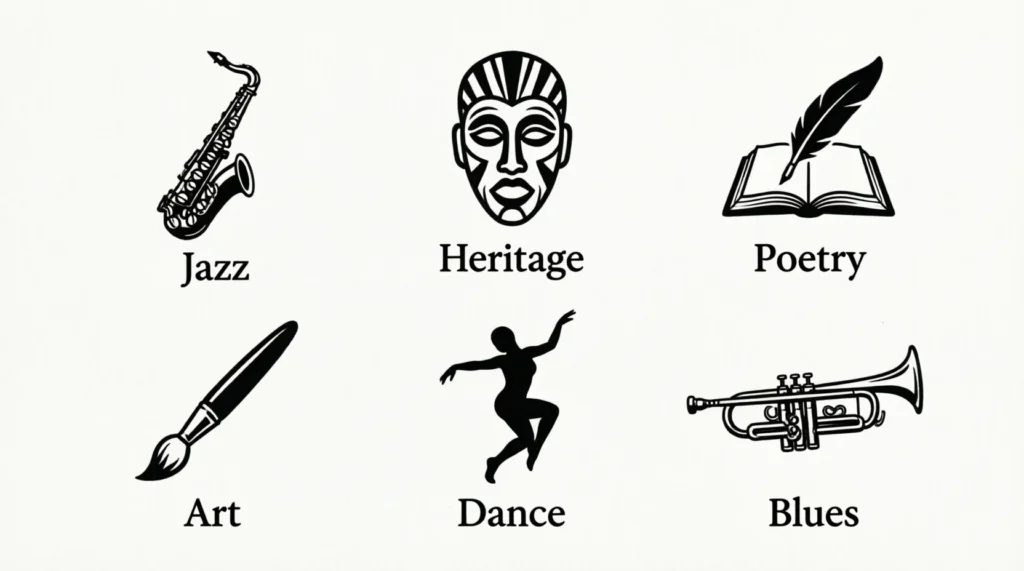
The best tattoos inspired by the Harlem Renaissance combine personal meaning with historical understanding. Simpler designs often age well and remain visually clear, while larger pieces allow room for detailed storytelling.
Popular tattoo choices include:
- African mask
- Rising sun
- Jazz saxophone
- Fountain pen
- Broken chain
- Harlem skyline
- Phoenix
Before choosing a culturally specific design, research its background to ensure respectful use and accurate representation.
Best Harlem Renaissance Symbols for Logos and Design
For logos, posters, and creative branding, simplicity is key. Clean symbols are easier to recognize across websites, social media, business cards, and merchandise.
Excellent design choices include the saxophone, open book, rising sun, laurel wreath, fountain pen, and Harlem skyline. These symbols communicate creativity, education, and cultural pride without becoming overly detailed. Combining two related symbols can also create a distinctive visual identity while maintaining readability.
Best Harlem Renaissance Symbols for Family, Spiritual, or Personal Meaning
Many people choose Harlem Renaissance-inspired symbols because they reflect personal values rather than religious beliefs.
- For family pride: Harlem skyline, open book, lion.
- For personal growth: Rising sun, phoenix, broken chain.
- For creativity: Saxophone, fountain pen, drum.
- For cultural identity: African mask, drum, Harlem skyline.
- For lifelong learning: Open book and laurel wreath.
These symbols remind people that creativity, education, resilience, and community can shape both individual lives and future generations.
Before Using Cultural or Sacred Symbols
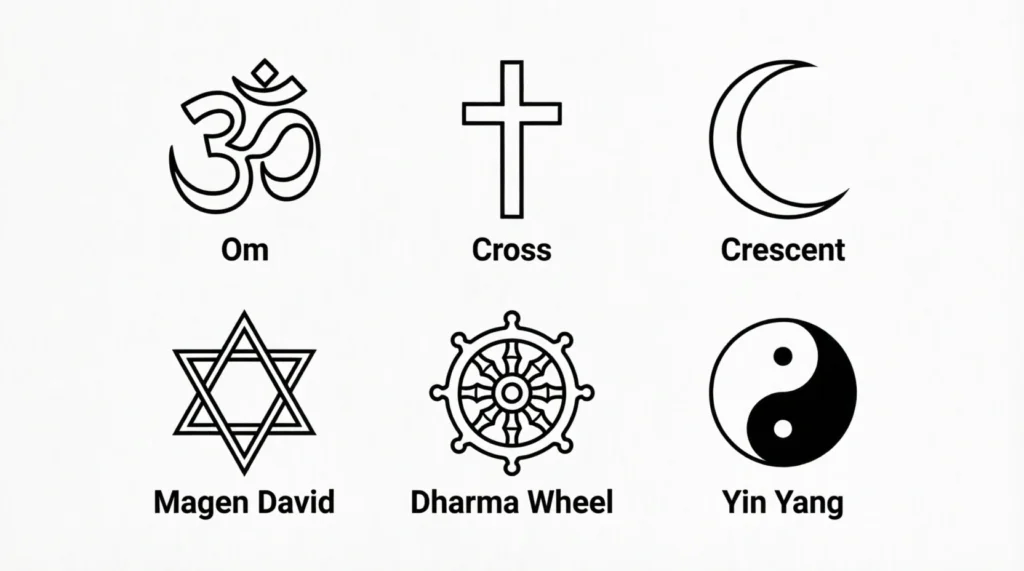
Some Harlem Renaissance symbols draw inspiration from African cultures, where certain designs carry spiritual, ceremonial, or community significance. Before using these images in tattoos, logos, products, or commercial artwork, take time to learn about their cultural origins.
Avoid assuming every African-inspired design has the same meaning. Context matters, and respectful use begins with understanding the history behind the symbol. When in doubt, choose designs inspired by the movement itself rather than copying sacred cultural objects.
How to Choose the Right Symbol for Harlem Renaissance
The best symbol depends on your purpose.
If you want a tattoo, choose something meaningful that will remain timeless. For branding, select a clean, recognizable design that works in different sizes. If your goal is personal inspiration, focus on a symbol that reflects your own values while respecting its historical background.
Ask yourself:
- Does this symbol match my personal story?
- Do I understand its cultural or historical meaning?
- Will it work well as a tattoo or logo?
- Is the design visually simple?
- Am I using it respectfully?
Taking time to answer these questions helps you choose a symbol with lasting significance.
FAQs About Harlem Renaissance Symbols
What is the best symbol for Harlem Renaissance?
The African mask is often considered the best-known symbol because it reflects the movement’s renewed appreciation of African heritage. However, the saxophone and rising sun are also widely associated with creativity, hope, and cultural pride.
What symbol represents Black artistic achievement?
The open book and fountain pen represent literary excellence, while the jazz saxophone symbolizes musical innovation. Together, they highlight the remarkable artistic accomplishments that defined the Harlem Renaissance.
What is a good Harlem Renaissance tattoo?
Meaningful tattoo choices include the rising sun, saxophone, phoenix, fountain pen, Harlem skyline, and broken chain. Each offers a distinct message while allowing room for personal interpretation.
Which symbol reflects resilience?
The phoenix and broken chain are popular symbols of resilience. They represent overcoming hardship, personal growth, and the pursuit of freedom through determination and creativity.
What is a simple symbol for Harlem Renaissance?
A fountain pen, open book, or rising sun provides a clean, recognizable design that captures important themes without requiring highly detailed artwork.
What colors are associated with the Harlem Renaissance?
Rich gold, deep black, warm bronze, royal purple, emerald green, and vibrant red are often used in artwork inspired by the Harlem Renaissance because they convey elegance, creativity, and cultural celebration.
Is the African mask a religious symbol?
Not necessarily. Africa includes thousands of cultures, and masks have different meanings depending on the community. Some are ceremonial or spiritual, while others are artistic or historical. Always research the specific tradition before using a mask design.
Final Thoughts
The most meaningful harlem renaissance symbols celebrate creativity, identity, resilience, education, and cultural pride.
Whether you’re choosing artwork, a tattoo, a logo, or simply learning about this remarkable period in history, understanding the stories behind these symbols makes them far more meaningful.
A thoughtful choice not only creates beautiful design but also honors the lasting legacy of one of history’s most influential cultural movements.

Isaac Wellington
I’ve always been fascinated by the hidden stories in everyday life and the power of words to change how we see the world. Writing, for me, isn’t just a profession—it’s a way to explore human emotions, mysteries, and the unexpected twists of life. Over the years, I’ve dedicated myself to creating stories that linger in your mind long after the last page. When I’m not writing, you’ll usually find me wandering through old libraries or sketching ideas in a notebook. I believe every story has a heartbeat, and I aim to capture that rhythm in my work. Join me on a journey where imagination meets reality, and the ordinary becomes extraordinary.
Books:
-
Shadows of the Forgotten
-
Whispers Through Time