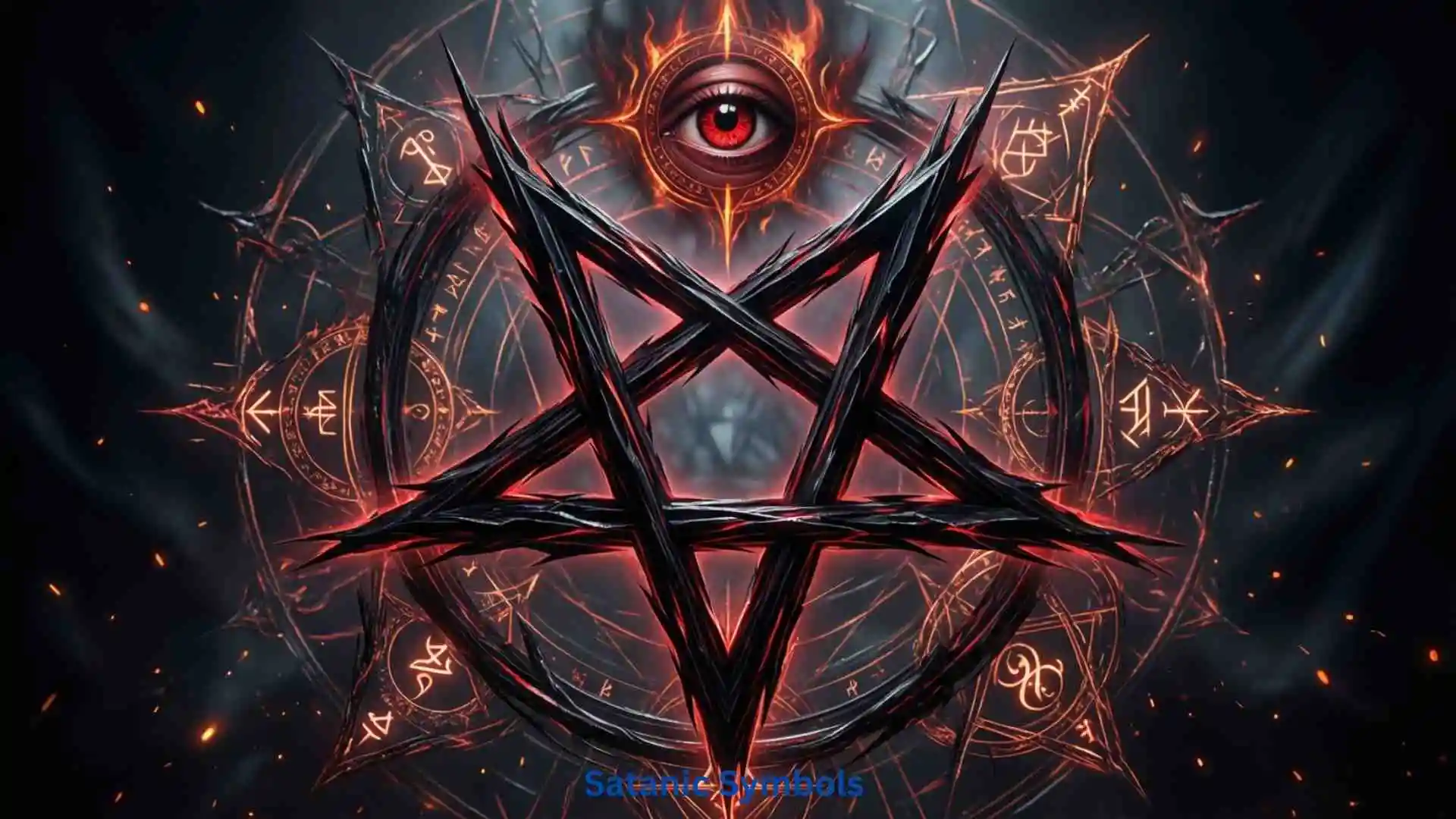
Satanic symbols are visual signs often linked with Satanism, philosophy, rebellion, or symbolic ideas rather than literal evil.
Short answer: they are mostly used to express beliefs, individuality, or artistic freedom.
Today, satanic symbols appear in art, music, fashion, tattoos, and pop culture, making many people curious about their real meanings.
Learning about them helps separate facts from myths in a calm and informed way.
What Are Satanic Symbols?
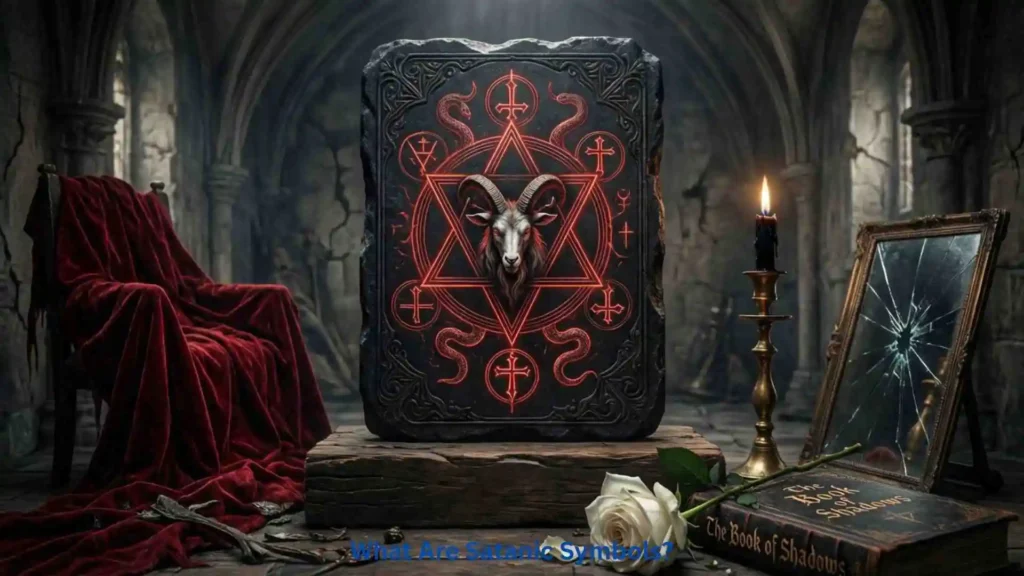
Satanic symbols are icons, shapes, or images linked to Satanism or ideas traditionally associated with Satan, such as rebellion, free will, and questioning authority.
They may represent:
- Philosophy and ideology
- Cultural or artistic expression
- Religious or anti-religious beliefs
- Symbolic opposition to control or dogma
Not all satanic symbols are religious, and not all are used negatively.
Satanic Symbols With Hands
Hand gestures are sometimes associated with Satanic or occult imagery, but their meanings can vary greatly depending on context. One of the most recognizable gestures is the sign of the horns, made by extending the index and little fingers while folding the middle and ring fingers. Although it is sometimes linked with Satanic imagery, the gesture also has non-Satanic meanings in music, popular culture, and different traditions.
Satanic Symbols and Meanings
Satanic symbols can refer to a range of historical, religious, occult, and modern cultural images. Their meanings are not always the same, and some symbols popularly described as “Satanic” have older meanings that developed independently of Satanism.
Commonly discussed examples include the Sigil of Baphomet, inverted pentagram, Satanic cross, and certain goat imagery. When explaining these symbols, it is useful to distinguish their historical origins from modern interpretations.
Satanic Symbols Copy and Paste
People searching for Satanic symbols copy and paste may be looking for text characters, Unicode symbols, or decorative characters for usernames, messages, artwork, and social-media posts. Some symbols can be copied directly, while others are images or graphic designs rather than standard Unicode characters.
Common Text Symbols
- ☠ Skull and crossbones
- † Cross symbol
- ✦ Decorative star
- ★ Black star
- ⚚ Occult-style decorative symbol
- ♄ Saturn symbol
- ♑ Capricorn symbol
Not every symbol listed above is inherently Satanic. Their meaning depends on the cultural, religious, historical, or artistic context in which they are used.
Satanic Symbols With Hands
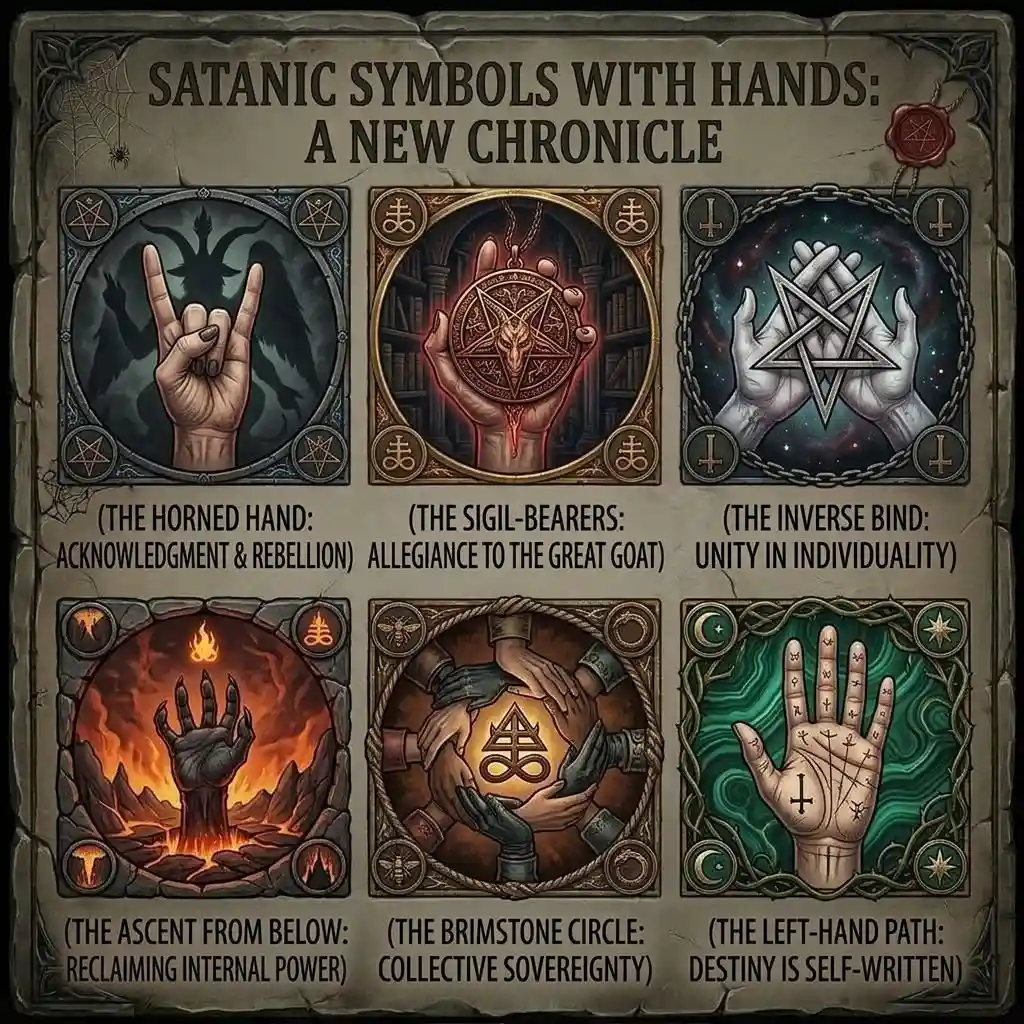
Satanic imagery involving hands often appears in tattoos, album artwork, illustrations, costumes, and online graphics. Hand gestures may be combined with pentagrams, goat imagery, horns, crosses, or other occult-inspired designs.
The same hand gesture can have completely different meanings in another setting. For example, the horns gesture has been used in heavy-metal culture and other forms of popular culture without necessarily expressing Satanic beliefs.
Satanic Symbols and Meanings
The meaning of a Satanic symbol should be examined according to its origin and the context in which it appears. A symbol may have an established meaning within a particular Satanic tradition while having a different interpretation in popular culture.
For example, the inverted pentagram is frequently associated with Satanism in modern Western culture, while the pentagram itself has a much broader history and has been used by different religious and philosophical traditions.
Satanic Symbols Tattoos
Satanic symbols tattoos can include pentagrams, goat-headed figures, Baphomet imagery, inverted crosses, sigils, horns, and other dark or occult-inspired artwork. Some people choose these designs for religious reasons, while others use them for artistic expression, rebellion, symbolism, or interest in horror and heavy-metal aesthetics.
Because tattoo symbolism is personal, the same design can communicate different ideas to different people. Anyone considering such imagery should understand its historical and contemporary associations before choosing a permanent design.
Satanic Symbols Text
Satanic symbols text generally refers to characters, Unicode symbols, stylized lettering, and text-based designs that are used to create an occult or dark aesthetic. Unlike ordinary letters, many recognizable occult symbols are not available as simple keyboard characters.
For copy-and-paste purposes, it is important to distinguish Unicode characters from graphic symbols. A Unicode character can usually be copied into messages or social-media profiles, whereas an image-based symbol needs to be inserted as an image.
Satanic Symbols Goat
Goat imagery is one of the most recognizable visual elements associated with modern Satanic symbolism. The Sigil of Baphomet, particularly its goat-headed central figure, became strongly associated with modern Satanic imagery through its use by the Church of Satan and other popular representations.
However, goat symbolism itself is much older and has appeared in mythology, folklore, religious imagery, and artistic traditions that are not inherently Satanic. The meaning of a goat image therefore depends on the specific design and historical context.
Historical Context of Goat Symbolism
The association between goats and Satan developed through several layers of Western religious and cultural history. Baphomet, in particular, has a complicated history and should not simply be treated as an ancient name for Satan. Modern depictions of a goat-headed Baphomet are largely associated with later occult and Satanic imagery.
Satanic Symbols With Hands
Hand gestures are sometimes associated with Satanic or occult imagery, but their meanings can vary greatly depending on context. One of the most recognizable gestures is the sign of the horns, made by extending the index and little fingers while folding the middle and ring fingers. Although it is sometimes linked with Satanic imagery, the gesture also has non-Satanic meanings in music, popular culture, and different traditions.
Satanic Symbols and Meanings
Satanic symbols can refer to a range of historical, religious, occult, and modern cultural images. Their meanings are not always the same, and some symbols popularly described as “Satanic” have older meanings that developed independently of Satanism.
Commonly discussed examples include the Sigil of Baphomet, inverted pentagram, Satanic cross, and certain goat imagery. When explaining these symbols, it is useful to distinguish their historical origins from modern interpretations.
Satanic Symbols Copy and Paste
People searching for Satanic symbols copy and paste may be looking for text characters, Unicode symbols, or decorative characters for usernames, messages, artwork, and social-media posts. Some symbols can be copied directly, while others are images or graphic designs rather than standard Unicode characters.
Common Text Symbols
- ☠ Skull and crossbones
- † Cross symbol
- ✦ Decorative star
- ★ Black star
- ⚚ Occult-style decorative symbol
- ♄ Saturn symbol
- ♑ Capricorn symbol
Not every symbol listed above is inherently Satanic. Their meaning depends on the cultural, religious, historical, or artistic context in which they are used.
Satanic Symbols With Hands
Satanic imagery involving hands often appears in tattoos, album artwork, illustrations, costumes, and online graphics. Hand gestures may be combined with pentagrams, goat imagery, horns, crosses, or other occult-inspired designs.
The same hand gesture can have completely different meanings in another setting. For example, the horns gesture has been used in heavy-metal culture and other forms of popular culture without necessarily expressing Satanic beliefs.
Satanic Symbols and Meanings
The meaning of a Satanic symbol should be examined according to its origin and the context in which it appears. A symbol may have an established meaning within a particular Satanic tradition while having a different interpretation in popular culture.
For example, the inverted pentagram is frequently associated with Satanism in modern Western culture, while the pentagram itself has a much broader history and has been used by different religious and philosophical traditions.
Satanic Symbols Tattoos
Satanic symbols tattoos can include pentagrams, goat-headed figures, Baphomet imagery, inverted crosses, sigils, horns, and other dark or occult-inspired artwork. Some people choose these designs for religious reasons, while others use them for artistic expression, rebellion, symbolism, or interest in horror and heavy-metal aesthetics.
Because tattoo symbolism is personal, the same design can communicate different ideas to different people. Anyone considering such imagery should understand its historical and contemporary associations before choosing a permanent design.
Satanic Symbols Text
Satanic symbols text generally refers to characters, Unicode symbols, stylized lettering, and text-based designs that are used to create an occult or dark aesthetic. Unlike ordinary letters, many recognizable occult symbols are not available as simple keyboard characters.
For copy-and-paste purposes, it is important to distinguish Unicode characters from graphic symbols. A Unicode character can usually be copied into messages or social-media profiles, whereas an image-based symbol needs to be inserted as an image.
Satanic Symbols Goat
Goat imagery is one of the most recognizable visual elements associated with modern Satanic symbolism. The Sigil of Baphomet, particularly its goat-headed central figure, became strongly associated with modern Satanic imagery through its use by the Church of Satan and other popular representations.
However, goat symbolism itself is much older and has appeared in mythology, folklore, religious imagery, and artistic traditions that are not inherently Satanic. The meaning of a goat image therefore depends on the specific design and historical context.
Historical Context of Goat Symbolism
The association between goats and Satan developed through several layers of Western religious and cultural history. Baphomet, in particular, has a complicated history and should not simply be treated as an ancient name for Satan. Modern depictions of a goat-headed Baphomet are largely associated with later occult and Satanic imagery.
Devil Symbolism
Devil symbolism has appeared in religion, mythology, literature, art, and popular culture for centuries. The Devil is often associated with temptation, rebellion, forbidden knowledge, fear, or opposition to established religious authority. However, the meaning changes depending on the cultural and historical context.
Symbols of Evil
Symbols of evil are images, objects, animals, or signs that different cultures and religious traditions have associated with wrongdoing, danger, darkness, death, or supernatural forces. Common examples discussed in folklore and popular culture include demons, serpents, skulls, inverted imagery, and certain representations of the Devil.
It is important to distinguish traditional religious interpretations from modern entertainment, where these symbols may be used simply to create a dark or mysterious atmosphere.
Satan Worship Symbols
Satan worship symbols are often discussed in connection with imagery such as inverted pentagrams, Baphomet, Satanic crosses, and other occult-inspired designs. Their meanings are not identical across all groups or individuals. For example, modern Satanic organizations may use these images for philosophical, religious, artistic, or political-expression purposes rather than describing them as symbols of evil.
The Satanic Temple identifies Baphomet as an important symbol of its modern religious movement and describes its symbolism in terms of religious liberty, pluralism, and opposition to imposed religious authority.
Evil Symbols
Evil symbols can have very different meanings depending on where and how they are used. A symbol considered frightening or evil in one religious tradition may have a completely different meaning in another culture. This makes historical context especially important when interpreting symbols.
Theistic Satanism Symbols
Theistic Satanism refers to forms of Satanism in which Satan or another Satanic figure is understood as a real supernatural being. Symbols used by different theistic Satanist groups can vary considerably, so there is no single universal set of symbols.
Some imagery associated with the broader history of Satanism includes Baphomet, inverted pentagrams, serpents, horns, and various occult signs. Readers should avoid assuming that every person who uses one of these symbols follows the same beliefs.
Importance of Signs and Symbols
Signs and symbols allow people to communicate ideas without using lengthy explanations. Religious and cultural symbols can express identity, beliefs, values, traditions, opposition, remembrance, or belonging.
When studying controversial symbols, context matters. The same image can have a historical religious meaning, a modern philosophical meaning, or simply an artistic meaning depending on who uses it and why.
Satanic Symbols and Their Meaning
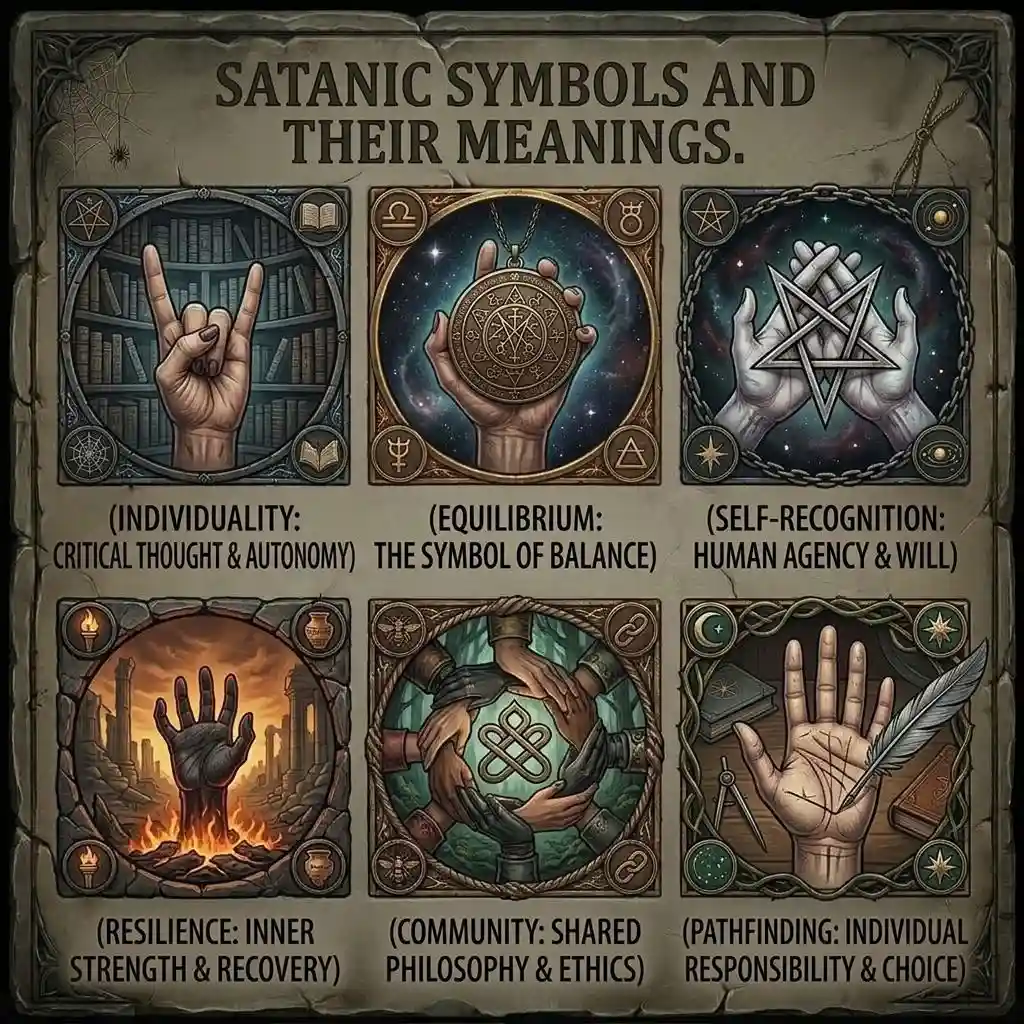
Satanic symbols and their meanings are not universal. Baphomet, for example, has a complicated history and is now used by some modern Satanists as an important religious or philosophical symbol. The Satanic Temple describes Baphomet as a representation connected with pluralism and religious freedom.
Other commonly discussed imagery includes the inverted pentagram, Satanic imagery, serpents, and horned figures. Their meanings should be explained individually rather than treating all of them as interchangeable signs of evil.
Evil Symbols and Their Meanings With Pictures
Evil symbols and their meanings can be easier to understand when each symbol is shown alongside its historical or cultural context. A useful section can examine symbols individually, explaining what the image looks like, where it appears, what it traditionally means, and how modern popular culture uses it.
You can organize the section around examples such as:
- Baphomet — a modern Satanic symbol with complex historical and philosophical associations.
- Inverted pentagram — an image frequently associated with Satanism and occult symbolism, although pentagrams have broader historical uses.
- Devil horns — imagery commonly connected with the Devil in Western popular culture.
- Serpent — a symbol whose meanings range from temptation and danger to wisdom, renewal, and transformation.
- Skull — often associated with death, mortality, danger, or rebellion.
- 666 — a number traditionally connected with the “number of the beast” in the Book of Revelation.
For modern examples, it is also worth noting that The Satanic Temple uses Baphomet imagery as part of its religious identity and has publicly explained its interpretation of that symbolism.
Evil Symbols and Their Meanings With Pictures
A picture-based section can help readers recognize symbols while also preventing common misconceptions. Each image should have a descriptive caption and explain whether the meaning comes from religious tradition, historical symbolism, modern Satanism, folklore, or popular culture.
For accuracy, avoid presenting every dark or occult-looking image as automatically “evil.” Symbolic meanings often change across cultures and time periods, and modern organizations may deliberately reinterpret older imagery. The Satanic Temple, for instance, explicitly states that it does not believe in symbolic “evil” and gives Satan a different philosophical interpretation.
Suggested Table for the Article
| Symbol | Common Association | Meaning Depends On |
| Baphomet | Modern Satanism | Religious and philosophical context |
| Inverted pentagram | Satanism and occult imagery | Historical and modern usage |
| Devil horns | Devil imagery | Religious art and popular culture |
| Serpent | Temptation, danger, renewal | Cultural and religious tradition |
| Skull | Death and mortality | Culture and artistic context |
| 666 | Beast/Apocalyptic symbolism | Biblical and later cultural interpretation |
Evil Symbols and Meanings
Explore commonly associated evil symbols and explain their meanings, origins, and how they have been interpreted in different religious and cultural traditions. This section can distinguish between historical symbols, modern imagery, and symbols that are sometimes incorrectly labeled as “evil.”
Satanist Symbol
Explain symbols associated with Satanism and note that different Satanist traditions do not necessarily use the same imagery. Cover commonly recognized examples such as the Sigil of Baphomet while explaining its modern religious and cultural context rather than treating every dark-looking symbol as inherently Satanist.
Satanic Imagery
Discuss satanic imagery found in religious art, literature, music, films, tattoos, fashion, and popular culture. Explain recurring visual elements such as horns, inverted crosses, pentagrams, serpents, and dark or rebellious imagery, while distinguishing historical religious symbolism from entertainment and contemporary aesthetics.
Symbols of the Devil
Cover symbols traditionally associated with the Devil or demonic figures, including horns, the serpent, the pitchfork, flames, and certain interpretations of the inverted cross. Explain where these associations come from and how their meanings have changed over time.
Symbols of Satanic Worship
Explain imagery that is commonly associated with Satanic worship and distinguish between historical accusations, fictional portrayals, and actual practices or beliefs of different Satanist groups. This section can discuss the pentagram, Sigil of Baphomet, inverted cross, and other frequently referenced symbols without assuming that every person who uses them practices Satanism.
Understanding Satanism vs. Satanic Symbols
Satanism as a Philosophy
Modern Satanism, especially LaVeyan Satanism, is:
- A symbolic belief system
- Focused on individual freedom
- Non-theistic (does not worship a literal Satan)
Symbols vs. Stereotypes
Many people confuse symbols with actions. In reality:
- Symbols represent ideas, not behavior
- Most users are artists, thinkers, or spiritual explorers
- Media often exaggerates meanings
Understanding context is key.
Historical Background of Satanic Symbols
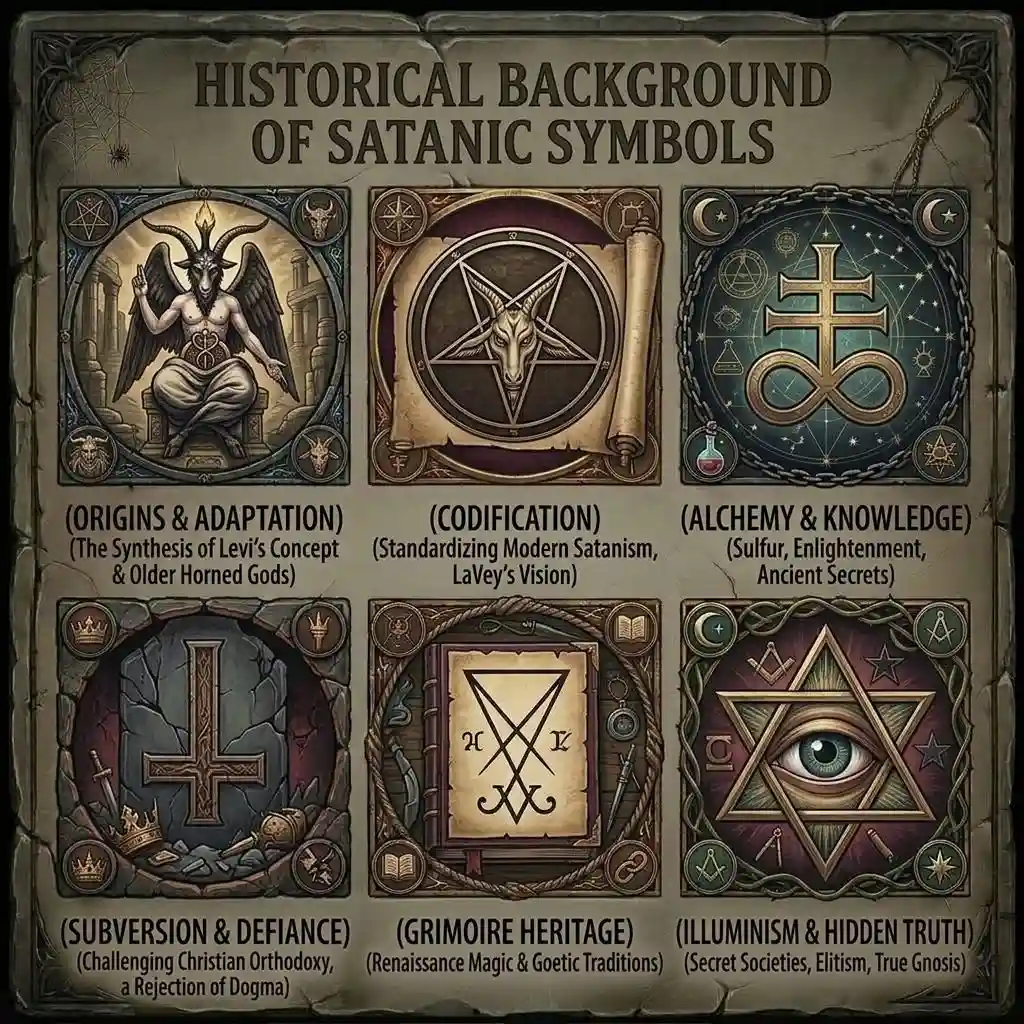
Religious Origins
- The concept of Satan comes from Abrahamic religions
- Early Christian texts used symbols to represent evil or temptation
- Over time, these images evolved into visual icons
Medieval Influence
- Church art used symbolic imagery to teach moral lessons
- Horns, fire, and beasts symbolized sin or chaos
- These images later influenced satanic symbolism
Most Common Satanic Symbols and Their Meanings
The Sigil of Baphomet
- A goat’s head inside a pentagram
- Popularized by the Church of Satan
- Represents balance between opposites
Meaning:
- Human instincts
- Earthly nature
- Duality of existence
The Inverted Pentagram
- Five-pointed star upside down
- Often misunderstood as purely evil
Symbolism:
- Reversal of traditional values
- Focus on physical reality over spiritual
- Used symbolically, not magically
The Sigil of Lucifer
- A symmetrical geometric symbol
- Represents enlightenment and freedom
Meaning:
- Light-bringer
- Knowledge
- Personal independence
Leviathan Cross (Satanic Cross)
- Double cross with infinity symbol
- Often associated with sulfur
Meaning:
- Eternal existence
- Protection
- Strength and stability
Number 666
- Known as the “Number of the Beast”
- Originates from the Book of Revelation
Modern Understanding:
- Symbolic representation of imperfection
- Often used in art, music, and pop culture
- Rarely used seriously in Satanism
Satanic Symbols in Art and Literature
Historical Art
- Renaissance painters used symbolic devil imagery
- Moral storytelling through visuals
Literature
- John Milton’s Paradise Lost
- Satan portrayed as complex and philosophical
- Influenced modern symbolic interpretations
Satanic Symbols in Modern Pop Culture
Music
- Heavy metal and rock genres
- Symbols used for rebellion and shock value
Movies and TV
- Horror genres use symbols for atmosphere
- Often exaggerated or fictional
Fashion and Tattoos
- Self-expression
- Aesthetic or philosophical reasons
- Not necessarily religious
Symbols often lose original meaning and gain new cultural ones.
Practical Uses of Satanic Symbols Today
Personal Identity
- Express individuality
- Represent non-conformity
Artistic Expression
- Visual art
- Graphic design
- Music branding
Philosophy and Thought
- Questioning authority
- Exploring moral complexity
These symbols are mostly symbolic, not literal.
Satanic Symbols and Misconceptions
Common Myths
- All users are dangerous ❌
- Symbols promote violence ❌
- Satanism equals crime ❌
Reality
- Most followers are peaceful
- Symbols are philosophical tools
- Beliefs focus on ethics and responsibility
Education reduces fear.
Impact of Satanic Symbols on Society
Cultural Impact
- Encouraged freedom of expression
- Influenced art, music, and design
Social Discussion
- Spark debates on religion and morality
- Promote critical thinking
Legal and Religious Freedom
- Protected under free speech laws
- Encourage pluralism and tolerance
Understanding symbols supports open dialogue.
Satanic Symbols and Freedom of Expression
In many countries:
- Wearing or displaying symbols is legal
- Protected by freedom of belief
- Misuse or hate crimes are still illegal
Symbols alone are not crimes.
Psychological Perspective on Symbol Use
People use symbols to:
- Explore identity
- Process emotions
- Challenge social norms
This is common across all belief systems.
Educational Value of Studying Satanic Symbols
For students and readers:
- Improves religious literacy
- Encourages critical thinking
- Reduces misinformation
- Promotes respectful discussion
Learning does not equal believing.
Satanic Symbols vs. Occult Symbols
While sometimes overlapping:
- Satanic symbols focus on philosophy
- Occult symbols focus on mysticism
- They are not always connected
Clear distinctions matter.
Interesting Facts About Satanic Symbols
- Baphomet was originally a symbol of balance
- Most Satanists do not believe in Satan
- Symbols are often reused across cultures
- Many designs are modern inventions
- Media shapes public perception heavily
How to Approach Satanic Symbols Respectfully
- Learn before judging
- Understand cultural context
- Avoid stereotypes
- Respect beliefs—even if you disagree
Knowledge builds understanding.
Frequently Asked Questions (FAQs)
1. Are satanic symbols dangerous?
No. Symbols themselves are not harmful; meaning depends on context and use.
2. Do satanic symbols mean devil worship?
Not usually. Most modern Satanists are non-theistic.
3. Why are satanic symbols misunderstood?
Media portrayal and lack of education cause fear and confusion.
4. Are satanic symbols legal?
Yes, in most countries under freedom of expression laws.
5. Can satanic symbols be artistic only?
Absolutely. Many people use them purely for art or fashion.
Conclusion
Satanic symbols are powerful cultural and philosophical signs, not tools of harm. They reflect humanity’s long history of questioning authority, exploring morality, and expressing individuality. By understanding their origins and meanings, we replace fear with knowledge and promote respectful conversation. Learning about satanic symbols helps society embrace diversity, critical thinking, and freedom of belief.

Elliot Kensington
Elliot Kensington is a storyteller at heart, always fascinated by the hidden corners of human imagination. From a young age, he found comfort in books and the worlds they created, inspiring him to craft tales that blend emotion, suspense, and wonder. His writing journey began with short stories that captured fleeting moments of life, and over time, evolved into novels that explore both the extraordinary and the everyday. Elliot believes that every story holds a piece of the soul, and his mission is to connect readers to those moments that linger long after the last page. When he’s not writing, he enjoys exploring nature, capturing moments through photography, and seeking inspiration in the little things.
Books by Elliot Kensington:
-
Shadows of Tomorrow
-
The Whispering Path