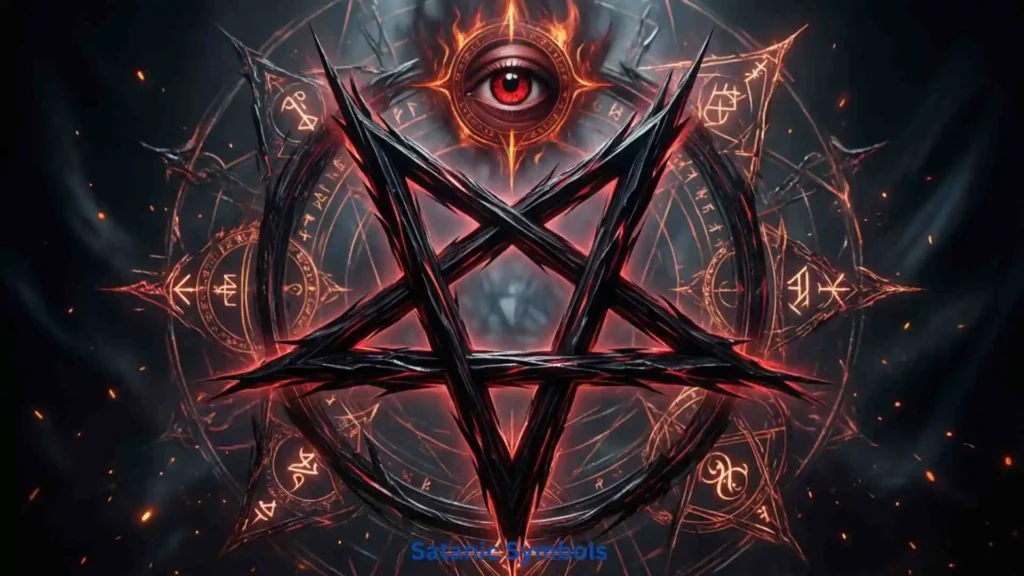
Satanic symbols are visual signs often linked with Satanism, philosophy, rebellion, or symbolic ideas rather than literal evil.
Short answer: they are mostly used to express beliefs, individuality, or artistic freedom.
Today, satanic symbols appear in art, music, fashion, tattoos, and pop culture, making many people curious about their real meanings.
Learning about them helps separate facts from myths in a calm and informed way.
What Are Satanic Symbols?
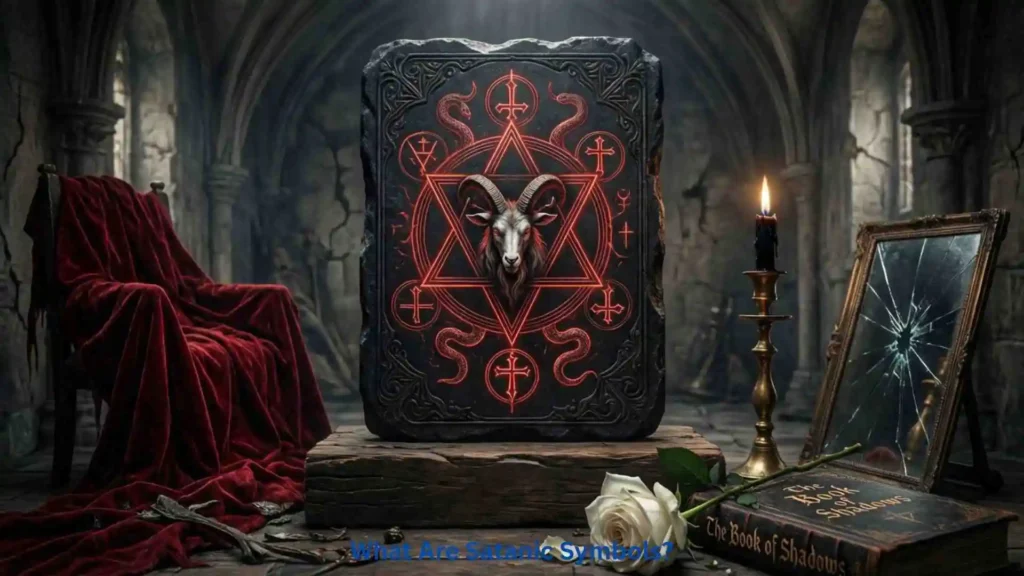
Satanic symbols are icons, shapes, or images linked to Satanism or ideas traditionally associated with Satan, such as rebellion, free will, and questioning authority.
They may represent:
- Philosophy and ideology
- Cultural or artistic expression
- Religious or anti-religious beliefs
- Symbolic opposition to control or dogma
Not all satanic symbols are religious, and not all are used negatively.
Understanding Satanism vs. Satanic Symbols
Satanism as a Philosophy
Modern Satanism, especially LaVeyan Satanism, is:
- A symbolic belief system
- Focused on individual freedom
- Non-theistic (does not worship a literal Satan)
Symbols vs. Stereotypes
Many people confuse symbols with actions. In reality:
- Symbols represent ideas, not behavior
- Most users are artists, thinkers, or spiritual explorers
- Media often exaggerates meanings
Understanding context is key.
Historical Background of Satanic Symbols
Religious Origins
- The concept of Satan comes from Abrahamic religions
- Early Christian texts used symbols to represent evil or temptation
- Over time, these images evolved into visual icons
Medieval Influence
- Church art used symbolic imagery to teach moral lessons
- Horns, fire, and beasts symbolized sin or chaos
- These images later influenced satanic symbolism
Most Common Satanic Symbols and Their Meanings
The Sigil of Baphomet
- A goat’s head inside a pentagram
- Popularized by the Church of Satan
- Represents balance between opposites
Meaning:
- Human instincts
- Earthly nature
- Duality of existence
The Inverted Pentagram
- Five-pointed star upside down
- Often misunderstood as purely evil
Symbolism:
- Reversal of traditional values
- Focus on physical reality over spiritual
- Used symbolically, not magically
The Sigil of Lucifer
- A symmetrical geometric symbol
- Represents enlightenment and freedom
Meaning:
- Light-bringer
- Knowledge
- Personal independence
Leviathan Cross (Satanic Cross)
- Double cross with infinity symbol
- Often associated with sulfur
Meaning:
- Eternal existence
- Protection
- Strength and stability
Number 666
- Known as the “Number of the Beast”
- Originates from the Book of Revelation
Modern Understanding:
- Symbolic representation of imperfection
- Often used in art, music, and pop culture
- Rarely used seriously in Satanism
Satanic Symbols in Art and Literature
Historical Art
- Renaissance painters used symbolic devil imagery
- Moral storytelling through visuals
Literature
- John Milton’s Paradise Lost
- Satan portrayed as complex and philosophical
- Influenced modern symbolic interpretations
Satanic Symbols in Modern Pop Culture
Music
- Heavy metal and rock genres
- Symbols used for rebellion and shock value
Movies and TV
- Horror genres use symbols for atmosphere
- Often exaggerated or fictional
Fashion and Tattoos
- Self-expression
- Aesthetic or philosophical reasons
- Not necessarily religious
Symbols often lose original meaning and gain new cultural ones.
Practical Uses of Satanic Symbols Today
Personal Identity
- Express individuality
- Represent non-conformity
Artistic Expression
- Visual art
- Graphic design
- Music branding
Philosophy and Thought
- Questioning authority
- Exploring moral complexity
These symbols are mostly symbolic, not literal.
Satanic Symbols and Misconceptions
Common Myths
- All users are dangerous ❌
- Symbols promote violence ❌
- Satanism equals crime ❌
Reality
- Most followers are peaceful
- Symbols are philosophical tools
- Beliefs focus on ethics and responsibility
Education reduces fear.
Impact of Satanic Symbols on Society
Cultural Impact
- Encouraged freedom of expression
- Influenced art, music, and design
Social Discussion
- Spark debates on religion and morality
- Promote critical thinking
Legal and Religious Freedom
- Protected under free speech laws
- Encourage pluralism and tolerance
Understanding symbols supports open dialogue.
Satanic Symbols and Freedom of Expression
In many countries:
- Wearing or displaying symbols is legal
- Protected by freedom of belief
- Misuse or hate crimes are still illegal
Symbols alone are not crimes.
Psychological Perspective on Symbol Use
People use symbols to:
- Explore identity
- Process emotions
- Challenge social norms
This is common across all belief systems.
Educational Value of Studying Satanic Symbols
For students and readers:
- Improves religious literacy
- Encourages critical thinking
- Reduces misinformation
- Promotes respectful discussion
Learning does not equal believing.
Satanic Symbols vs. Occult Symbols
While sometimes overlapping:
- Satanic symbols focus on philosophy
- Occult symbols focus on mysticism
- They are not always connected
Clear distinctions matter.
Interesting Facts About Satanic Symbols
- Baphomet was originally a symbol of balance
- Most Satanists do not believe in Satan
- Symbols are often reused across cultures
- Many designs are modern inventions
- Media shapes public perception heavily
How to Approach Satanic Symbols Respectfully
- Learn before judging
- Understand cultural context
- Avoid stereotypes
- Respect beliefs—even if you disagree
Knowledge builds understanding.
Frequently Asked Questions (FAQs)
1. Are satanic symbols dangerous?
No. Symbols themselves are not harmful; meaning depends on context and use.
2. Do satanic symbols mean devil worship?
Not usually. Most modern Satanists are non-theistic.
3. Why are satanic symbols misunderstood?
Media portrayal and lack of education cause fear and confusion.
4. Are satanic symbols legal?
Yes, in most countries under freedom of expression laws.
5. Can satanic symbols be artistic only?
Absolutely. Many people use them purely for art or fashion.
Conclusion
Satanic symbols are powerful cultural and philosophical signs, not tools of harm. They reflect humanity’s long history of questioning authority, exploring morality, and expressing individuality. By understanding their origins and meanings, we replace fear with knowledge and promote respectful conversation. Learning about satanic symbols helps society embrace diversity, critical thinking, and freedom of belief.

Elliot Kensington
Elliot Kensington is a storyteller at heart, always fascinated by the hidden corners of human imagination. From a young age, he found comfort in books and the worlds they created, inspiring him to craft tales that blend emotion, suspense, and wonder. His writing journey began with short stories that captured fleeting moments of life, and over time, evolved into novels that explore both the extraordinary and the everyday. Elliot believes that every story holds a piece of the soul, and his mission is to connect readers to those moments that linger long after the last page. When he’s not writing, he enjoys exploring nature, capturing moments through photography, and seeking inspiration in the little things.
Books by Elliot Kensington:
-
Shadows of Tomorrow
-
The Whispering Path