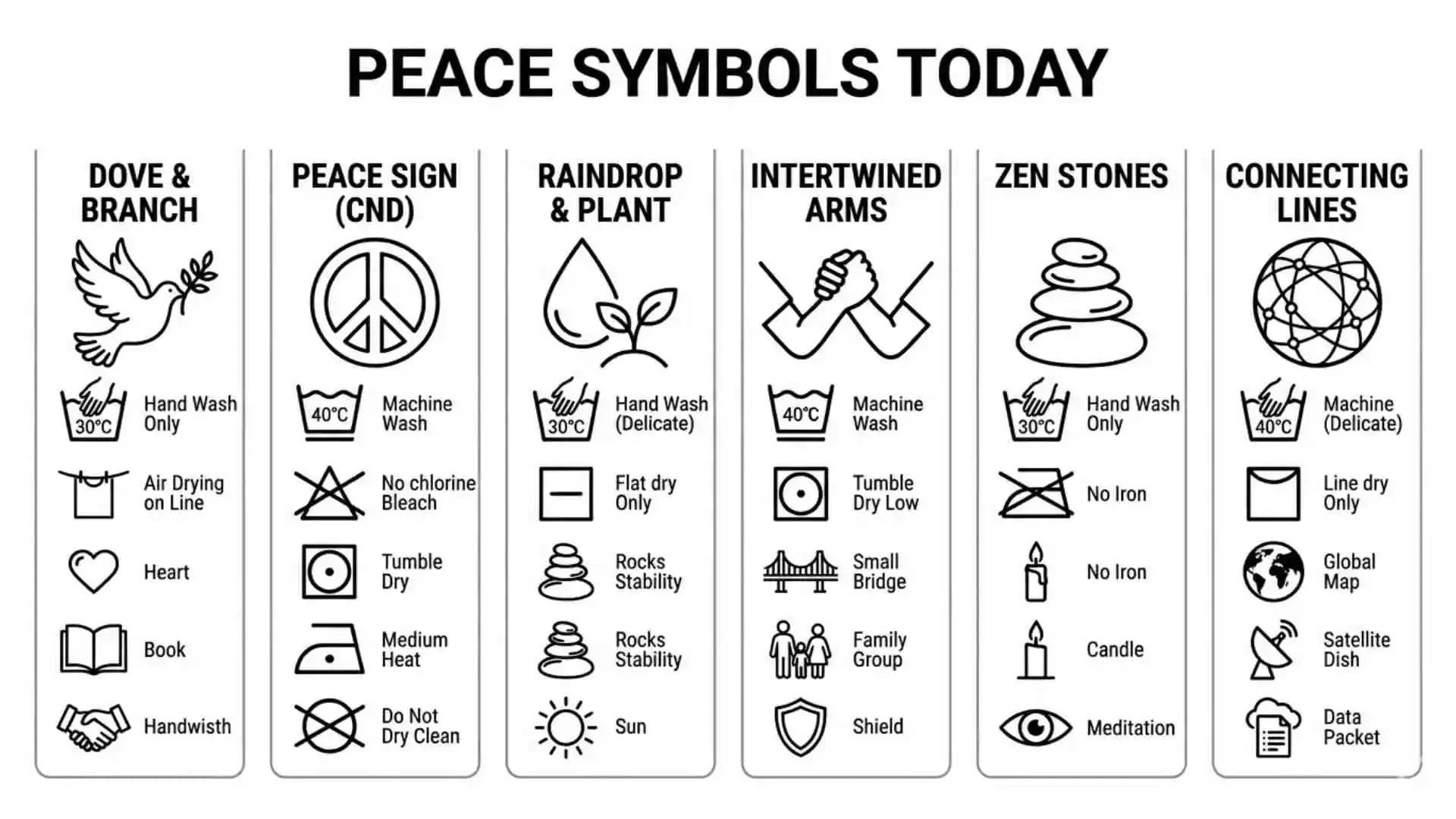
Peace symbols are powerful visual signs that represent harmony, unity, and hope for a better world. In simple words, peace symbols are images or signs used to show the idea of peace, love, and no violence.
From ancient times to modern social media, these symbols continue to inspire people across cultures.
🌍 What Are Peace Symbols?
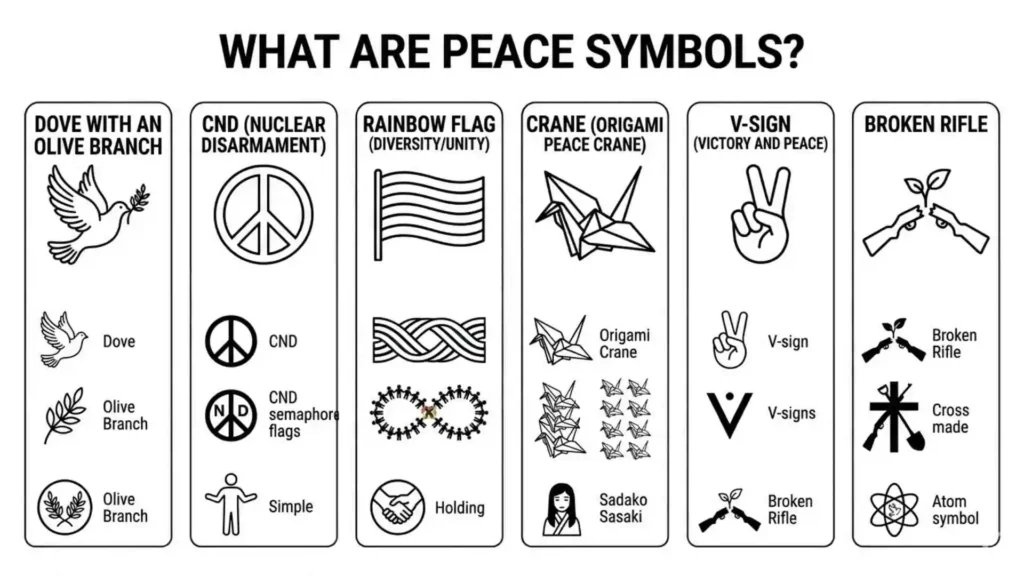
Peace symbols are visual representations that communicate the idea of peace, calmness, unity, and non-violence without using words.
They are used in:
- Protests and movements
- Religious and spiritual practices
- Art and fashion
- Social media and digital communication
These symbols work because they are simple, emotional, and universally understood.
🕊️ Most Popular Peace Symbols and Their Meanings
☮️ The Peace Sign (CND Symbol)
The most recognized peace symbol is the circle with three lines inside.
Meaning:
- Represents nuclear disarmament
- Later became a global symbol of peace and anti-war movements
Interesting Fact:
It was created in 1958 for a British campaign against nuclear weapons.
🕊️ The Dove and Olive Branch
This is one of the oldest peace symbols in history.
Meaning:
- The dove represents purity and calm
- The olive branch stands for peace and reconciliation
Historical Story:
In ancient traditions, a dove carrying an olive branch symbolized the end of conflict and the beginning of peace.
✌️ The Hand Peace Sign
You’ve probably seen people raising two fingers in a “V” shape.
Meaning:
- Victory (originally)
- Now widely used to show peace and positivity
Modern Use:
Popular in selfies, social media posts, and casual greetings.
🌈 Rainbow as a Peace Symbol
The rainbow is often linked with hope, diversity, and unity.
Meaning:
- Harmony among different people
- A peaceful future after difficult times
🧘 Lotus Flower
Common in Eastern cultures, especially in spiritual practices.
Meaning:
- Inner peace
- Growth and enlightenment
📜 History of Peace Symbols
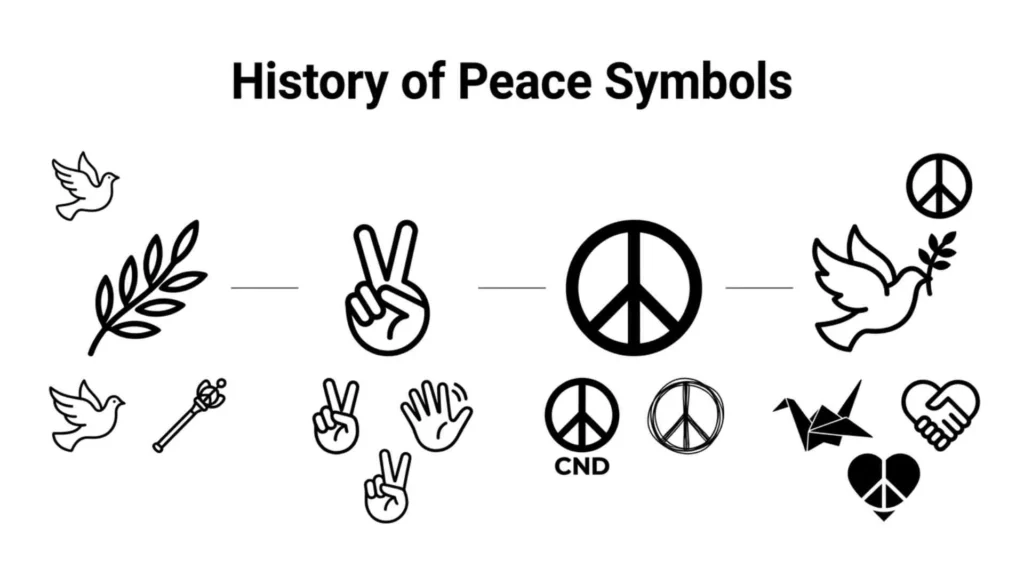
Peace symbols didn’t just appear overnight they evolved over time.
Ancient Times
- Olive branches were used in ancient Greece to signal peace
- Religious symbols promoted harmony and compassion
20th Century
- The peace sign became popular during anti-war protests
- Movements for civil rights and freedom adopted peace imagery
Modern Era
- Peace symbols are now part of global culture
- Used in emojis, fashion, branding, and activism
Peace Symbols Images
Images of peace symbols can help readers quickly recognize the signs, emblems, and objects that have been associated with peace across different cultures and historical periods. Common examples include the peace sign, white dove, olive branch, peace crane, white poppy, rainbow, and V-sign.
When adding images to an article, use clear images with descriptive alt text such as “peace symbols and meanings” or “different symbols of peace around the world.” It is also helpful to place the image close to the section explaining its meaning so readers can connect the visual symbol with its cultural context.
Peace Symbols and Meanings
Peace symbols can communicate ideas such as harmony, reconciliation, nonviolence, hope, freedom, and an end to conflict. However, their meanings can vary depending on their historical and cultural context.
Some widely recognized examples include:
- Peace sign: Associated with peace and opposition to war.
- White dove: Often used as a symbol of peace, hope, and reconciliation.
- Olive branch: Traditionally associated with peace and the ending of conflict.
- Peace crane: Connected with peace, remembrance, and the hope for a world without nuclear war.
- White poppy: Used by some peace organizations to represent remembrance and opposition to war.
- Rainbow: Can represent peace, diversity, unity, and hope in different contexts.
- V-sign: Depending on context, the raised two-finger gesture can represent victory or peace.
Understanding the background of each symbol is important because the same image or gesture may have different meanings in different cultures or historical periods.
Images of Peace Symbols
Images of peace symbols can range from simple graphic signs to natural objects, religious imagery, artwork, flags, and cultural emblems. A visual collection can make it easier for readers to compare symbols and understand how different societies have expressed the idea of peace.
For an informative article, consider showing each symbol alongside its name, meaning, origin or historical association, and common use. This creates a useful visual reference rather than presenting a collection of unexplained images.
What to Include With Each Image
A helpful peace-symbol image section can include:
| Symbol | Common Meaning | Visual Example |
| Peace sign | Peace and nonviolence | ☮ |
| White dove | Peace and reconciliation | Dove illustration |
| Olive branch | Peace and truce | Olive branch |
| Peace crane | Peace and remembrance | Origami crane |
| White poppy | Peace and remembrance | White poppy |
| Rainbow | Unity and hope | Rainbow |
| V-sign | Peace or victory, depending on context | Two raised fingers |
Peace Symbols Around the World
Peace symbols around the world come from different historical, religious, cultural, and political traditions. Some are internationally recognizable, while others are strongly connected to particular communities or movements.
The olive branch, for example, has a long association with peace in Mediterranean and Western traditions. The white dove became especially prominent in modern peace imagery, while the peace crane has a specific connection to Japanese culture and the international peace movement.
Other symbols have meanings that depend heavily on context. The V-sign, for example, has been used to communicate both victory and peace, while the rainbow can carry several different cultural and social meanings.
Exploring these differences helps readers understand that there is not one universal image of peace. Instead, people around the world have developed many visual ways to express hopes for harmony, reconciliation, remembrance, and nonviolence.
10 Symbols of Peace With Names
Here are 10 commonly recognized symbols associated with peace, along with their names and general meanings:
- Peace Sign (☮) — Peace and nonviolence
- White Dove — Peace, hope, and reconciliation
- Olive Branch — Peace and the end of conflict
- Peace Crane — Peace, remembrance, and hope
- White Poppy — Peace and remembrance
- V-Sign — Peace or victory, depending on context
- Rainbow — Unity, hope, and peace in various contexts
- Broken Rifle — Opposition to war and armed conflict
- Peace Bell — A call for peace and international harmony
- White Flag — Surrender, truce, or a request to stop fighting
The meaning of these symbols is not identical everywhere. Historical period, cultural background, and the situation in which a symbol is used can all affect its interpretation.
What Is the Symbol of Peace and Love?
A symbol of peace and love can express harmony, compassion, friendship, unity, and hope without using words. Different cultures and communities have used visual signs, plants, gestures, and objects to communicate these ideas. Common examples include the peace sign, dove, heart, olive branch, rainbow, and certain flowers.
The meaning can also depend on personal or cultural context. For example, someone may choose a heart to express romantic love, while an olive branch may suggest reconciliation or a desire for peace. Understanding the background of each symbol can help you choose one that matches the message you want to share.
7 Symbols of Peace and Love
If you are looking for symbols that combine peaceful and loving ideas, several familiar designs have meaningful associations. Here are seven examples:
- ☮ Peace Sign – Often associated with peace, anti-war movements, and the hope for harmony.
- Dove – Commonly used as a symbol of peace, gentleness, and hope.
- Heart – Represents love, affection, care, and emotional connection.
- Olive Branch – Traditionally associated with peace, reconciliation, and the end of conflict.
- Rainbow – Can symbolize hope, diversity, acceptance, and unity.
- White Rose – Often connected with peace, innocence, remembrance, and respect.
- Infinity Symbol – Can express everlasting love, continuity, and an enduring bond.
These symbols can overlap in meaning, so their interpretation may change depending on how they are designed or used.
Peace Symbols Tattoos: Meanings and Design Ideas
Peace symbols tattoos allow people to carry a visual reminder of harmony, nonviolence, love, or hope. The classic ☮ peace sign is one of the most recognizable choices, while combinations with hearts, doves, flowers, or olive branches can create a more personal design.
A small peace symbol can work well as a simple tattoo, while a larger design can incorporate words, dates, leaves, or other meaningful imagery. Before choosing a design, consider whether you want the tattoo to communicate peace, love, reconciliation, remembrance, or a combination of these ideas.
What Are Symbols of Peace?
Symbols of peace are visual signs or objects that communicate ideas such as harmony, reconciliation, nonviolence, cooperation, and hope. Some have ancient cultural or religious associations, while others became widely recognized through modern social and political movements.
The dove, olive branch, and peace sign ☮ are among the most recognizable examples. Their meanings are not always identical, however. The historical context behind a symbol can be just as important as its appearance.
Common Peace Symbols and Their Meanings
Different peace symbols carry slightly different messages. The ☮ symbol is strongly associated with peace movements, while the olive branch can suggest reconciliation. A dove may communicate peaceful intentions, and a white flag is widely understood as a sign of surrender or a request to stop fighting.
Other designs, such as flowers, hands, or circles, can communicate peace when they are used in a particular cultural or artistic context. When interpreting a symbol, it is useful to consider both its traditional meaning and the context in which it appears.
What Is the Peace Leaf Symbol?
The phrase peace leaf symbol can refer to leaf imagery used to represent peace, harmony, growth, or renewal. Unlike the internationally recognized peace sign, there is not one universally standardized “peace leaf” symbol with a single fixed meaning.
Leaf designs are often combined with an olive branch or other peaceful imagery. In this context, leaves can suggest nature, renewal, balance, and the possibility of peaceful growth. The exact meaning depends on the type of leaf and the cultural or artistic context.
7 Symbols of Peace and Their Meanings
Here are seven widely recognized symbols that can be associated with peace:
| Symbol | Common Meaning |
| ☮ Peace sign | Peace and opposition to war |
| Dove | Peace, hope, and gentleness |
| Olive branch | Reconciliation and peace |
| White flag | Surrender or a request to end conflict |
| White rose | Peace, remembrance, and innocence |
| Rainbow | Hope, unity, and diversity |
| Peaceful hands | Cooperation, understanding, and solidarity |
Not every symbol has exactly the same meaning in every culture. Context, history, religion, and personal interpretation can influence how a peace symbol is understood.
☮ Meaning: What Does the Peace Symbol Mean?
The ☮ symbol is commonly known as the peace sign or peace symbol. It was designed in 1958 by British artist and designer Gerald Holtom for the Campaign for Nuclear Disarmament. The design combines semaphore signals for the letters N and D, representing “nuclear disarmament.”
The symbol later became widely associated with broader peace and anti-war movements. Today, many people use ☮ more generally to express peace, nonviolence, harmony, or a hope for a world without war.
What Is the Symbol for Peace?
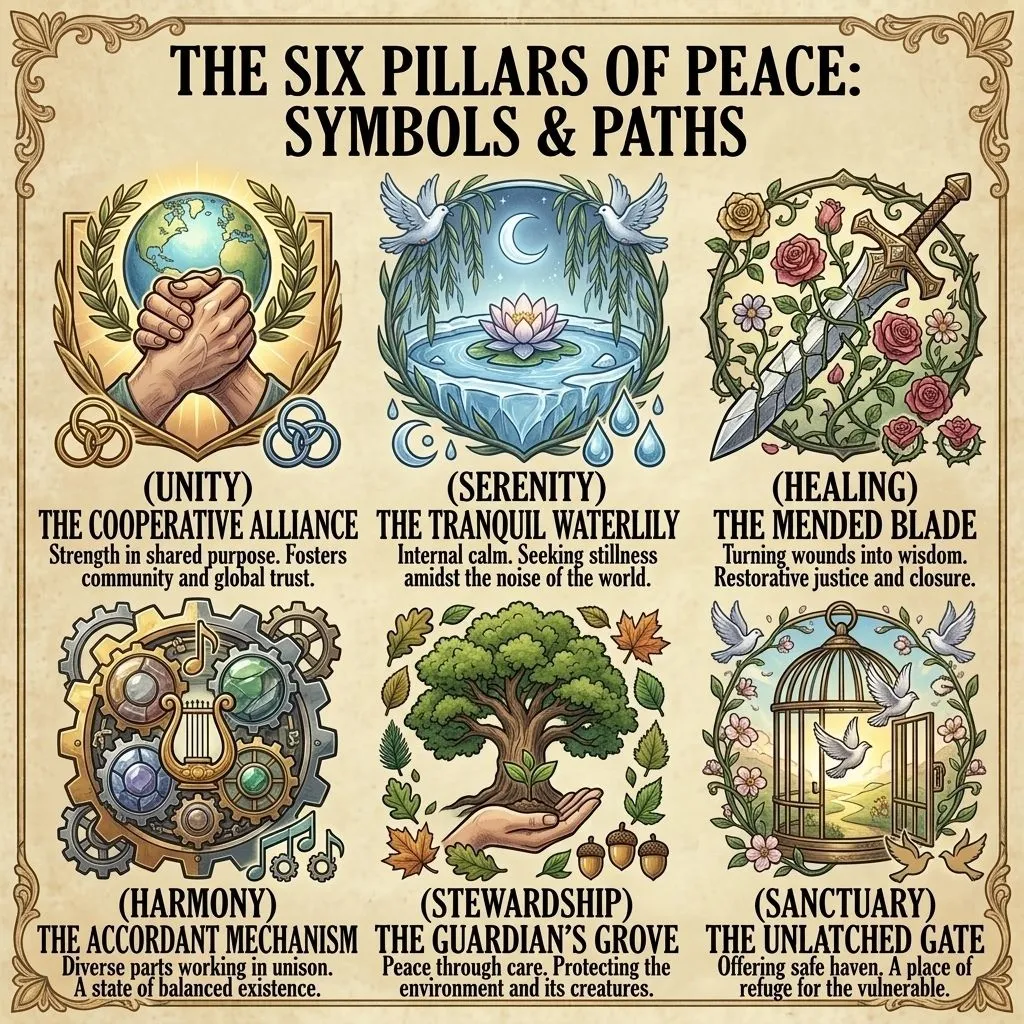
The most widely recognized symbol for peace is the ☮ peace sign, which was created for the British Campaign for Nuclear Disarmament in 1958. Today, it is used around the world to express peace, nonviolence, harmony, and opposition to war.
Other symbols can also communicate peaceful ideas, including the white dove, olive branch, white poppy, and various cultural or religious symbols. Their meanings can differ depending on history, culture, and context.
What Are the Main Symbols of Peace?
There are many symbols of peace, and each one carries its own history and associations. Some are closely connected with peace movements, while others have much older cultural or religious meanings.
Common examples include:
- ☮ Peace sign – peace, nonviolence, and nuclear disarmament
- 🕊 White dove – peace, hope, and reconciliation
- 🫒 Olive branch – peace and the end of conflict
- White poppy – remembrance and opposition to war
- V-sign – victory, peace, or resistance depending on context
- Peace flag – a visual expression of peaceful intentions
- Broken rifle – opposition to armed conflict
Understanding the background of each symbol makes it easier to choose one that matches the message you want to express.
What Are Peace Sign Symbols?
Peace sign symbols are visual marks, images, or gestures used to communicate ideas such as nonviolence, harmony, reconciliation, and freedom from conflict. The ☮ symbol is the most recognizable example.
The peace sign became particularly prominent during campaigns against nuclear weapons and later became associated with wider peace and anti-war movements. The familiar two fingers raised in a V shape can also symbolize peace, although its meaning may change according to the country and situation.
Peace Symbols and Meanings
Peace symbols and meanings vary across cultures and historical periods. A symbol that communicates peace in one context may have a different meaning somewhere else.
| Symbol | Common Meaning |
| ☮ Peace sign | Peace, nonviolence, nuclear disarmament |
| 🕊 White dove | Peace, hope, reconciliation |
| Olive branch | Truce, peace, reconciliation |
| White poppy | Peace and remembrance |
| V-sign | Peace or victory |
| Broken rifle | Opposition to war |
| Peace flag | Peaceful action and solidarity |
These meanings are general rather than universal. Historical and cultural context should always be considered when interpreting a peace symbol.
What Does the Symbol of Peace Mean?
The symbol of peace generally communicates a desire for harmony and an end to violence or conflict. The meaning can be personal as well as social.
For some people, a peace symbol expresses a commitment to nonviolence. For others, it represents hope, forgiveness, cooperation, or the wish for peaceful relationships. The same symbol may therefore carry different emotional meanings depending on how and where it is used.
What Symbolizes Peace?
Several things symbolize peace, including the white dove, olive branch, peace sign, white poppy, and gestures such as the V-sign.
Nature is also commonly used to communicate peaceful ideas. Calm water, flowers, gentle colors, and open hands can suggest tranquility and harmony even when they are not formal peace symbols.
When choosing a symbol, consider whether you want to communicate personal peace, social harmony, reconciliation, nonviolence, or opposition to war. This can help you select an image that fits your intended message.
Understanding Peace Symbolism
Peace symbolism has developed through different cultures, religions, political movements, and historical events. Some symbols are thousands of years old, while others became recognizable during modern peace campaigns.
The olive branch, for example, has long been associated with peace and reconciliation. The dove also developed strong peaceful associations through religious and cultural traditions. In modern history, the ☮ symbol became closely connected with nuclear disarmament and anti-war movements.
This variety shows that peace symbolism is not limited to one image. Different communities have created and adopted symbols to express their hopes for cooperation and an end to violence.
Symbols of Peace in Different Cultures
Symbols of peace can have different origins and interpretations around the world. The dove and olive branch are widely recognized in Western traditions, while other cultures use their own imagery, colors, gestures, or objects to communicate harmony and reconciliation.
It is important not to assume that every symbol has exactly the same meaning everywhere. Historical background, religious traditions, and local customs can influence how a symbol is understood.
Peace Symbols for Tattoos and Personal Expression
Peace symbols are also popular choices for tattoos, jewelry, artwork, clothing, and decorative designs. A person may choose a peace sign to express nonviolence, a dove to represent hope, or an olive branch to symbolize reconciliation.
For a tattoo or personal design, the meaning can be made more individual by combining a peace symbol with names, dates, flowers, words, or other imagery. The final interpretation depends on the person and the context behind the design.
Why Are Peace Symbols Still Important?
Peace symbols remain useful because they communicate a complex idea quickly and visually. A simple sign, animal, plant, or gesture can express a wish for harmony without requiring a long explanation.
They are used in artwork, demonstrations, educational materials, memorials, personal accessories, tattoos, and international peace campaigns. Their continued use also reflects the enduring human desire for cooperation, safety, reconciliation, and peaceful relationships.
💡 Why Peace Symbols Are Important
Peace symbols are more than just drawings—they have real impact.
🌟 Benefits for Society
- Promote unity among people
- Encourage non-violence
- Raise awareness about global issues
- Inspire hope during difficult times
They act as silent messages that bring people together.
🧠 Psychological Impact of Peace Symbols
Seeing a peace symbol can instantly affect your mood.
Positive Effects:
- Creates a sense of calm
- Reduces stress
- Encourages kindness
For example, a simple ☮️ emoji in a message can make it feel warmer and friendlier.
🌐 Peace Symbols in Different Cultures
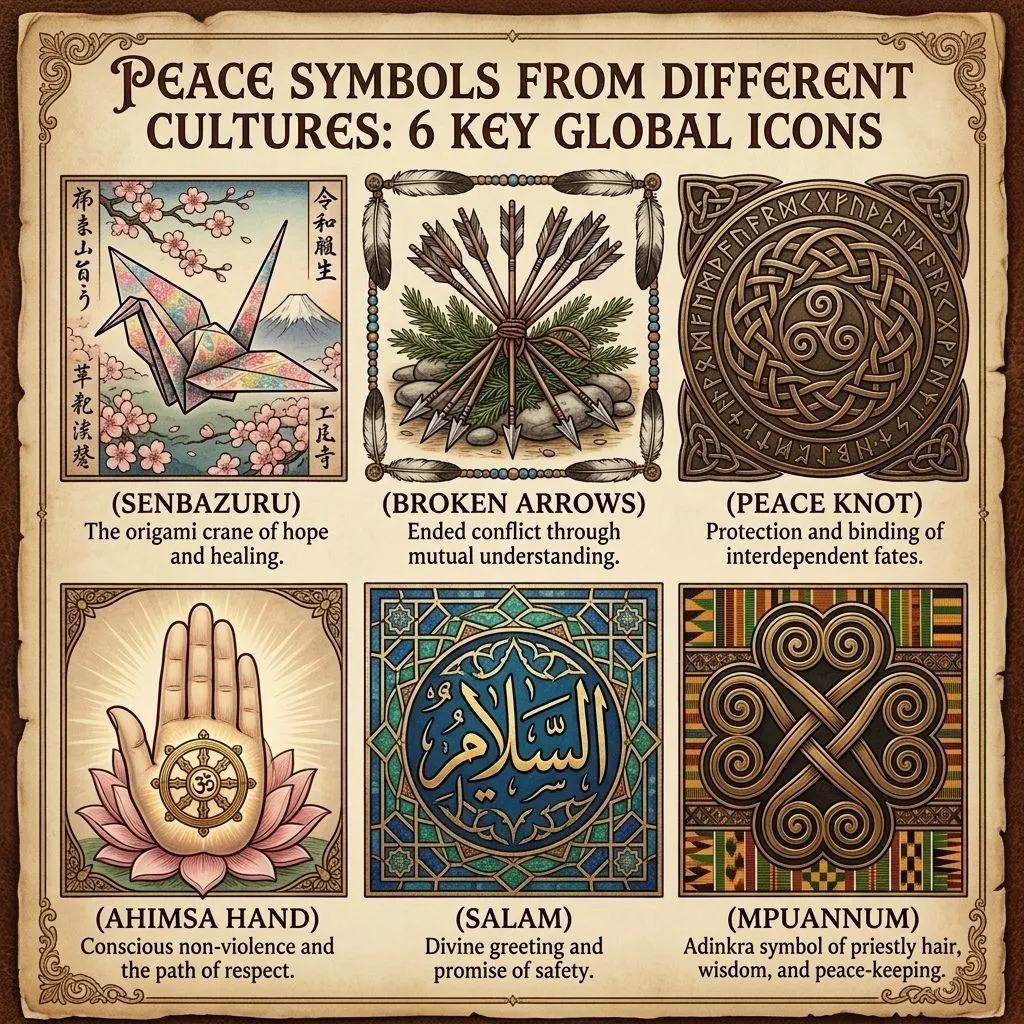
Western Cultures
- Focus on the peace sign and dove
- Strong connection with activism
Eastern Cultures
- Use symbols like the lotus
- Emphasis on inner peace and spirituality
Middle Eastern & South Asian Cultures
- Peace linked with faith, prayers, and harmony
- Symbols often combined with religious meaning
📱 Peace Symbols in Modern Digital Life
Today, peace symbols are everywhere online.
Social Media Use:
- Instagram captions
- TikTok videos promoting positivity
- WhatsApp messages with emojis
Popular Emojis:
- ☮️ Peace sign
- ✌️ Victory hand
- 🕊️ Dove
These symbols help people express emotions quickly and clearly.
🎨 Peace Symbols in Art and Fashion
Peace symbols are widely used in creative industries.
In Art:
- Paintings showing unity and harmony
- Street art promoting anti-violence messages
In Fashion:
- T-shirts with peace signs
- Jewelry featuring doves or symbols
- Accessories with positive messages
They allow people to wear their beliefs.
🏫 Practical Examples of Using Peace Symbols
Here’s how people use peace symbols in daily life:
- Writing ✌️ in messages to end conversations positively
- Using ☮️ in school projects about global peace
- Wearing peace-themed clothing
- Sharing peace quotes on social media
Even small uses can spread positivity.
📖 Stories and Legends Behind Peace Symbols
The Dove Story
In ancient stories, a dove returned with an olive branch, showing that danger had passed and peace had returned.
The Peace Sign Movement
During the 1960s, young people used the peace sign in protests against war. It became a symbol of hope and change.
⚠️ Misunderstandings About Peace Symbols
Some people misinterpret peace symbols.
Common Misconceptions:
- Thinking they only relate to politics
- Believing they have one fixed meaning
- Ignoring cultural differences
In reality, peace symbols are flexible and universal.
🔄 Similar Symbols and Their Differences
| Symbol | Meaning | Difference |
| ☮️ Peace Sign | Global peace | Political origin |
| 🕊️ Dove | Calm & purity | Religious roots |
| ✌️ Hand Sign | Victory/peace | Casual use |
| 🌸 Lotus | Inner peace | Spiritual meaning |
❤️ How Peace Symbols Inspire People
Peace symbols often motivate people to:
- Be kinder
- Avoid conflict
- Support others
- Think positively
They remind us that peace starts with small actions.
🚫 When Not to Use Peace Symbols
Even positive symbols have limits.
Avoid using them:
- In serious political conflicts without understanding context
- In situations where they may seem insensitive
- Just for trend without meaning
Respect and awareness are important.
📊 Interesting Facts About Peace Symbols
- The peace sign is recognized worldwide
- The dove symbol is over 2000 years old
- Emojis have made peace symbols more popular than ever
- Many global organizations use peace imagery
❓ FAQs About Peace Symbols
1. What is the most common peace symbol?
The ☮️ peace sign is the most widely recognized symbol globally.
2. What does the dove symbolize?
It represents peace, purity, and hope.
3. Are peace symbols the same in every culture?
No, meanings can vary slightly depending on cultural beliefs.
4. Why do people use peace symbols online?
To express positivity, calmness, and friendly intentions.
5. Can peace symbols have negative meanings?
Generally no, but misuse or context can change interpretation.
🏁 Conclusion
Peace symbols are simple yet powerful tools that connect people across the world. Whether it’s a dove, a hand sign, or a small emoji, each symbol carries a message of hope, unity, and kindness.
In a world full of noise and conflict, these symbols remind us of something important peace is always possible, and it often starts with us.

Isaac Wellington
I’ve always been fascinated by the hidden stories in everyday life and the power of words to change how we see the world. Writing, for me, isn’t just a profession—it’s a way to explore human emotions, mysteries, and the unexpected twists of life. Over the years, I’ve dedicated myself to creating stories that linger in your mind long after the last page. When I’m not writing, you’ll usually find me wandering through old libraries or sketching ideas in a notebook. I believe every story has a heartbeat, and I aim to capture that rhythm in my work. Join me on a journey where imagination meets reality, and the ordinary becomes extraordinary.
Books:
-
Shadows of the Forgotten
-
Whispers Through Time