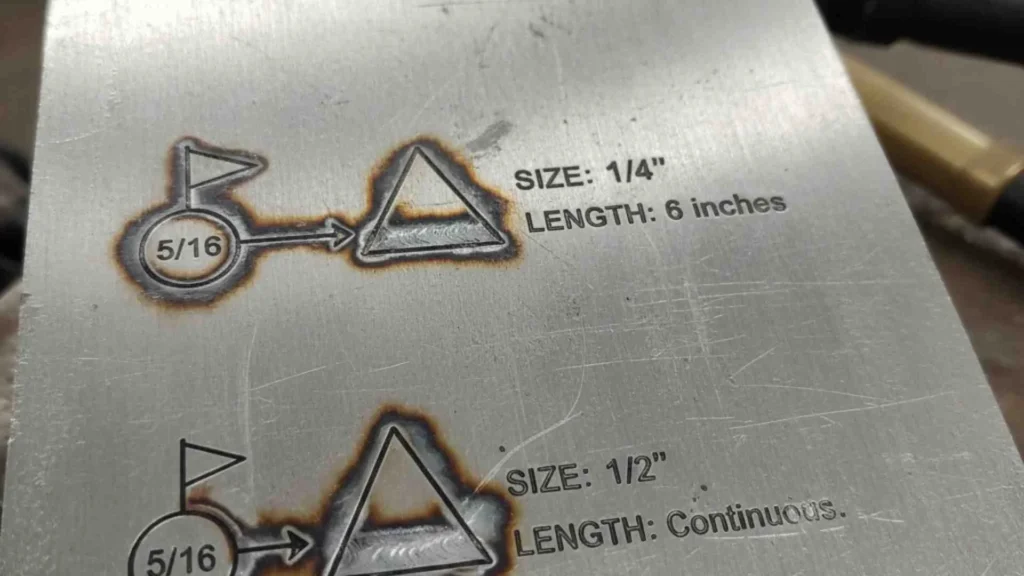
Weld symbols are visual signs used on engineering drawings and blueprints to show how metal pieces should be joined.
Short answer: weld symbols tell welders exactly what type of weld to make, where to place it, and how to finish it.
Understanding weld symbols is essential for beginners, students, and professionals because it ensures accurate construction, safety, and high-quality results in welding projects.
What Are Weld Symbols?
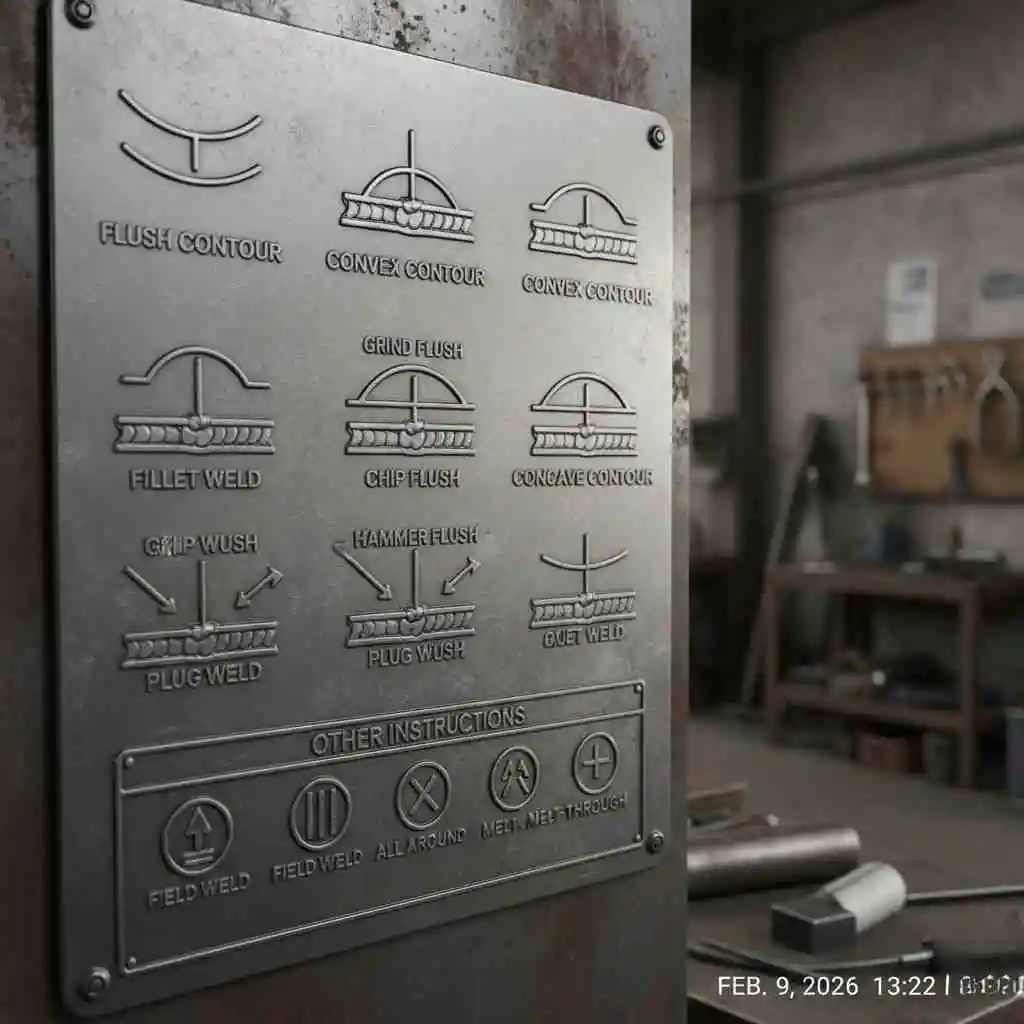
Weld symbols are notations on technical drawings that specify the details of a weld. They convey information such as:
- Type of weld (fillet, groove, plug, slot, etc.)
- Size and length of weld
- Location of weld relative to the parts
- Finish, contour, and other instructions
These symbols help welders understand exactly how to execute a joint without ambiguity.
History of Weld Symbols
Early Welding Practices
- Welding started as a manual craft centuries ago
- Early welders relied on experience and verbal instructions
- Lack of standardization caused inconsistencies in metal structures
Standardization of Weld Symbols
- Early 20th century: American Welding Society (AWS) introduced standard symbols
- ISO standards later made symbols globally consistent
- Modern engineering drawings now use standardized weld symbols for clarity
Basic Components of a Weld Symbol
Weld symbols usually consist of four main components:
- Reference Line – The horizontal line where all symbols are attached
- Arrow Line – Points to the joint that needs welding
- Basic Weld Symbol – Indicates the type of weld (triangle, square, circle, etc.)
- Supplementary Symbols – Show additional instructions like contour, finish, or field weld
Understanding these components is key to reading welding drawings accurately.
Common Types of Weld Symbols
Fillet Weld Symbol
- Looks like a right-angle triangle on the reference line
- Joins two pieces at a 90-degree angle
- Example: Joining a metal plate to a frame
Groove Weld Symbol
- Used when edges of plates need a groove to fill with weld metal
- Types include V-groove, U-groove, and bevel-groove
- Ensures strong, flush joints for structural integrity
Plug and Slot Weld Symbols
- Circular or elongated slot symbol
- Used to fill holes or slots to connect overlapping plates
- Common in automotive and sheet metal work
Spot and Projection Weld Symbols
- Circle with a line for spot welding
- Small projections on the surface are fused
- Widely used in mass production and automotive industry
Edge Weld Symbol
- Parallel lines along the edge of a plate
- Joins overlapping metal edges
- Often used in thin sheet metal
Supplementary Weld Symbols
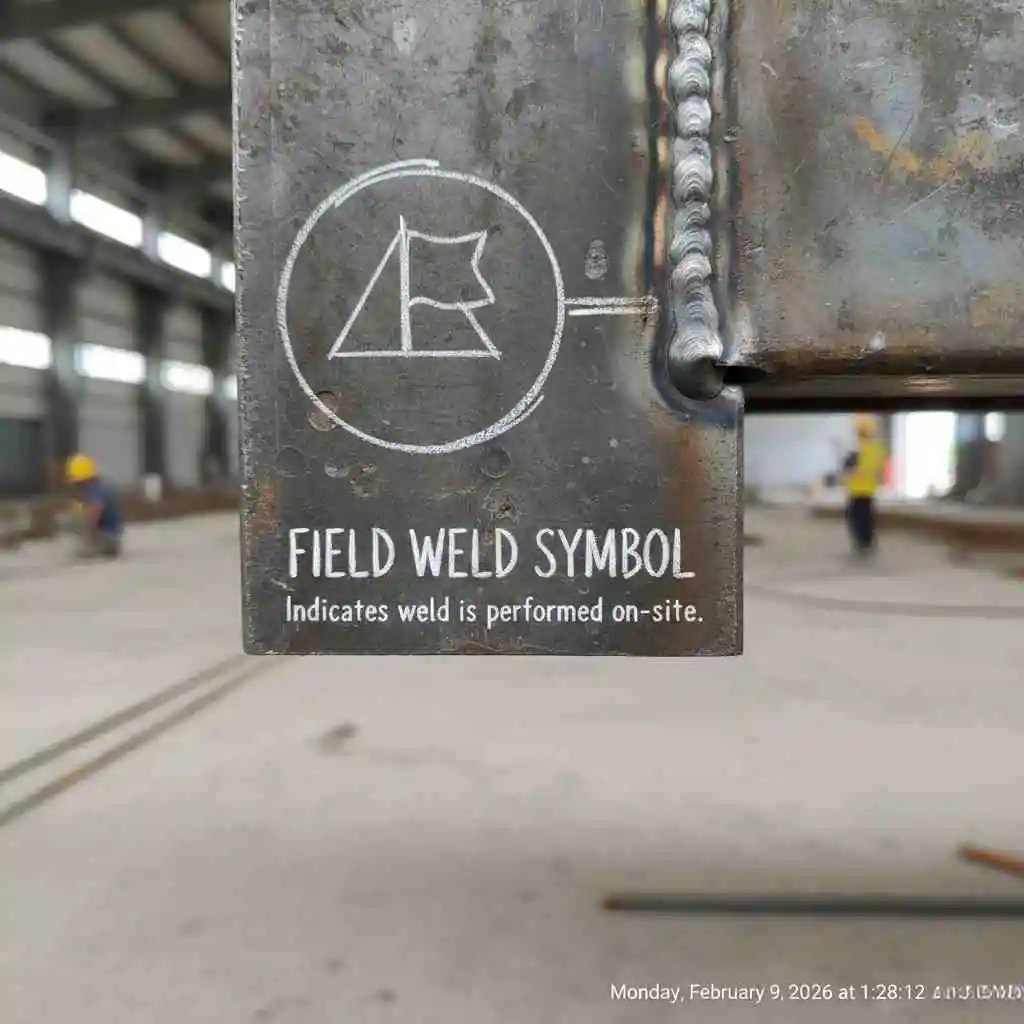
- Contour Symbols: Flat, convex, concave shapes
- Finish Symbols: Grinding, machining, or other surface finishes
- Field Weld Symbol: Indicates weld is performed on-site
- All-Around Symbol: Circle around reference line for continuous weld
Supplementary symbols help specify precision and quality requirements.
Reading a Weld Symbol Step by Step
- Identify the reference line
- Check the arrow line pointing to the joint
- Recognize the basic weld symbol
- Look for dimensions (length, size, pitch)
- Note any supplementary symbols
- Determine if it’s a field weld or shop weld
By following these steps, welders can execute jobs correctly every time.
Practical Applications of Weld Symbols
Construction Industry
- Steel beams, bridges, and pipelines
- Ensures safety and durability
- Communicates welding instructions across large teams
Manufacturing Industry
- Automotive frames, machinery parts, and shipbuilding
- Improves production efficiency
- Reduces errors and scrap material
Educational and Training Use
- Engineering students learn to read symbols
- Welding schools use standardized drawings for practice
- Prepares students for real-world fabrication work
Benefits of Using Weld Symbols
- Accuracy: Prevents miscommunication in fabrication
- Consistency: Standardizes weld quality across projects
- Efficiency: Speeds up production and reduces mistakes
- Safety: Ensures strong, reliable joints
- Cost-effective: Reduces material waste and rework
Common Mistakes in Reading Weld Symbols
- Confusing arrow side and other side welds
- Ignoring supplementary symbols
- Misreading dimensions or scale
- Overlooking field weld indicators
Avoiding these mistakes ensures strong and safe welds.
Real-World Examples of Weld Symbols
Example 1: Bridge Construction
- Groove welds for steel beams
- Continuous all-around fillet welds on joints
Example 2: Automotive Body Panels
- Spot and plug welds
- Edge welds for thin sheet metals
Example 3: Industrial Machinery
- Bevel groove welds on pressure vessels
- Field welds for on-site assembly
These examples show how weld symbols translate drawings into strong, functional structures.
Impact of Weld Symbols on Society
Industrial Advancement
- Critical in modern manufacturing
- Supports mass production and automation
Infrastructure Safety
- Bridges, buildings, and pipelines rely on correct welding
- Prevents structural failures
Educational Impact
- Teaches students universal engineering communication
- Prepares future welders and engineers
Interesting Facts About Weld Symbols
- Fillet welds are the most common in the industry
- Spot welds are widely used in the automotive sector
- Supplementary symbols indicate weld quality and aesthetics
- International standards like ISO 2553 ensure global consistency
- Digital CAD software often incorporates weld symbols automatically
Modern Tools for Reading Weld Symbols
- CAD Software: AutoCAD and SolidWorks integrate symbols
- Digital Welding Guides: Online charts and apps
- Training Simulators: Allow students to practice virtual welding based on symbols
Technology makes learning and applying weld symbols easier and more accurate.
Tips for Beginners to Learn Weld Symbols
- Start with basic fillet and groove welds
- Use visual charts and reference manuals
- Practice on small projects
- Study both shop and field weld symbols
- Review real engineering drawings
Hands-on experience combined with theory ensures mastery.
Frequently Asked Questions (FAQs)
1. What are weld symbols used for?
They communicate detailed welding instructions on technical drawings.
2. Are weld symbols standardized worldwide?
Yes, most follow AWS or ISO standards for consistency.
3. What is the most common weld symbol?
The fillet weld symbol is widely used in construction and manufacturing.
4. Can beginners read weld symbols easily?
Yes, with practice and visual guides, beginners can quickly learn.
5. Do weld symbols include size and length information?
Yes, they often specify dimensions, pitch, and type of weld.
Conclusion
Weld symbols are the universal language of welding, allowing engineers and welders to communicate precise instructions efficiently.
They improve accuracy, safety, and quality in construction, manufacturing, and metal fabrication.
By understanding weld symbols, students, beginners, and professionals can ensure strong, reliable, and cost-effective welds, bridging the gap between drawings and real-world applications.

Isaac Wellington
I’ve always been fascinated by the hidden stories in everyday life and the power of words to change how we see the world. Writing, for me, isn’t just a profession—it’s a way to explore human emotions, mysteries, and the unexpected twists of life. Over the years, I’ve dedicated myself to creating stories that linger in your mind long after the last page. When I’m not writing, you’ll usually find me wandering through old libraries or sketching ideas in a notebook. I believe every story has a heartbeat, and I aim to capture that rhythm in my work. Join me on a journey where imagination meets reality, and the ordinary becomes extraordinary.
Books:
-
Shadows of the Forgotten
-
Whispers Through Time