
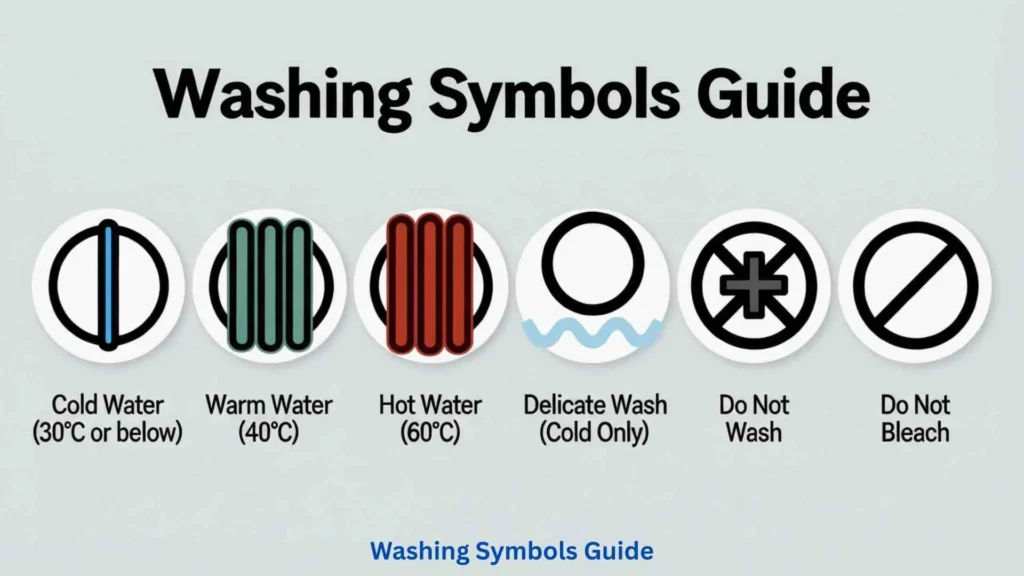
Washing symbols are the small signs you see on clothing labels that tell you how to wash, dry, and iron your clothes safely.
Short answer: they help prevent shrinking, fading, and fabric damage.
Many people ignore these symbols, but understanding washing symbols can save your favorite clothes and your money.
Once you learn them, laundry becomes easier and stress-free.
What Are Washing Symbols?
Washing symbols are standardized care labels printed on garments to guide proper cleaning and maintenance. They provide instructions about:
- Washing methods
- Water temperature
- Drying techniques
- Ironing limits
- Bleaching rules
These symbols are used worldwide, making them easy to understand regardless of language.
Why Washing Symbols Are Important
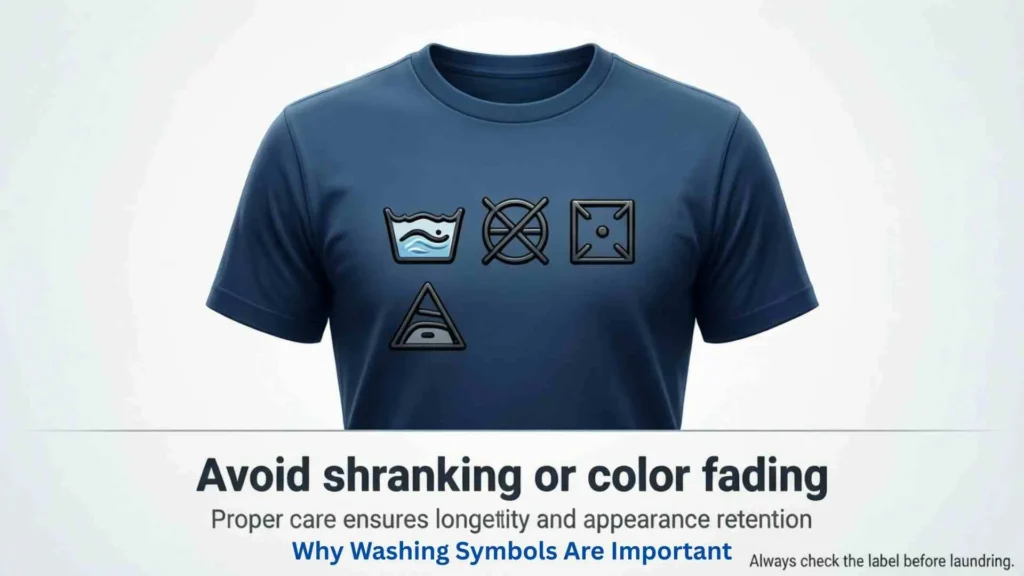
Washing symbols help people:
- Prevent fabric damage
- Maintain clothing quality
- Save money on replacements
- Avoid shrinking or color fading
- Extend the life of garments
For busy households, washing symbols reduce guesswork and laundry mistakes.
History of Washing Symbols
Early Clothing Care
Before symbols, clothing care was passed verbally or through experience. People often damaged clothes because instructions were unclear.
Introduction of Care Labels
In the mid-20th century:
- Textile industries standardized care symbols
- International systems were introduced
- Labels became legally required in many countries
Today, washing symbols are globally recognized and regulated.
The Five Main Categories of Washing Symbols
All washing symbols fall into five basic groups:
- Washing
- Bleaching
- Drying
- Ironing
- Dry Cleaning
Each group uses a unique shape to identify its function.
Washing Symbols Explained (The Tub Icon)
Basic Wash Symbol
- Looks like a bucket filled with water
- Indicates machine or hand washing
Temperature Symbols
- Numbers (30, 40, 60) show water temperature in Celsius
- Dots may also represent temperature levels
Gentle Wash
- One line under the tub means gentle cycle
- Two lines mean very delicate wash
Hand Wash Symbol
- A hand inside the tub
- Indicates hand washing only
Do Not Wash
- Tub with an X through it
- Means no water washing allowed
These washing symbols protect delicate fabrics like silk and wool.
Bleaching Symbols (The Triangle Icon)
Bleach Allowed
- Plain triangle
- Any bleach can be used
Non-Chlorine Bleach Only
- Triangle with diagonal lines
- Use oxygen or color-safe bleach
Do Not Bleach
- Triangle with an X
- Bleach will damage the fabric
Bleaching symbols prevent fabric weakening and color loss.
Drying Symbols (The Square Icon)
Tumble Dry Allowed
- Square with a circle inside
Temperature Dots
- One dot: low heat
- Two dots: medium heat
- Three dots: high heat
Line Dry
- Vertical line inside square
- Hang clothes to dry
Flat Dry
- Horizontal line
- Lay garment flat
Do Not Tumble Dry
- Crossed-out circle
Drying symbols are essential for preventing shrinkage.
Ironing Symbols (The Iron Icon)
Ironing Allowed
- Simple iron shape
Temperature Dots
- One dot: low heat (synthetics)
- Two dots: medium heat (cotton blends)
- Three dots: high heat (linen)
Do Not Iron
- Iron with an X
Ironing symbols protect fabric texture and finish.
Dry Cleaning Symbols (The Circle Icon)
Dry Clean Allowed
- Plain circle
Letter Codes
- P, F, or A show solvent types
Do Not Dry Clean
- Circle with an X
These washing symbols are common on formal wear.
Practical Examples of Washing Symbols in Daily Life
Example 1: Cotton T-Shirt
- Wash at 40°C
- Tumble dry low
- Iron medium heat
Example 2: Wool Sweater
- Hand wash only
- Lay flat to dry
- Do not tumble dry
Example 3: Silk Dress
- Do not wash
- Dry clean only
- Low heat iron
Understanding washing symbols avoids costly mistakes.
Washing Symbols for Different Fabrics
Natural Fabrics
- Cotton: heat-resistant
- Wool: delicate and shrink-prone
- Linen: high heat tolerant
Synthetic Fabrics
- Polyester: low heat recommended
- Nylon: gentle cycles
- Acrylic: avoid high temperatures
Fabric type determines symbol combinations.
Washing Symbols in Washing Machines
Modern washing machines:
- Match symbols to preset cycles
- Use icons instead of text
- Help users choose correct settings
This improves efficiency and garment care.
Impact of Washing Symbols on Society
Environmental Benefits
- Reduce water waste
- Lower energy consumption
- Support sustainable clothing care
Economic Benefits
- Extend garment lifespan
- Reduce clothing waste
- Save household money
Educational Value
- Teach responsibility
- Improve household skills
- Encourage fabric awareness
Washing symbols promote smarter consumption.
Washing Symbols and Fashion Industry
Fashion brands rely on washing symbols to:
- Protect brand quality
- Reduce customer complaints
- Ensure global understanding
Luxury brands especially depend on precise care labels.
Common Washing Symbol Mistakes
- Ignoring temperature limits
- Overusing bleach
- Tumble drying delicate items
- Ironing without checking symbols
Learning washing symbols prevents these errors.
Tips for Remembering Washing Symbols
- Group symbols by shape
- Use laundry charts
- Take photos of labels
- Practice regularly
With time, symbols become easy to recognize.
Washing Symbols Around the World
While symbols are universal:
- Some countries include text
- Metric temperatures vary
- Icon designs may differ slightly
The meaning remains consistent globally.
Modern Washing Symbols and Technology
Smart Labels
- QR codes for care instructions
- Digital guides
Eco-Friendly Symbols
- Water-saving icons
- Sustainable care signs
Laundry care continues to evolve.
Interesting Facts About Washing Symbols
- Introduced widely in the 1960s
- Recognized by ISO standards
- Over 40 common symbols exist
- Misuse leads to millions of damaged clothes yearly
- Symbols reduce textile waste globally
Washing Symbols for Students and Beginners
Why beginners should learn washing symbols:
- Build independence
- Avoid wardrobe damage
- Develop life skills
They are essential knowledge for daily life.
Frequently Asked Questions (FAQs)
1. What are washing symbols used for?
They guide proper washing, drying, and ironing of clothes.
2. Are washing symbols the same worldwide?
Yes, most are internationally standardized.
3. What happens if I ignore washing symbols?
Clothes may shrink, fade, or get damaged.
4. Why do some clothes say “do not wash”?
Some fabrics require dry cleaning only.
5. How can I learn washing symbols easily?
Use charts, practice, and follow garment labels regularly.
Conclusion
Washing symbols are the silent guardians of your clothes. They help you care for fabrics properly, reduce waste, and save money.
By understanding these simple symbols, anyone can become confident in laundry care no matter their age or experience.
In a world focused on sustainability and smart living, washing symbols play a vital role in protecting both clothing and the environment.

Elliot Kensington
Elliot Kensington is a storyteller at heart, always fascinated by the hidden corners of human imagination. From a young age, he found comfort in books and the worlds they created, inspiring him to craft tales that blend emotion, suspense, and wonder. His writing journey began with short stories that captured fleeting moments of life, and over time, evolved into novels that explore both the extraordinary and the everyday. Elliot believes that every story holds a piece of the soul, and his mission is to connect readers to those moments that linger long after the last page. When he’s not writing, he enjoys exploring nature, capturing moments through photography, and seeking inspiration in the little things.
Books by Elliot Kensington:
-
Shadows of Tomorrow
-
The Whispering Path