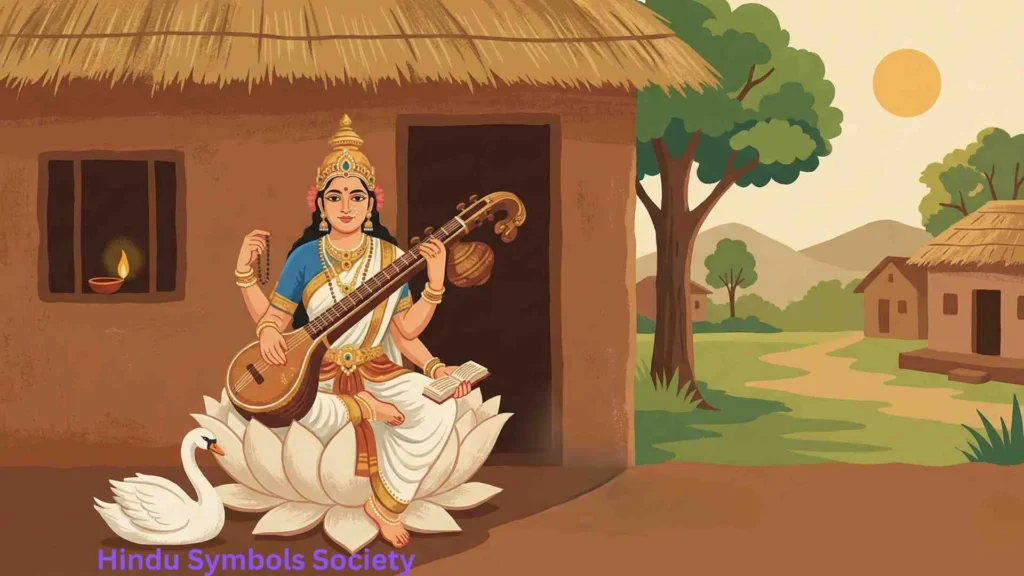
Hindu symbols are sacred signs and visual representations used in Hinduism to express deep spiritual ideas, beliefs, and traditions.
In short, Hindu symbols help people understand complex concepts like life, creation, energy, and the divine.
These symbols are seen in temples, homes, rituals, art, and daily life, making them an important part of Hindu culture and spirituality.
What Are Hindu Symbols?
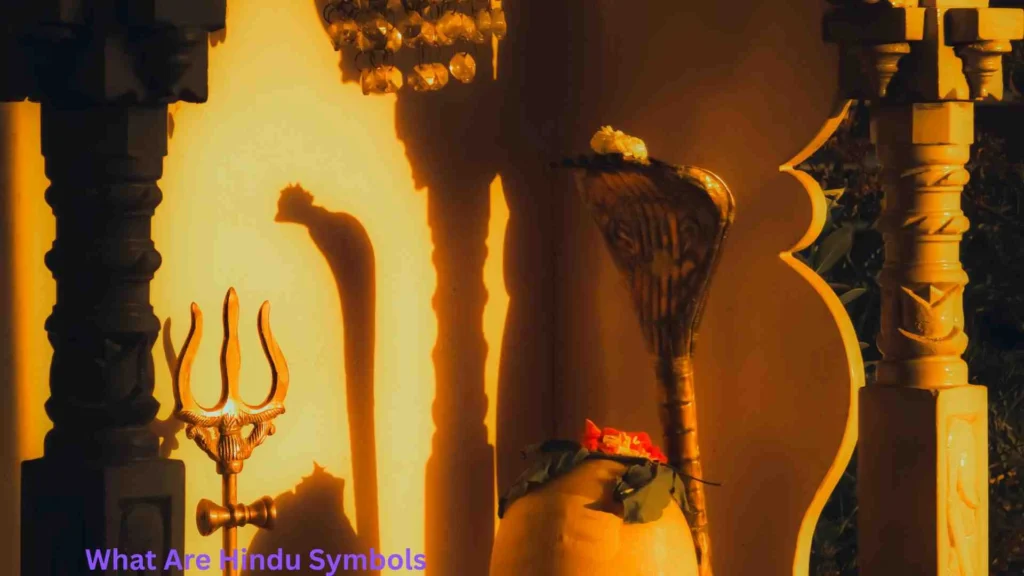
Hindu symbols are visual elements, signs, or icons that represent spiritual truths, cosmic principles, and religious beliefs in Hinduism. They are used to:
- Communicate deep philosophical ideas
- Represent gods and goddesses
- Guide meditation and worship
- Bring positivity and protection
Unlike simple designs, Hindu symbols often carry multiple layers of meaning—spiritual, cultural, and historical.
Importance of Hindu Symbols in Daily Life
Hindu symbols are not just religious images—they are part of everyday living.
Where You See Them
- At home entrances (like rangoli or sacred marks)
- In temples and prayer rooms
- On jewelry and clothing
- In festivals and ceremonies
Why They Matter
- Promote peace and positivity
- Strengthen faith and devotion
- Serve as reminders of moral values
- Help in meditation and focus
The Most Popular Hindu Symbols and Their Meanings
1. Om (ॐ) – The Sound of the Universe
Om is the most sacred Hindu symbol.
Meaning and Significance
- Represents the ultimate reality or Brahman
- Symbolizes creation, preservation, and destruction
- Used in meditation and chanting
Practical Use
- Chanted during yoga and prayers
- Written in homes and temples for spiritual energy
2. Swastika (卐) – Symbol of Good Luck
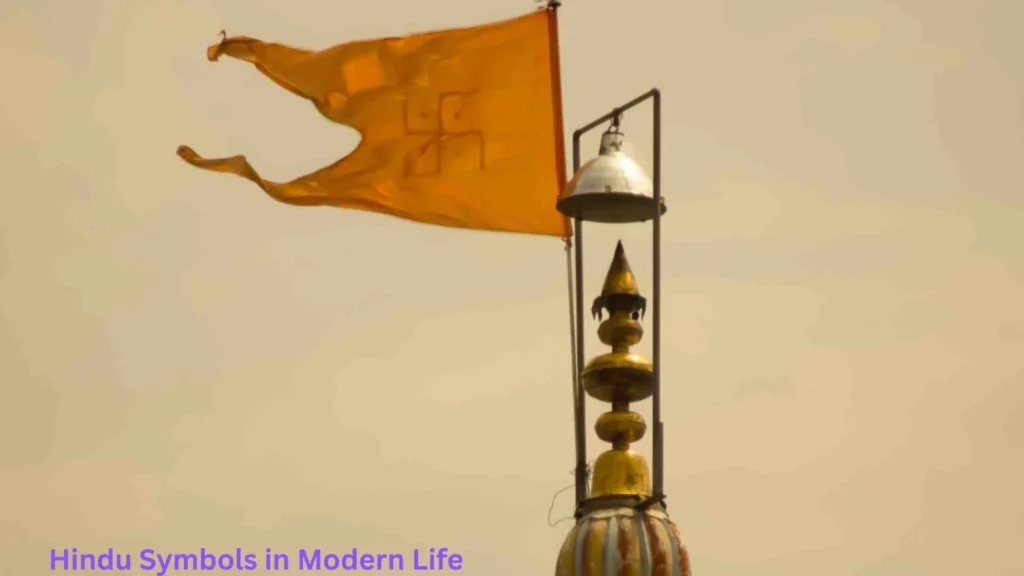
The Swastika is one of the oldest and most powerful Hindu symbols.
Meaning
- Represents prosperity, good fortune, and well-being
- Symbolizes the sun, life, and positive energy
Important Note
In Hinduism, the Swastika is a positive and sacred symbol, very different from its misuse in modern history.
Practical Use
- Drawn at entrances during festivals
- Used in rituals and ceremonies
3. Lotus (Padma) – Purity and Enlightenment
The lotus flower is a beautiful spiritual symbol.
Meaning
- Represents purity, beauty, and spiritual awakening
- Grows in muddy water but remains clean
Symbolism
- Life journey from darkness to light
- Inner strength and growth
Practical Use
- Seen in temple art
- Associated with gods like Lakshmi and Saraswati
4. Trishul (Trident) – Power and Protection
The Trishul is a three-pronged weapon associated with Lord Shiva.
Meaning
- Represents creation, preservation, and destruction
- Symbolizes control over mind, body, and soul
Use
- Found in temples
- Used as a spiritual protection symbol
5. Tilak – Mark of Blessing
The tilak is a mark placed on the forehead.
Meaning
- Represents the third eye (wisdom and awareness)
- Sign of blessing and respect
Practical Use
- Applied during rituals, prayers, and festivals
6. Kalash – Symbol of Abundance
The Kalash is a pot filled with water and topped with leaves and coconut.
Meaning
- Represents life, fertility, and prosperity
- Associated with divine energy
Use
- Used in weddings and religious ceremonies
7. Chakra – Wheel of Dharma
The chakra symbolizes movement and time.
Meaning
- Represents law, order, and righteousness (dharma)
- Symbol of continuous change
Example
- Seen in the Ashoka Chakra on the Indian flag
8. Shiva Lingam – Divine Energy
The Shiva Lingam represents Lord Shiva.
Meaning
- Symbolizes creation and cosmic energy
- Represents unity of male and female energies
Use
- Worshipped in temples and homes
Historical Origins of Hindu Symbols
Hindu symbols have roots in:
- Ancient Vedic texts
- Indus Valley Civilization
- Mythological stories and legends
Example Story: The Origin of Om
According to tradition:
- The universe began with the sound Om
- It is considered the first vibration of creation
Spiritual Meaning Behind Hindu Symbols
Hindu symbols are deeply connected to:
1. Dharma (Duty and Righteousness)
Symbols guide people to live a moral and balanced life.
2. Karma (Action and Consequence)
They remind individuals of responsibility for their actions.
3. Moksha (Liberation)
Symbols help in the journey toward spiritual freedom.
Practical Applications of Hindu Symbols
1. In Meditation and Yoga
- Om chanting improves focus
- Symbols help visualize spiritual concepts
2. In Architecture
- Temples use symbols in design
- Each structure has spiritual meaning
3. In Festivals
Symbols are used in:
- Diwali decorations
- Holi celebrations
- Wedding rituals
4. In Art and Design
- Paintings and sculptures
- Jewelry and clothing
Impact of Hindu Symbols on Society
1. Cultural Identity
Hindu symbols help preserve:
- Traditions
- Heritage
- Values
2. Social Harmony
They promote:
- Peace
- Unity
- Respect for diversity
3. Spiritual Growth
Encourage:
- Mindfulness
- Inner peace
- Self-awareness
Interesting Facts About Hindu Symbols
- Om is considered the sound of the universe
- Swastika is over 5,000 years old
- Lotus appears in many ancient scriptures
- Trishul represents both physical and spiritual power
- Tilak styles vary by region and tradition
Hindu Symbols in Modern Life
Digital and Global Presence
- Used in tattoos and logos
- Seen in yoga studios worldwide
Education and Awareness
- Taught in cultural studies
- Shared through media and books
Common Misunderstandings
Swastika Confusion
Many people confuse the Hindu Swastika with its misuse in the 20th century. In Hinduism, it remains a positive symbol.
Over-Simplification
Some think symbols have only one meaning, but most Hindu symbols are deep and multi-layered.
Benefits of Understanding Hindu Symbols
- Builds cultural awareness
- Promotes respect for traditions
- Enhances spiritual knowledge
- Encourages mindfulness
- Improves cross-cultural understanding
Frequently Asked Questions (FAQs)
1. What are Hindu symbols used for?
Hindu symbols are used in worship, rituals, meditation, and daily life to represent spiritual ideas and beliefs.
2. What is the most important Hindu symbol?
Om (ॐ) is considered the most sacred and important symbol in Hinduism.
3. Is the Swastika a positive symbol in Hinduism?
Yes, it represents good luck, prosperity, and positivity in Hindu culture.
4. Why is the lotus important in Hinduism?
The lotus symbolizes purity, spiritual growth, and enlightenment.
5. Can Hindu symbols be used in modern life?
Yes, they are widely used in art, yoga, fashion, and spiritual practices today.
Conclusion
Hindu symbols are more than just visual designs they are powerful tools of spiritual expression and cultural identity.
From the sacred sound of Om to the purity of the lotus, each symbol carries deep meaning and timeless wisdom.
Understanding these symbols helps us connect with ancient traditions while promoting respect, awareness, and harmony in today’s world.

Isaac Wellington
I’ve always been fascinated by the hidden stories in everyday life and the power of words to change how we see the world. Writing, for me, isn’t just a profession—it’s a way to explore human emotions, mysteries, and the unexpected twists of life. Over the years, I’ve dedicated myself to creating stories that linger in your mind long after the last page. When I’m not writing, you’ll usually find me wandering through old libraries or sketching ideas in a notebook. I believe every story has a heartbeat, and I aim to capture that rhythm in my work. Join me on a journey where imagination meets reality, and the ordinary becomes extraordinary.
Books:
-
Shadows of the Forgotten
-
Whispers Through Time